
Acura
After months of working at Dentsu, with the Acura client, it became clear that their Design System needed an update. Initially the site was designed by another agency, and built by a different agency, and then handed over to Dentsu for maintenance. We acquired a Design System that was piece meal, didn’t match 1:1 with the live site, and updated & rebuilt where we could. There was barely any documentation and little clarity on who did what and why things were the way they were.
Because the live site was already built the time spent on this design system initially was not enough and as page design work came in for this client as well as others, the system was not consistently updated and just started getting more and more confusing and convoluted. Every time a new page was being designed we would have to auto layout the components and on top of that pages were copied from previous years carrying over bad designs again and again. The client was also looking at getting all their dealer partners to update their websites to be more on brand with the corporate brand and we were putting together presentations on our Design System but there seemed to be no point in putting together guidelines for something that was so broken.
So I was tasked with updating the Design System
I took a phased approach and put together a plan to update all components that were needed by dealers first, along with a presentation.
I started out planning based on each page that was needed, breaking it down based on component. We were also sending a Figma file to our dealers so of course the fundamentals had to be set up first and documentation was needed for everything. I took this as an opportunity to look at every single component being used on the live site and in the Design System and audited whether we would need to consolidate, remove, re-design, or update.
We did have a pretty robust design system already
But most if not all the components were not auto layouted and they weren’t using variants so there were pages and pages of components that were almost exactly alike.
There were also so many inconsistencies between the live site and the design system as there were multiple code bases that the live site was using (one older and one newer).
Design System 1.0
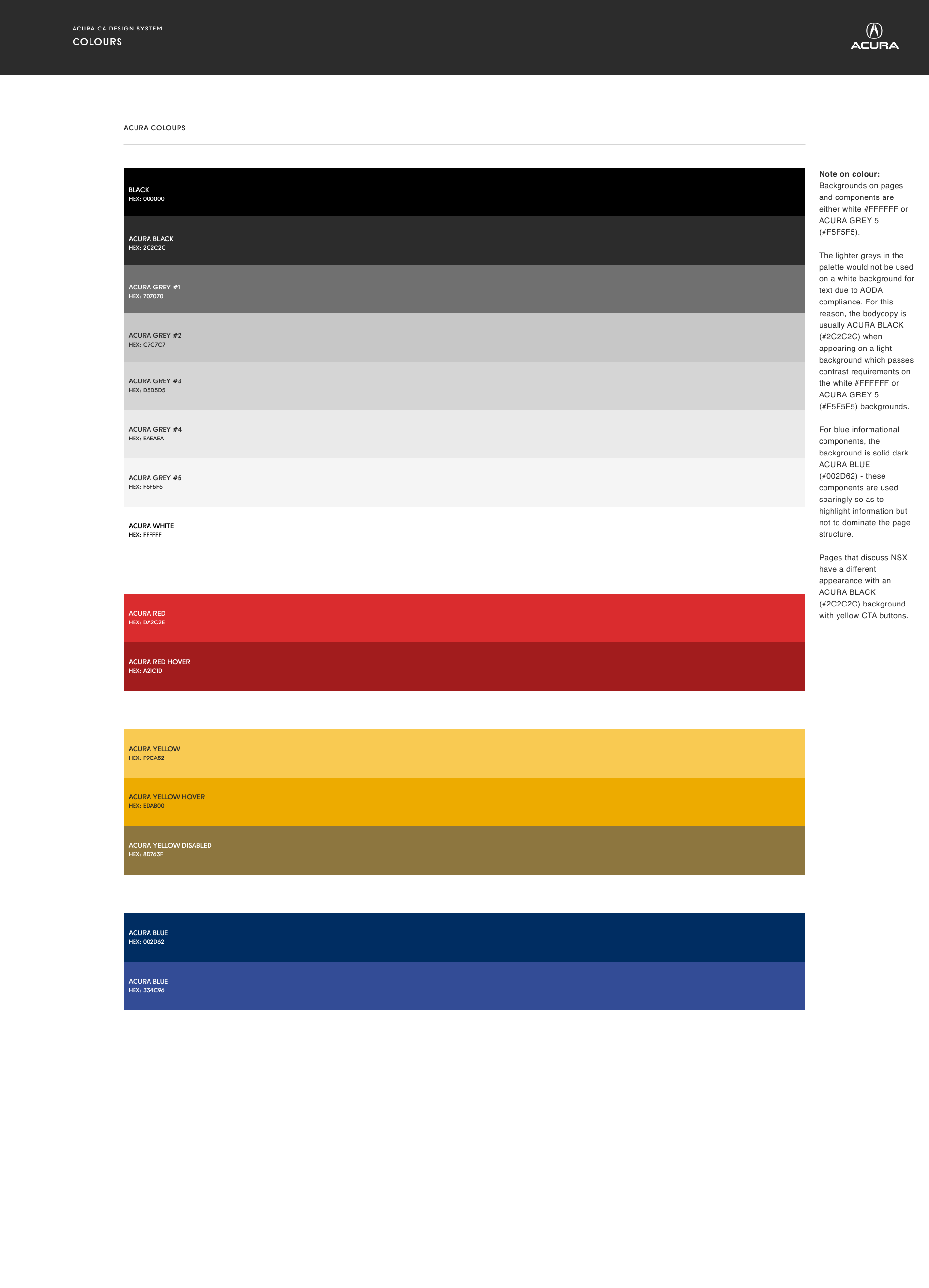
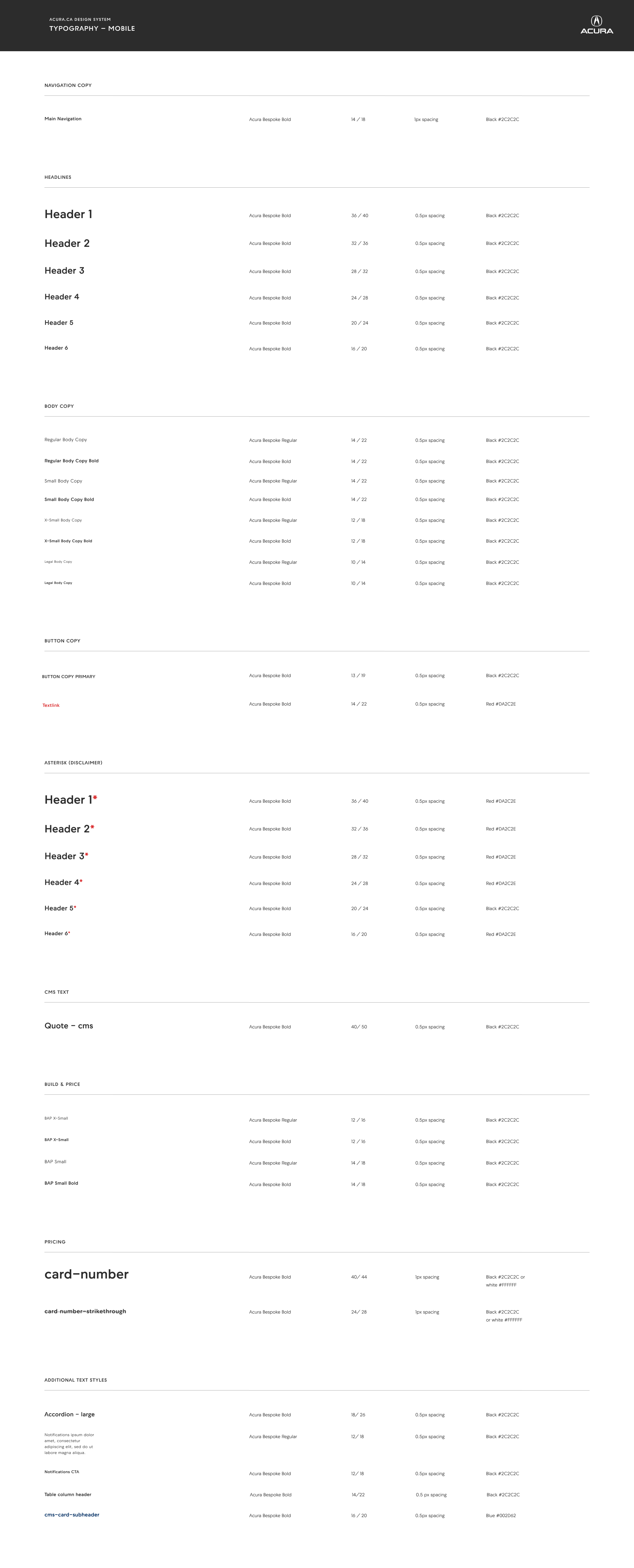
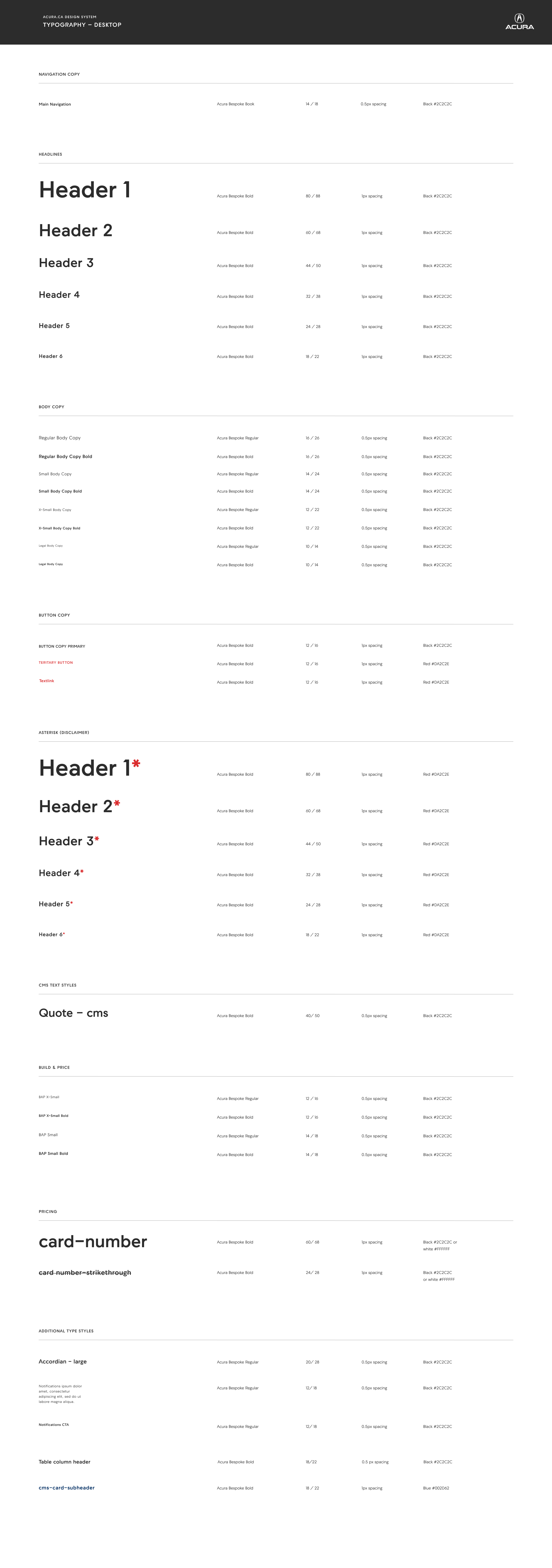
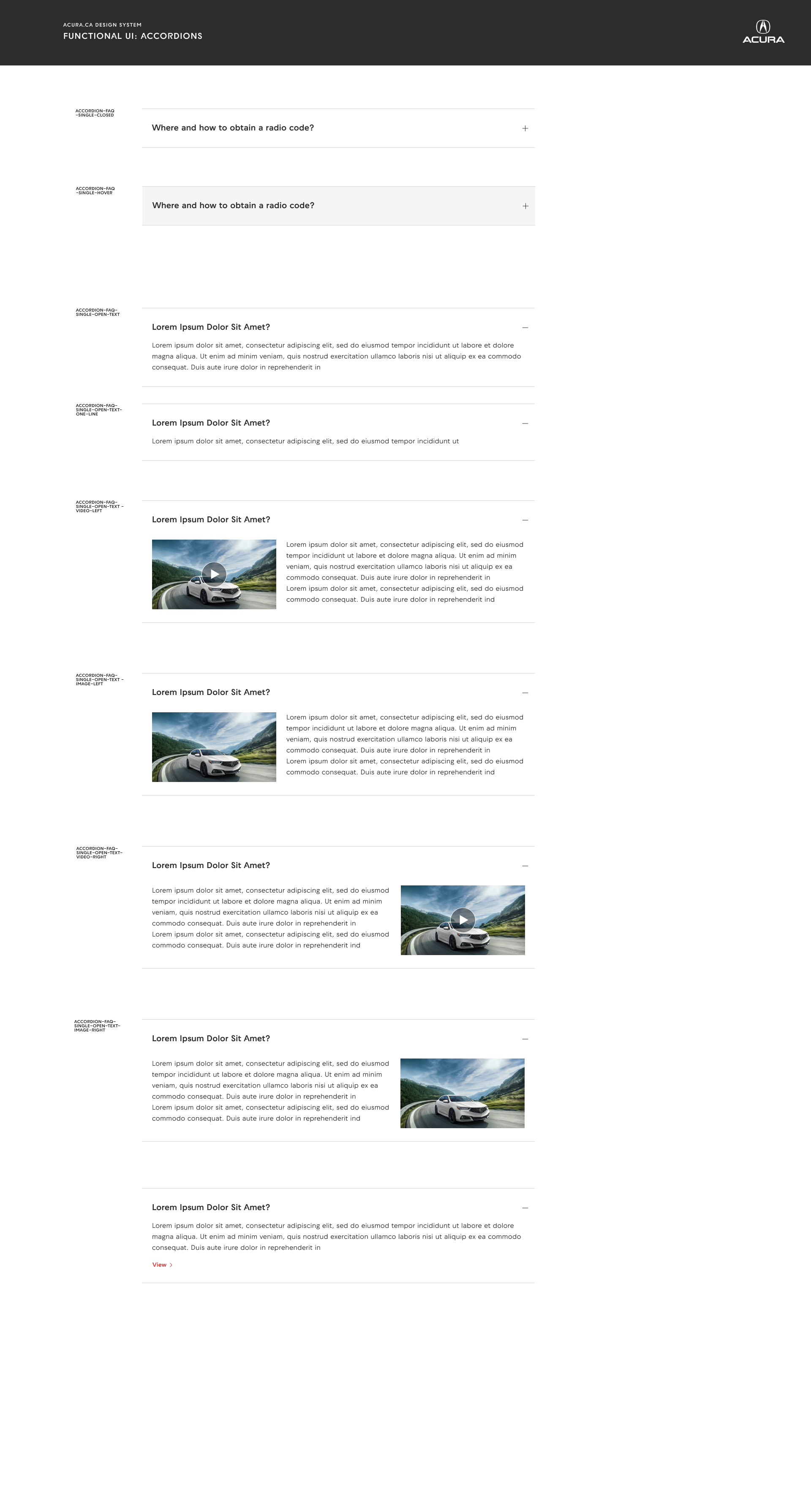
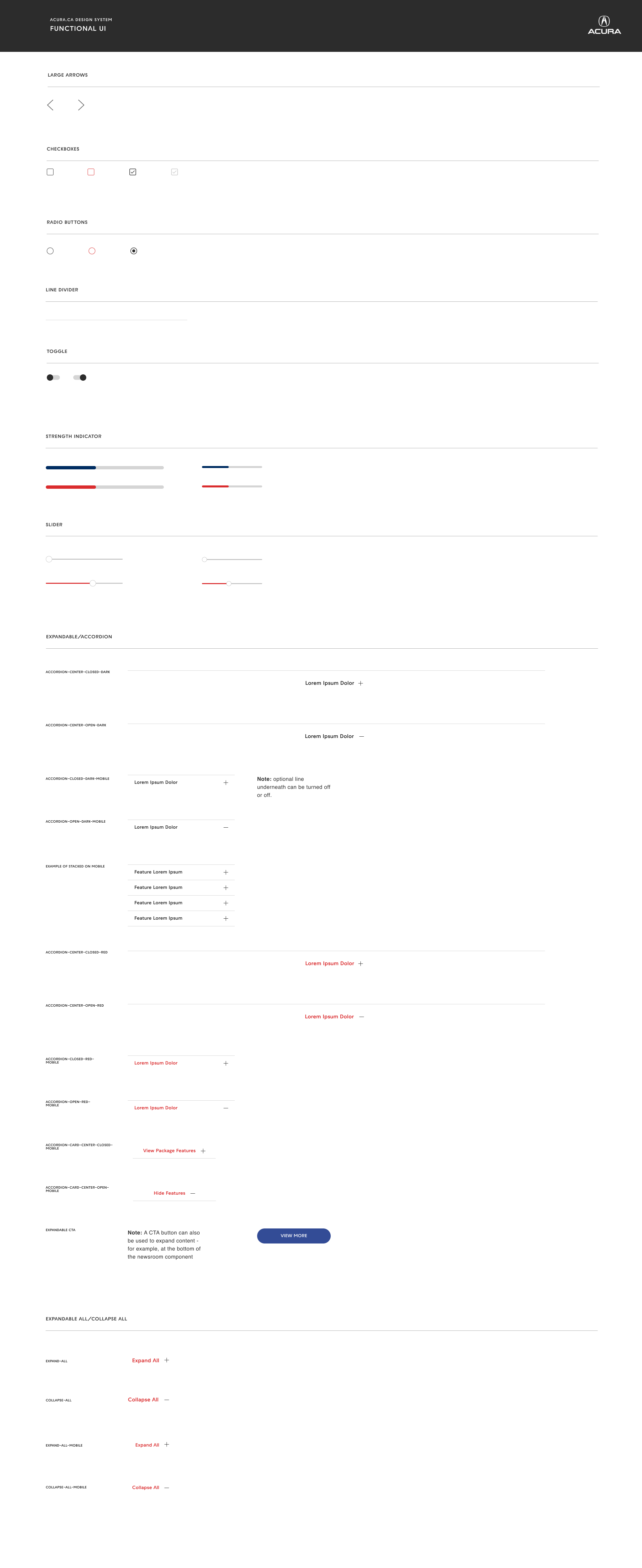
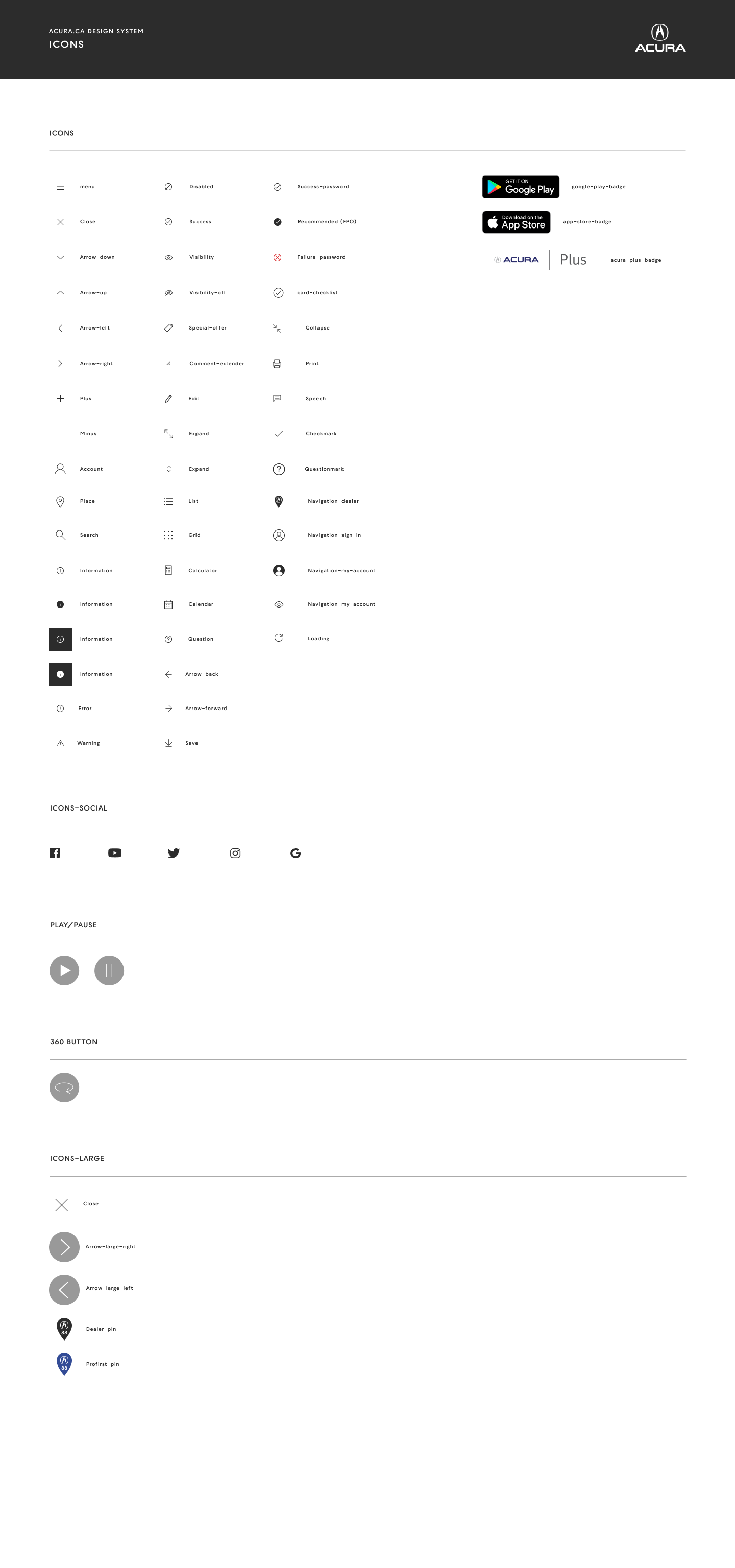
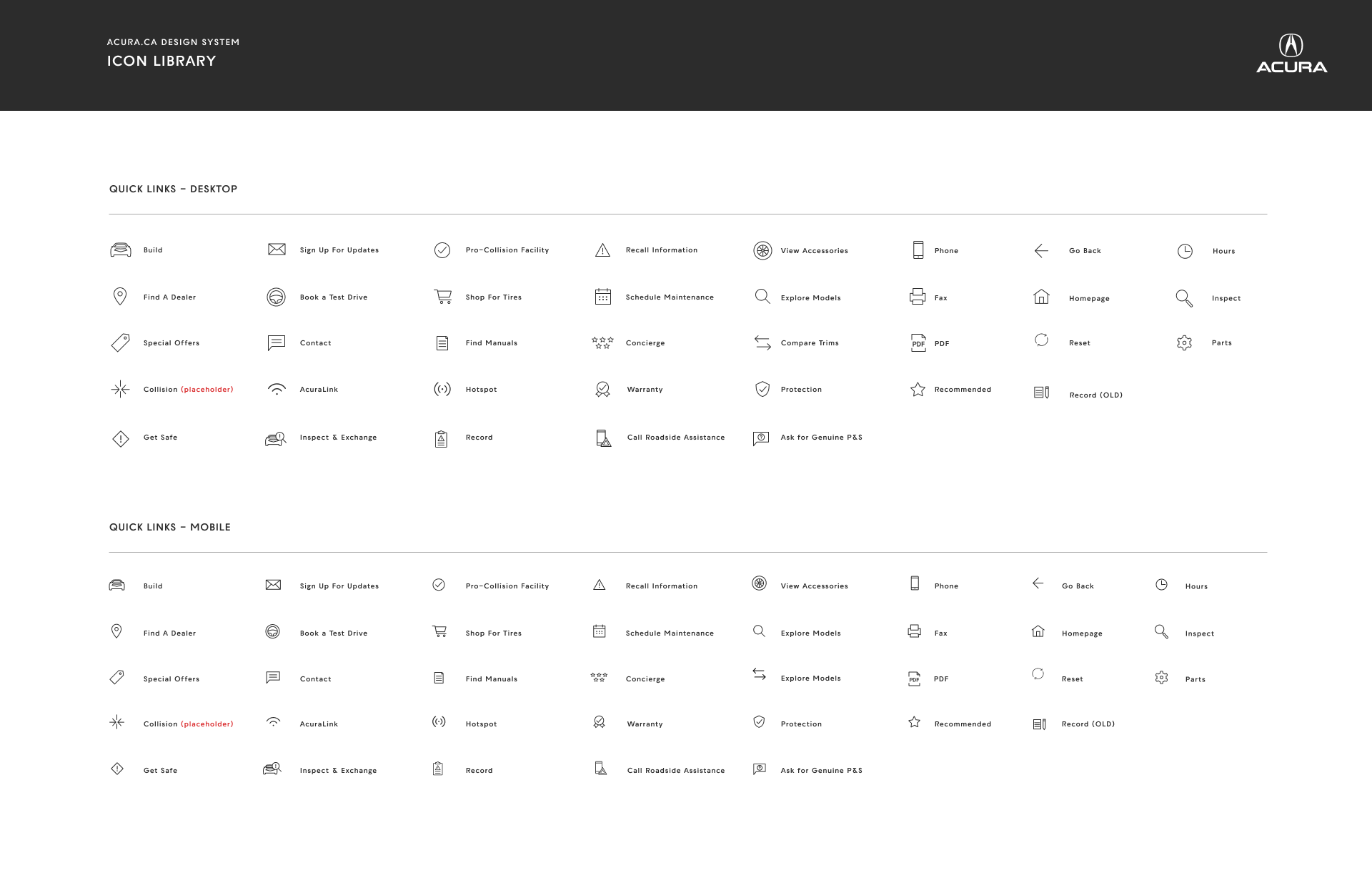
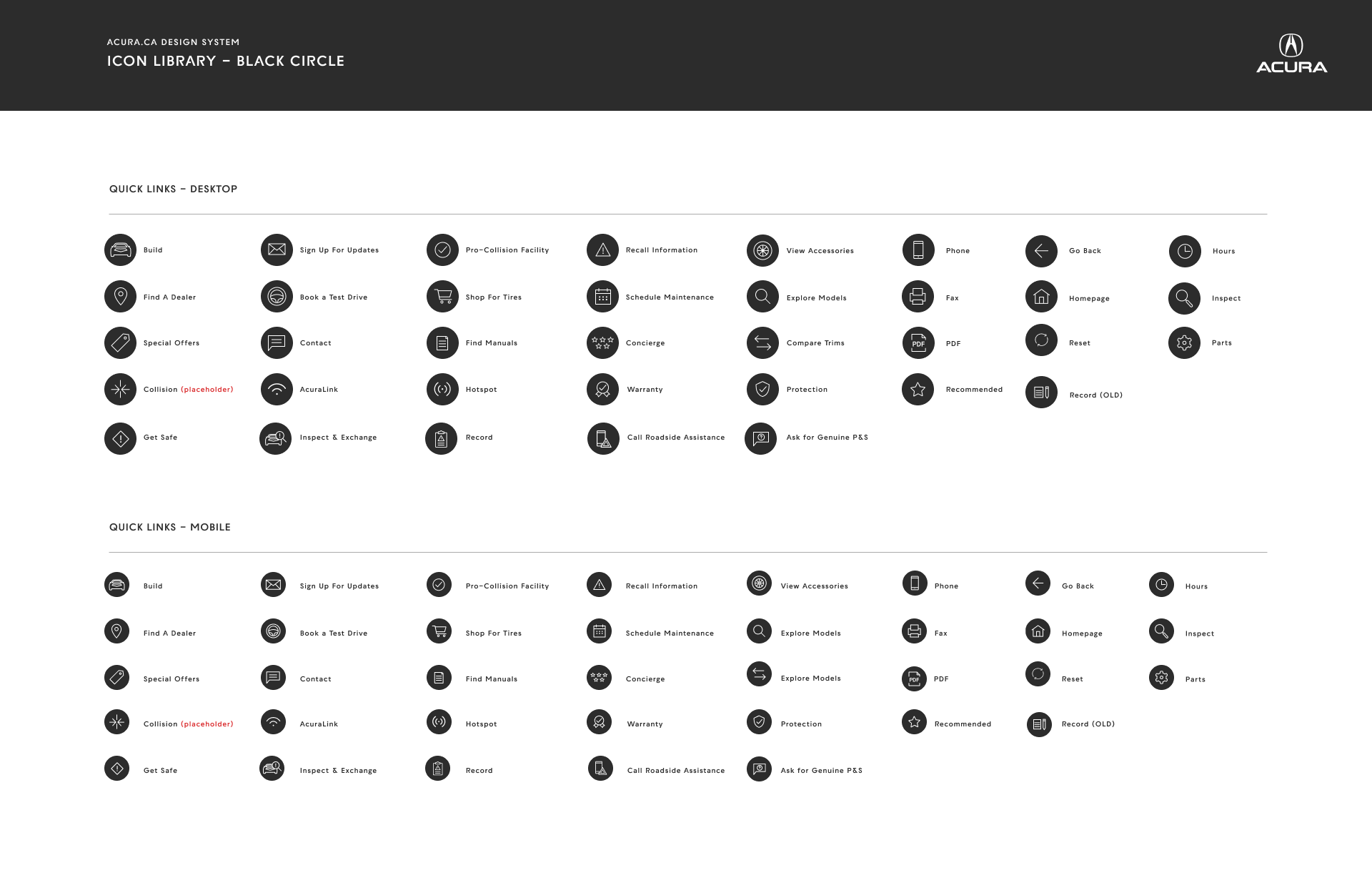
I started auditing the current live site & got to work
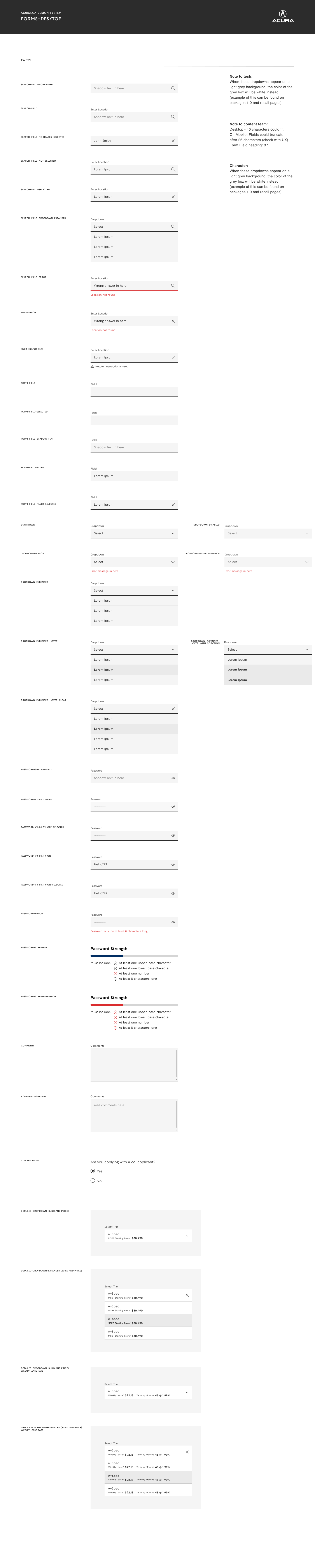
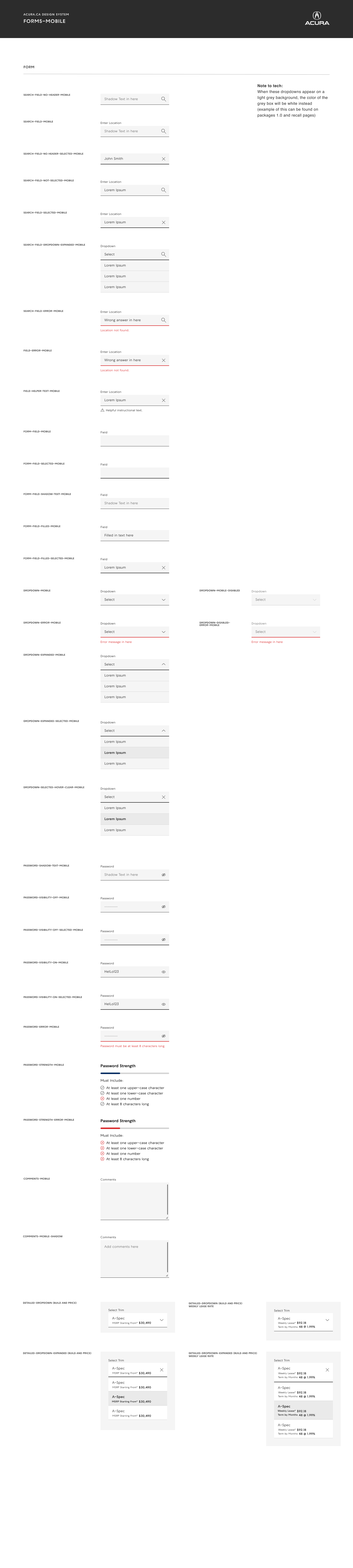
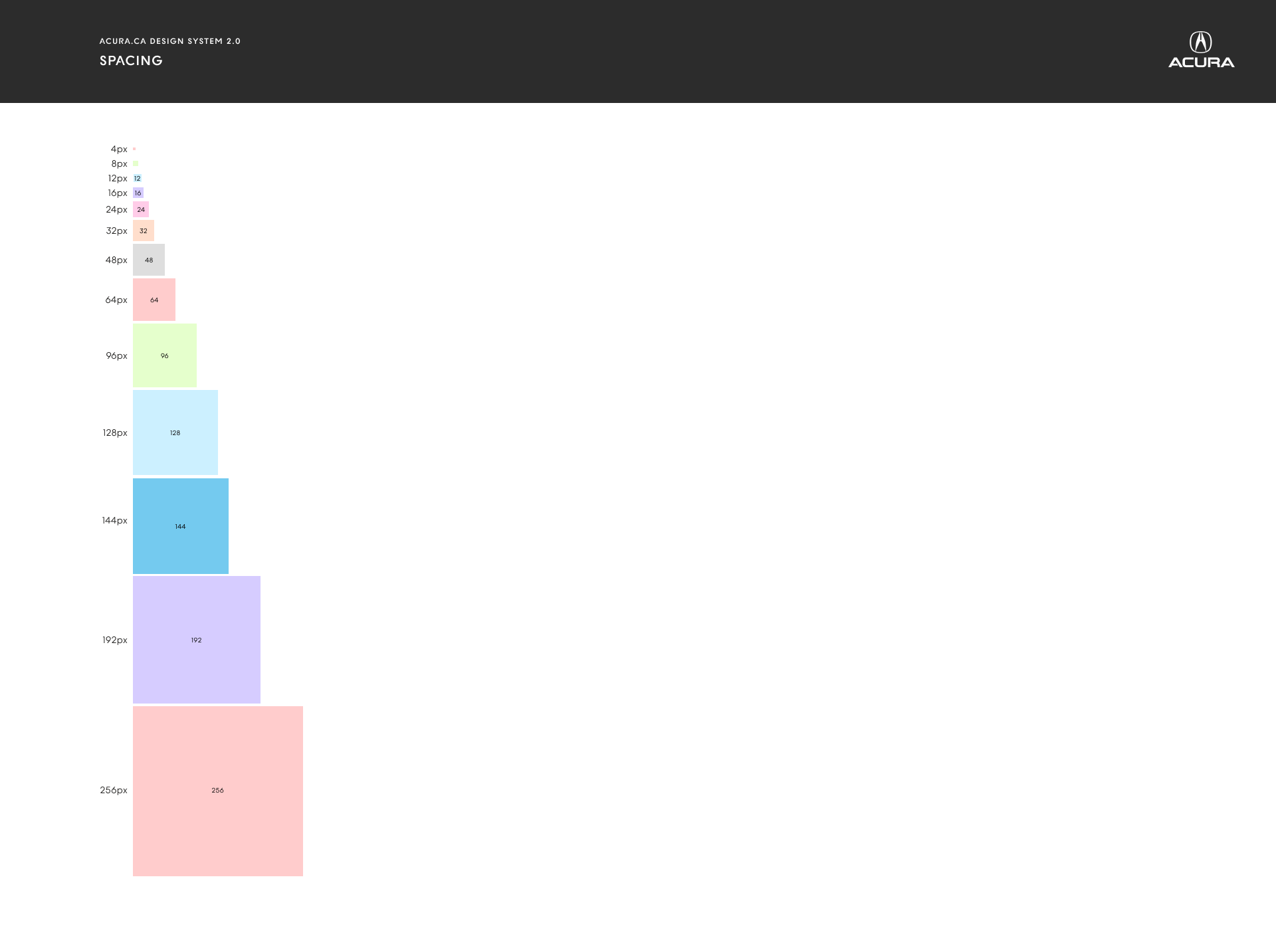
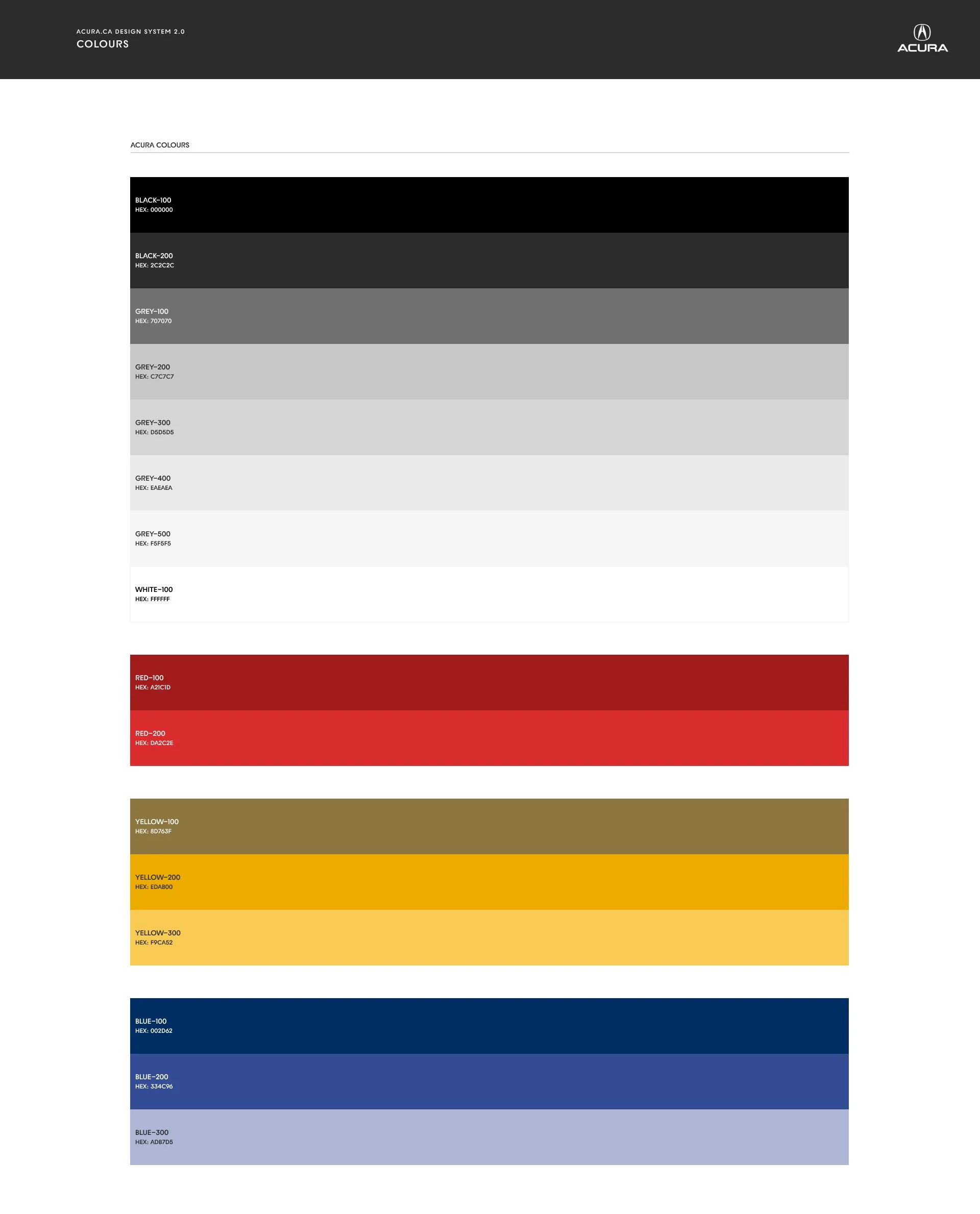
I worked with a junior designer and set up the Design System 2.0 Figma adding all desktop and mobile typography styles, colours, & grids. We then redesigned all components from the ground up using the updated styles making sure all components had variants and used auto layout and the correct properties.
As we worked we audited the current system so we could find ways to improve the system to improve adoption, and ease of use. See process here
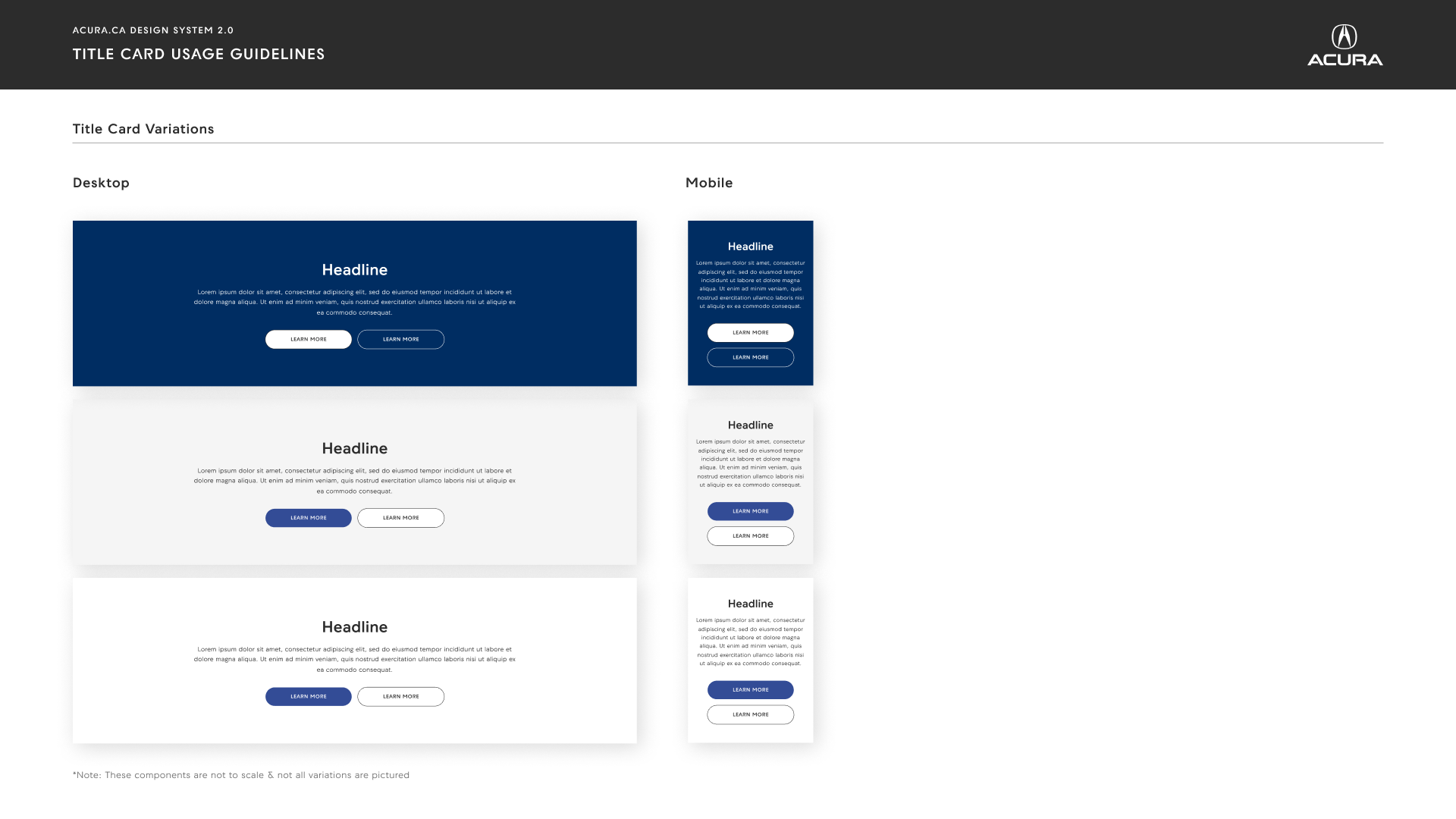
Design System 2.0 Selected Components
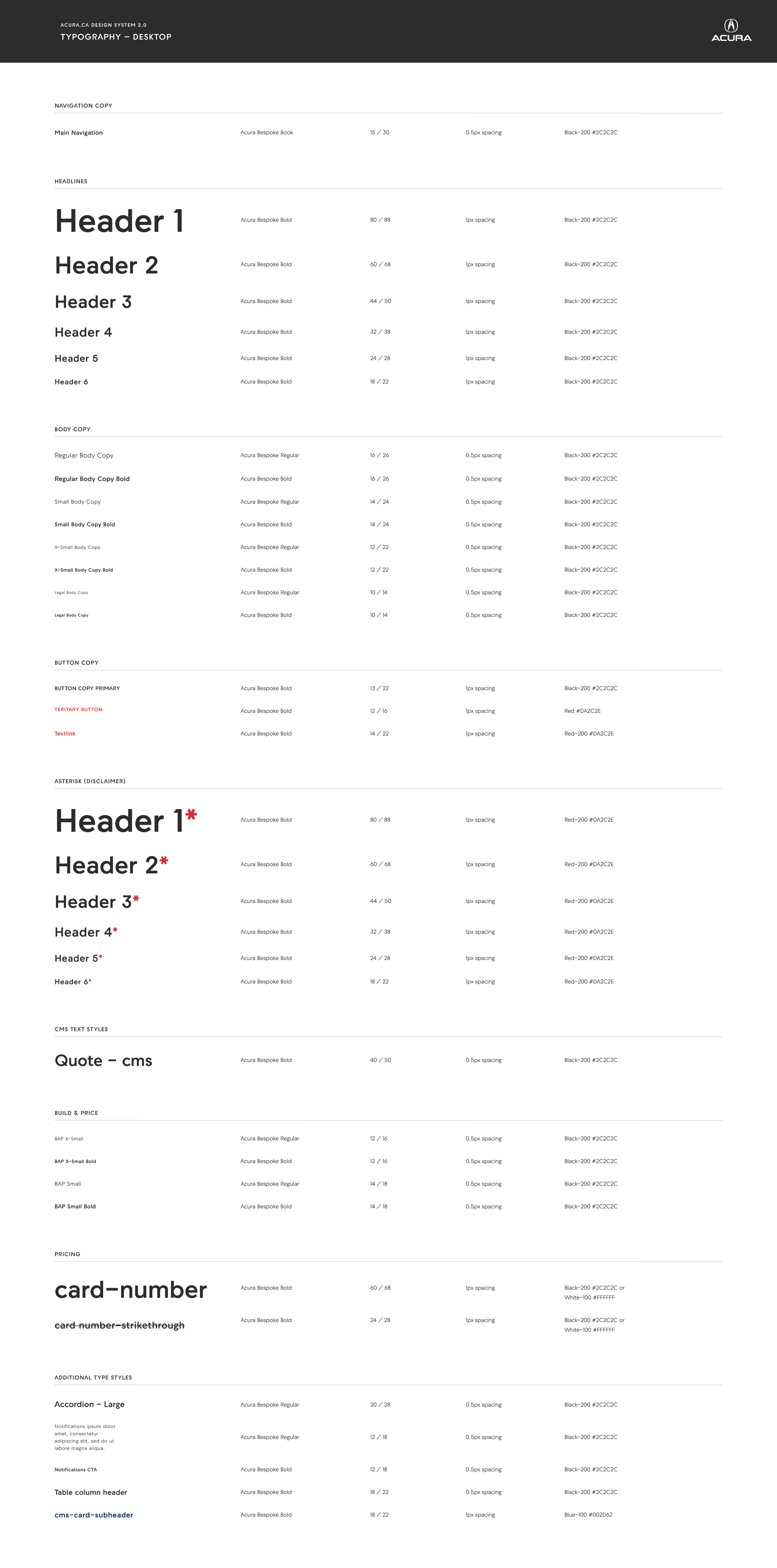
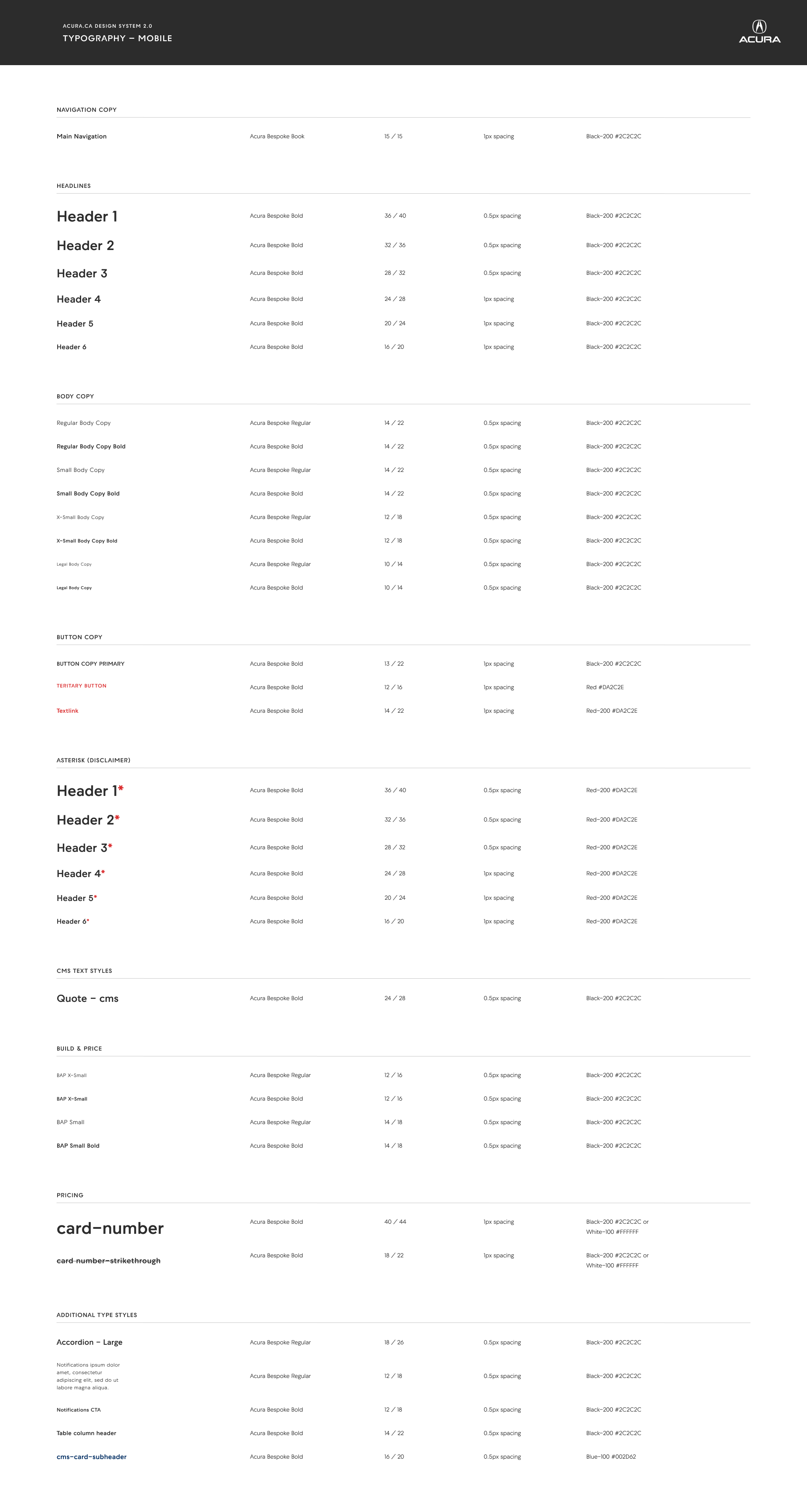
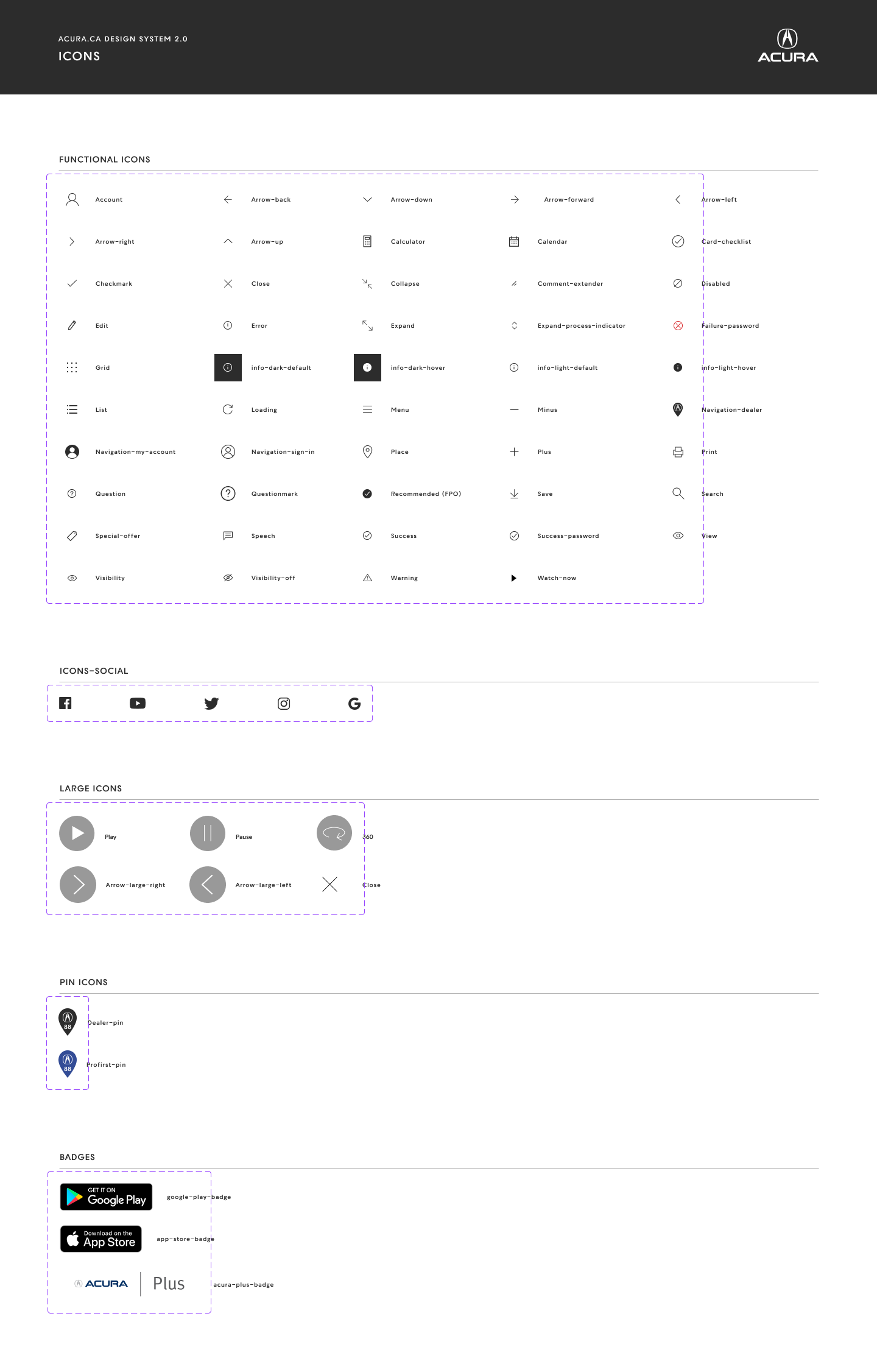
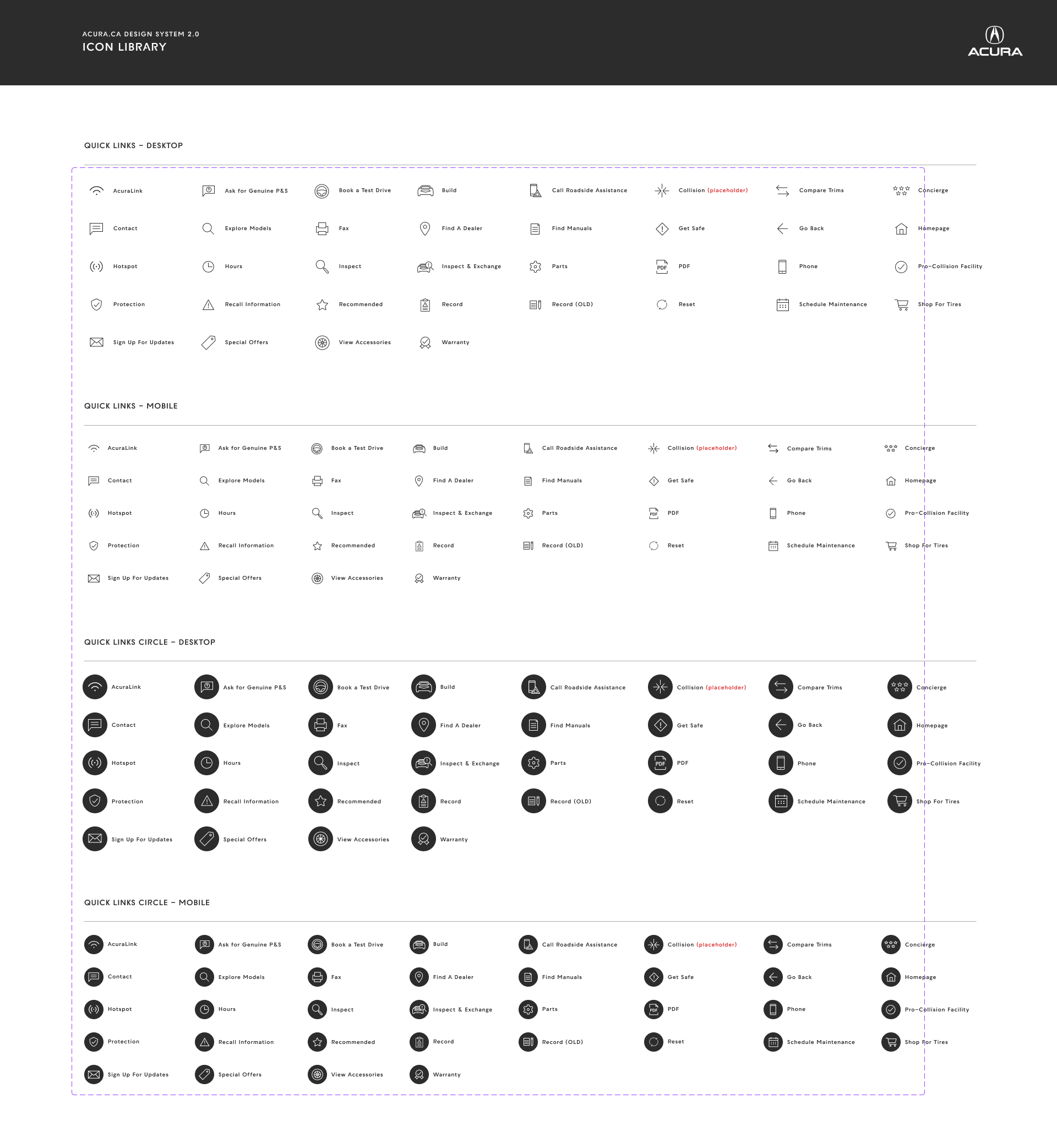
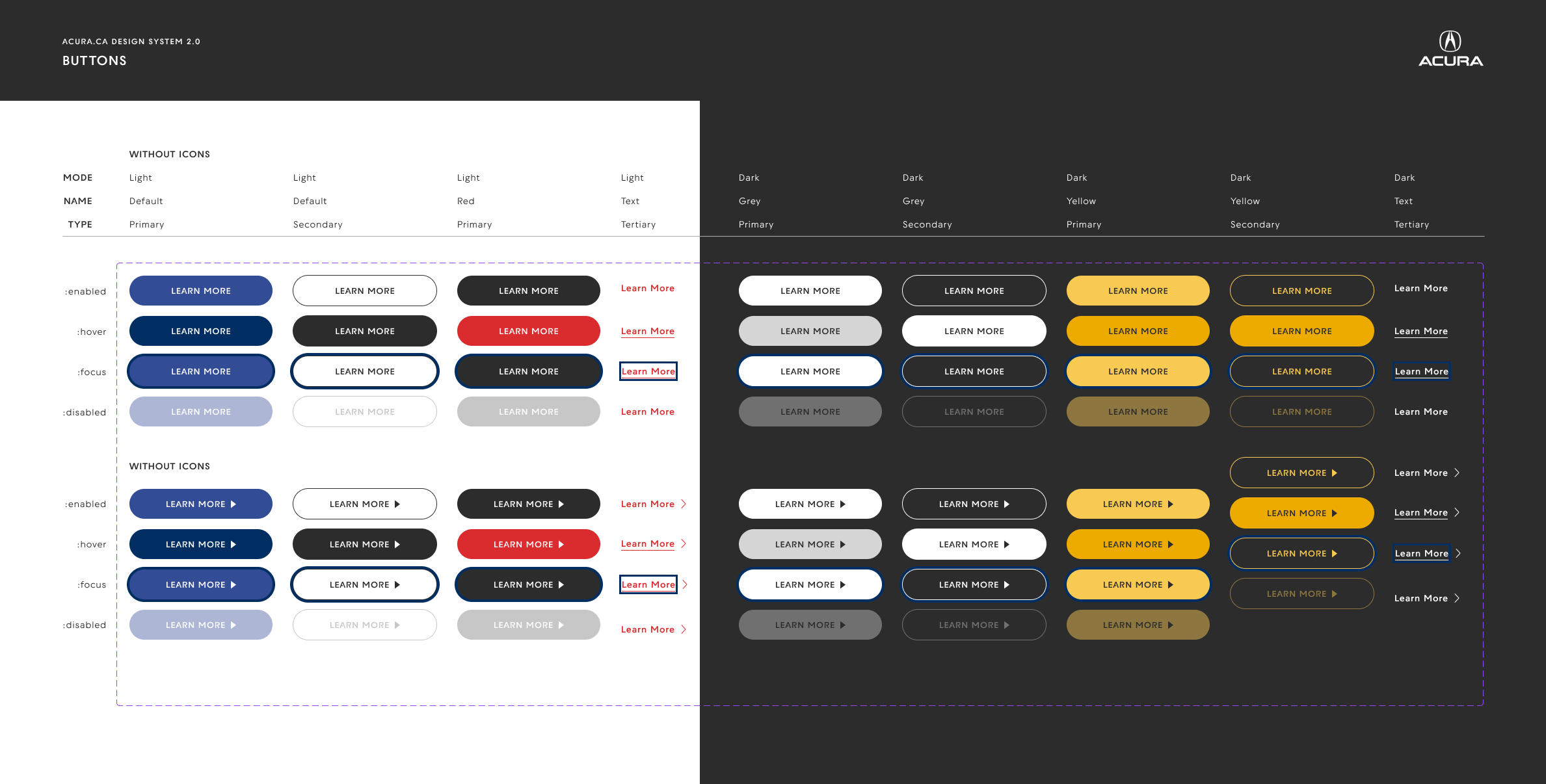
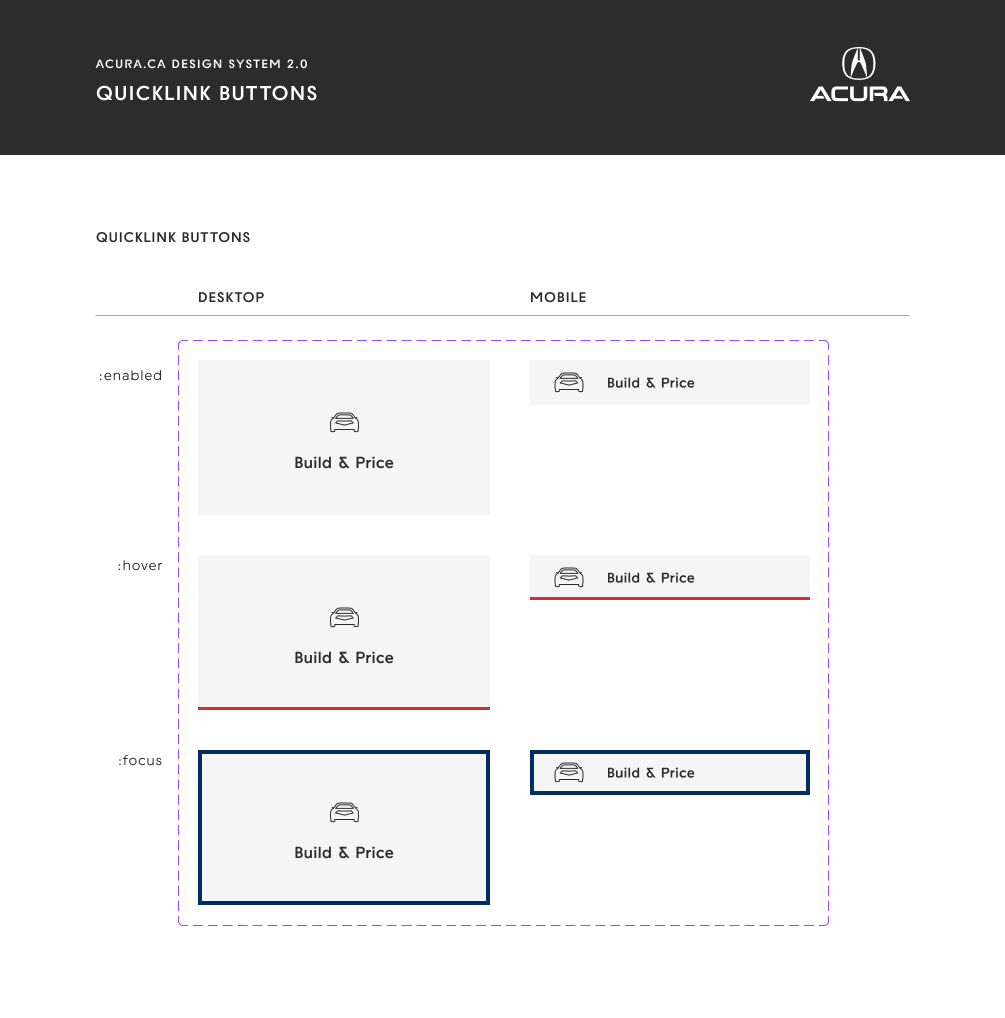
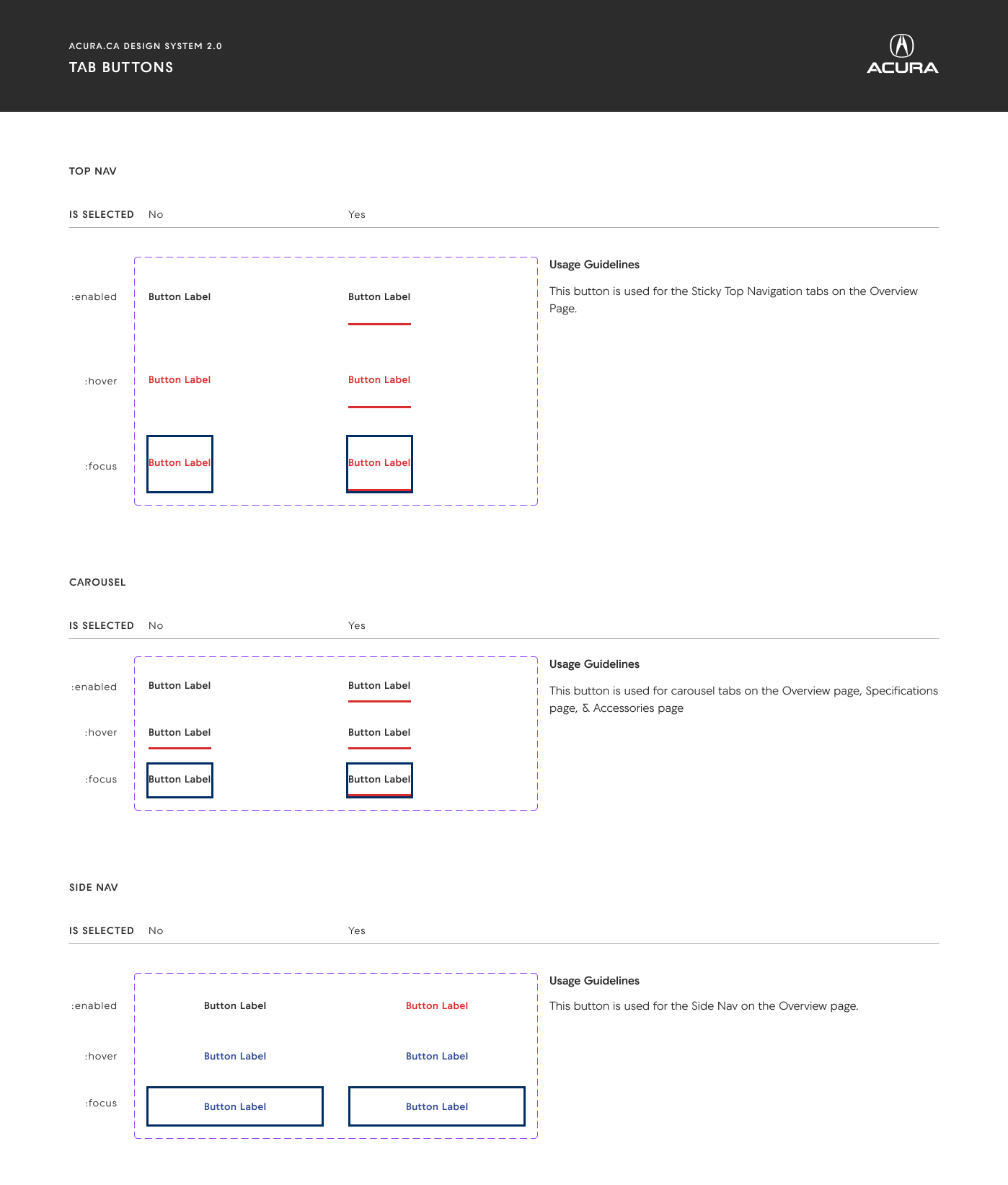
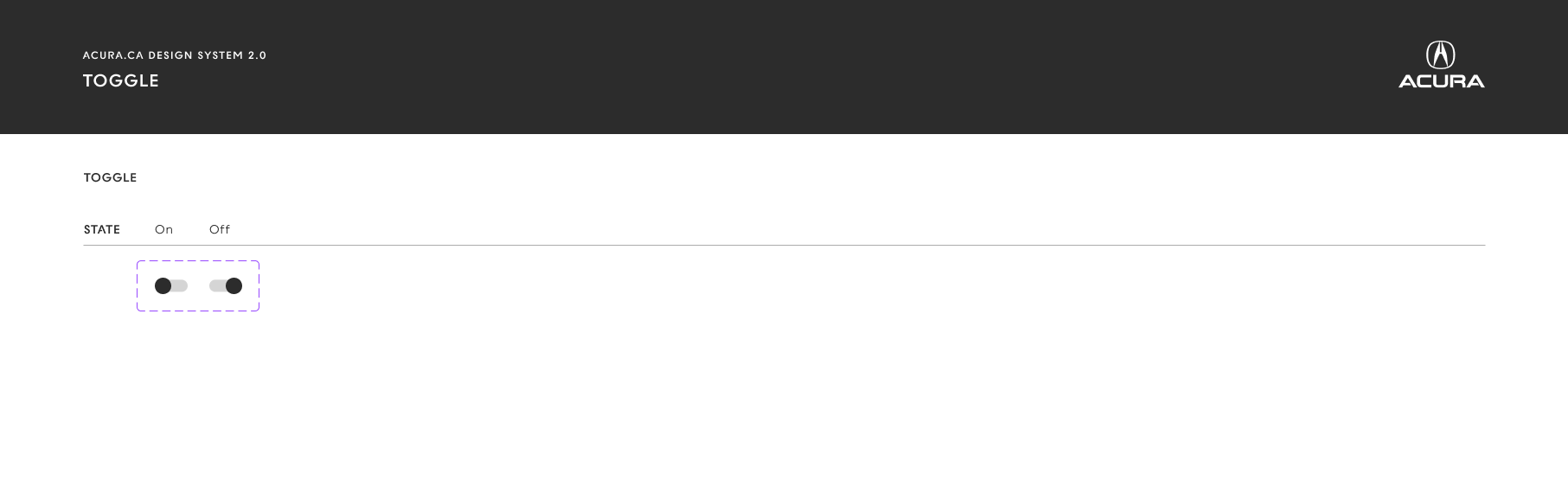
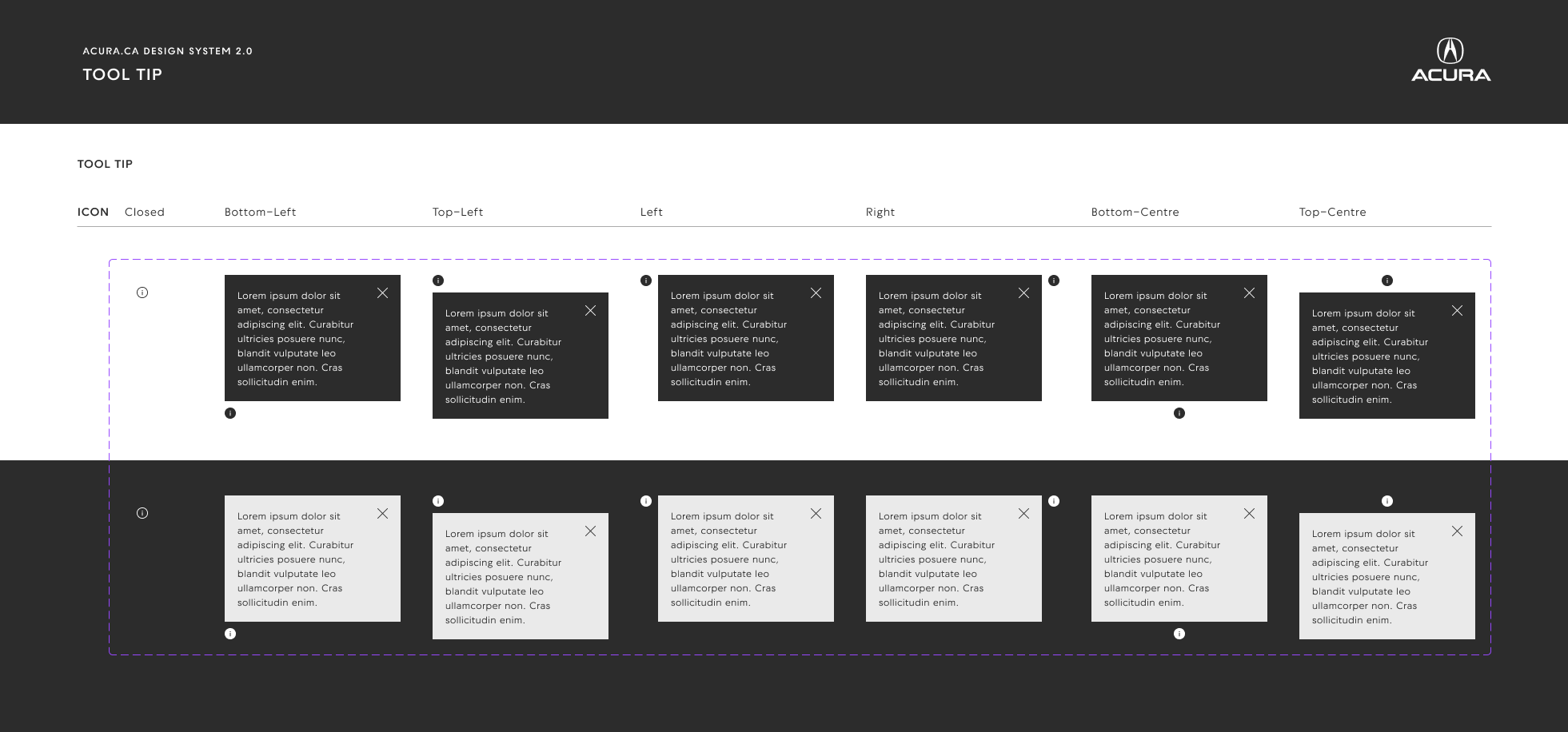
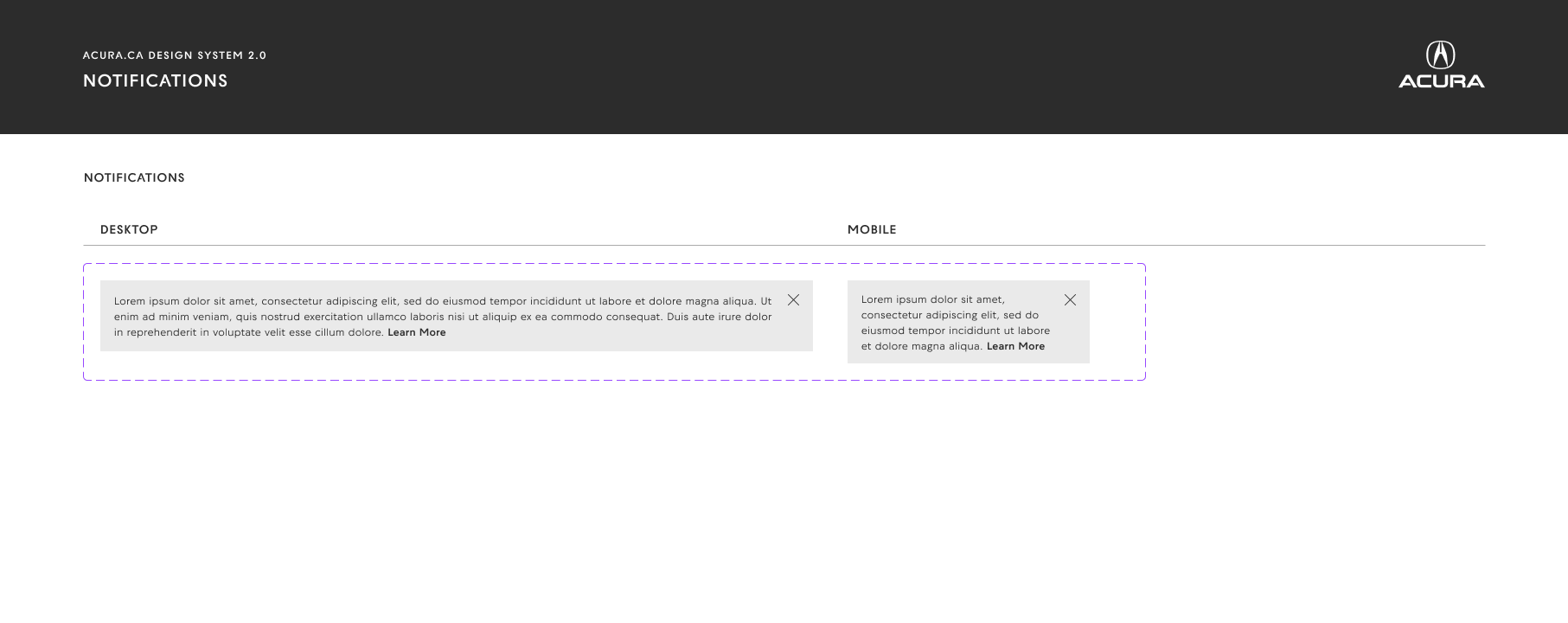
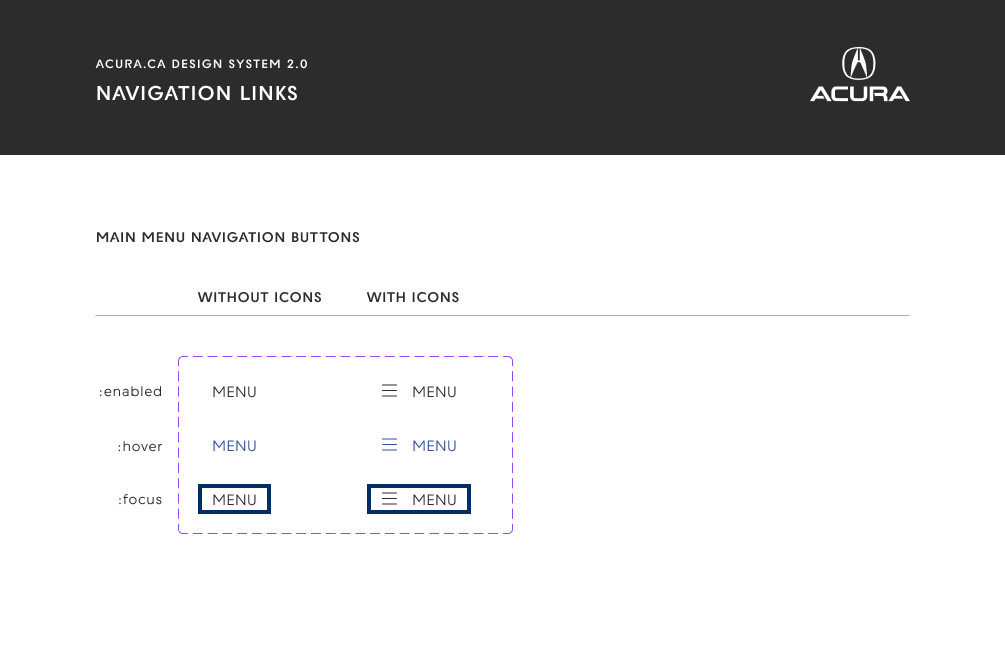
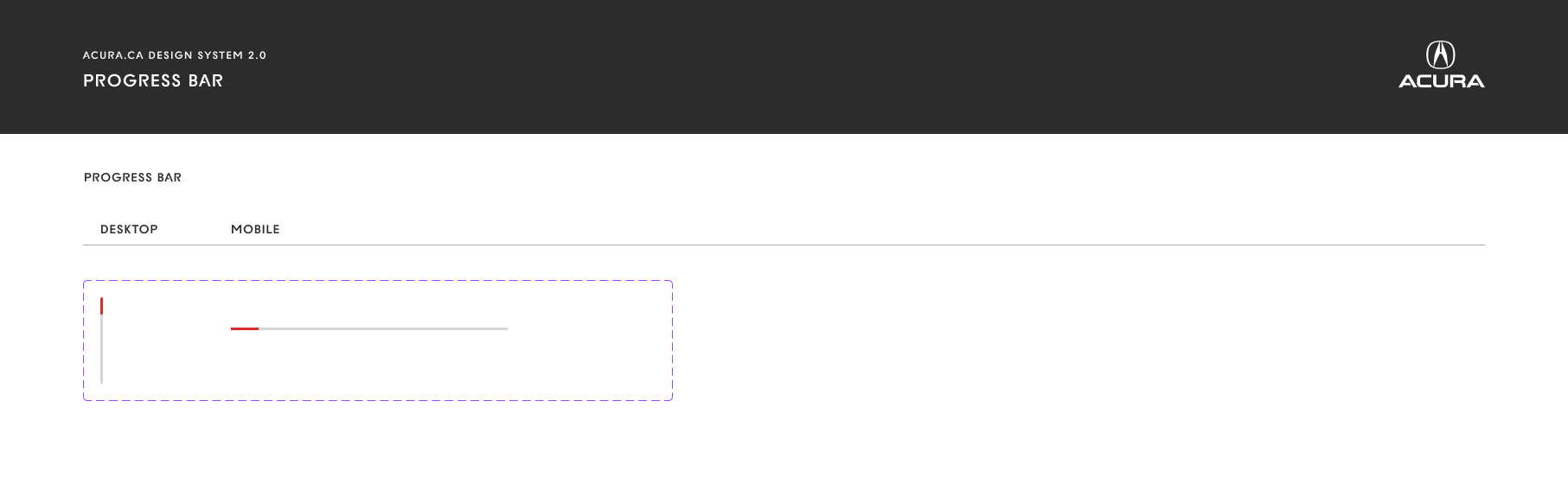
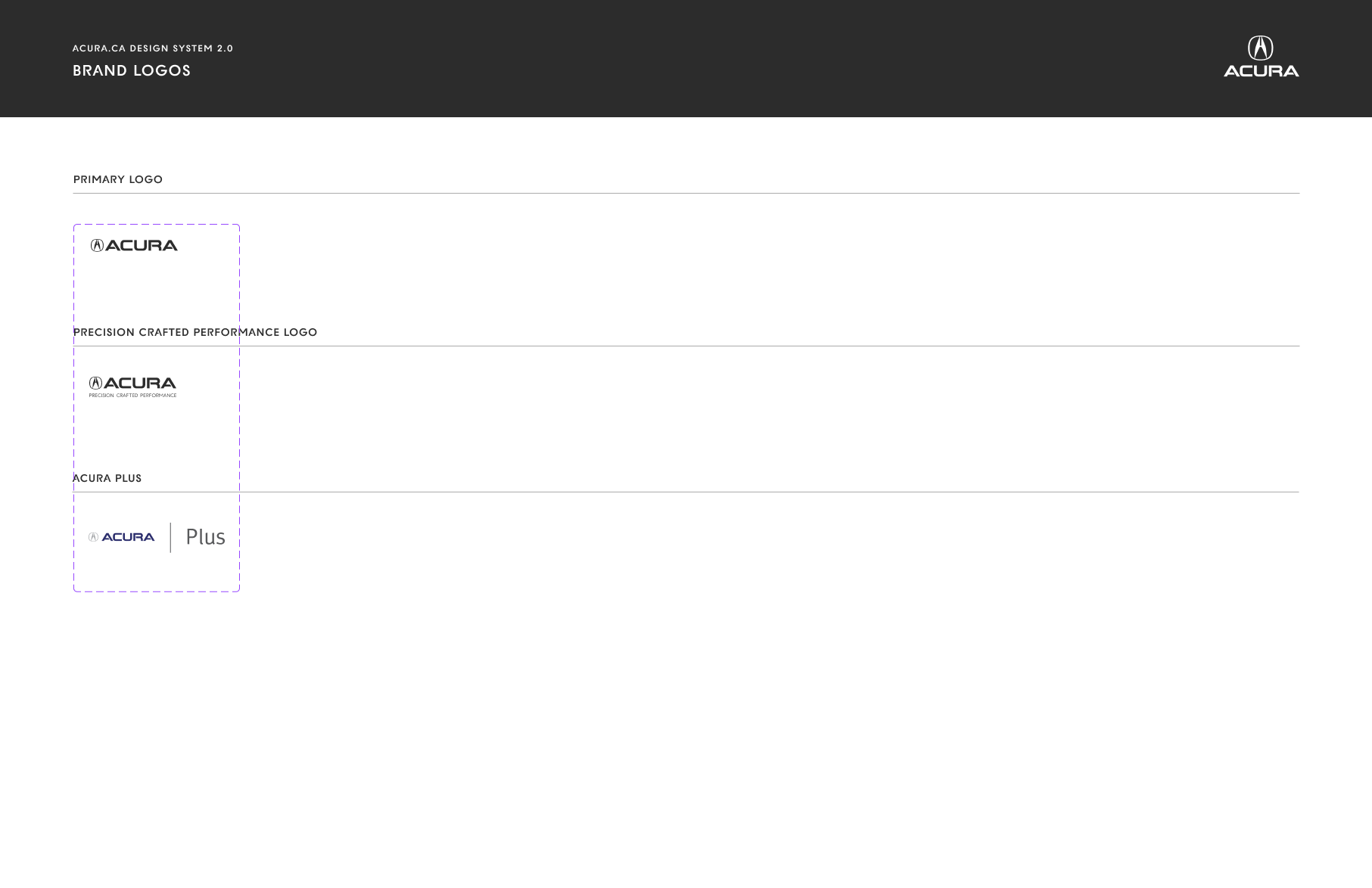
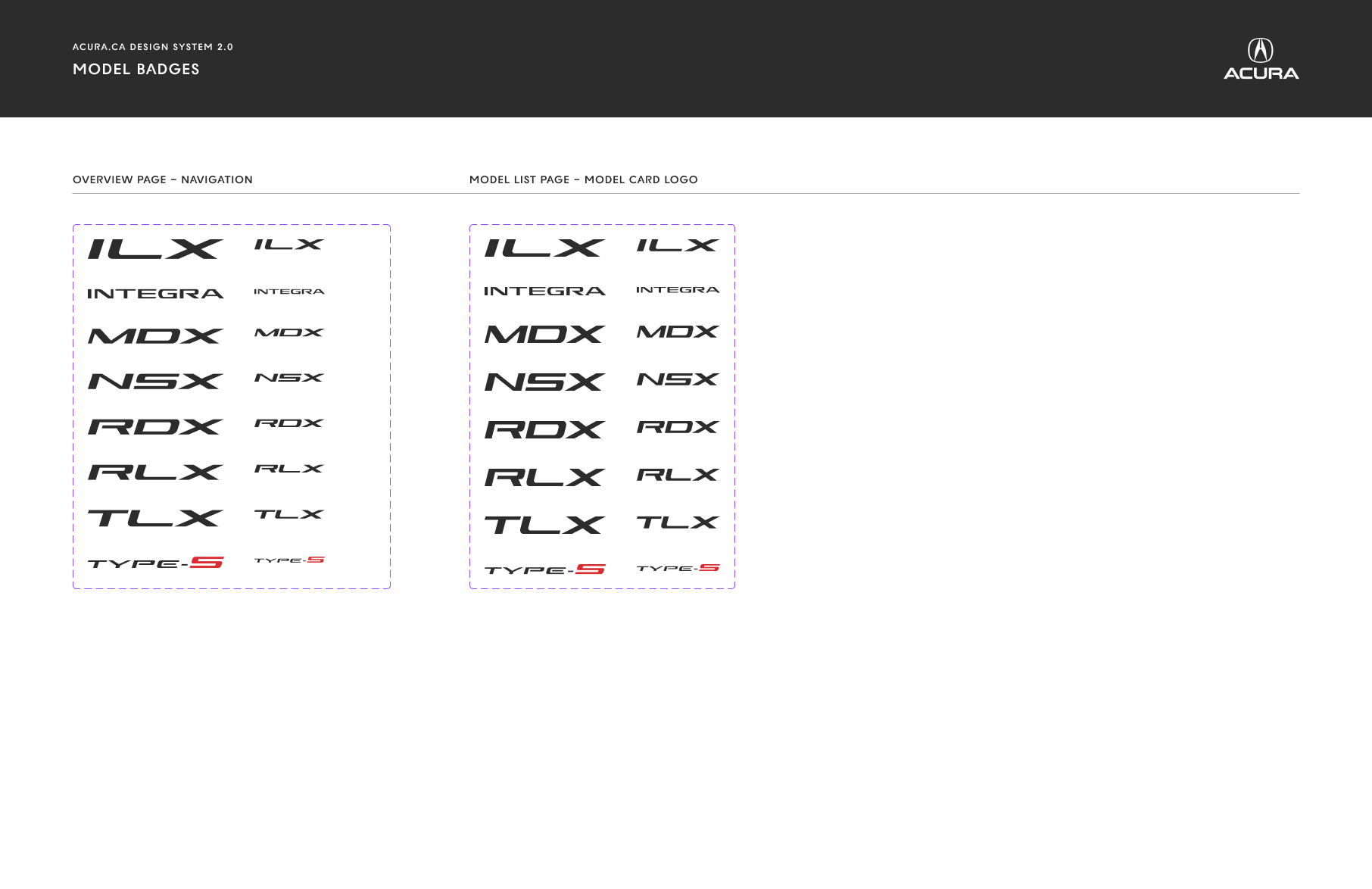
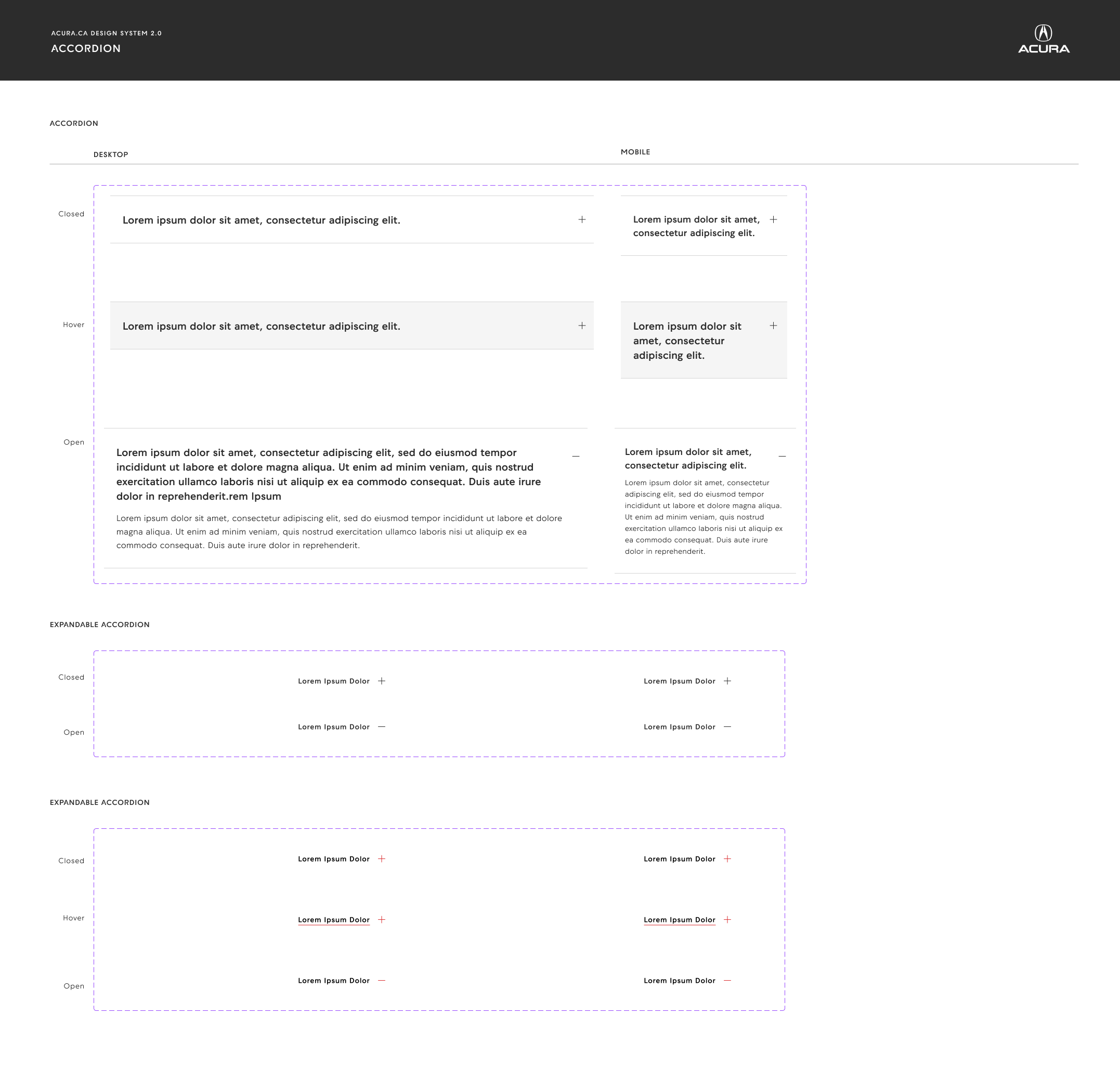
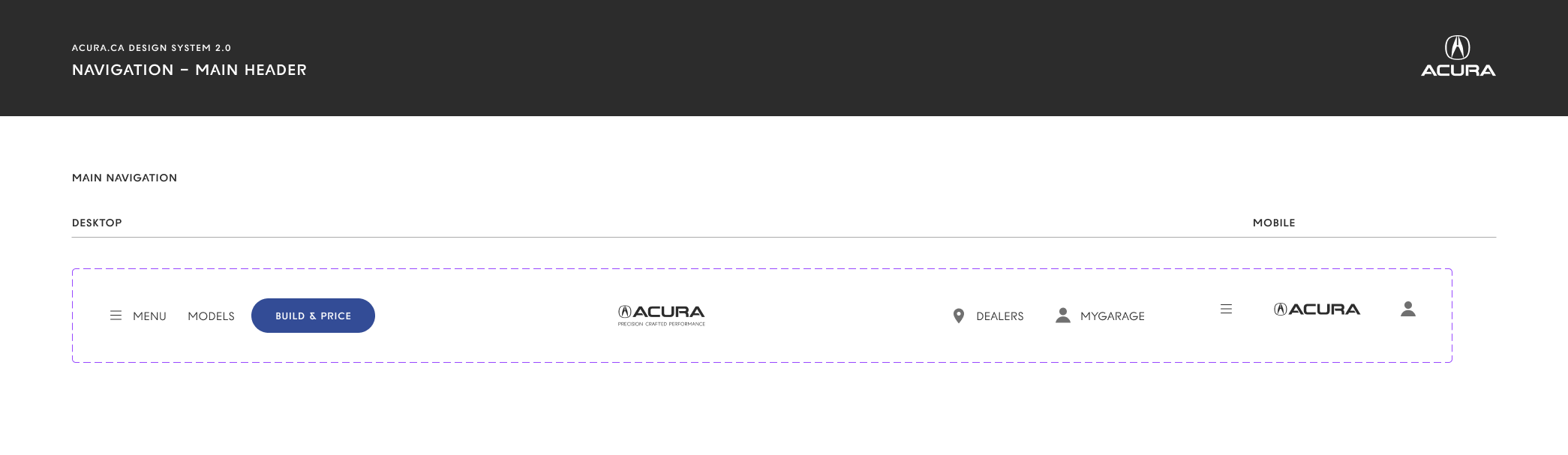
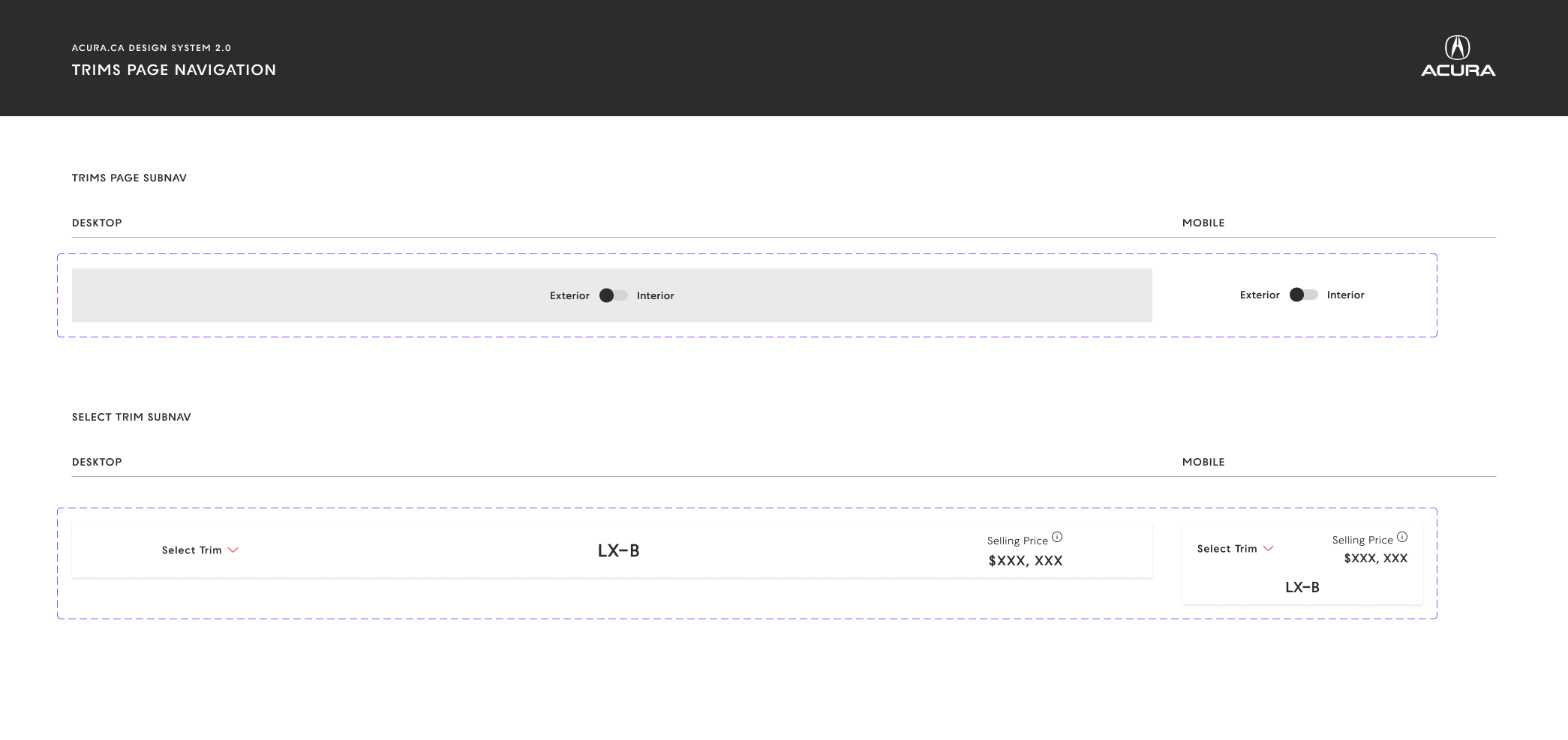
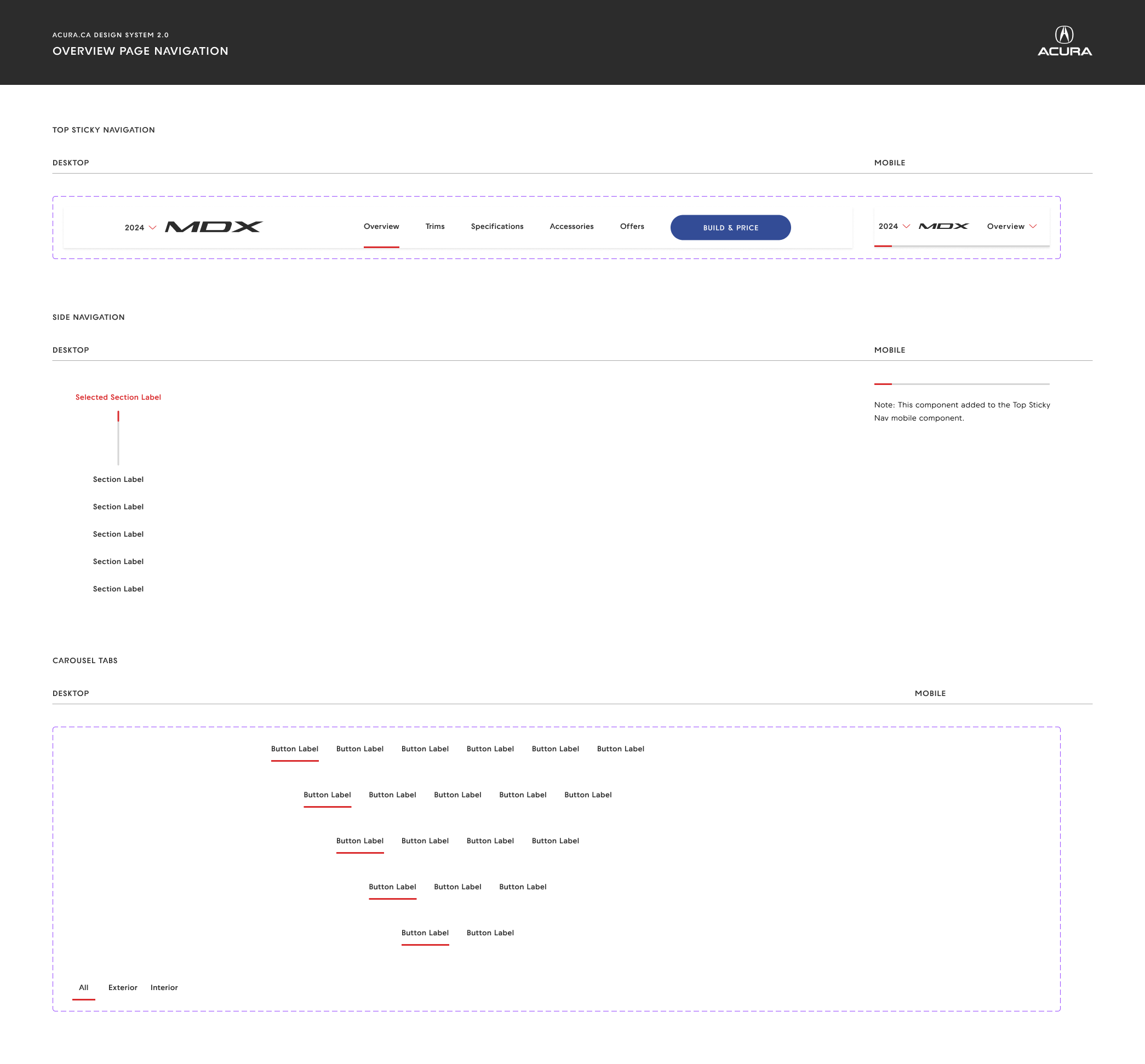
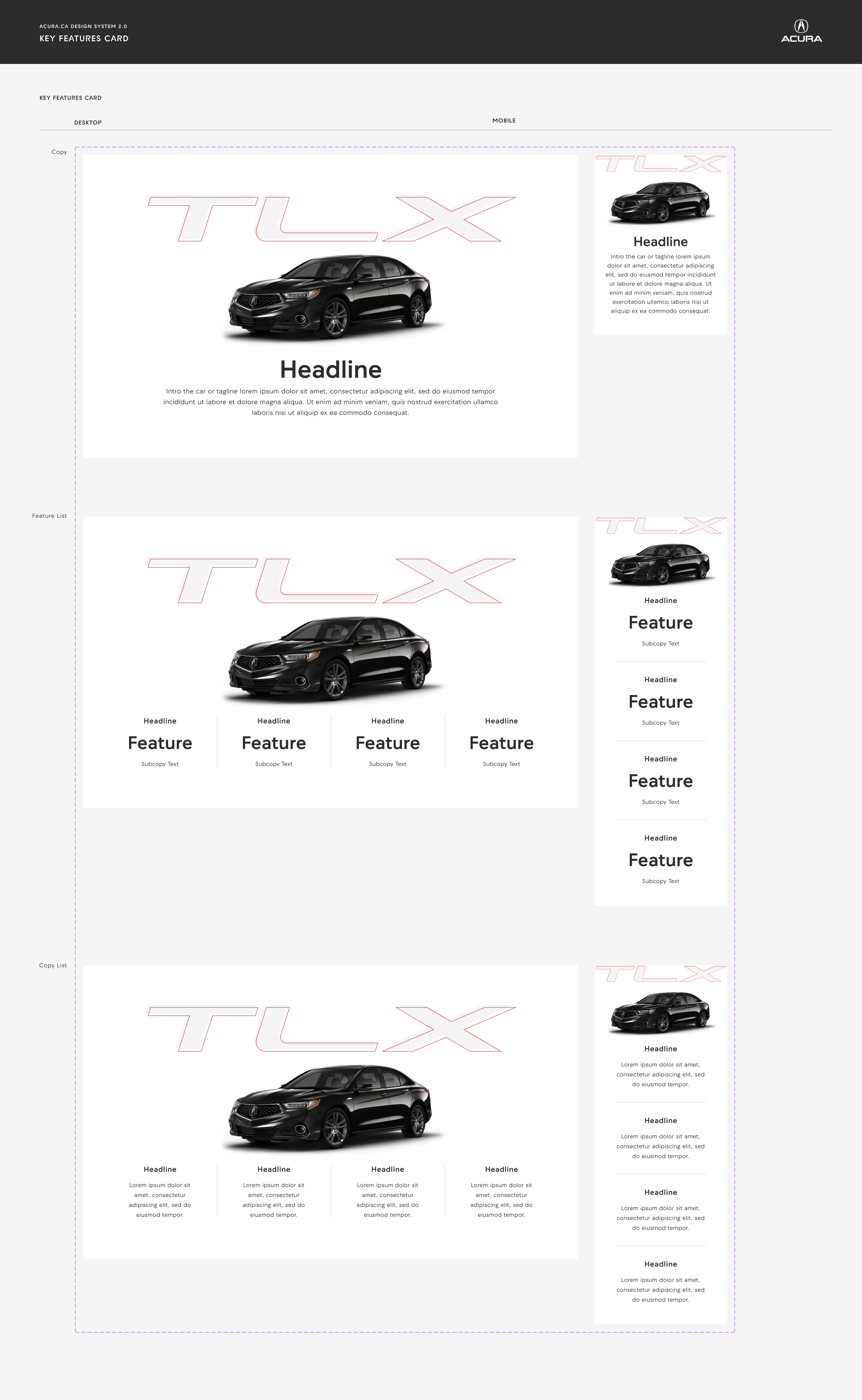
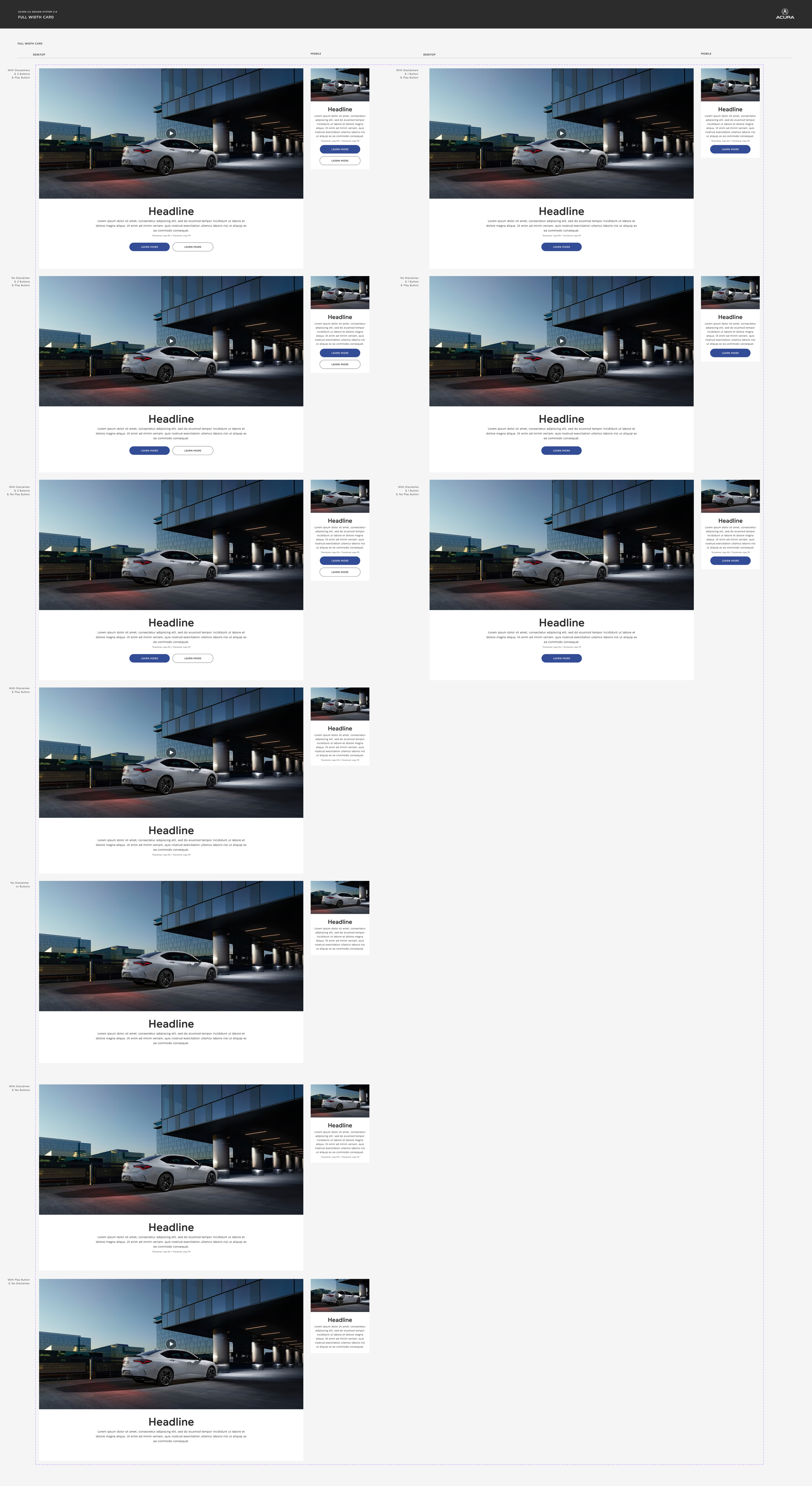
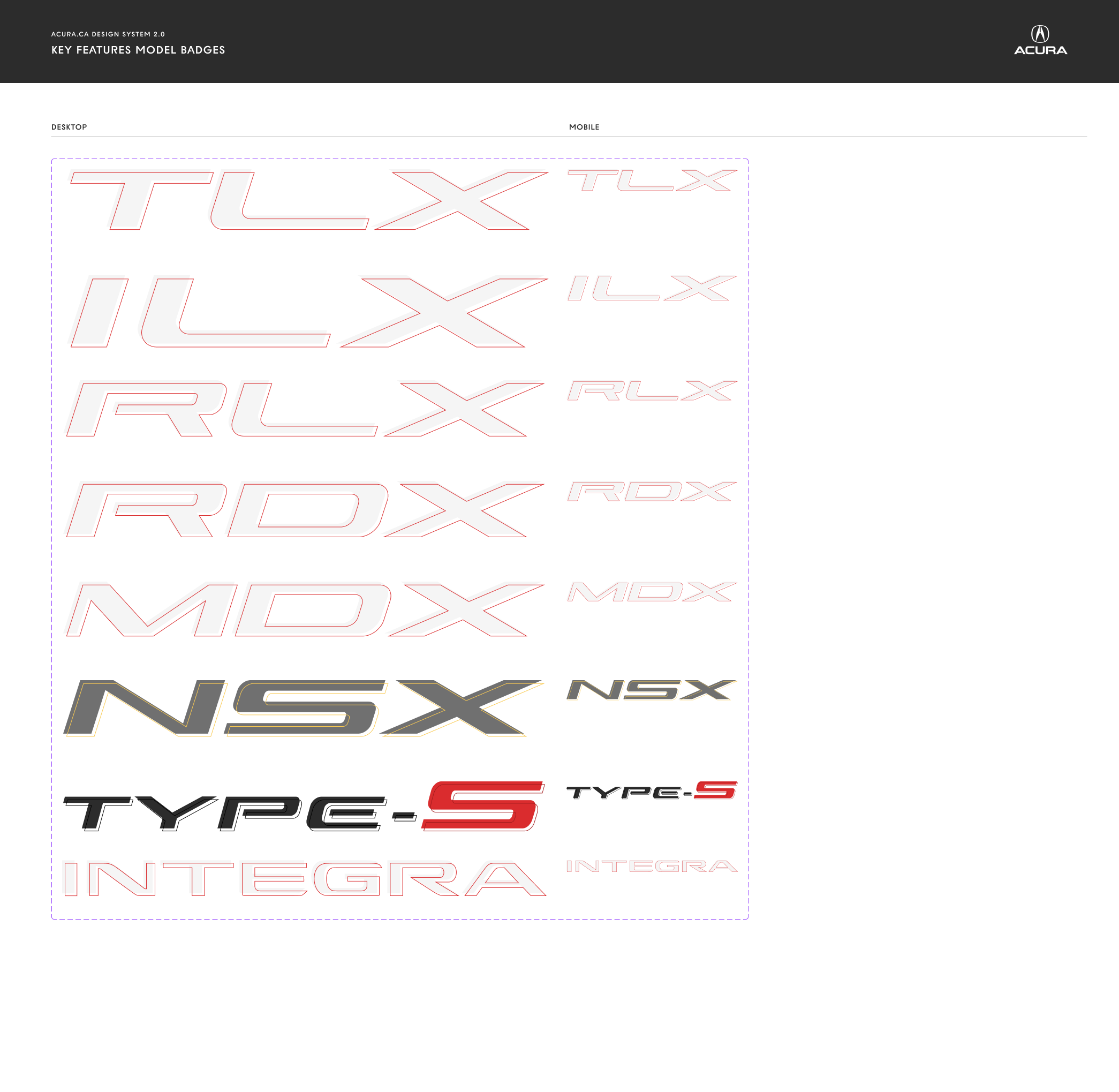
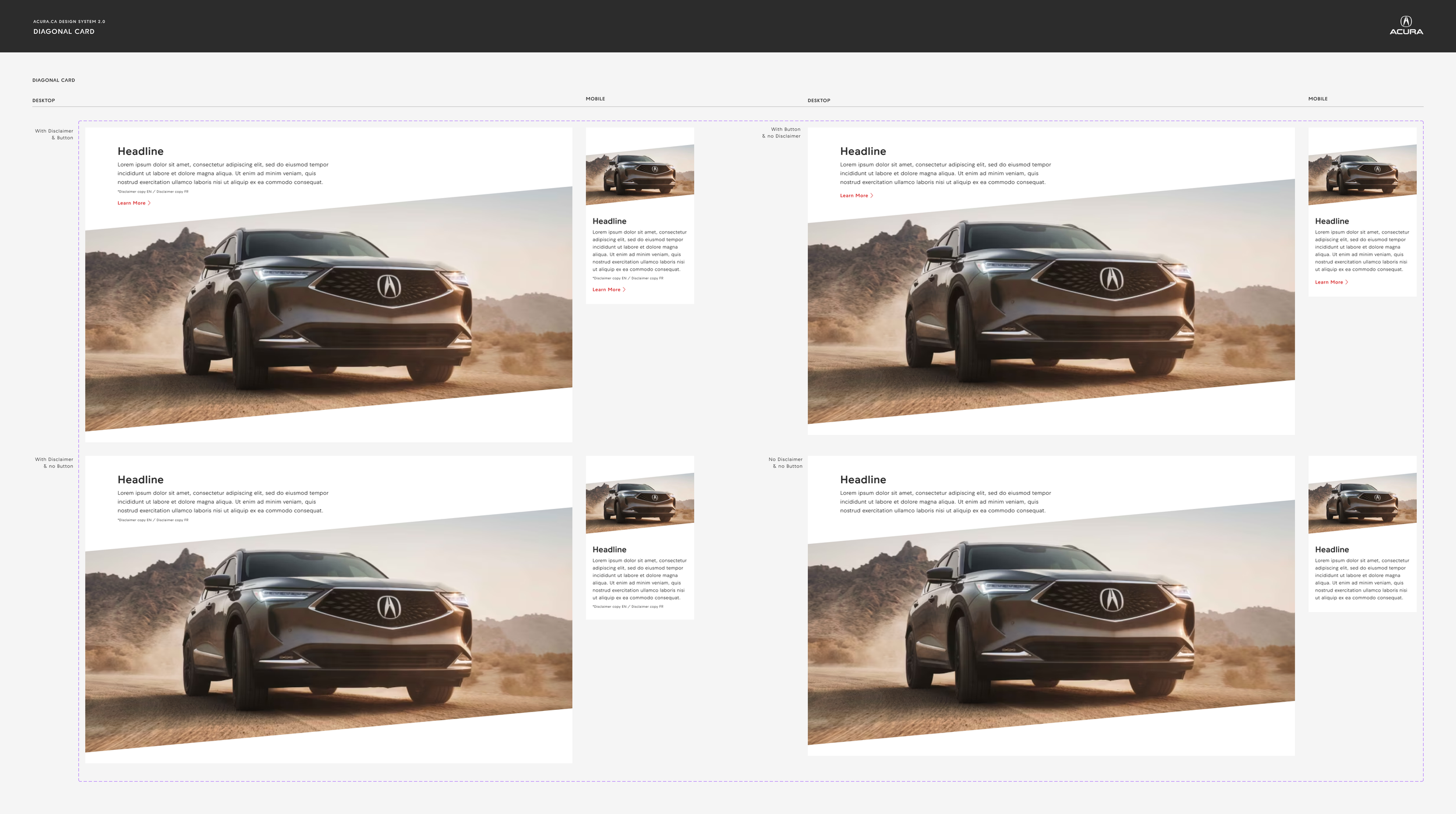
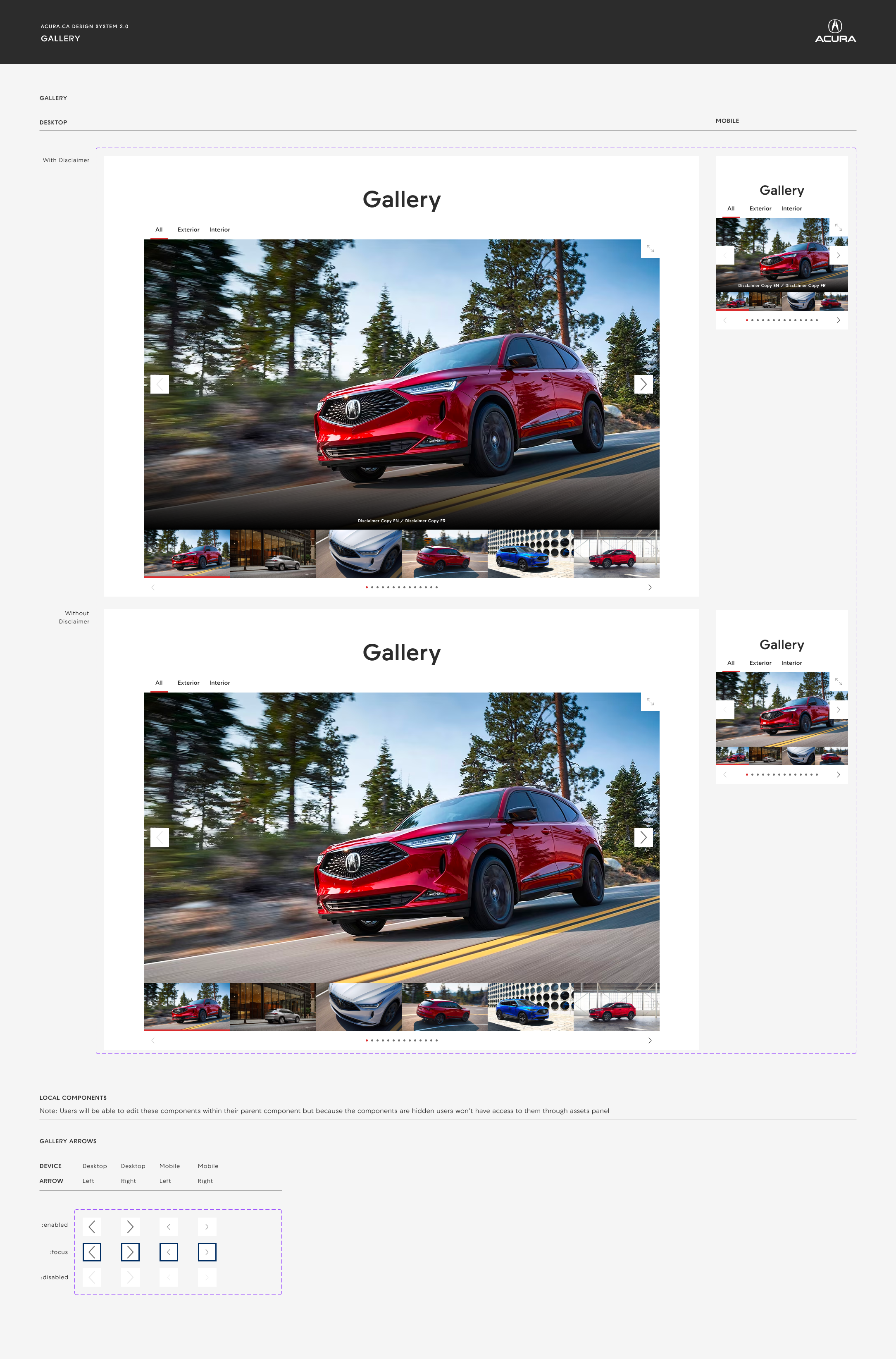
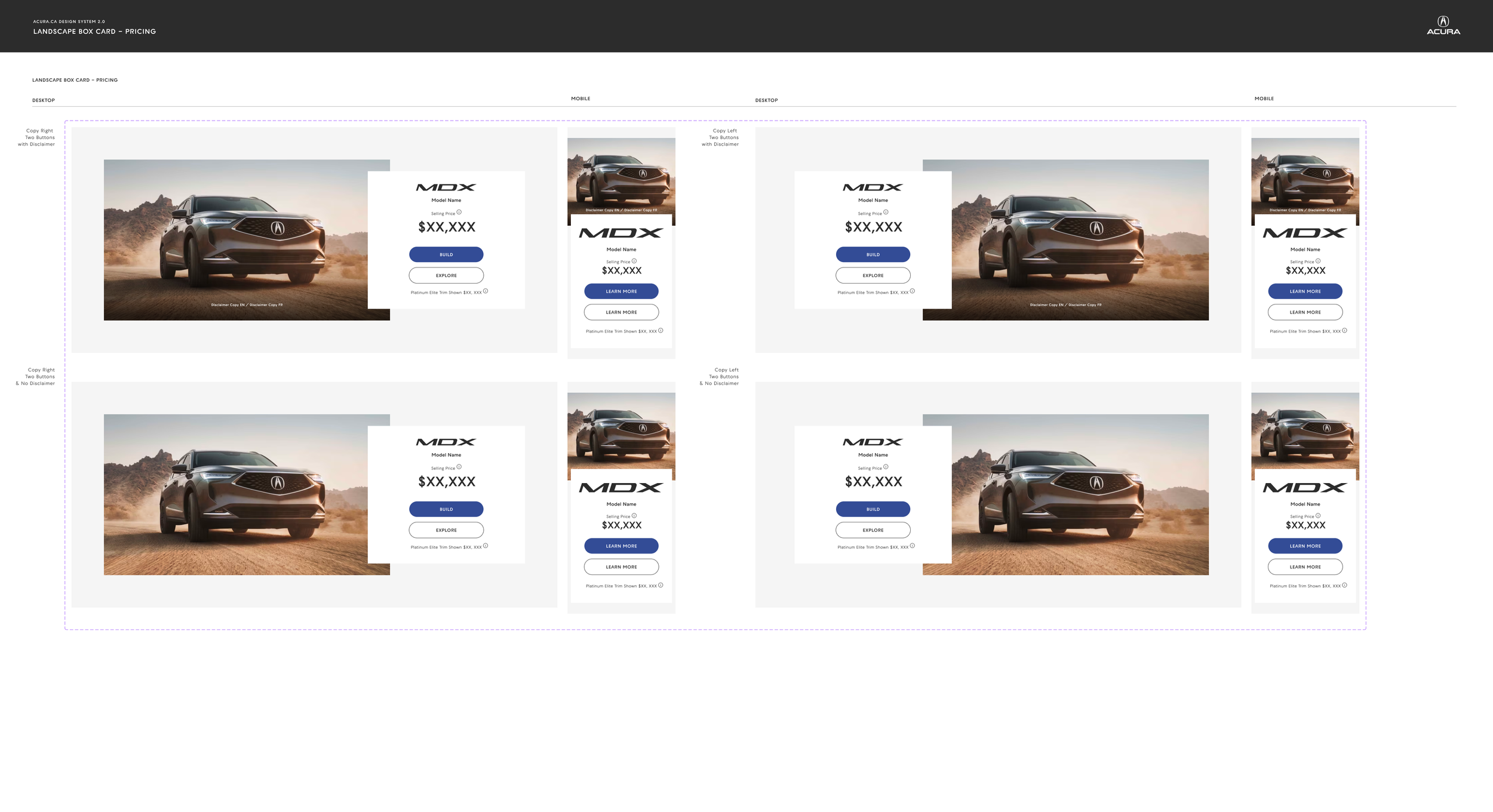
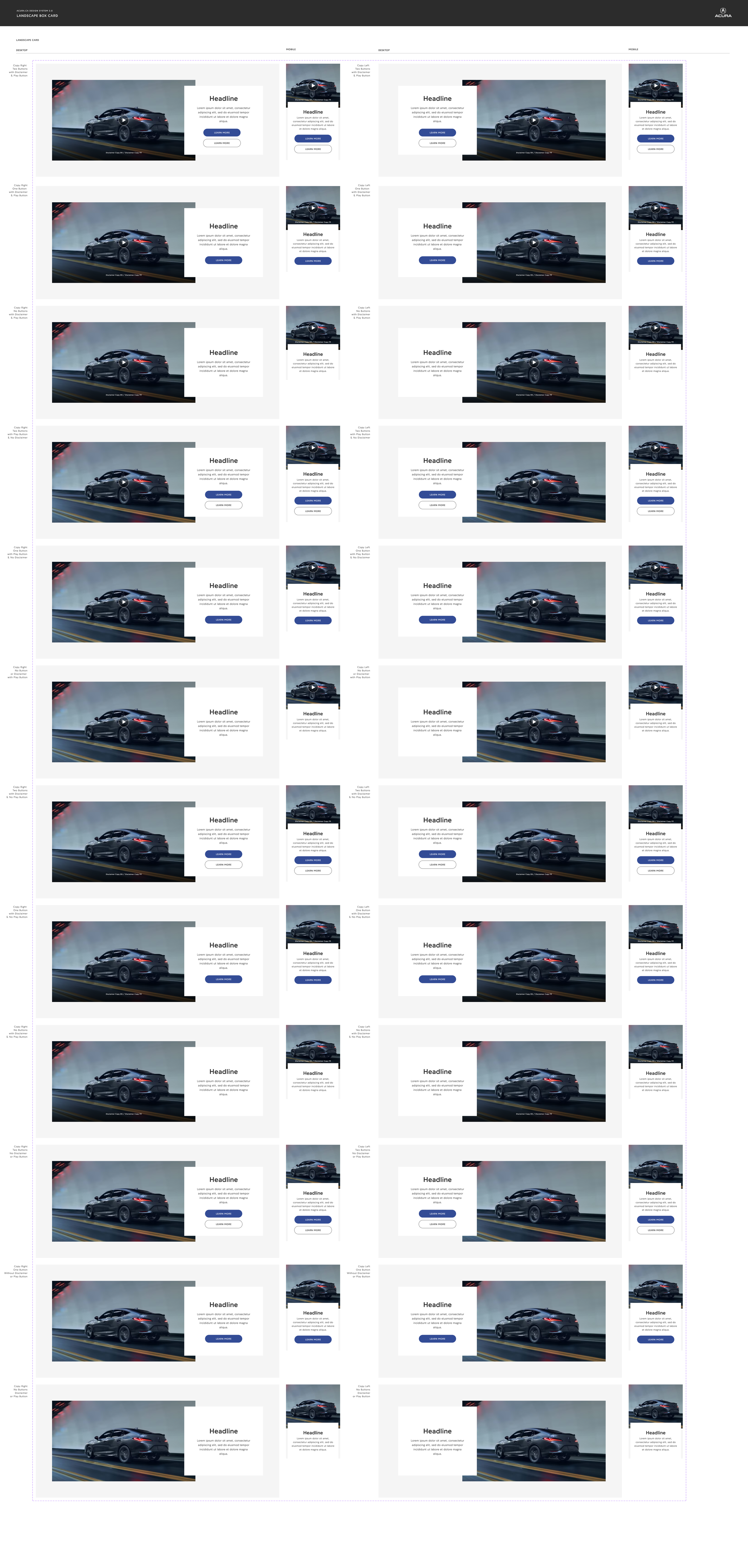
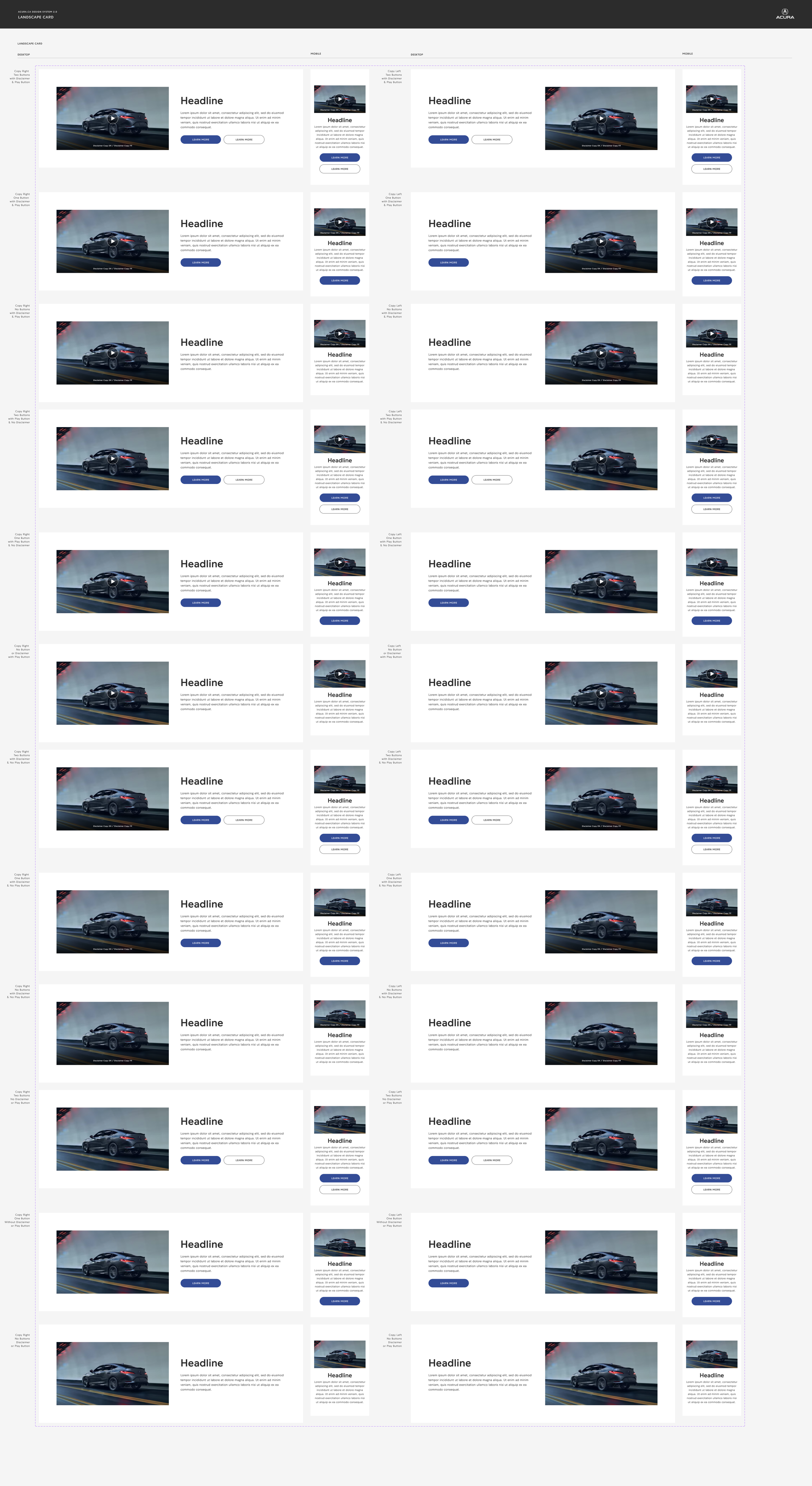
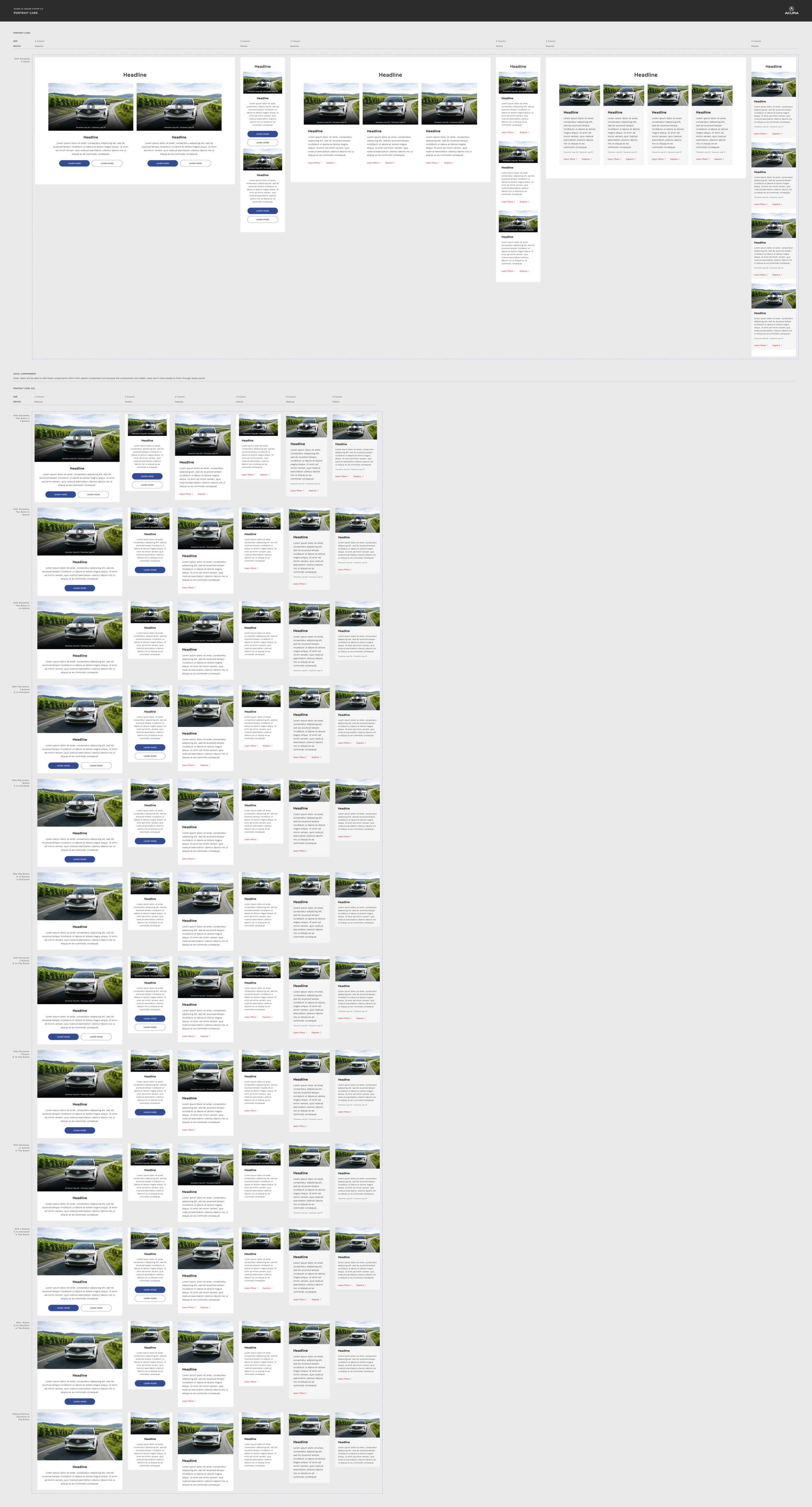
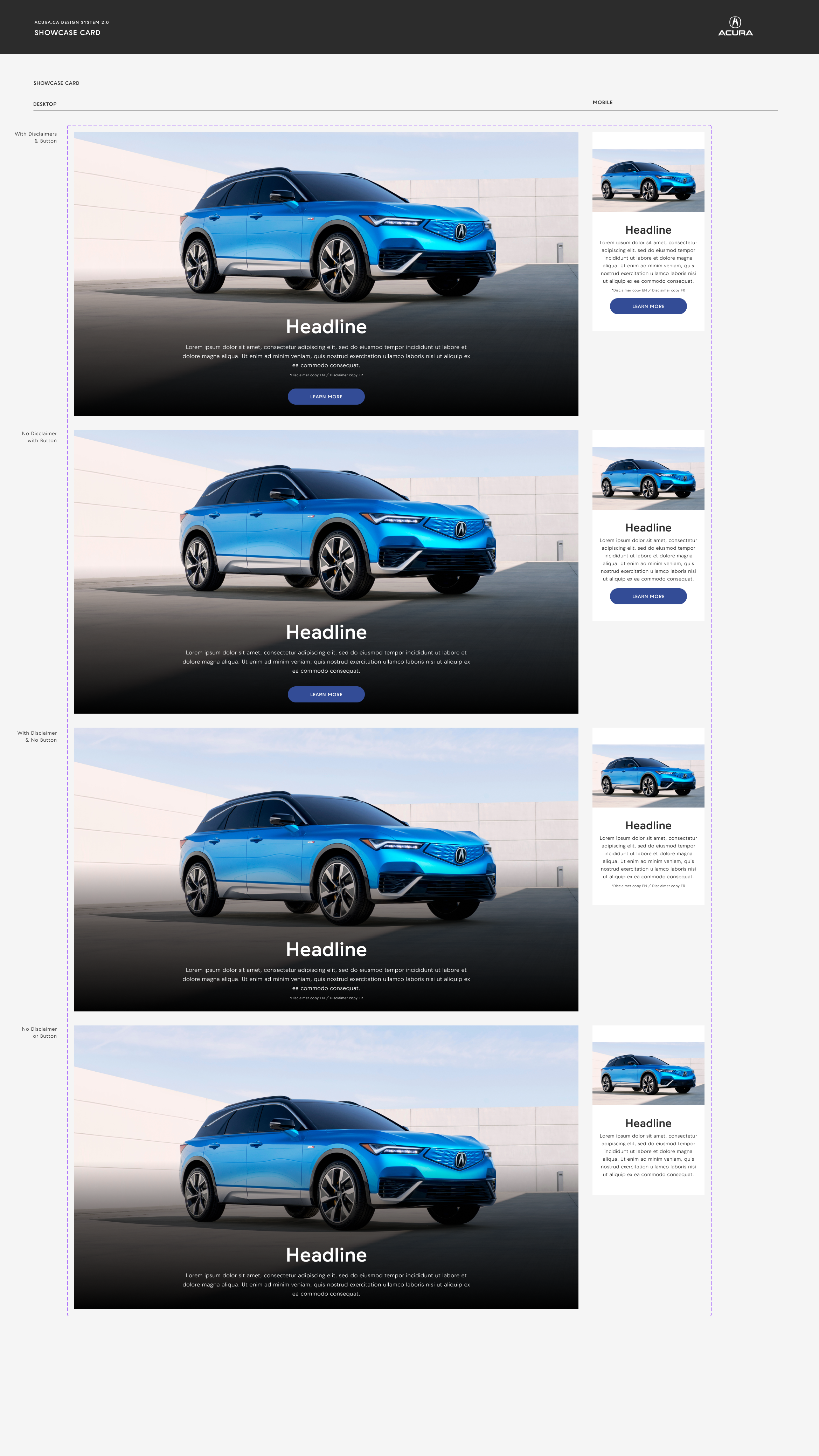
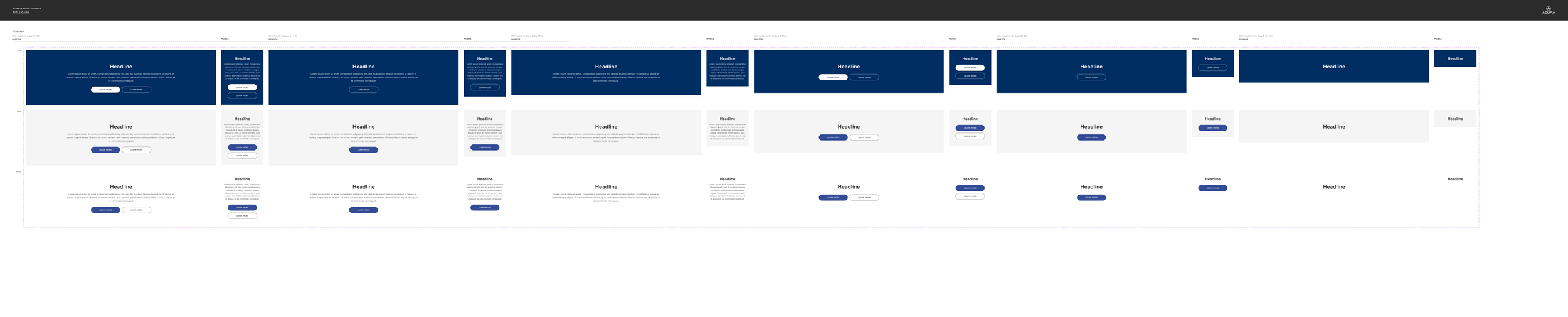
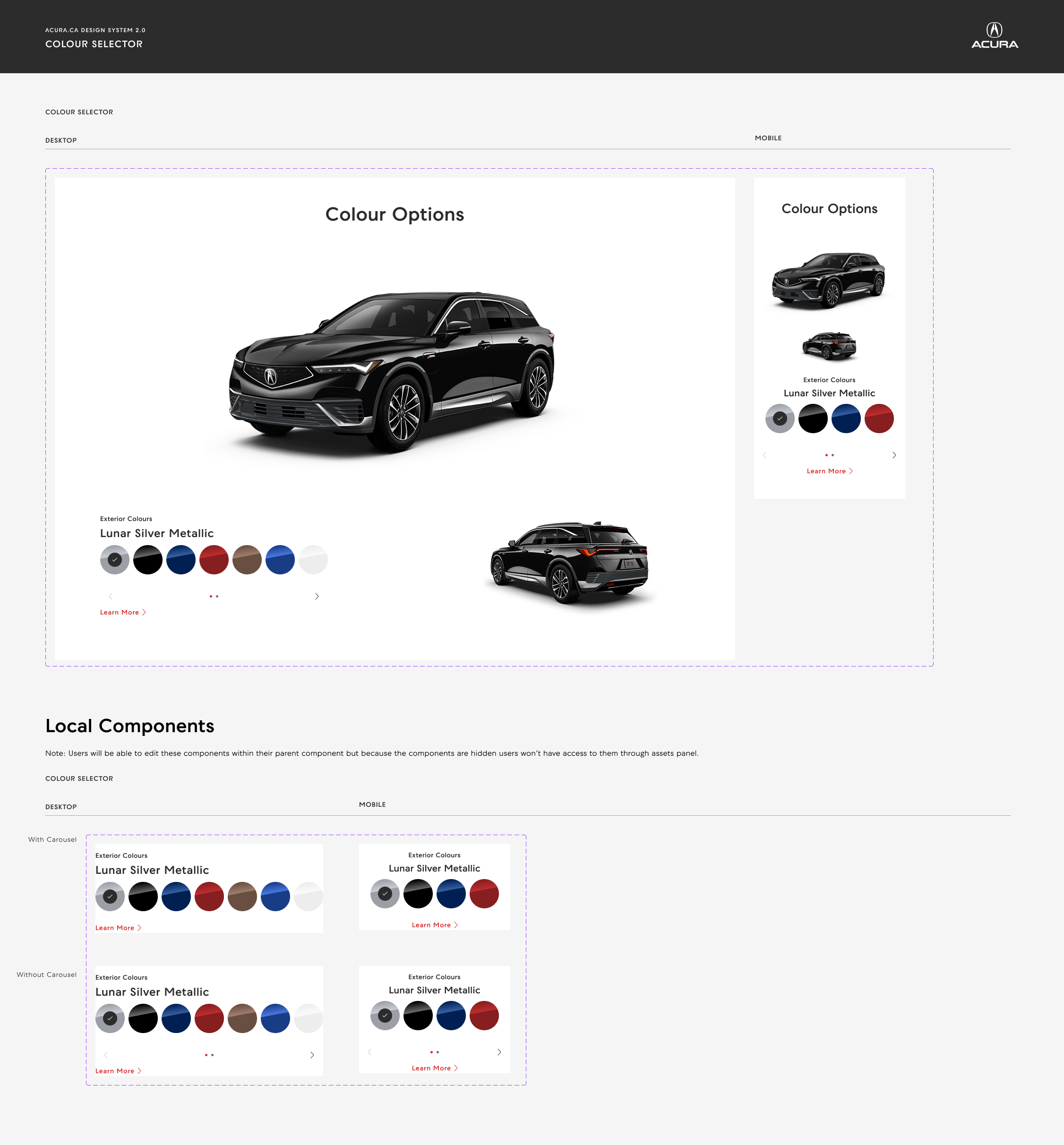
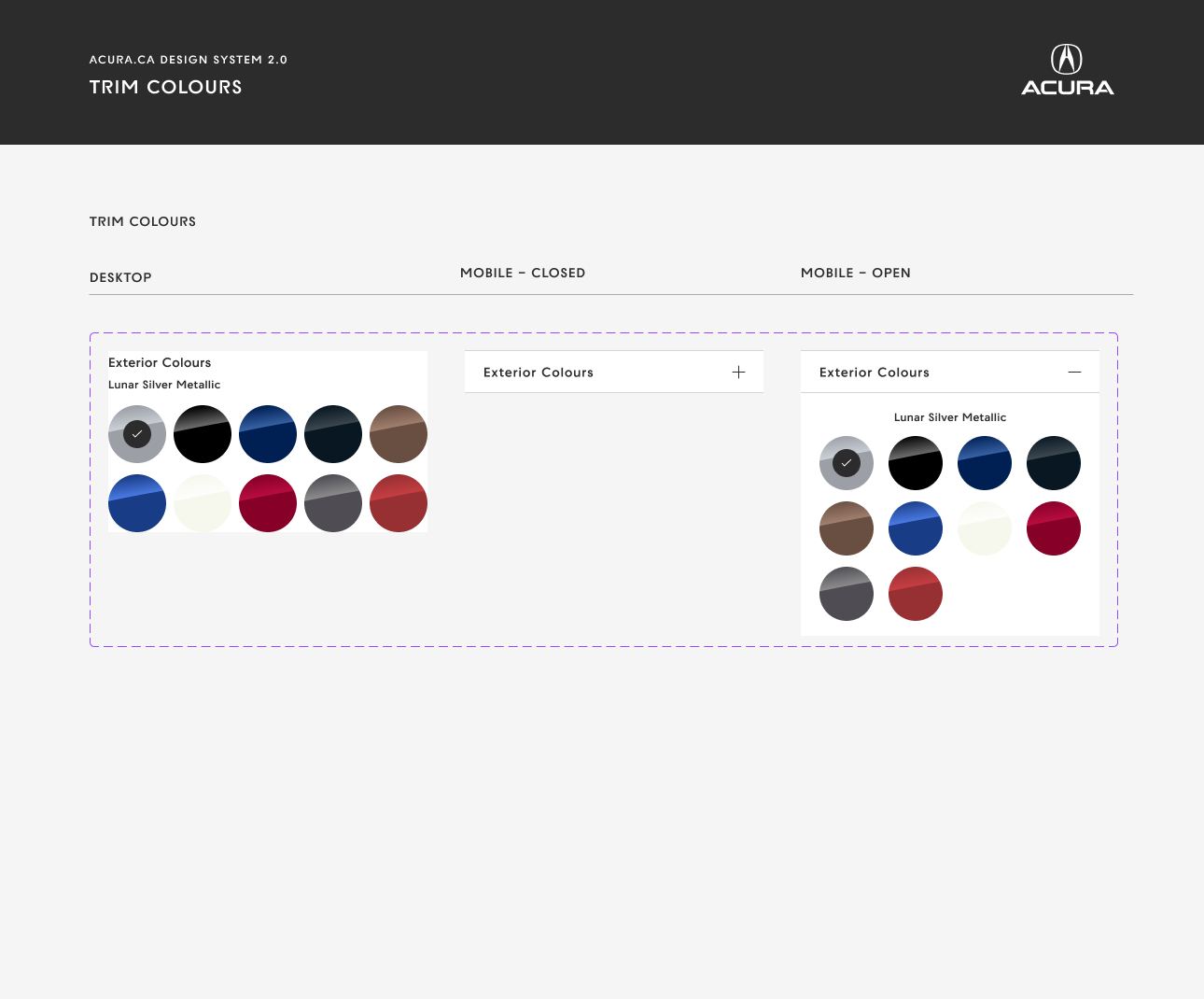
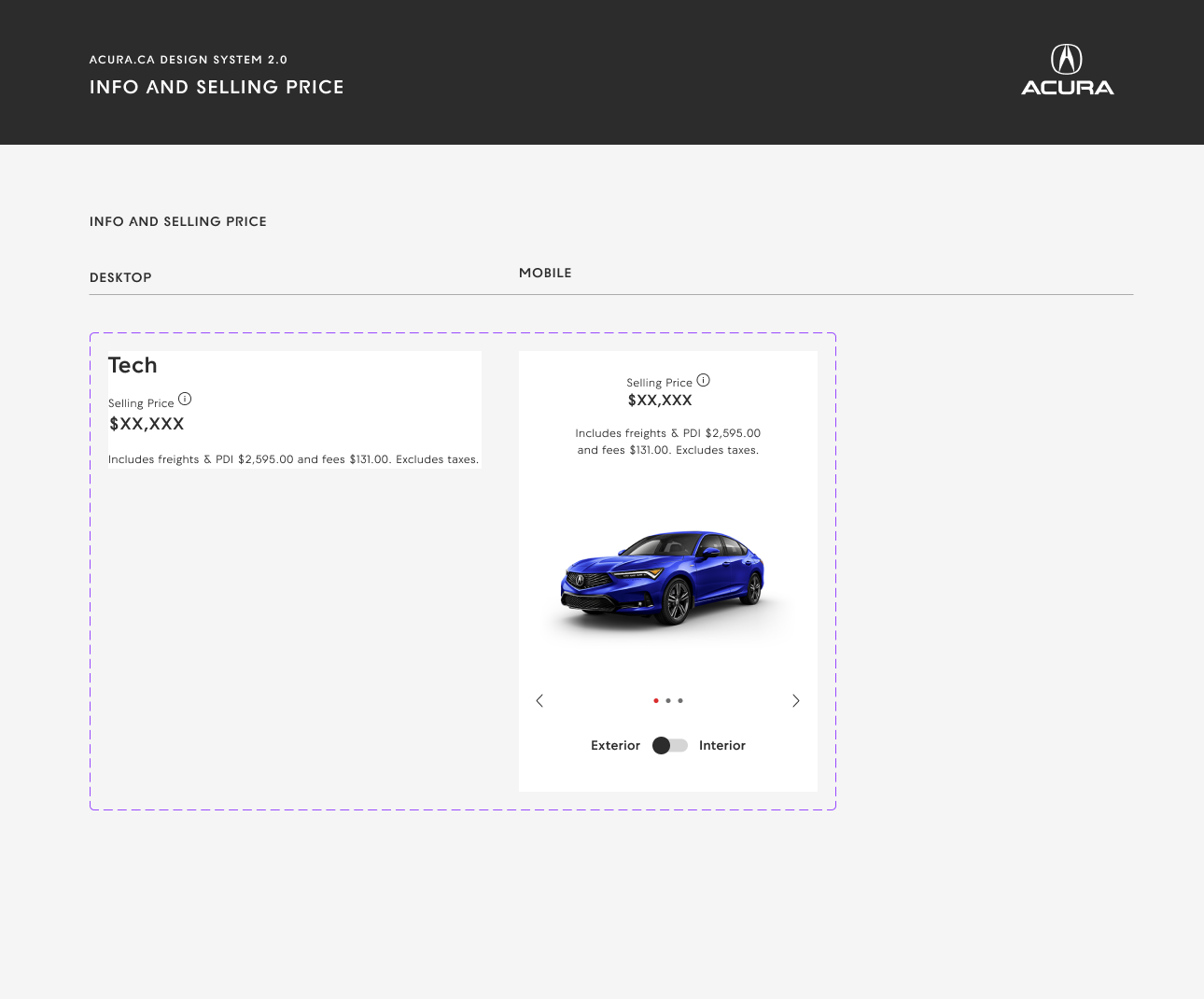
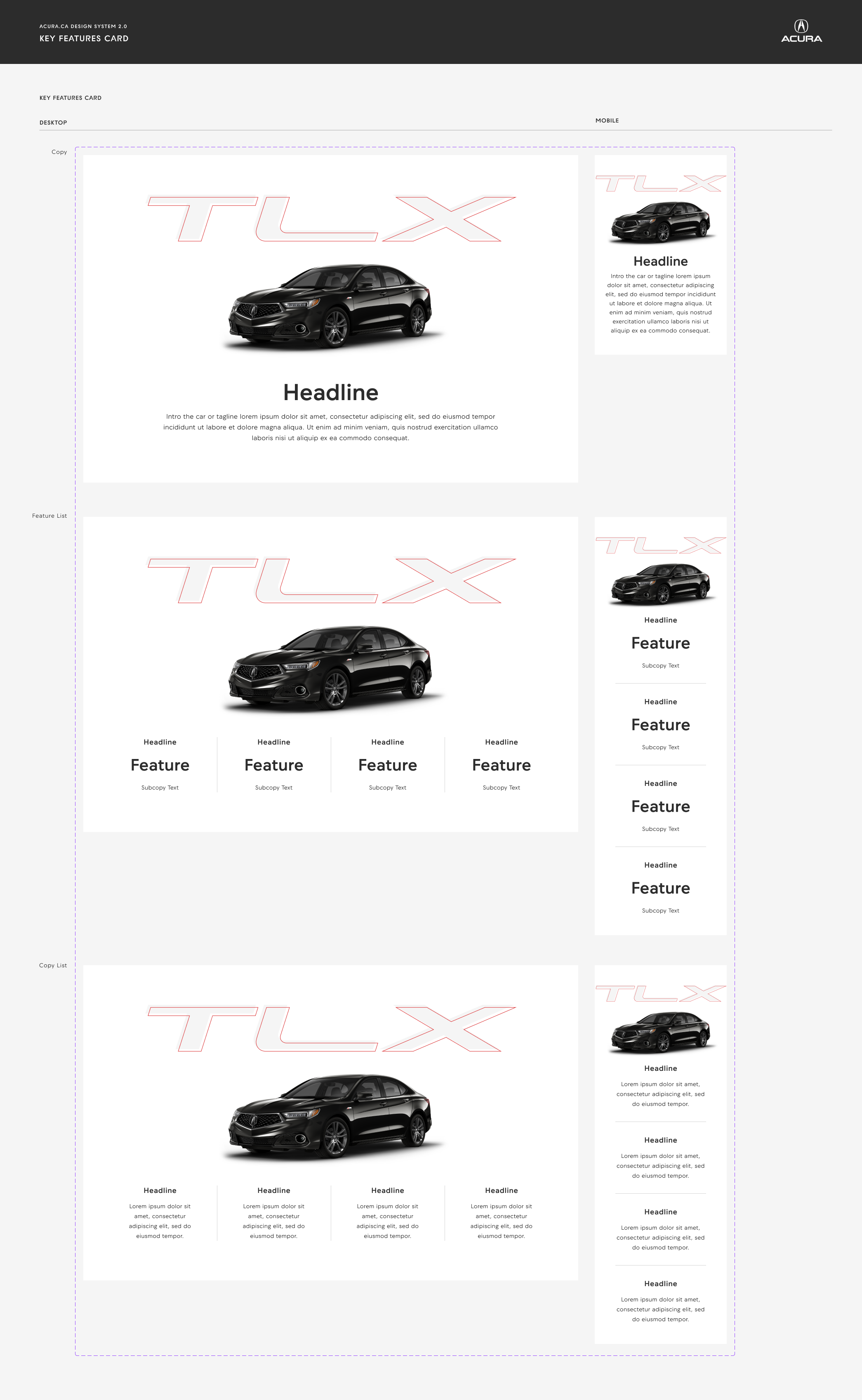
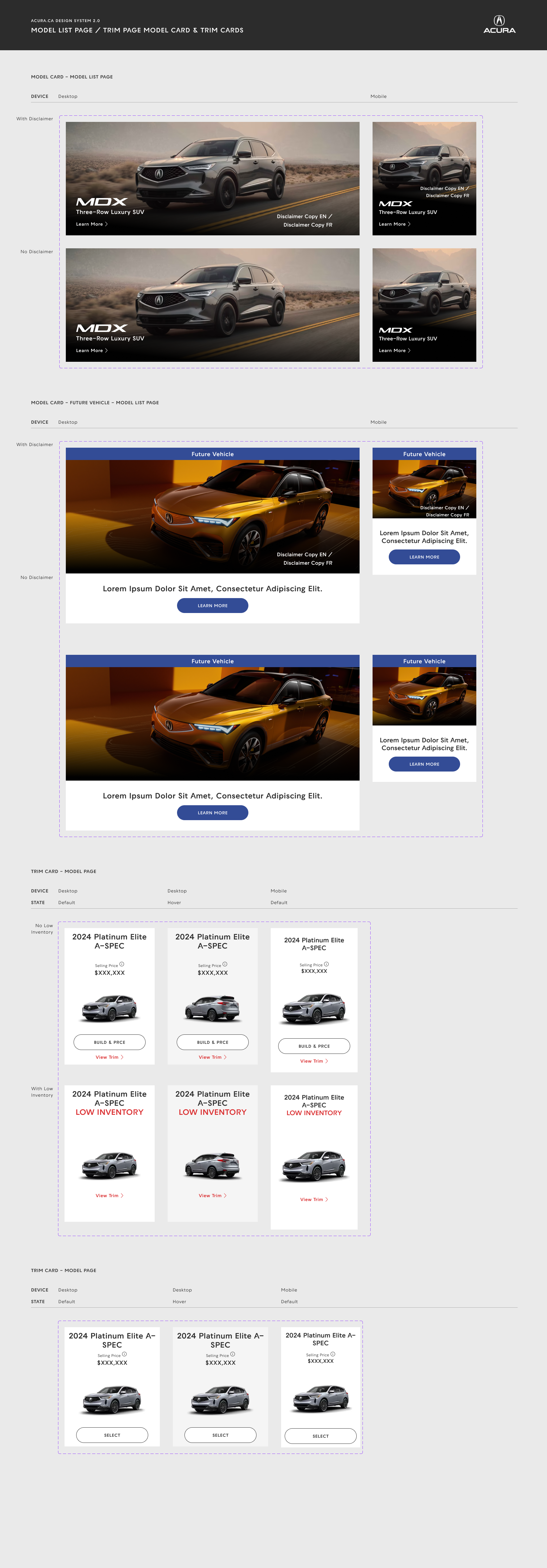
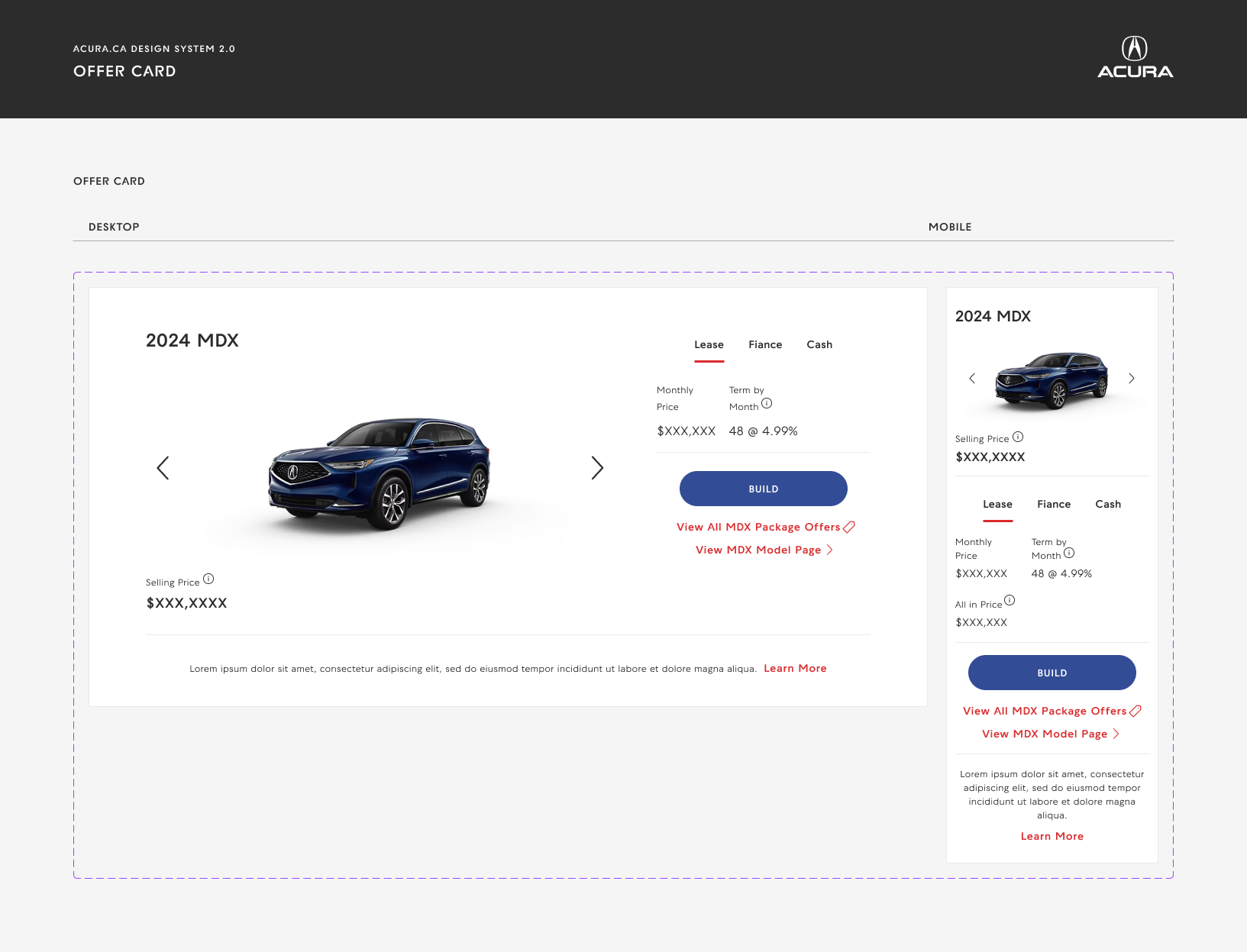
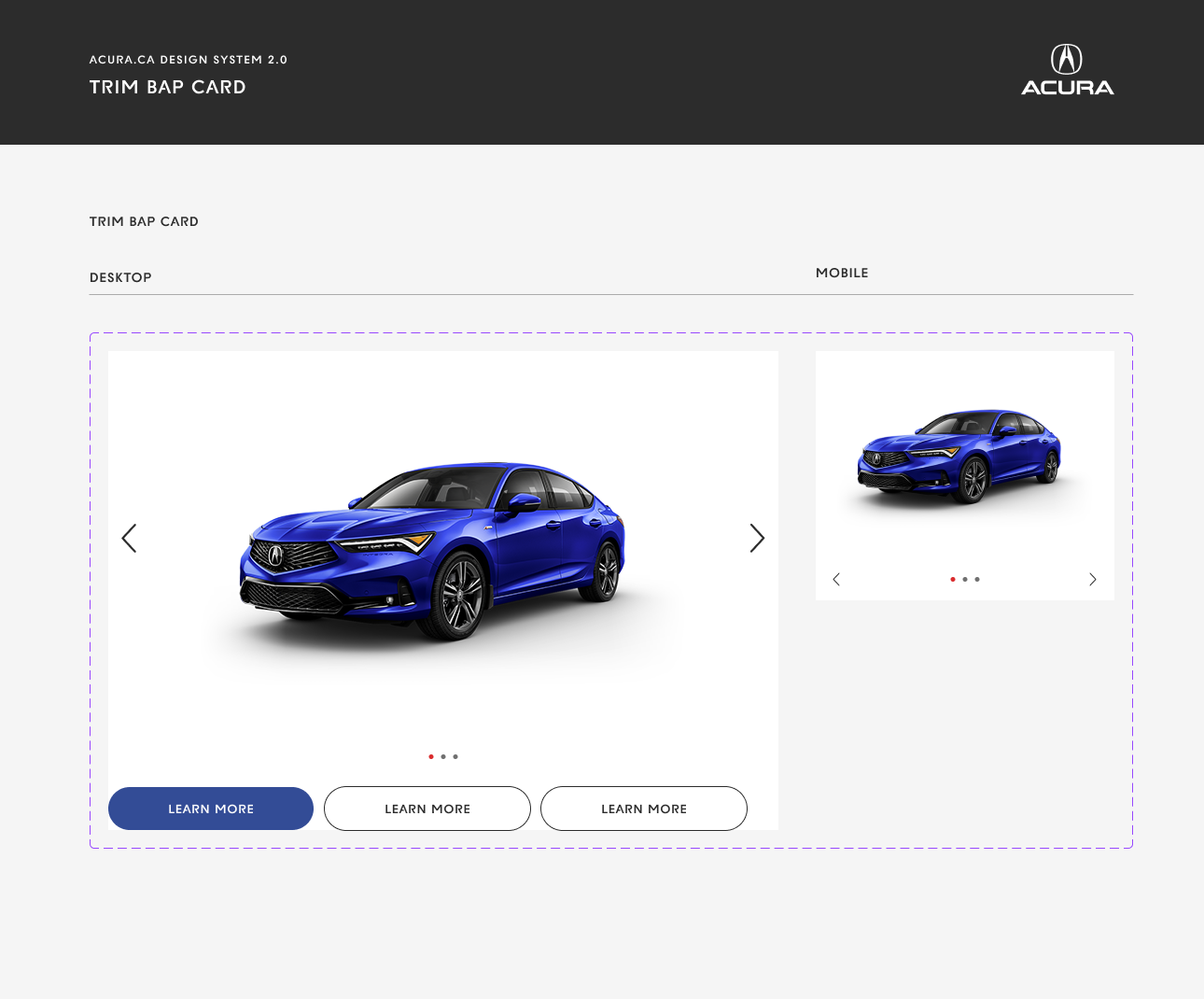
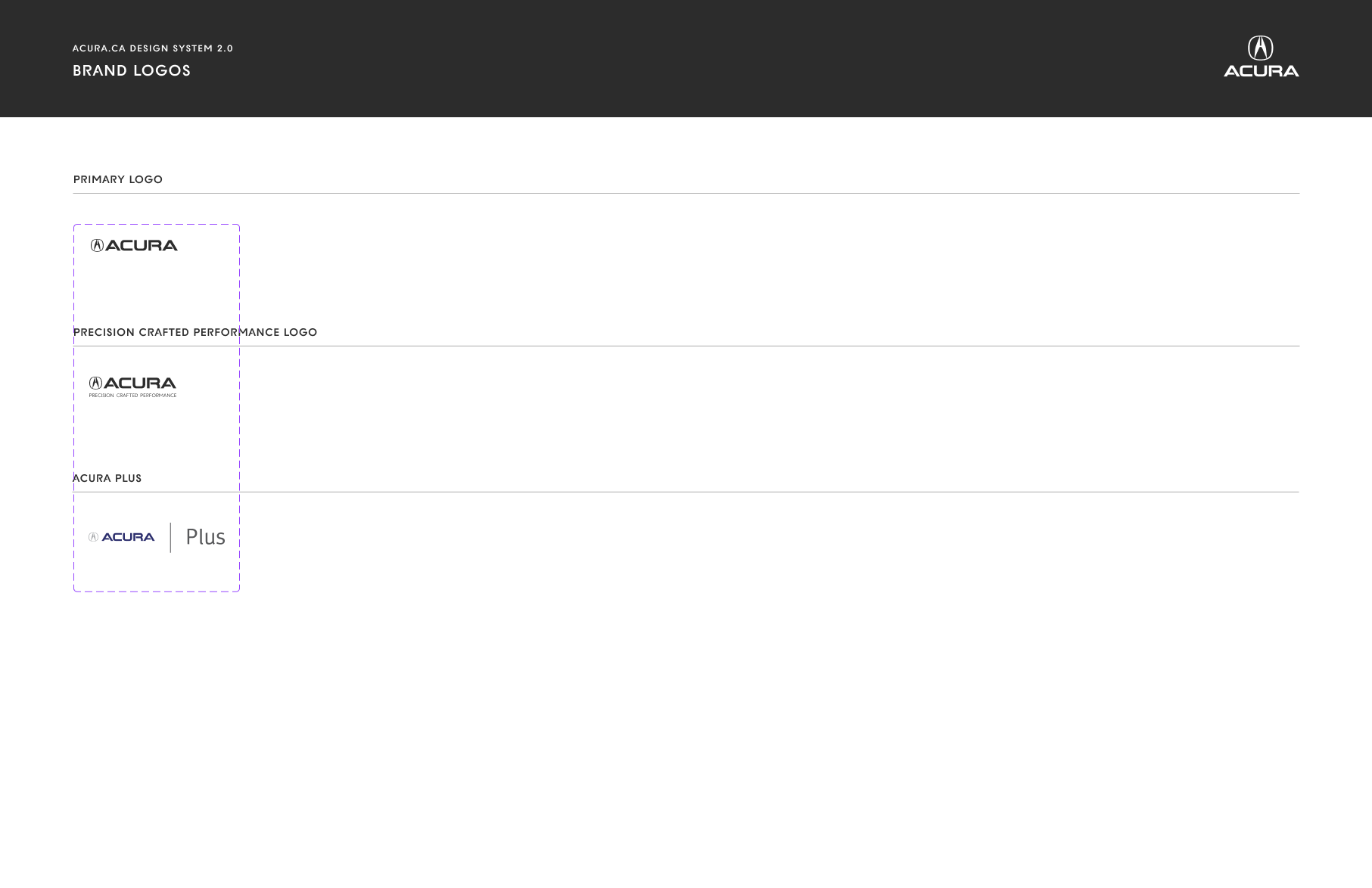
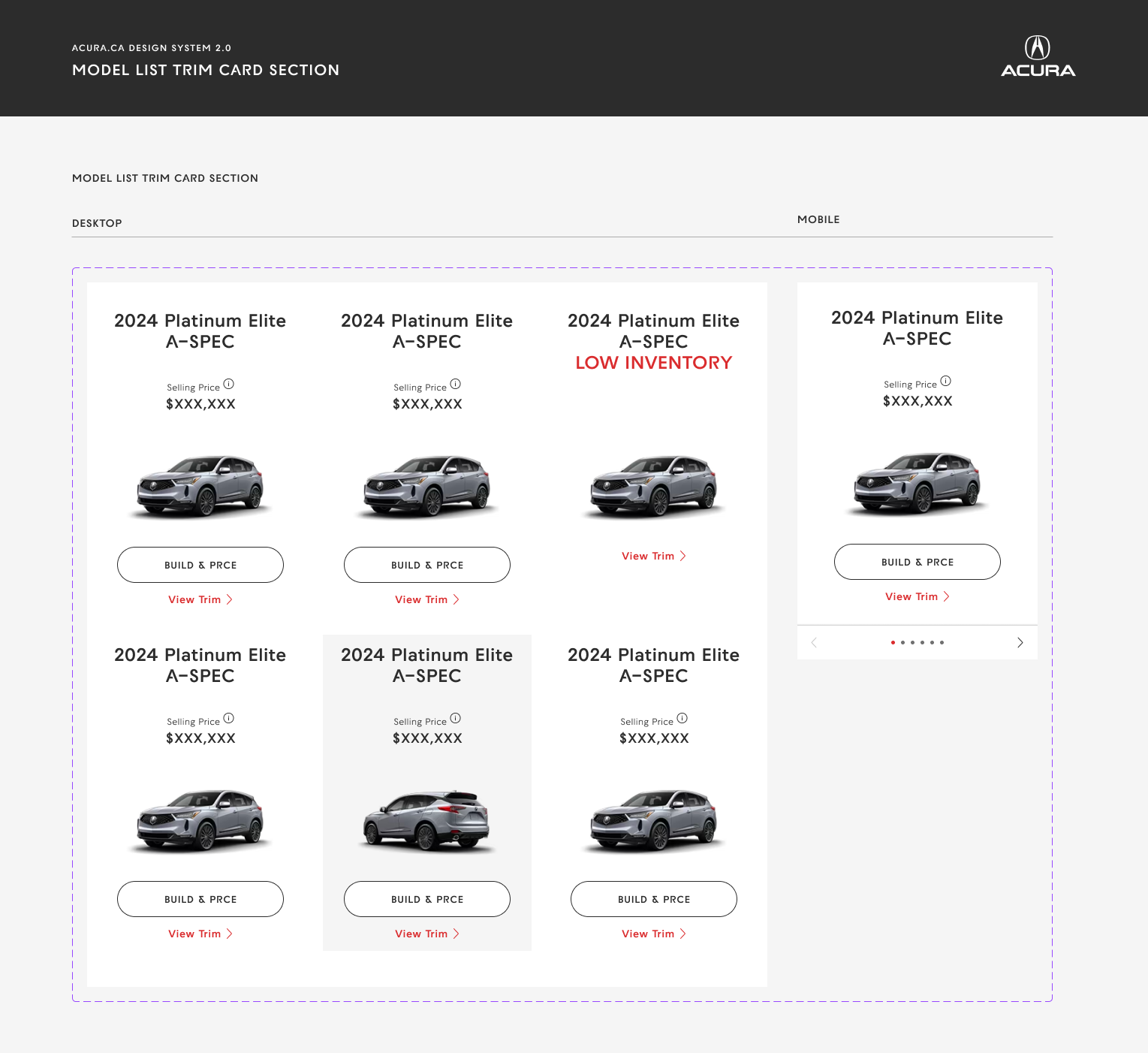
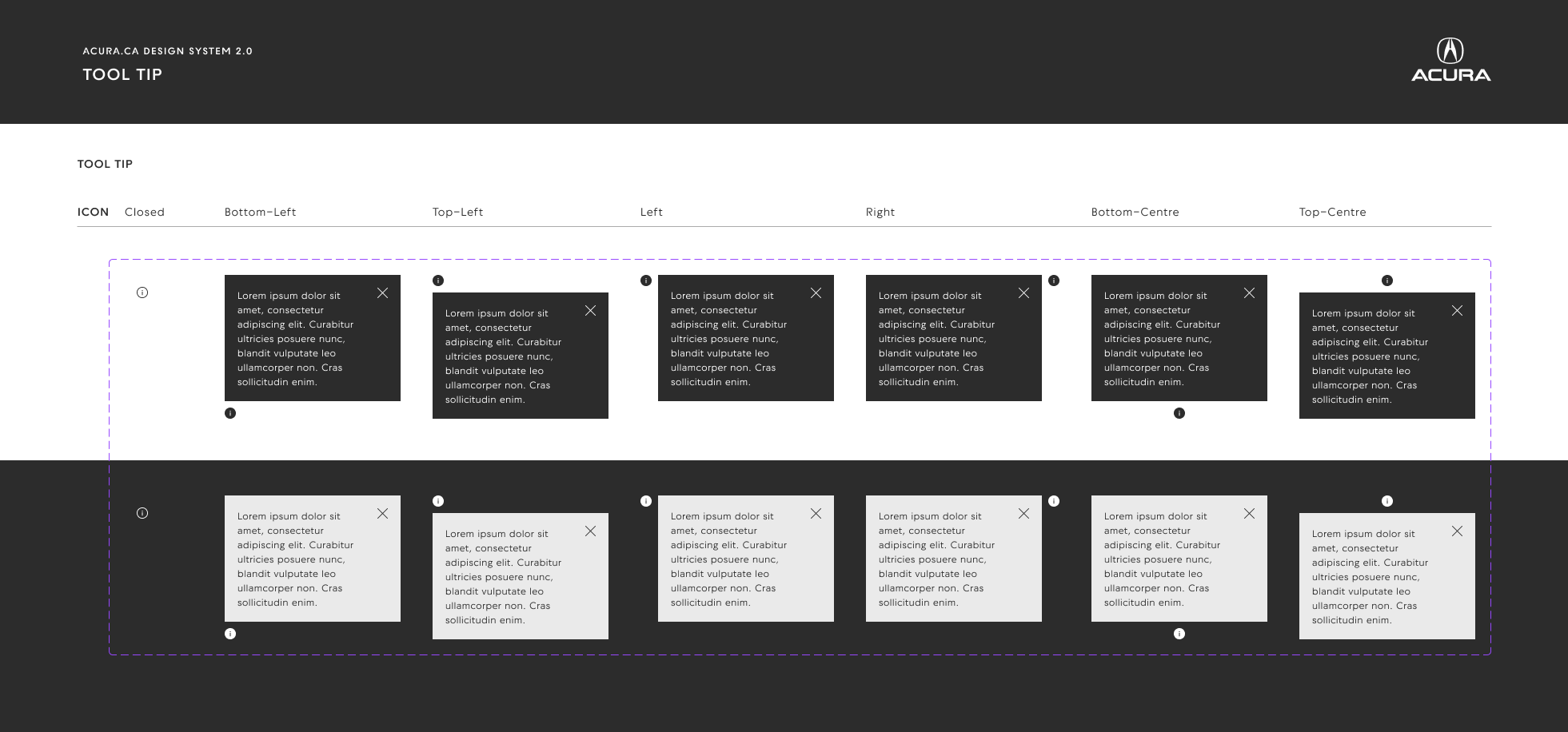
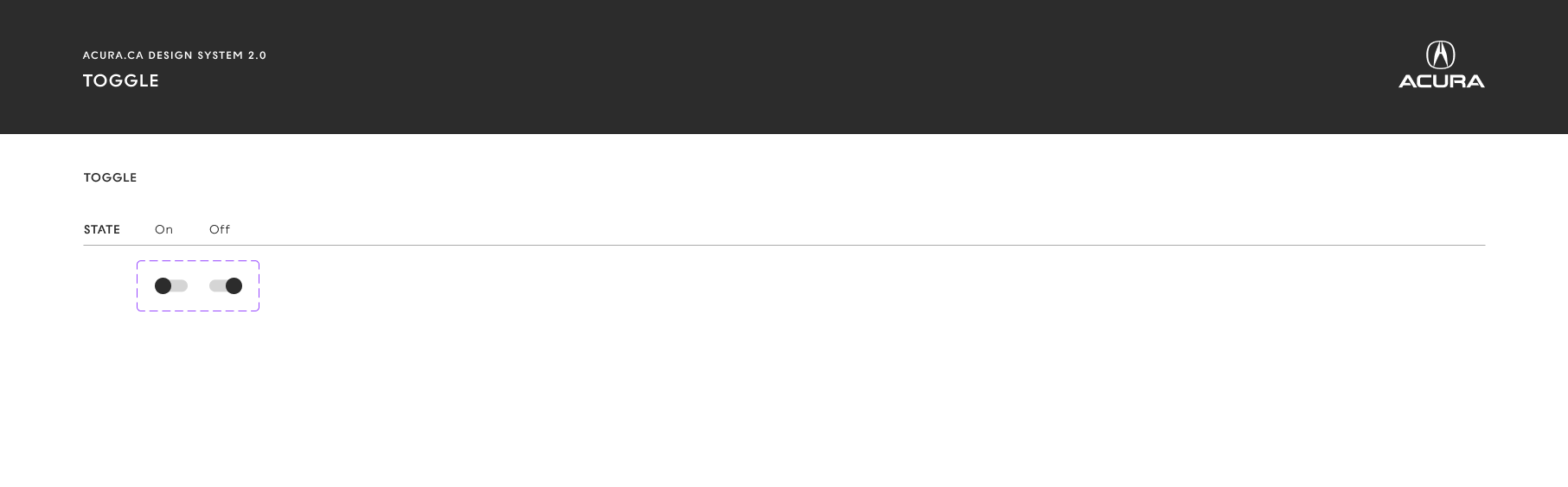
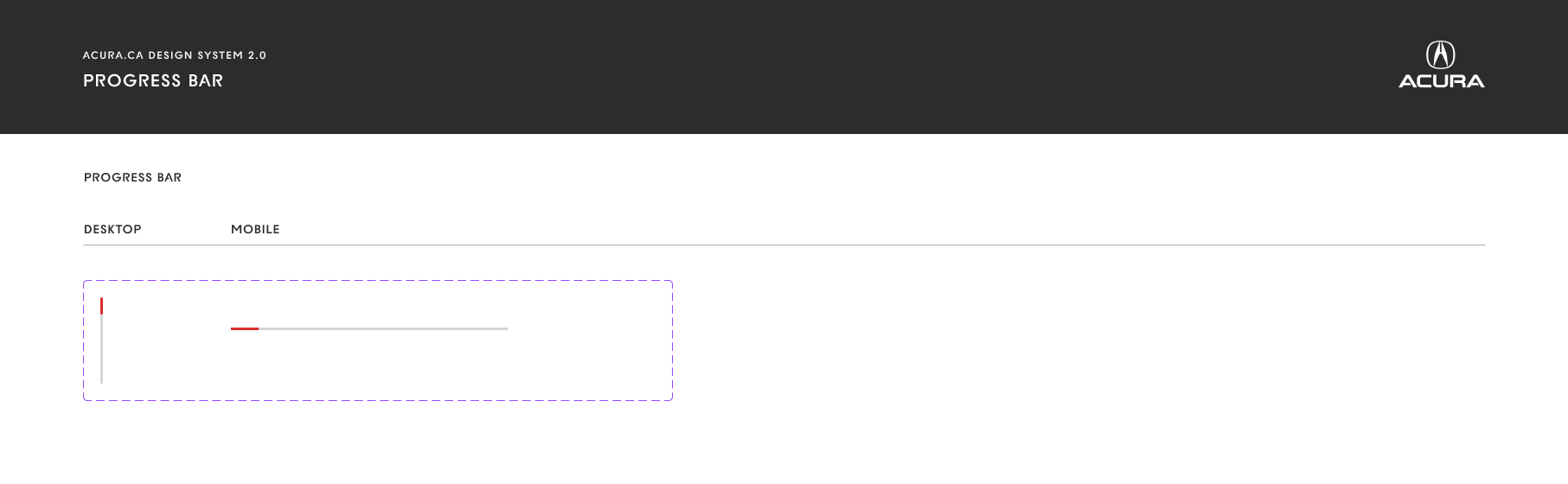
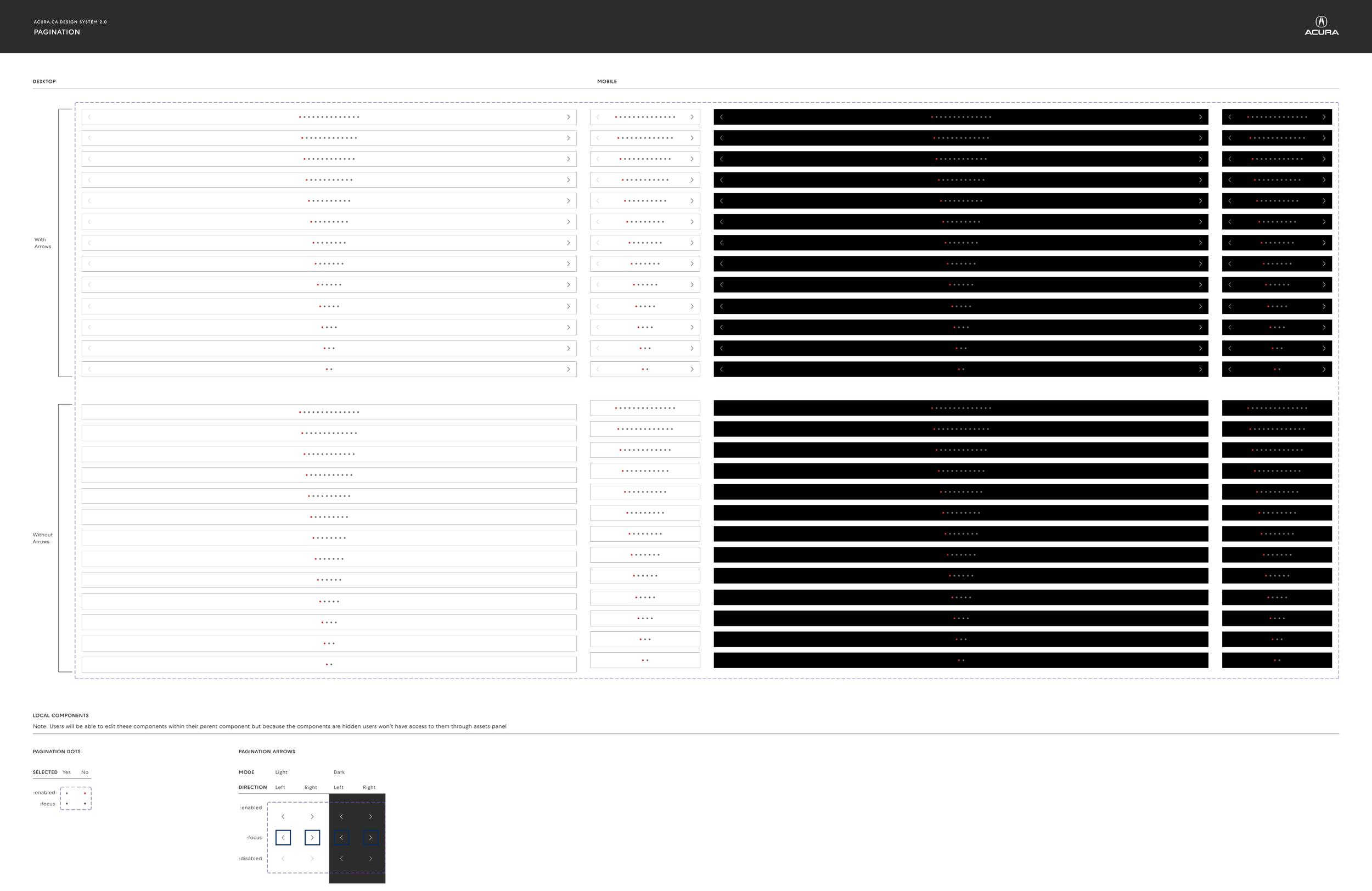
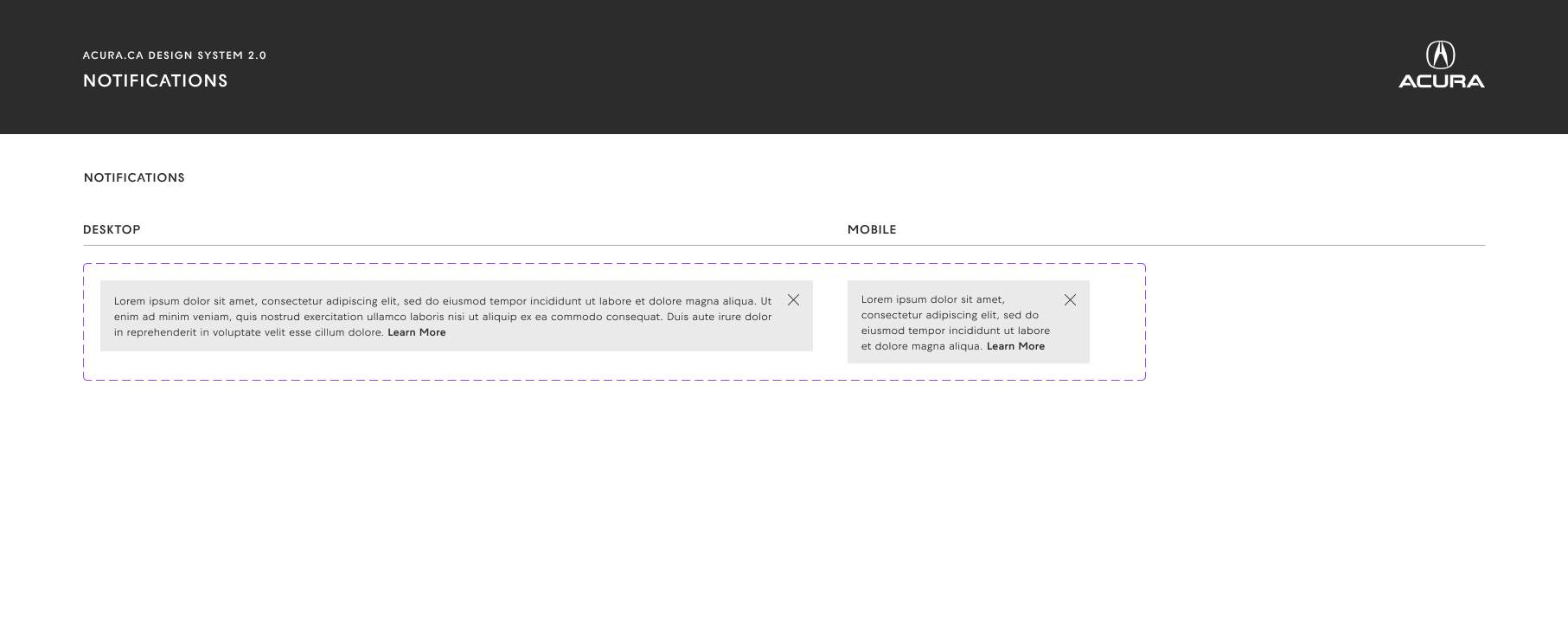
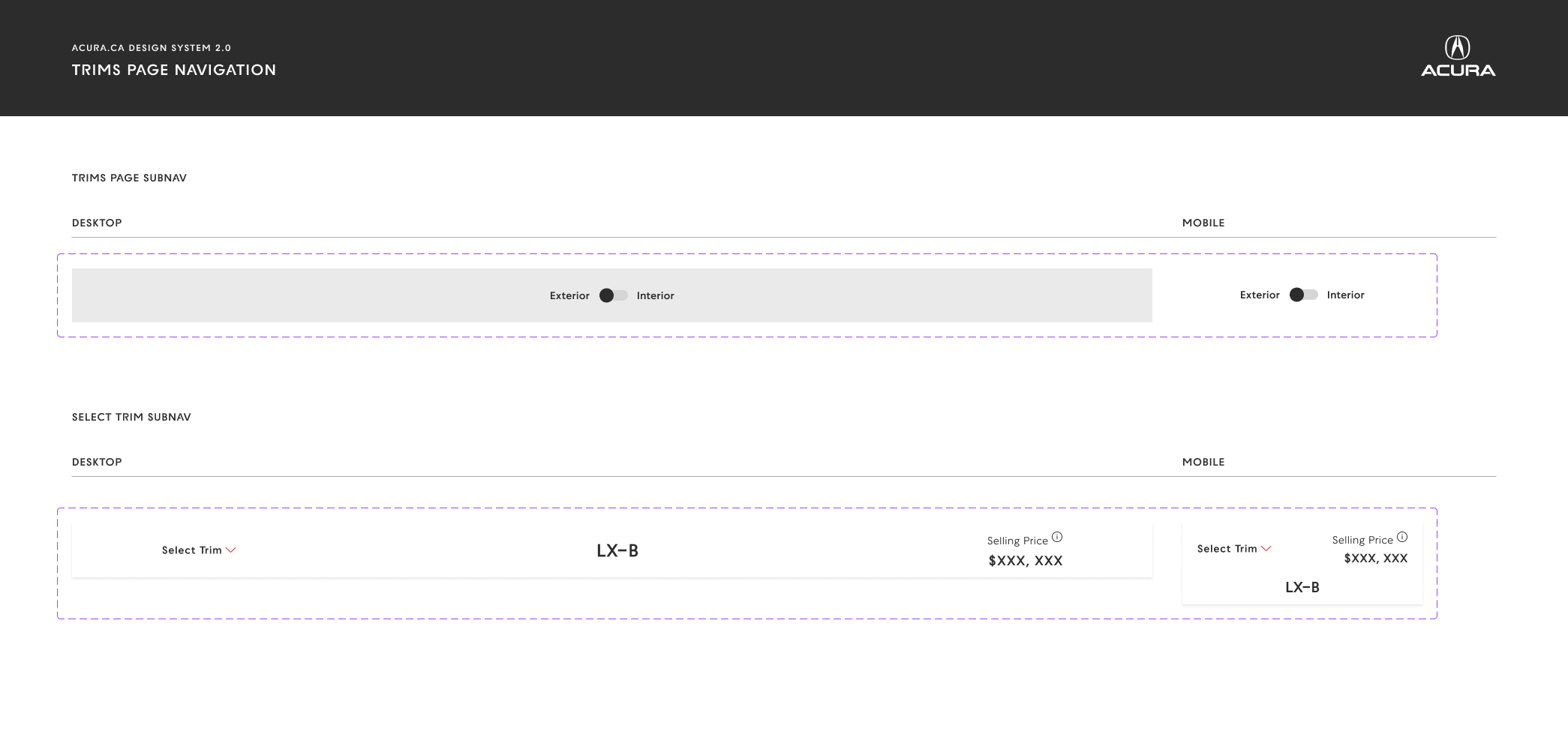
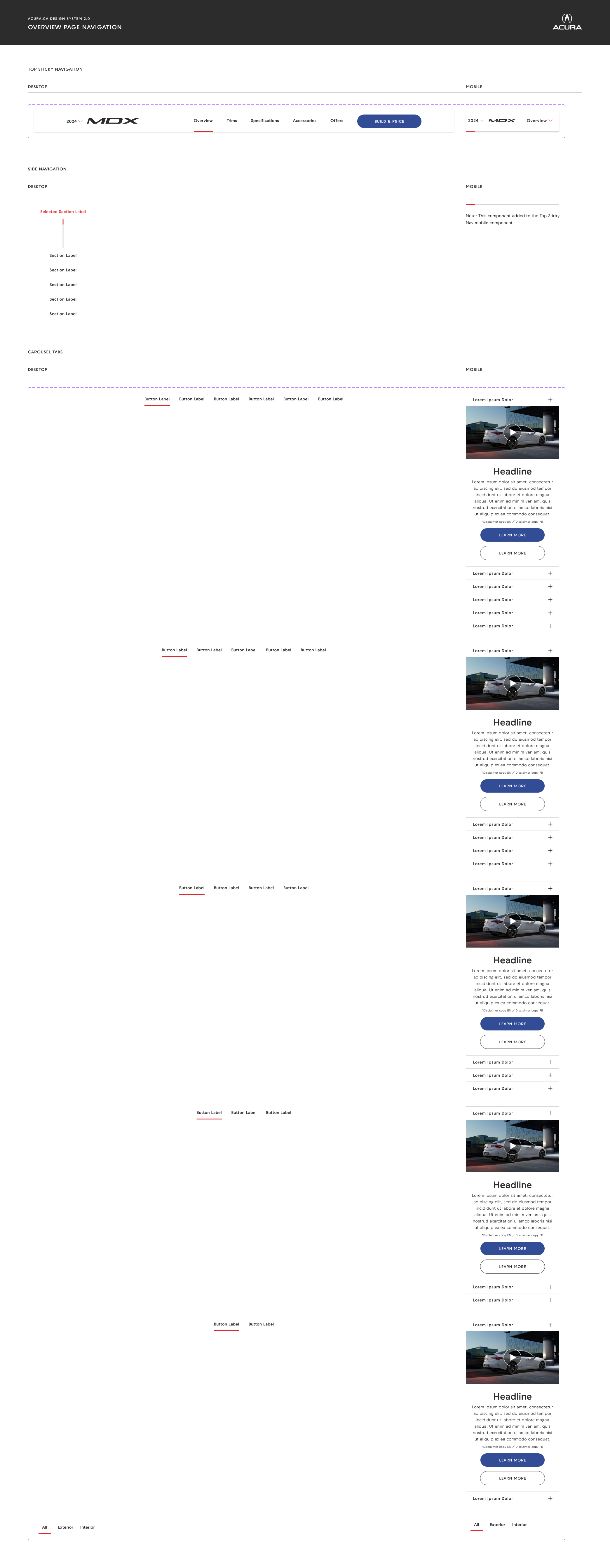
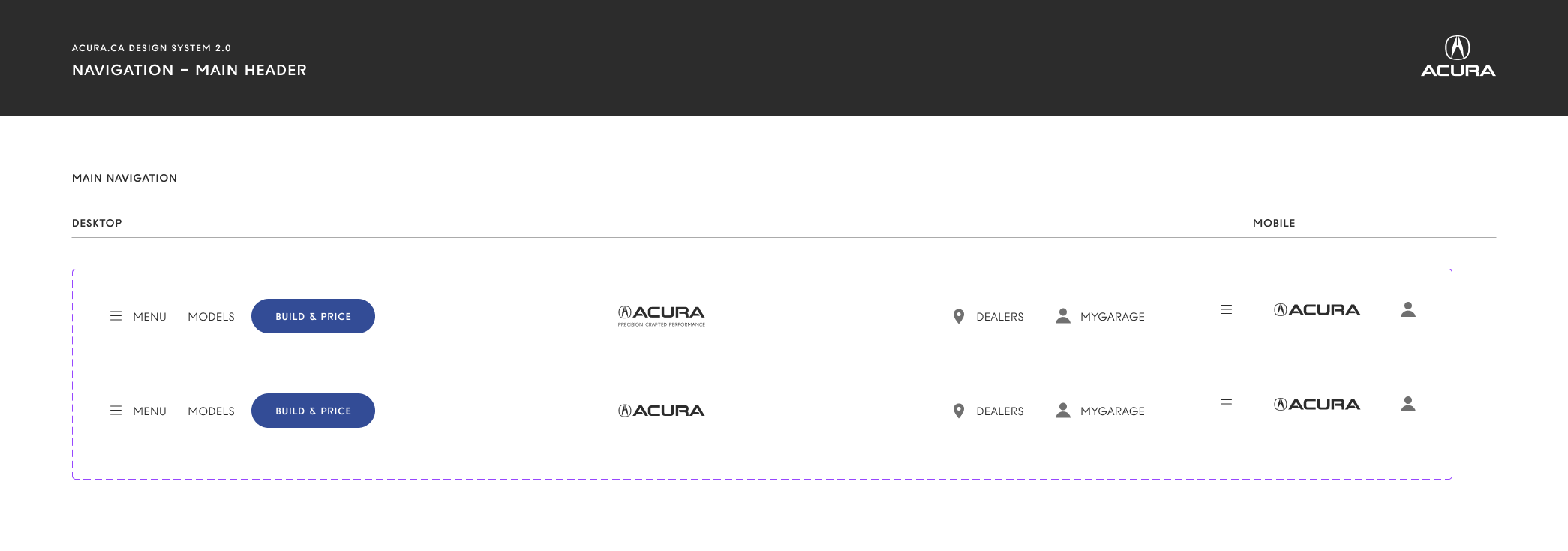
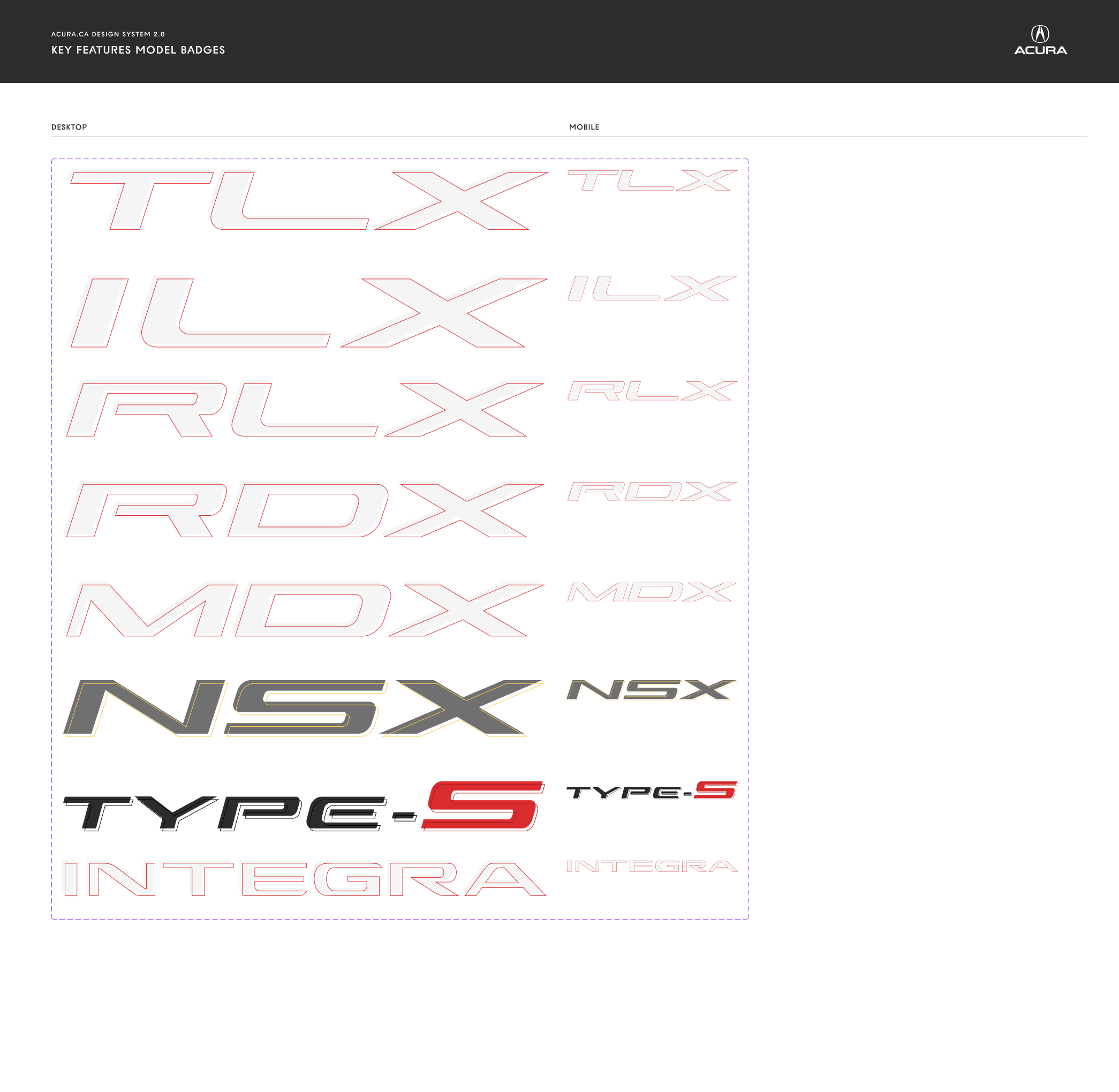
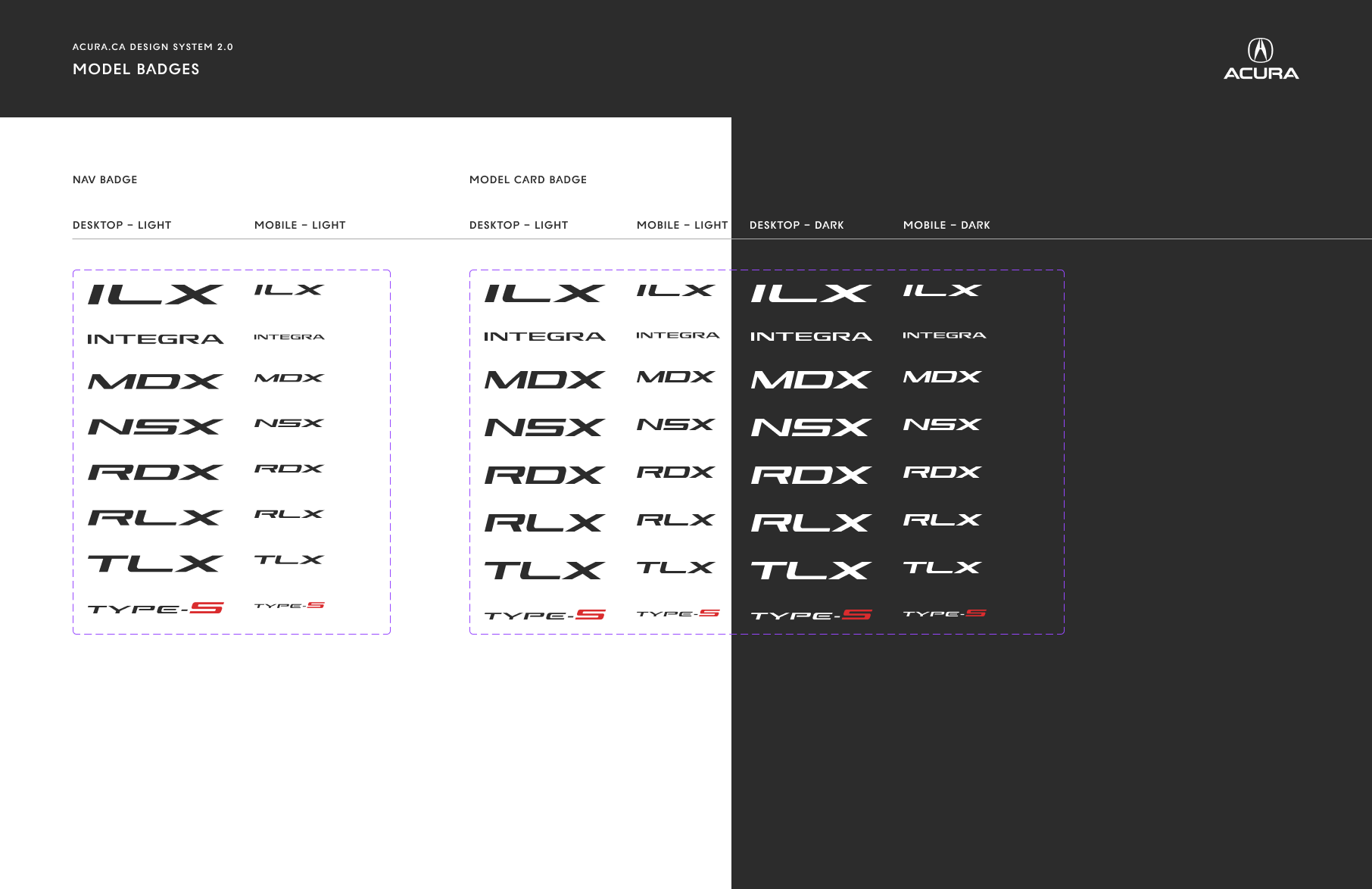
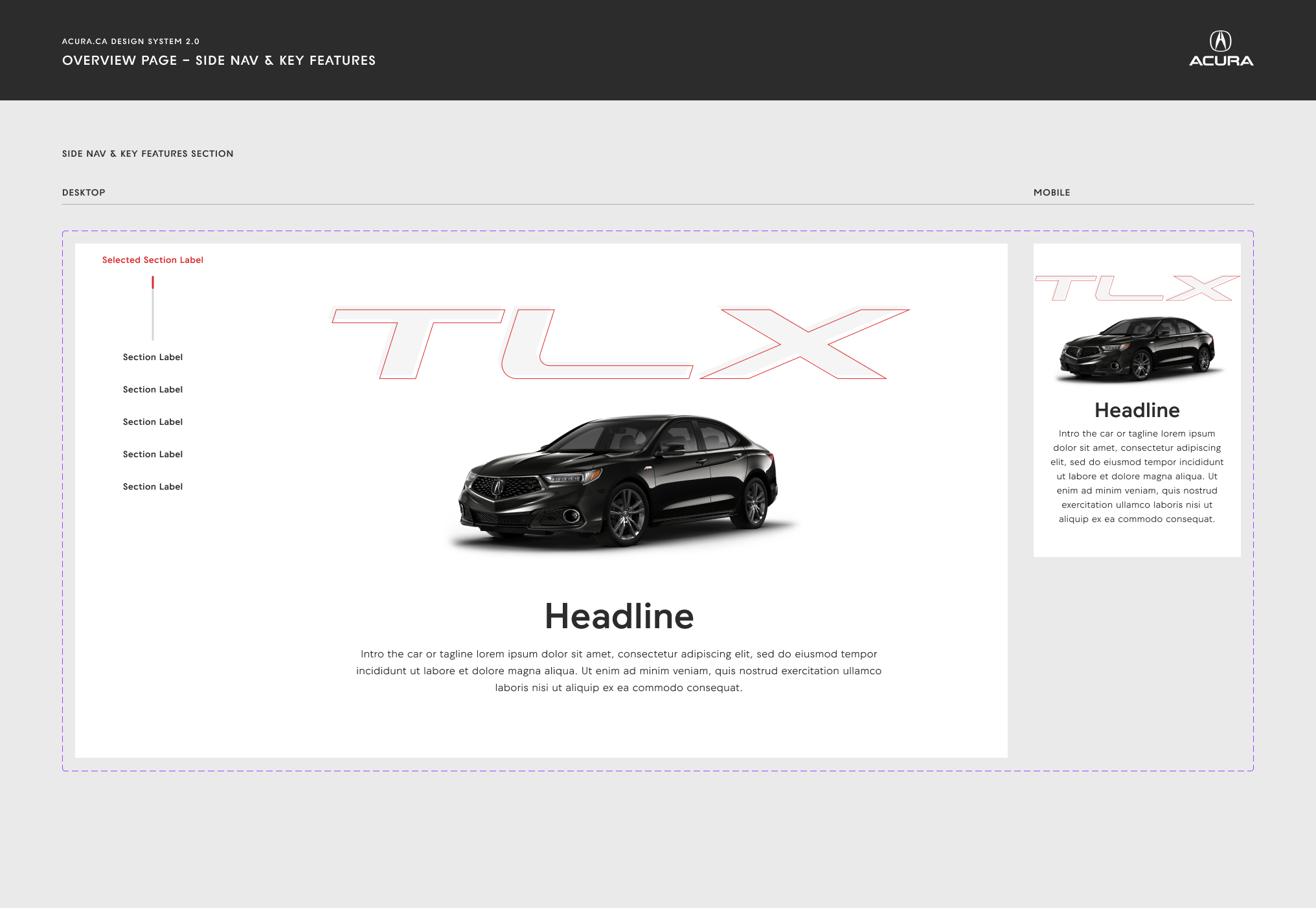
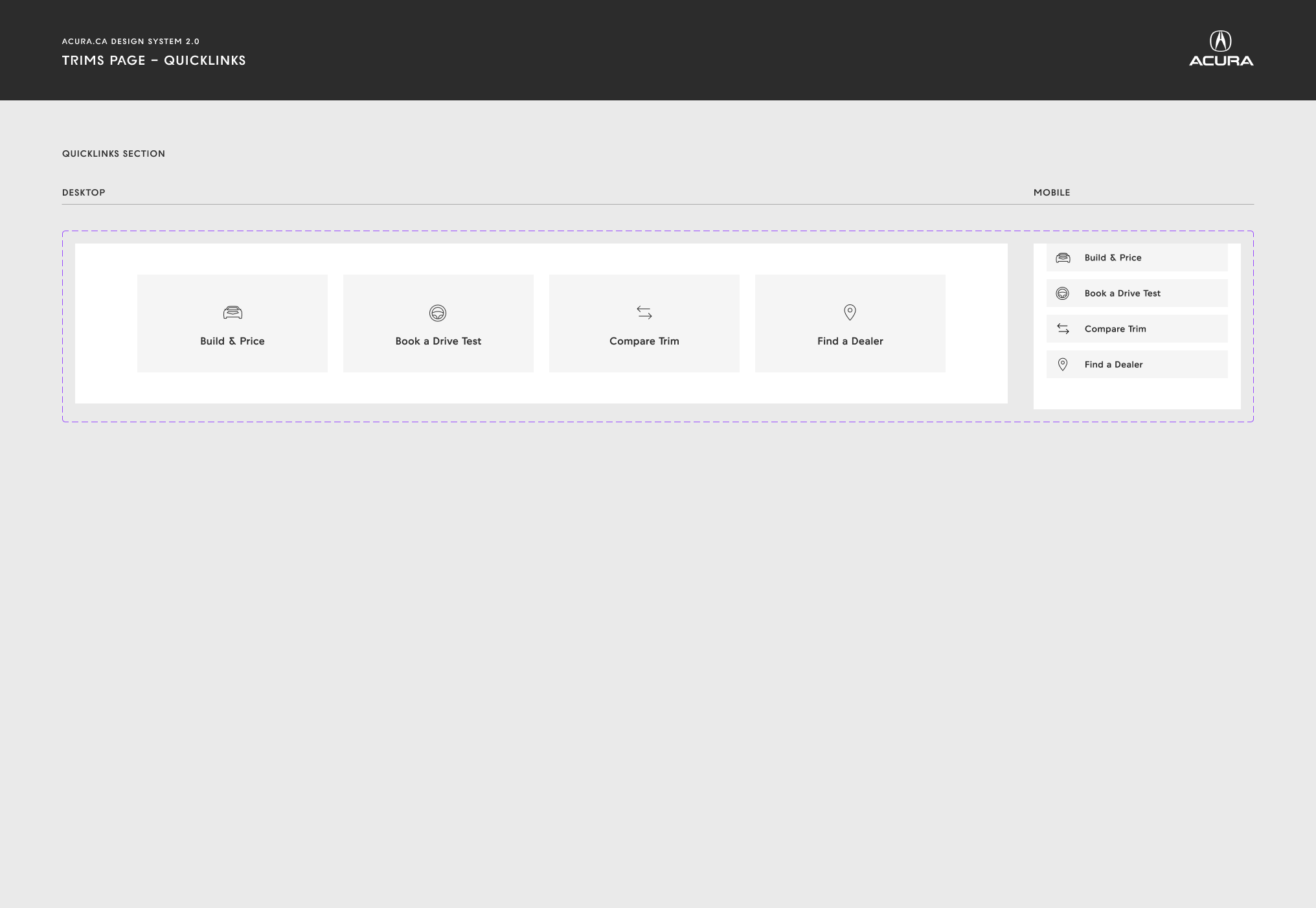
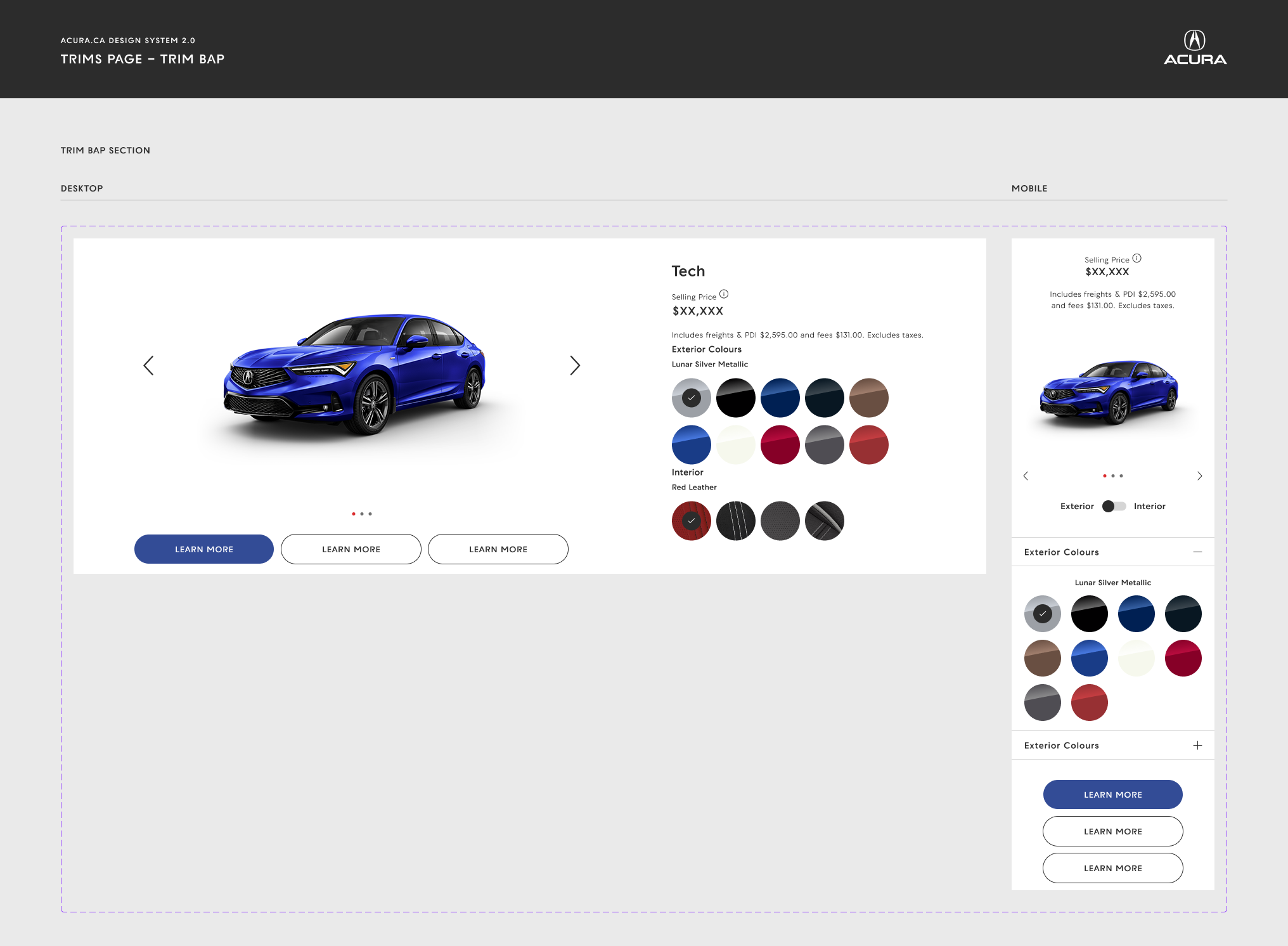
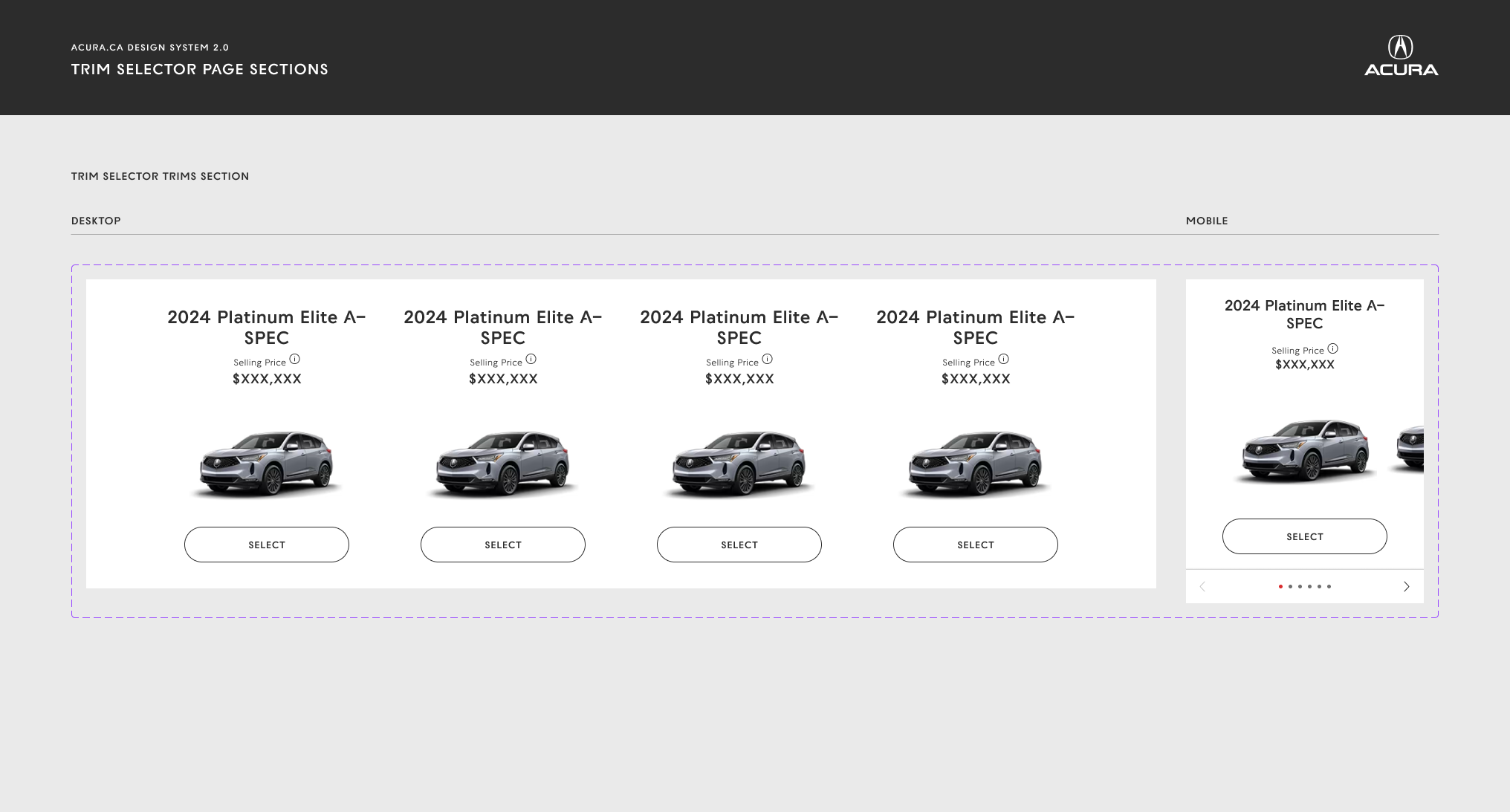
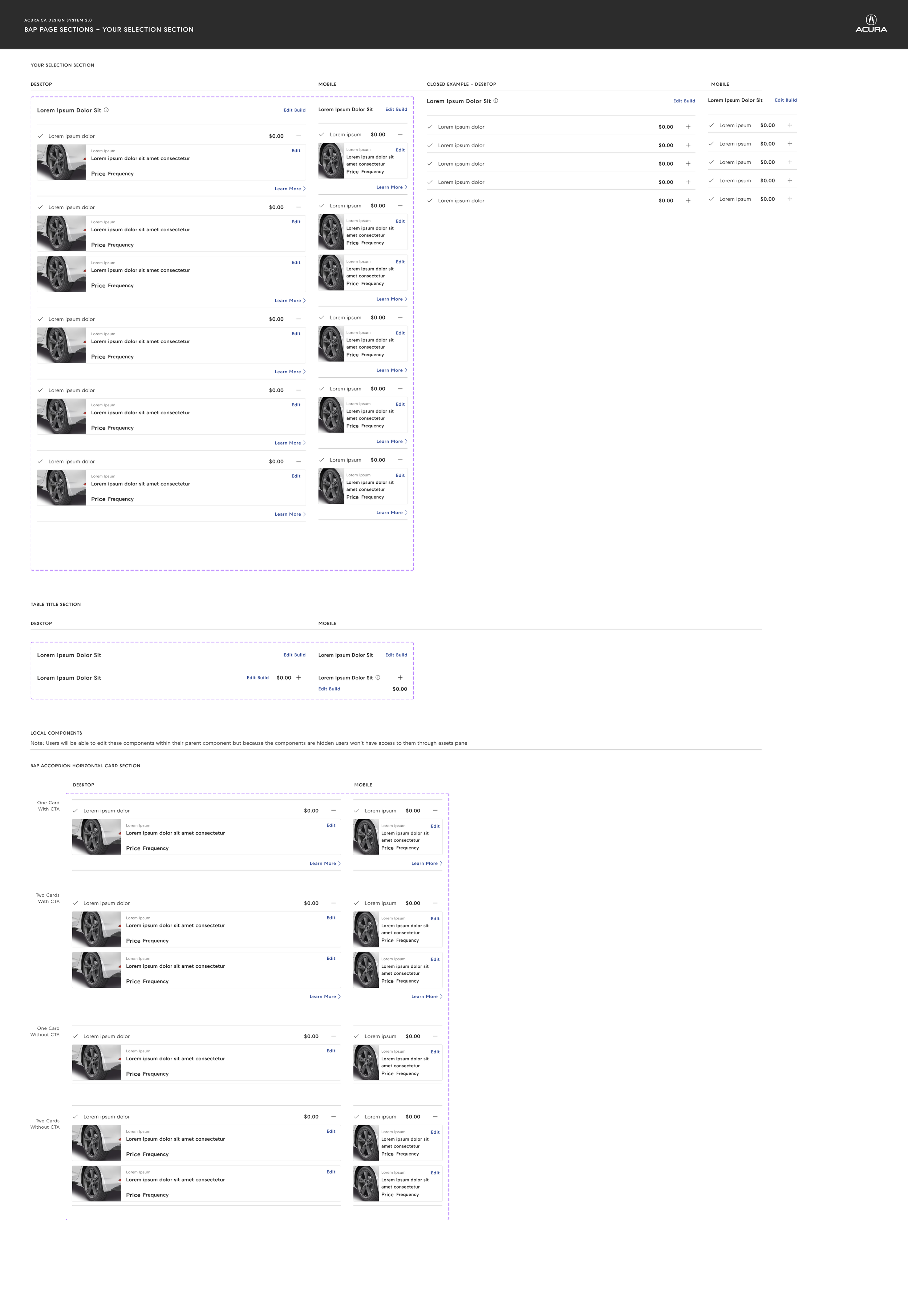
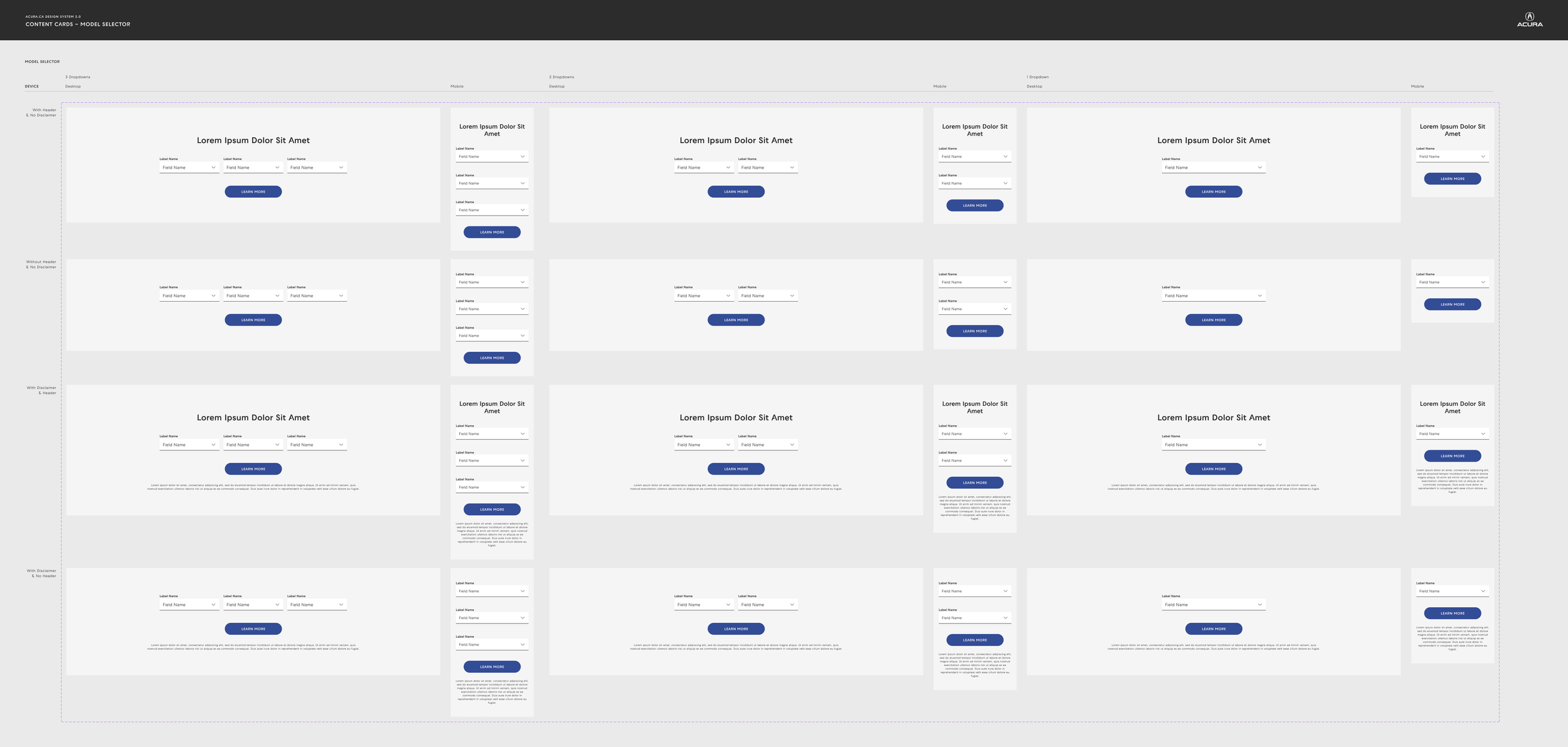
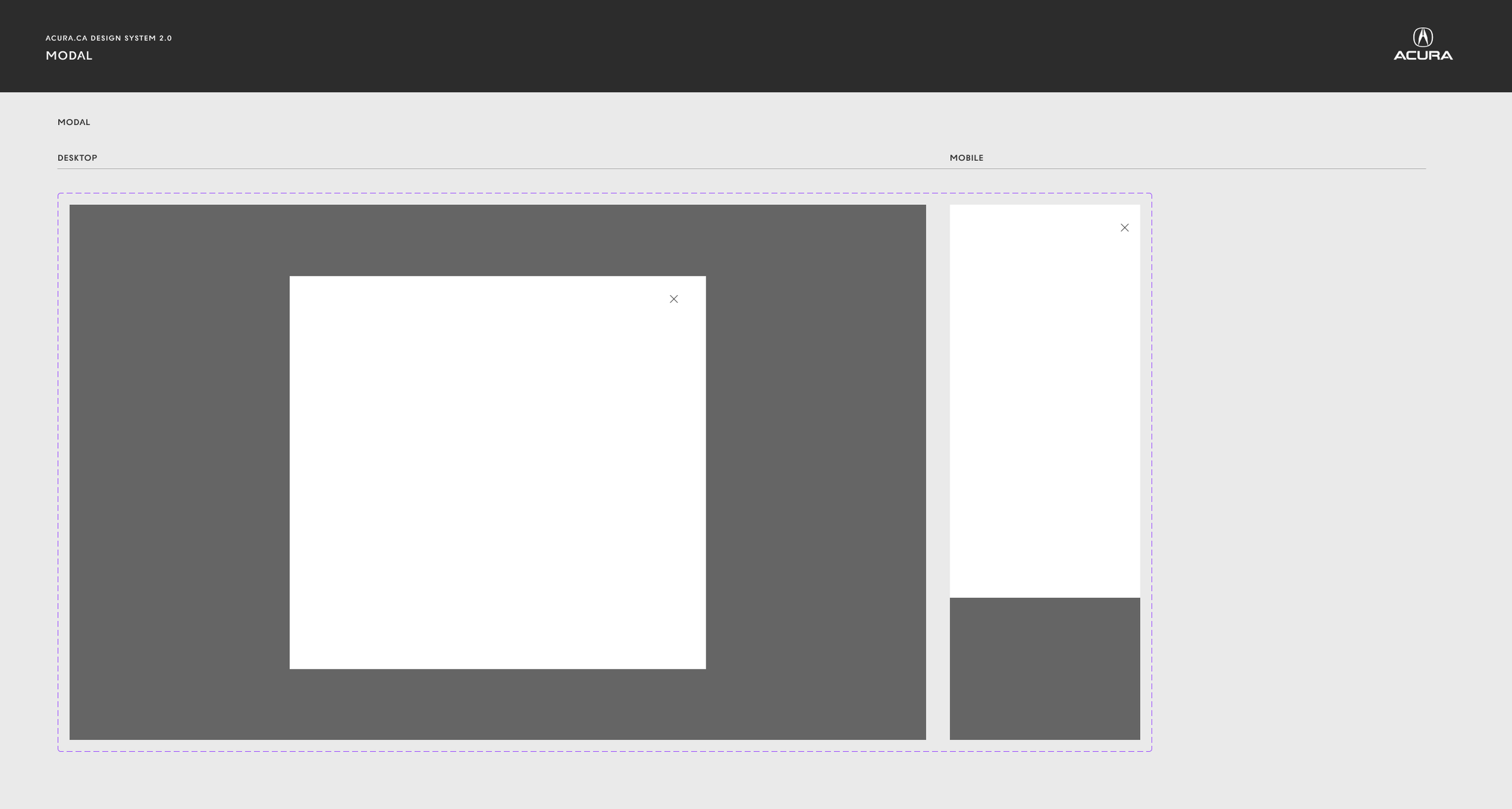
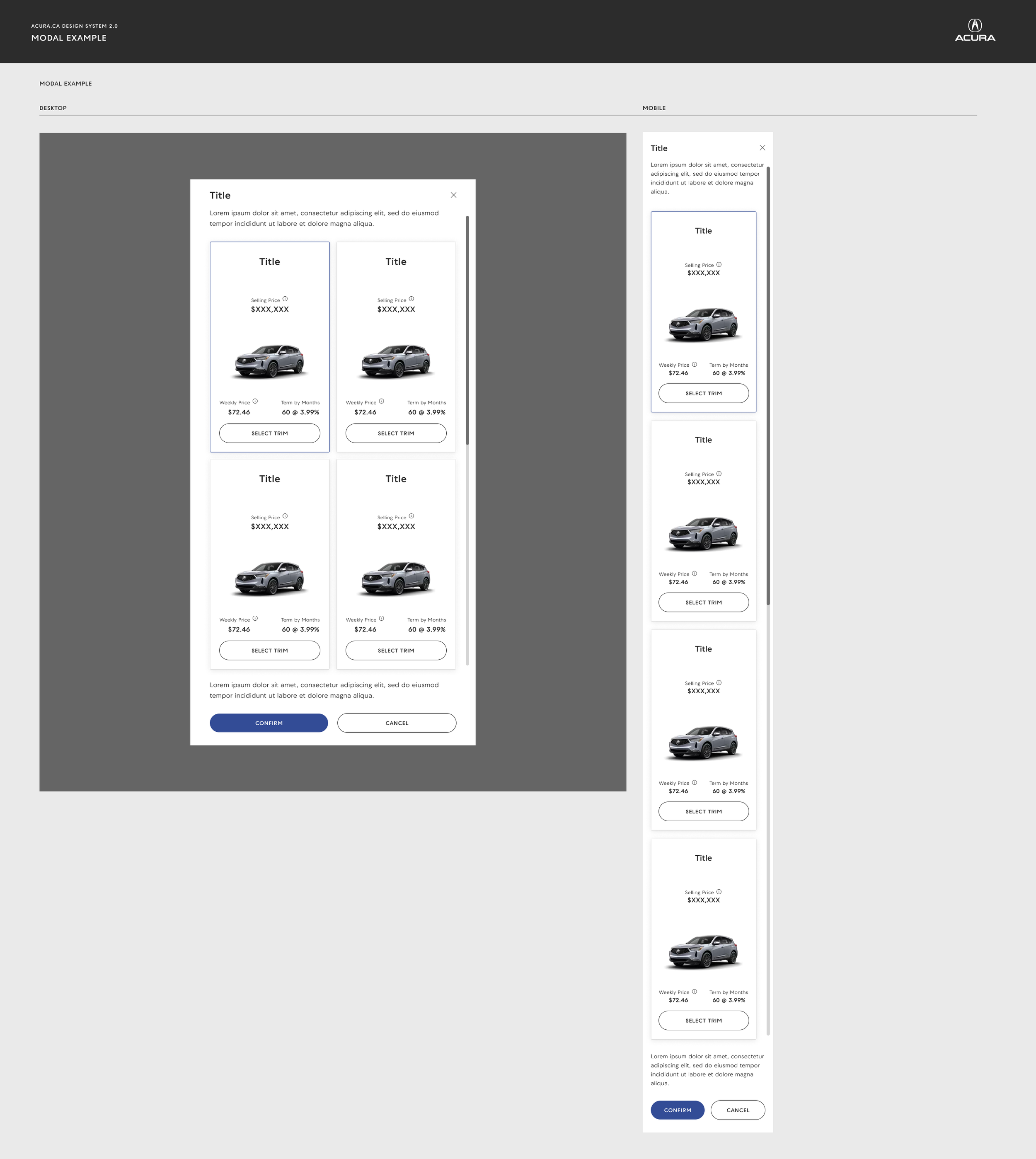
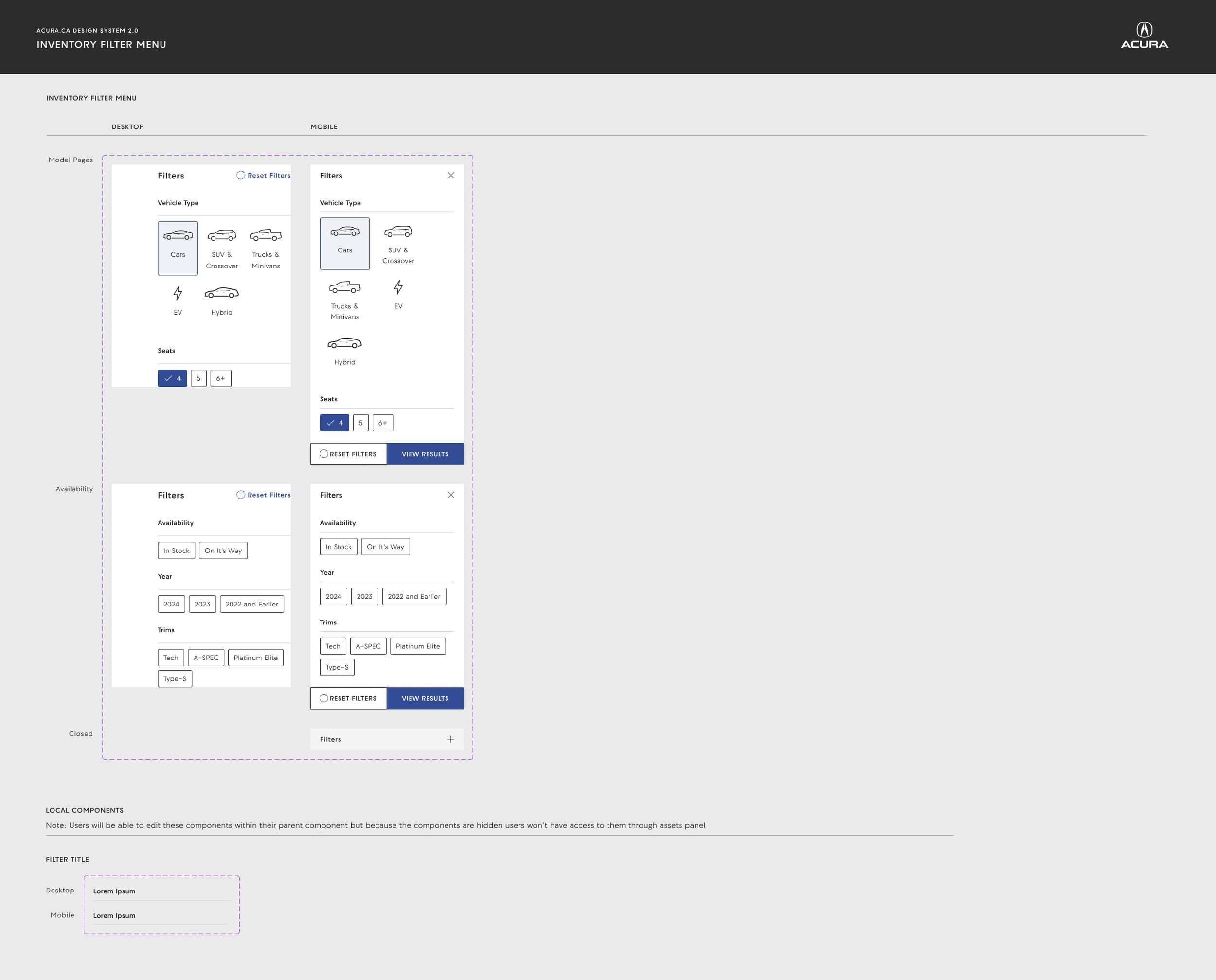
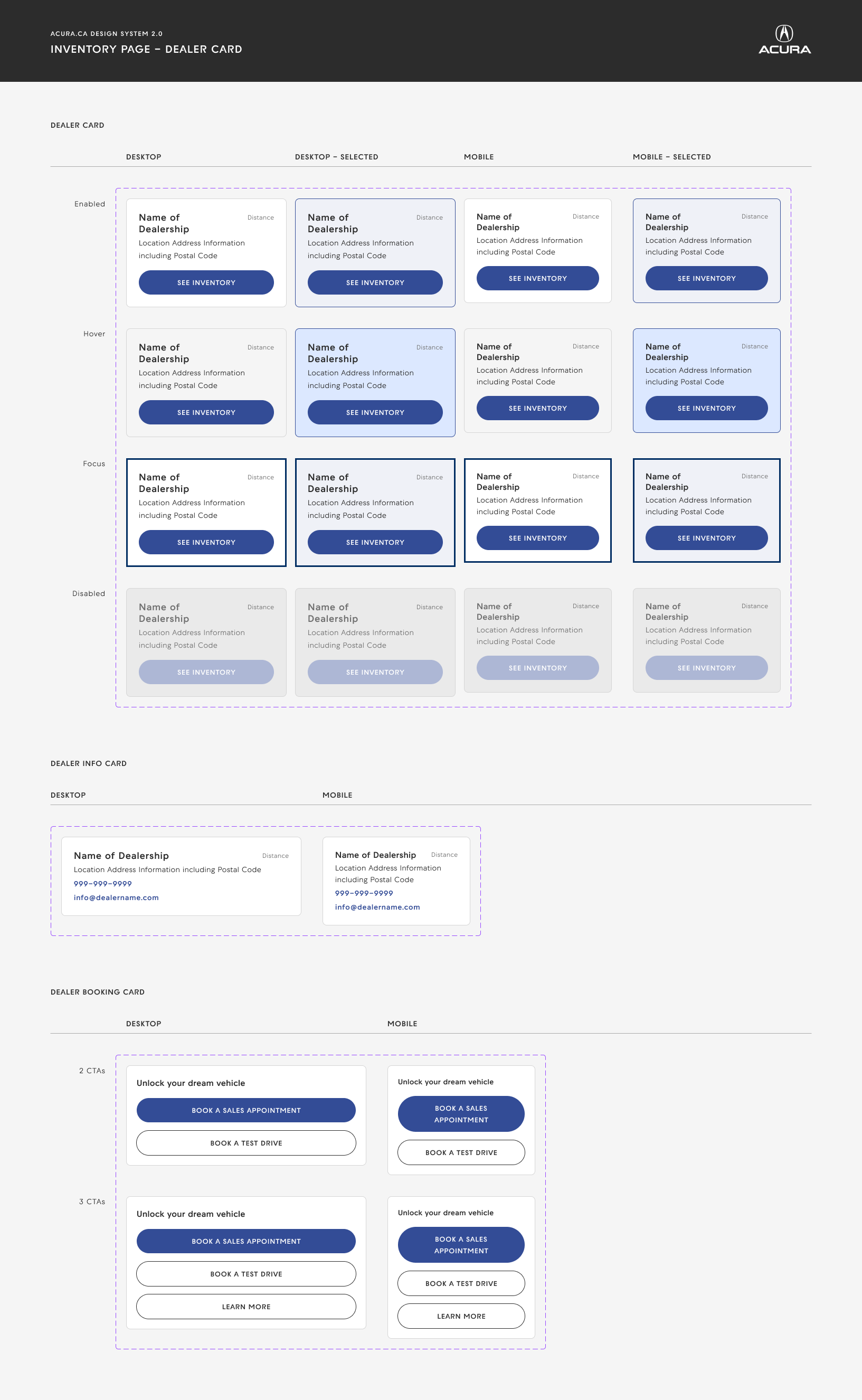
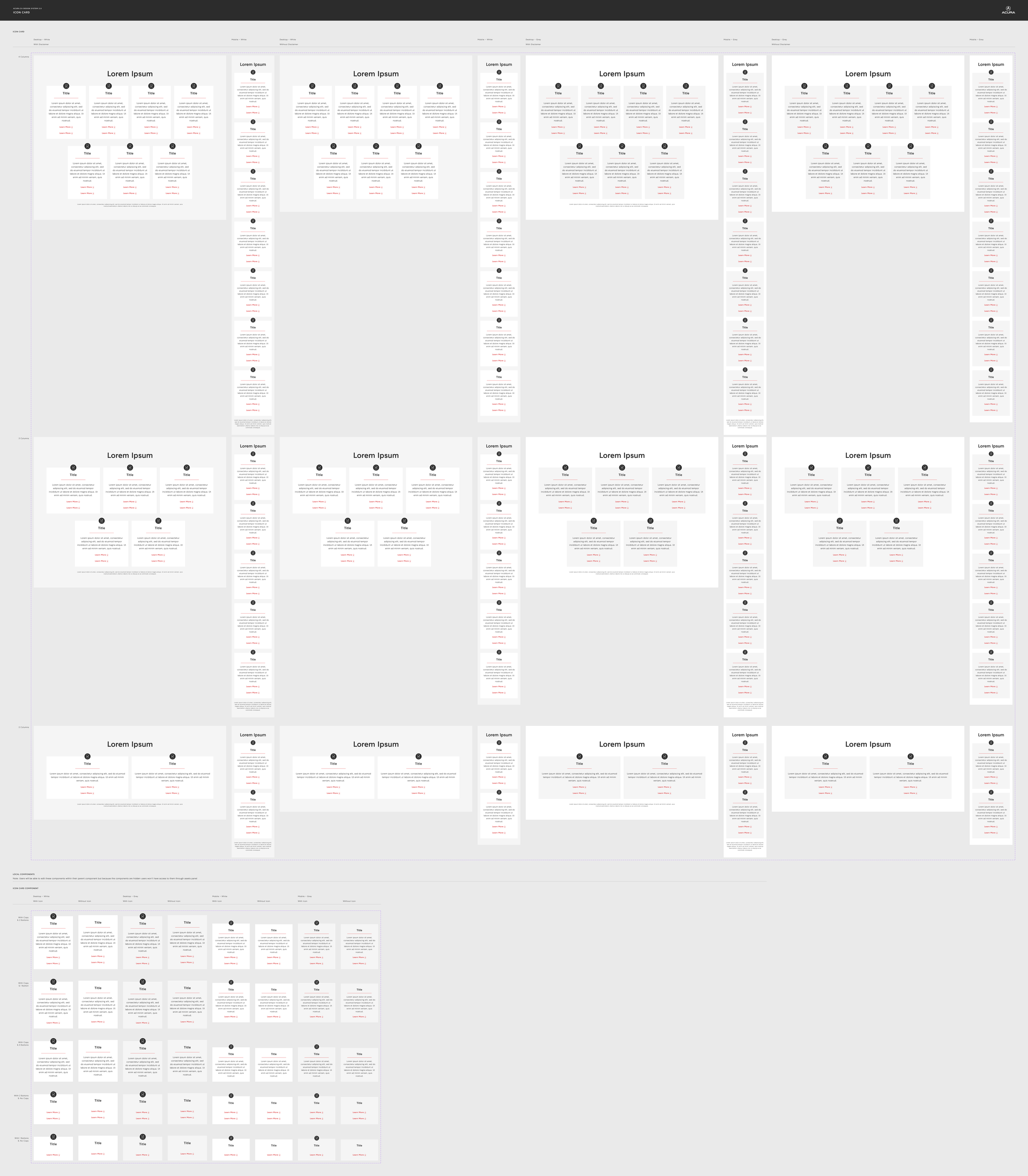
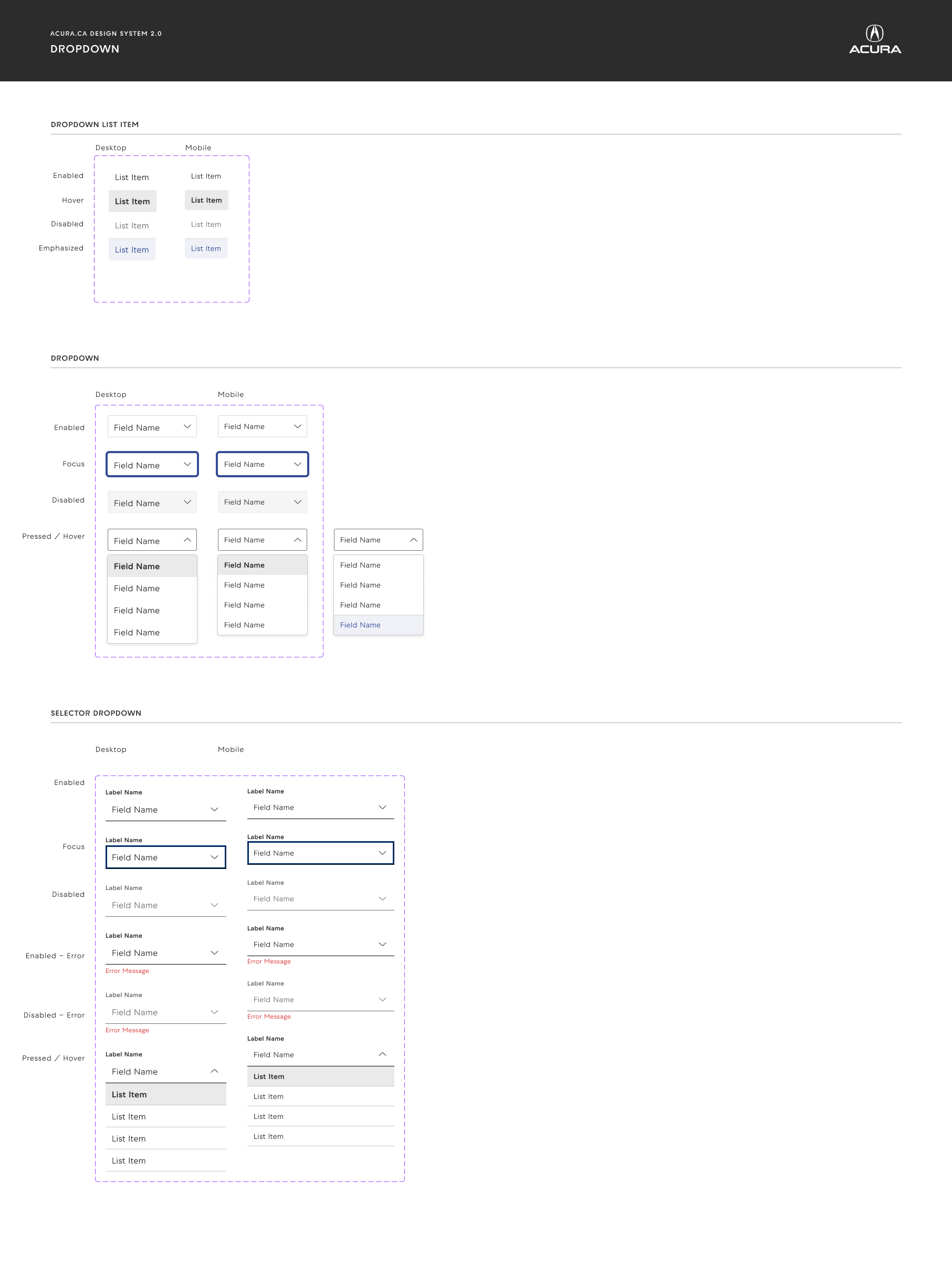
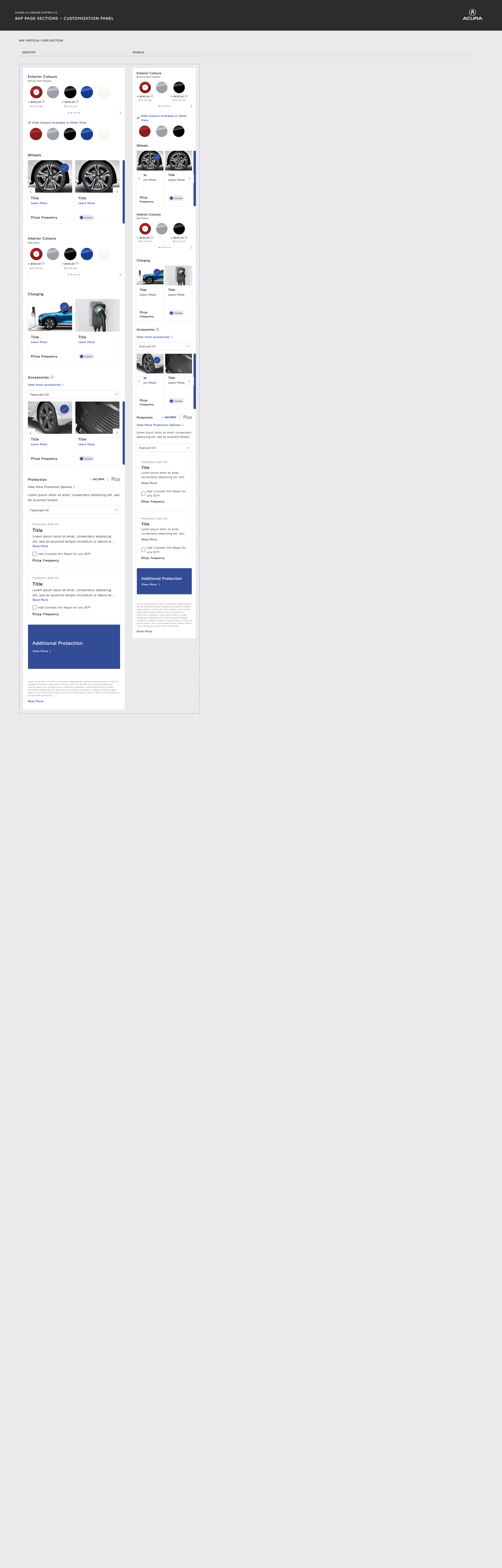
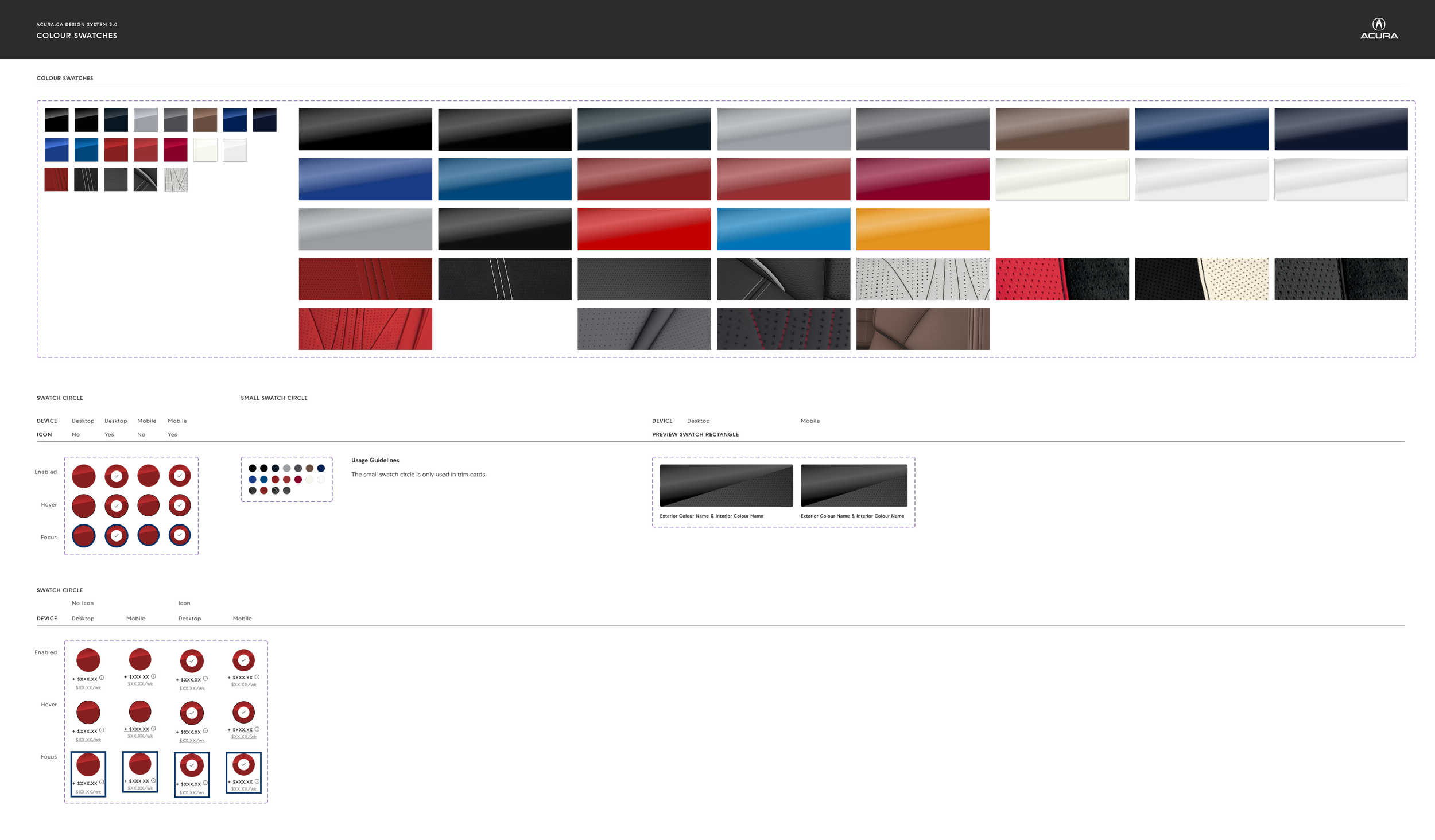
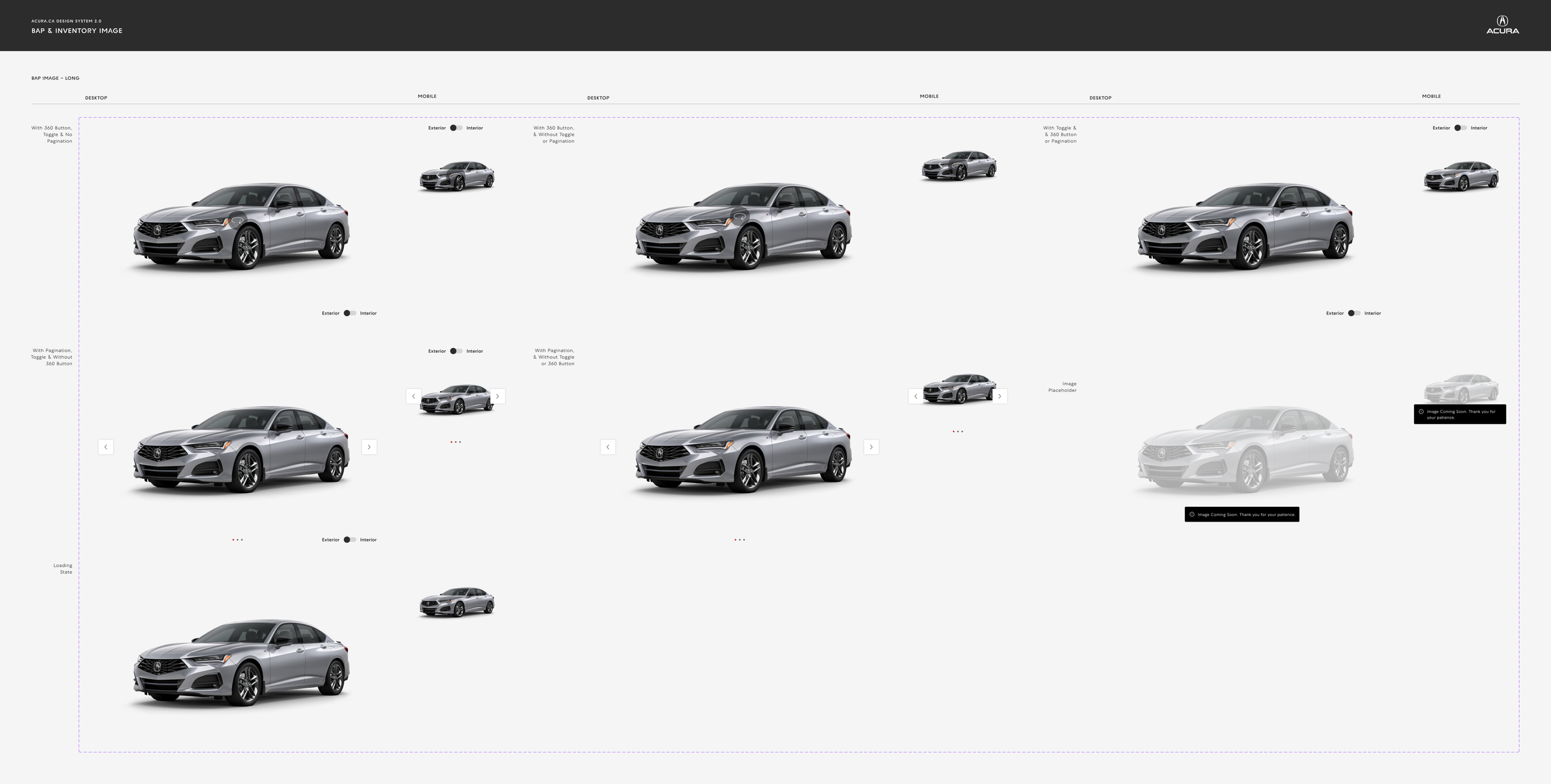
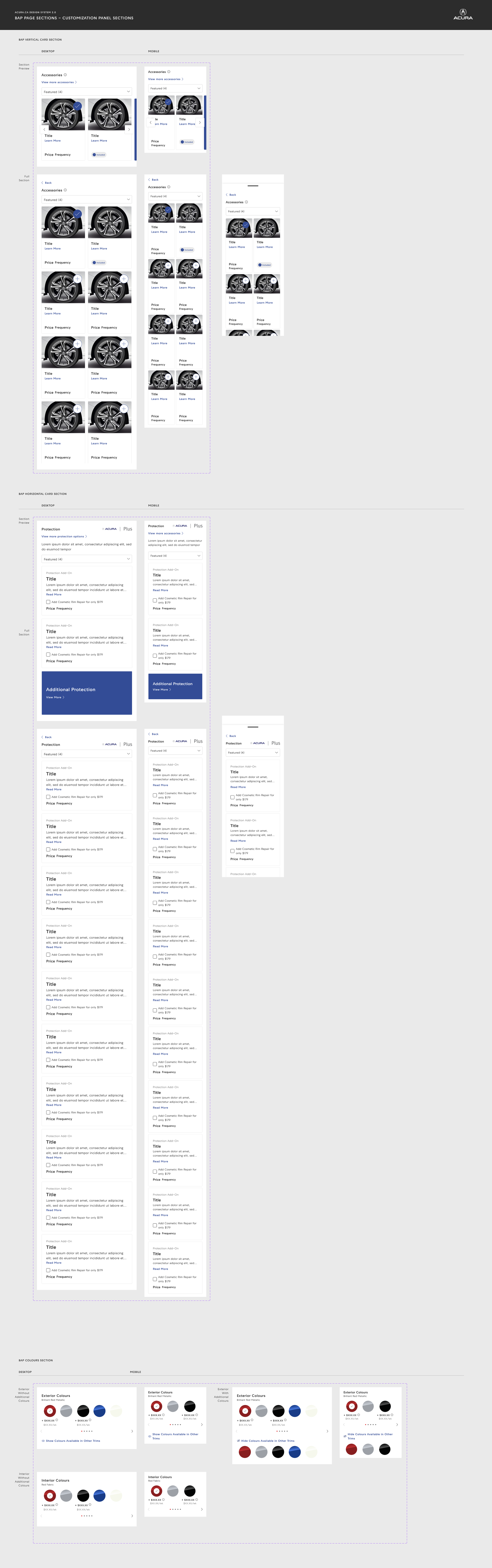
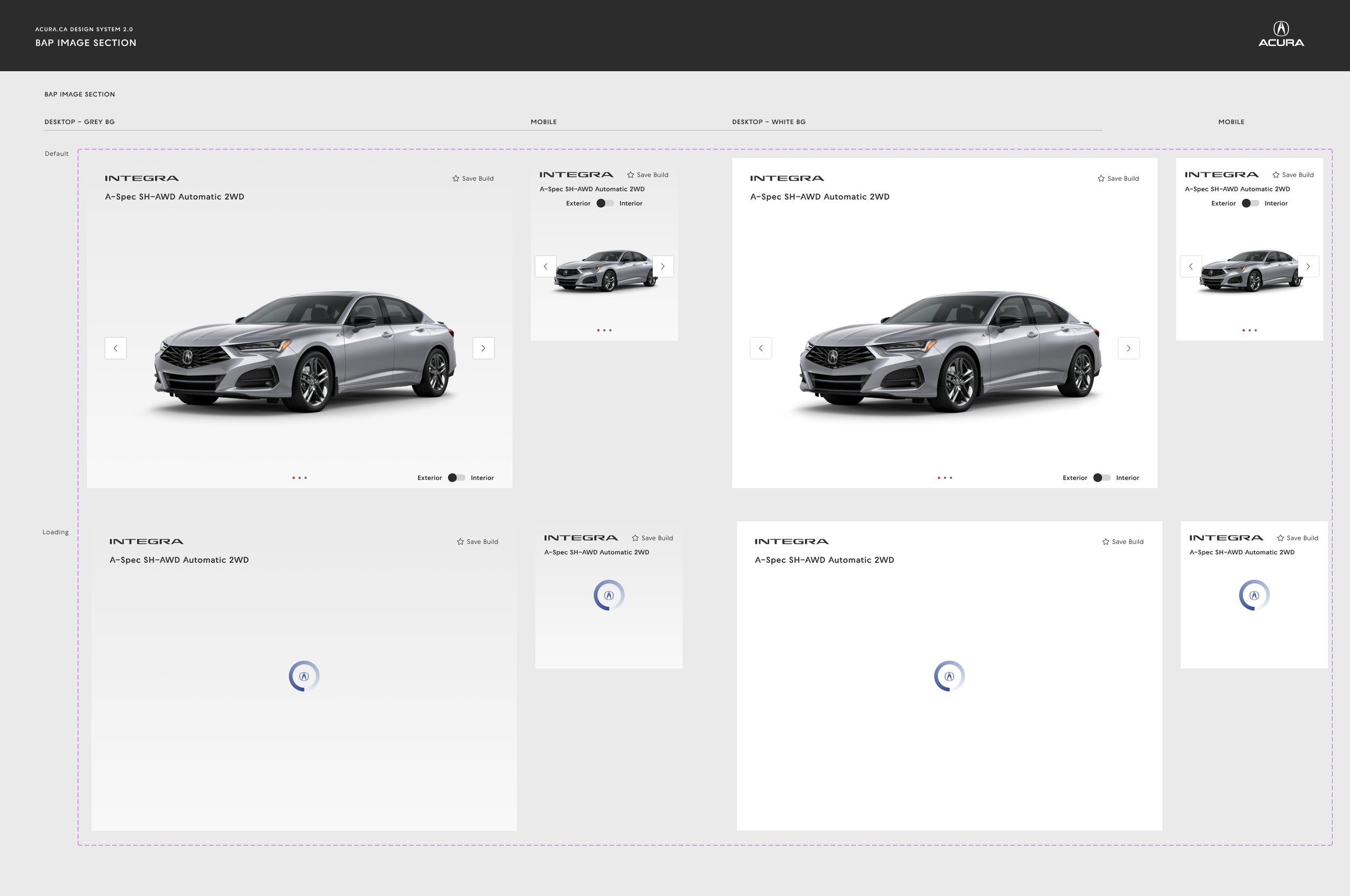
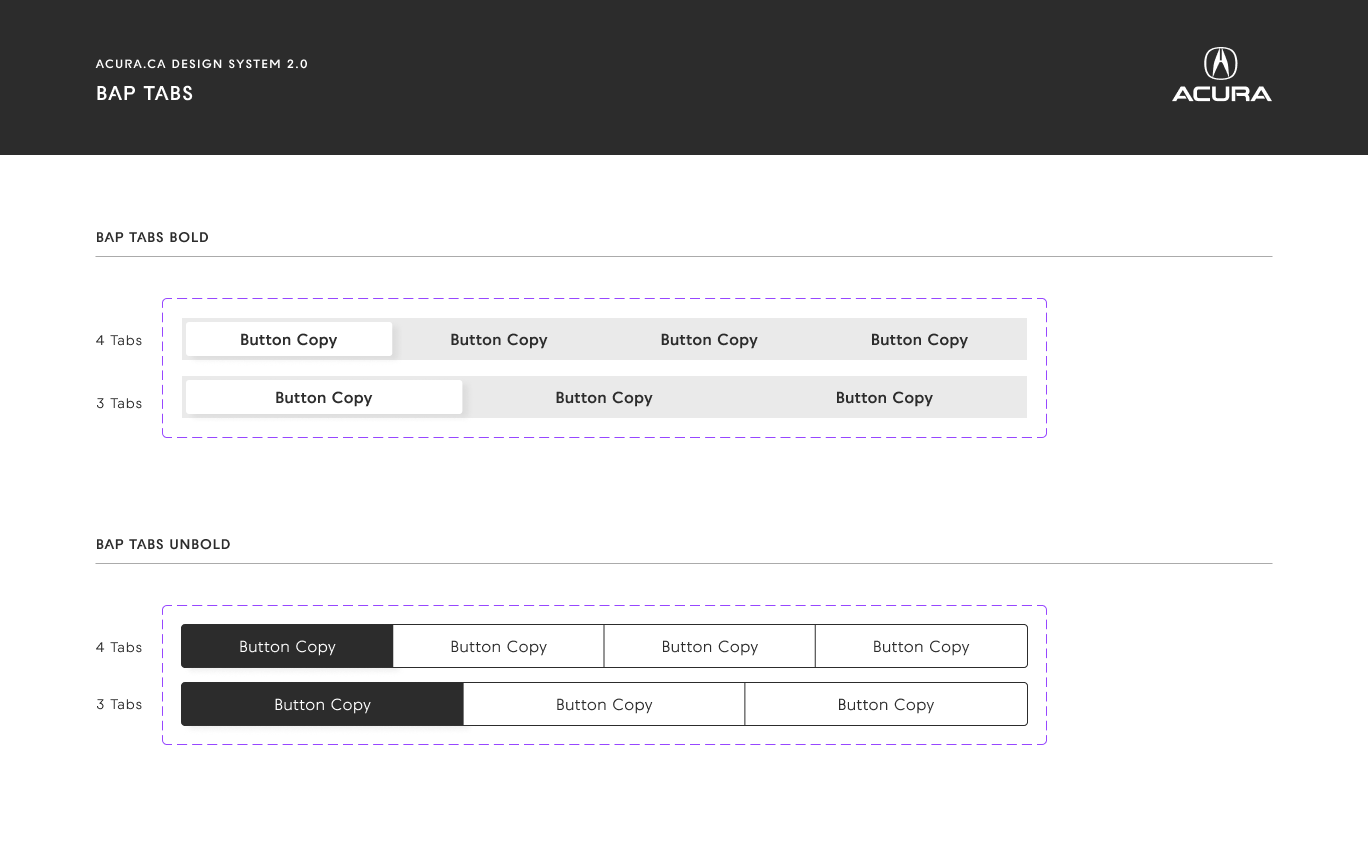
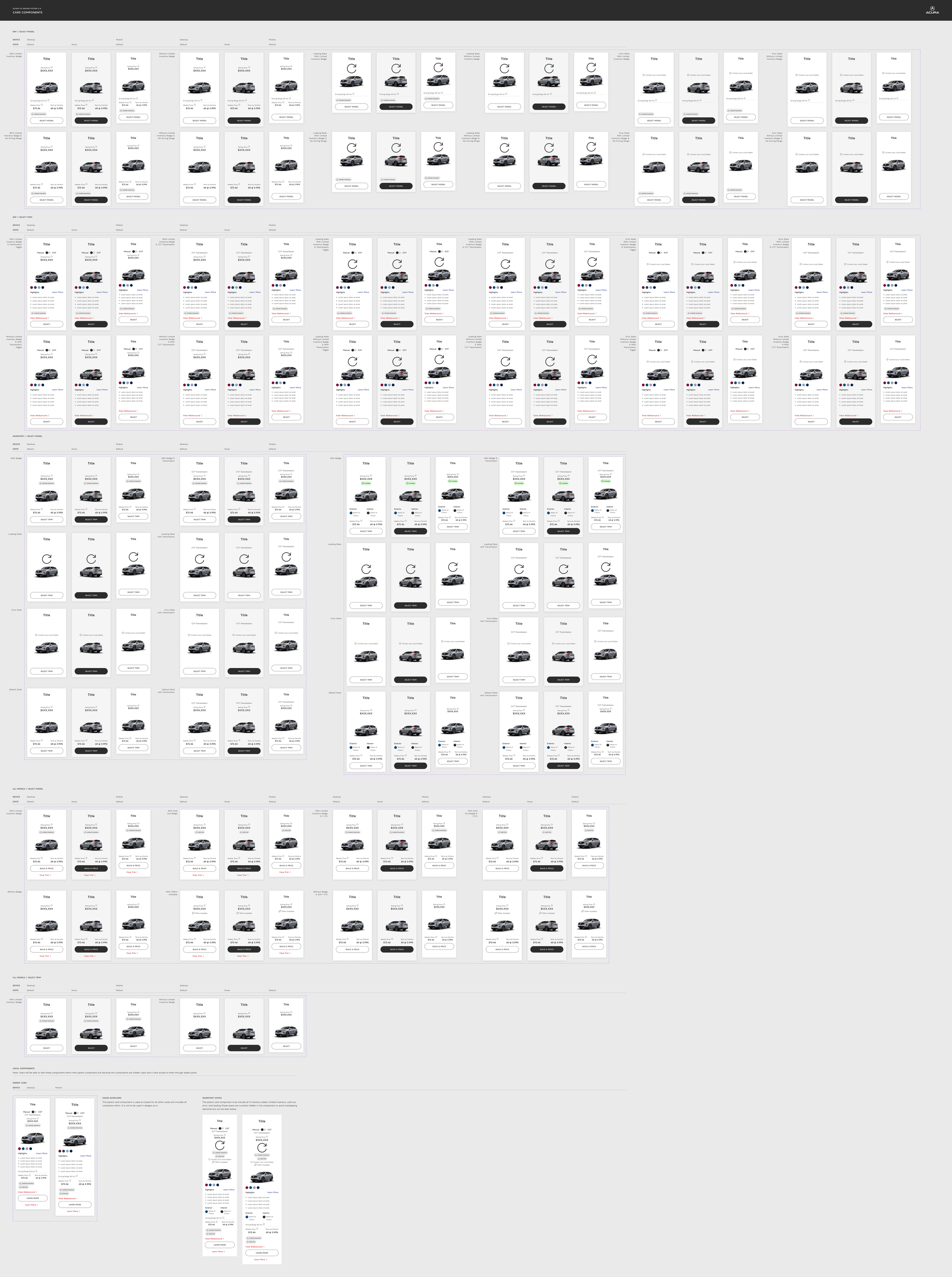
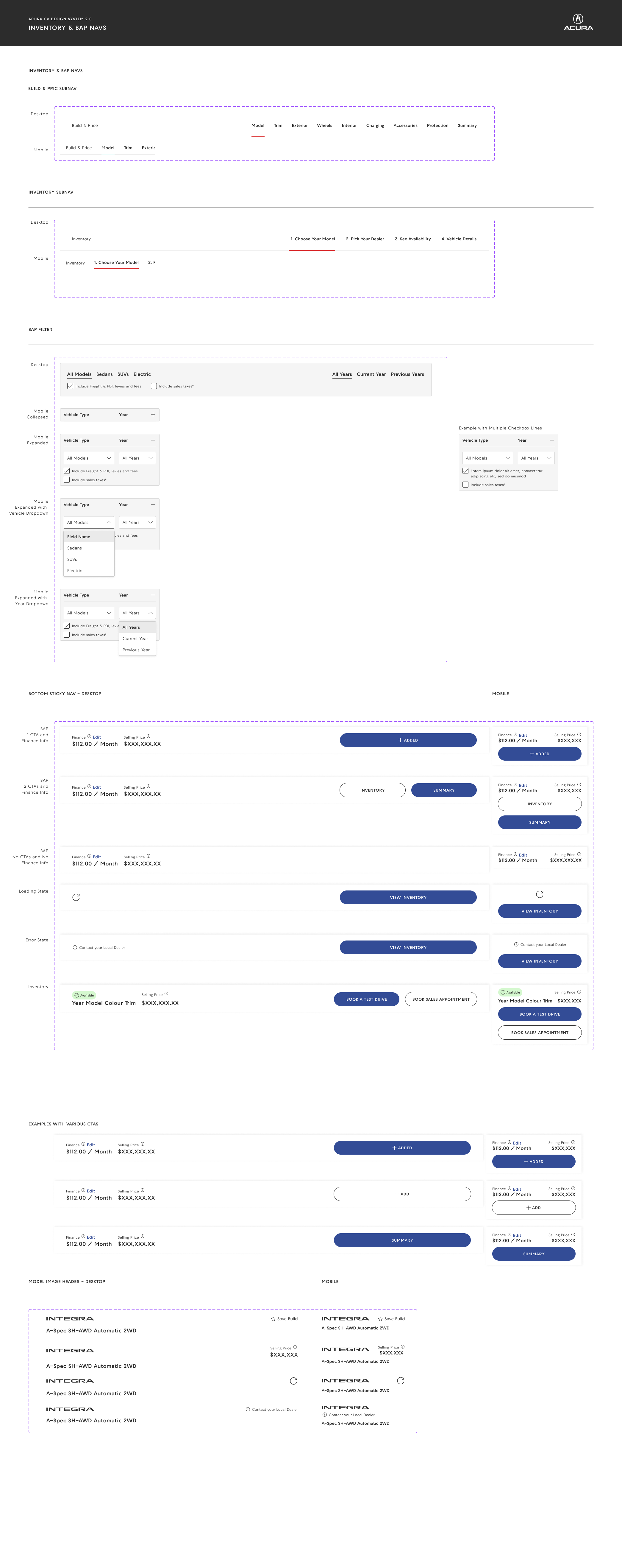

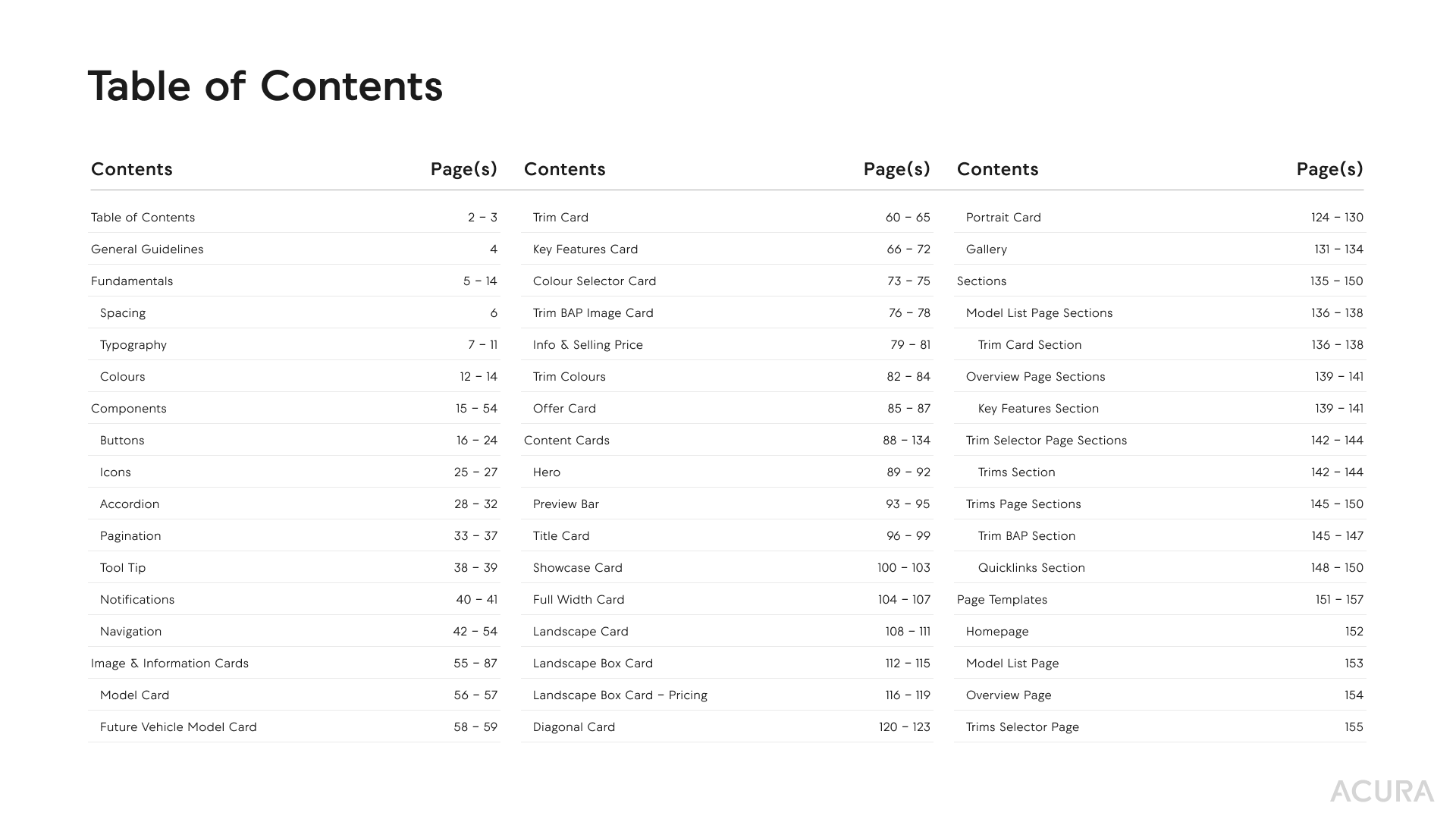
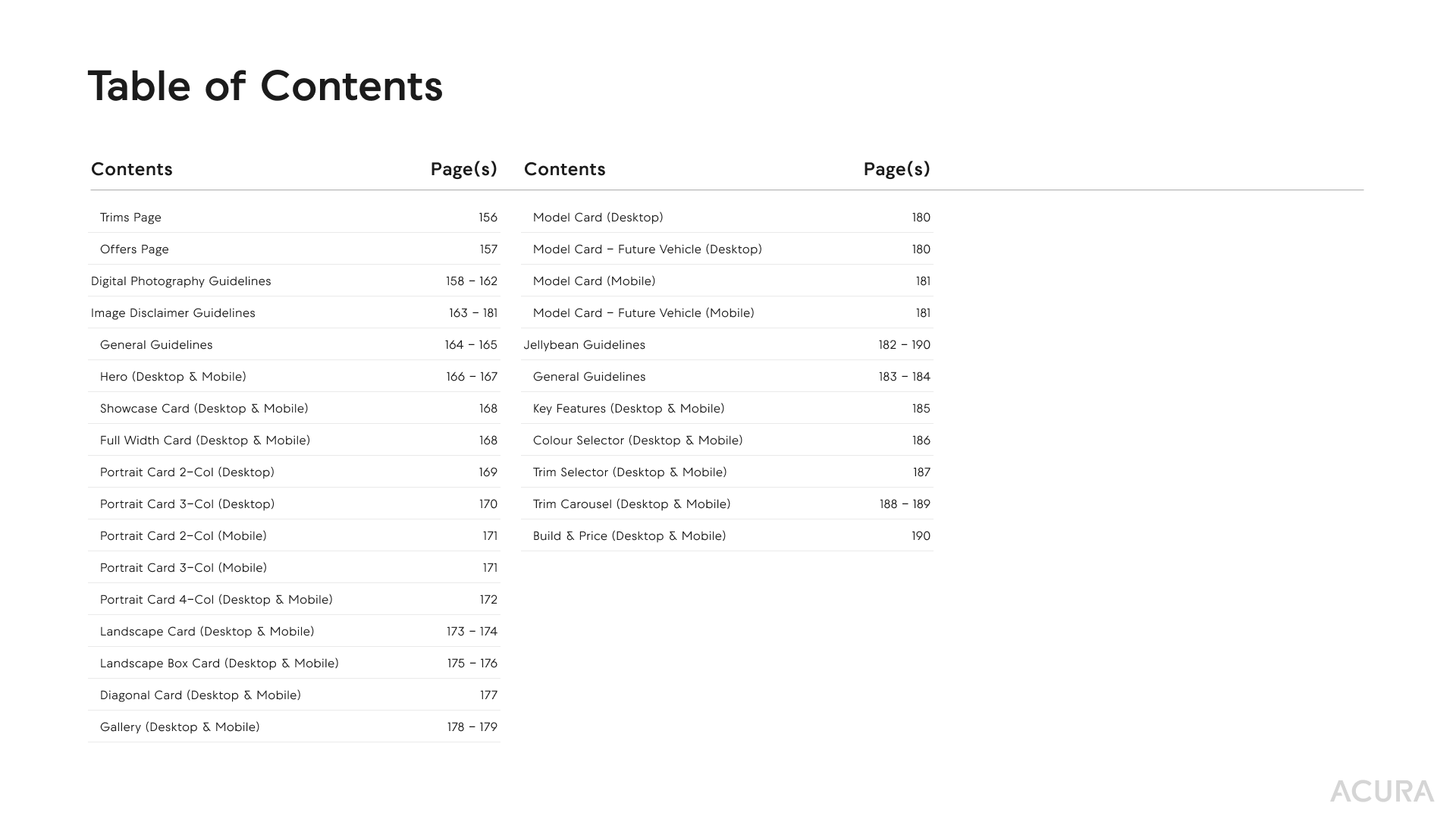
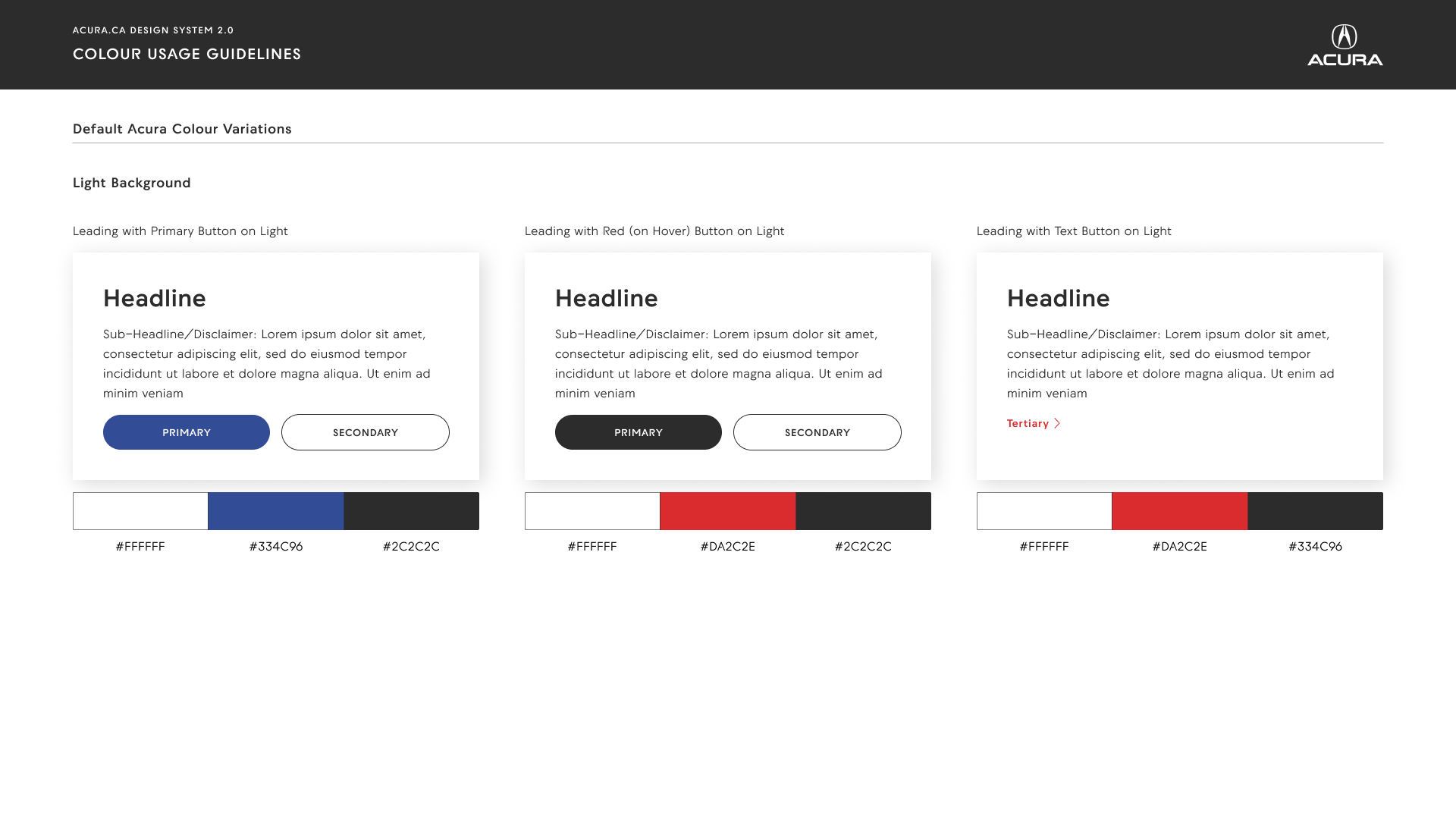
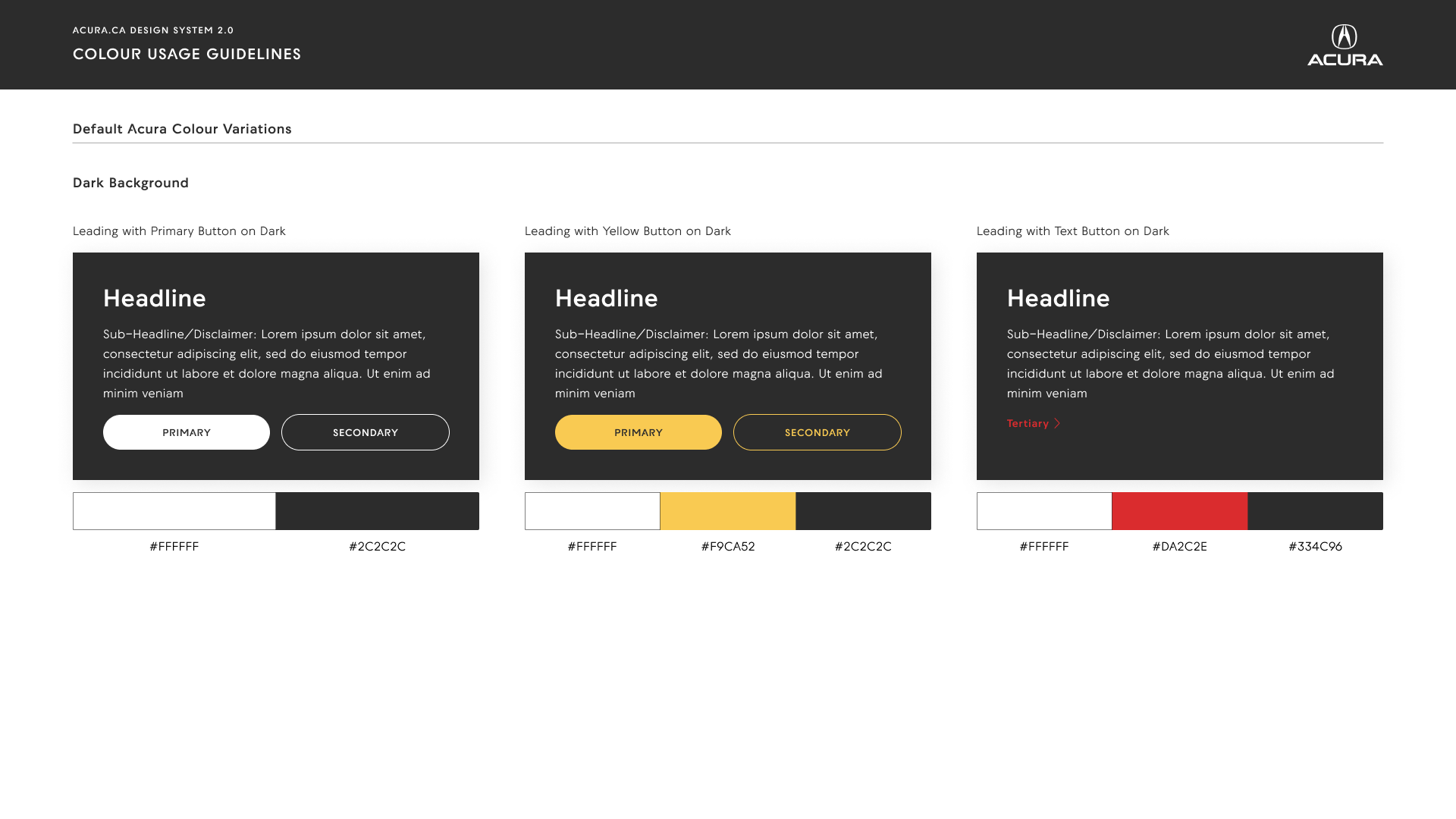
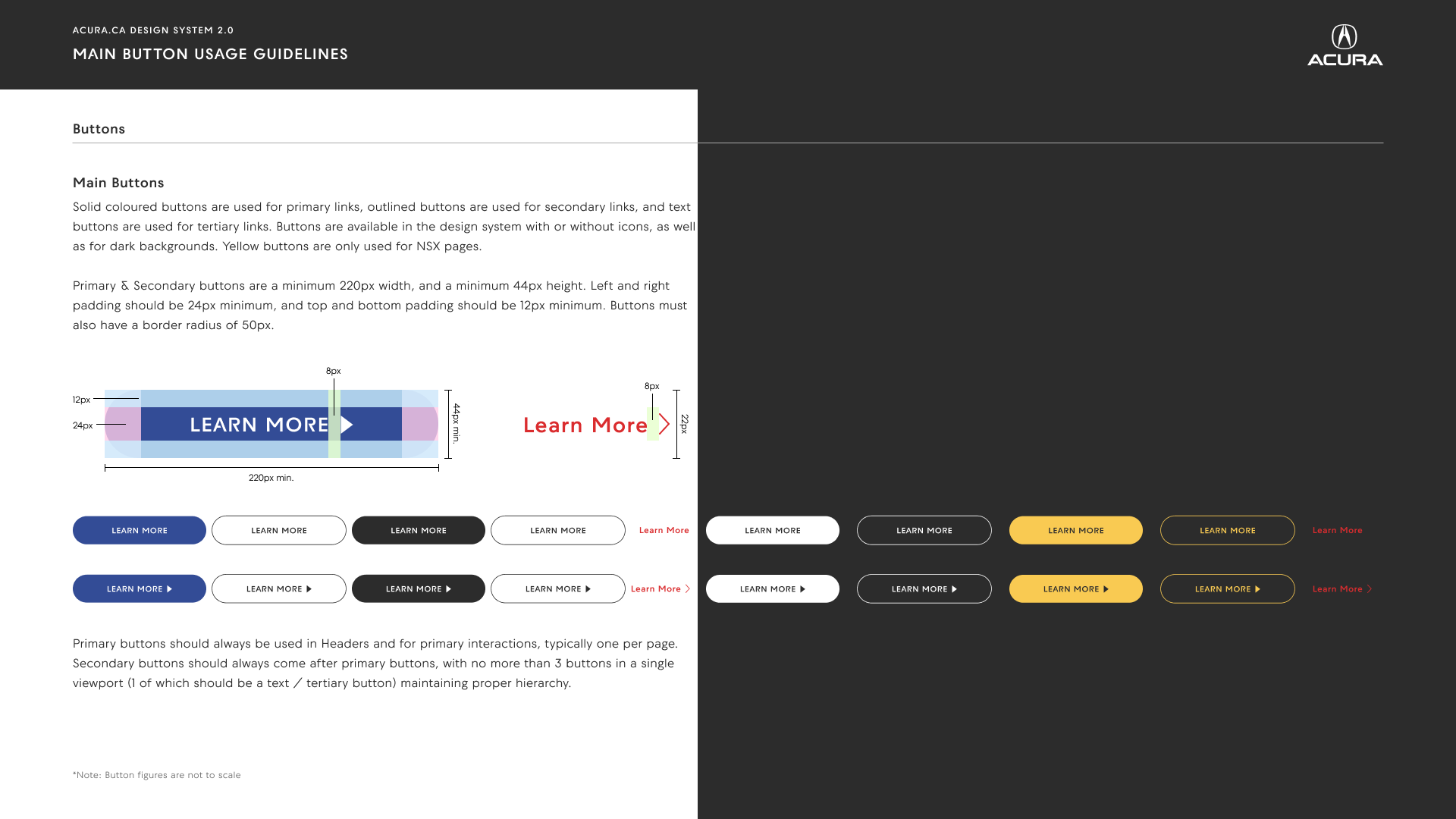
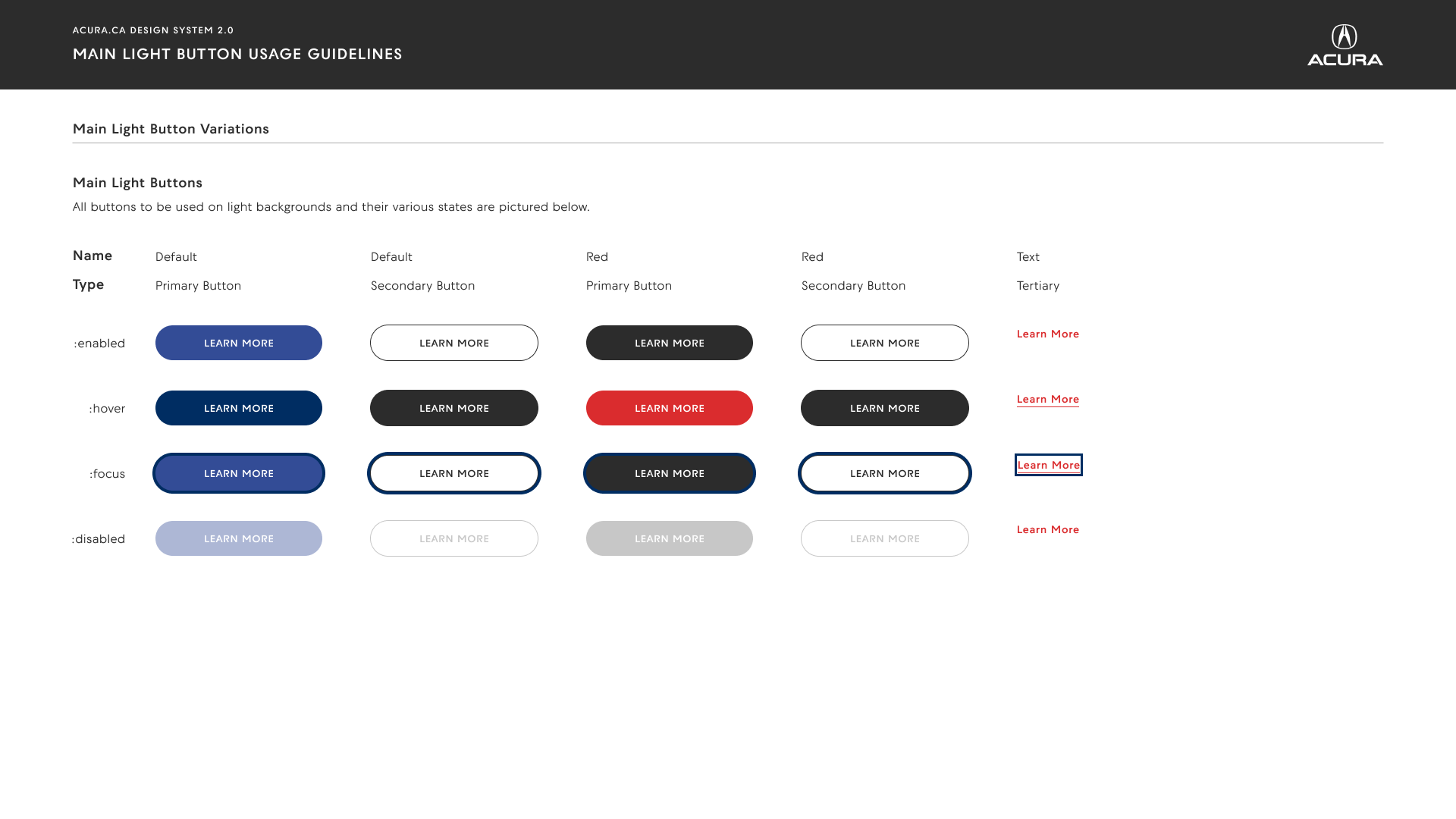
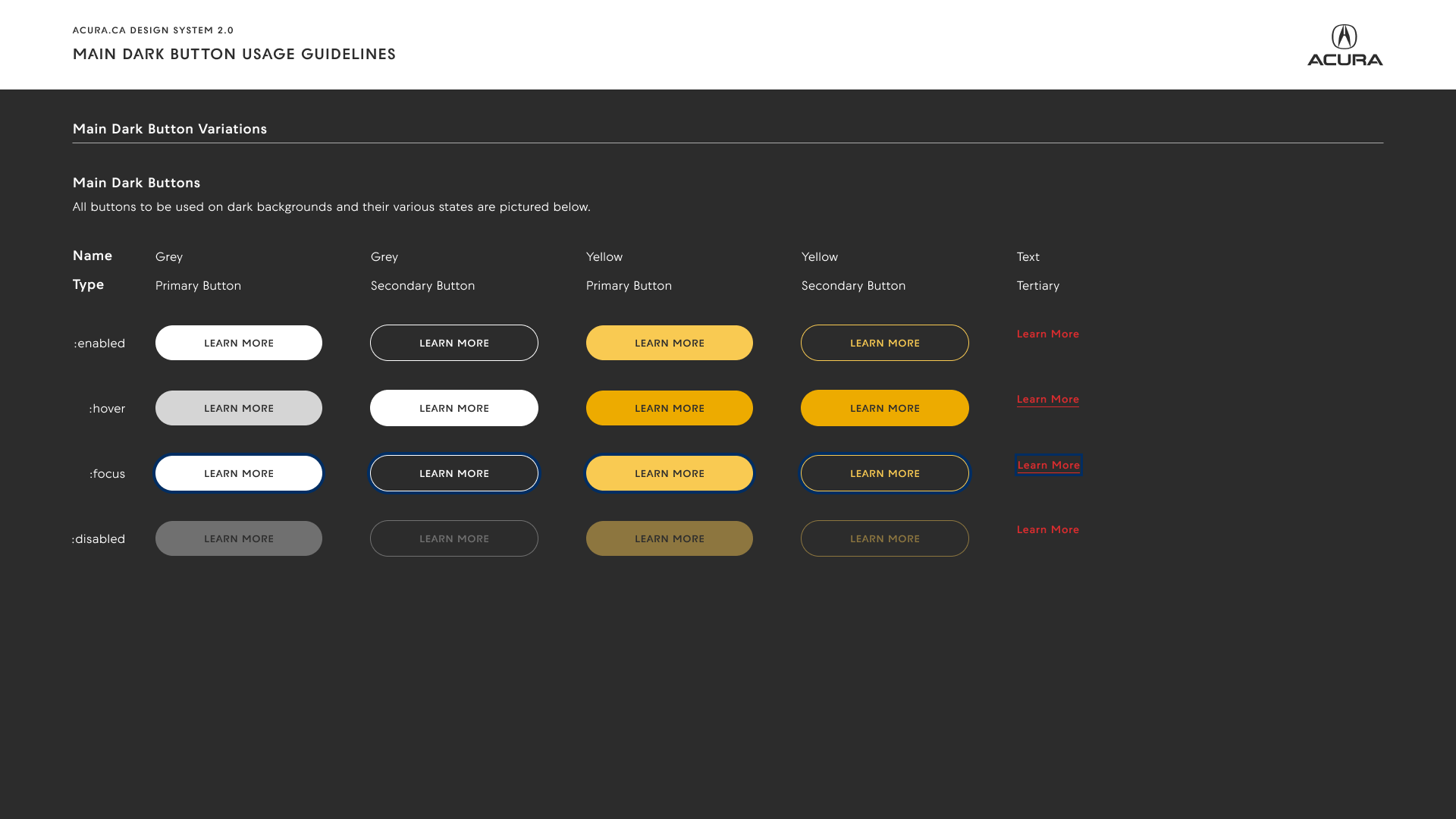
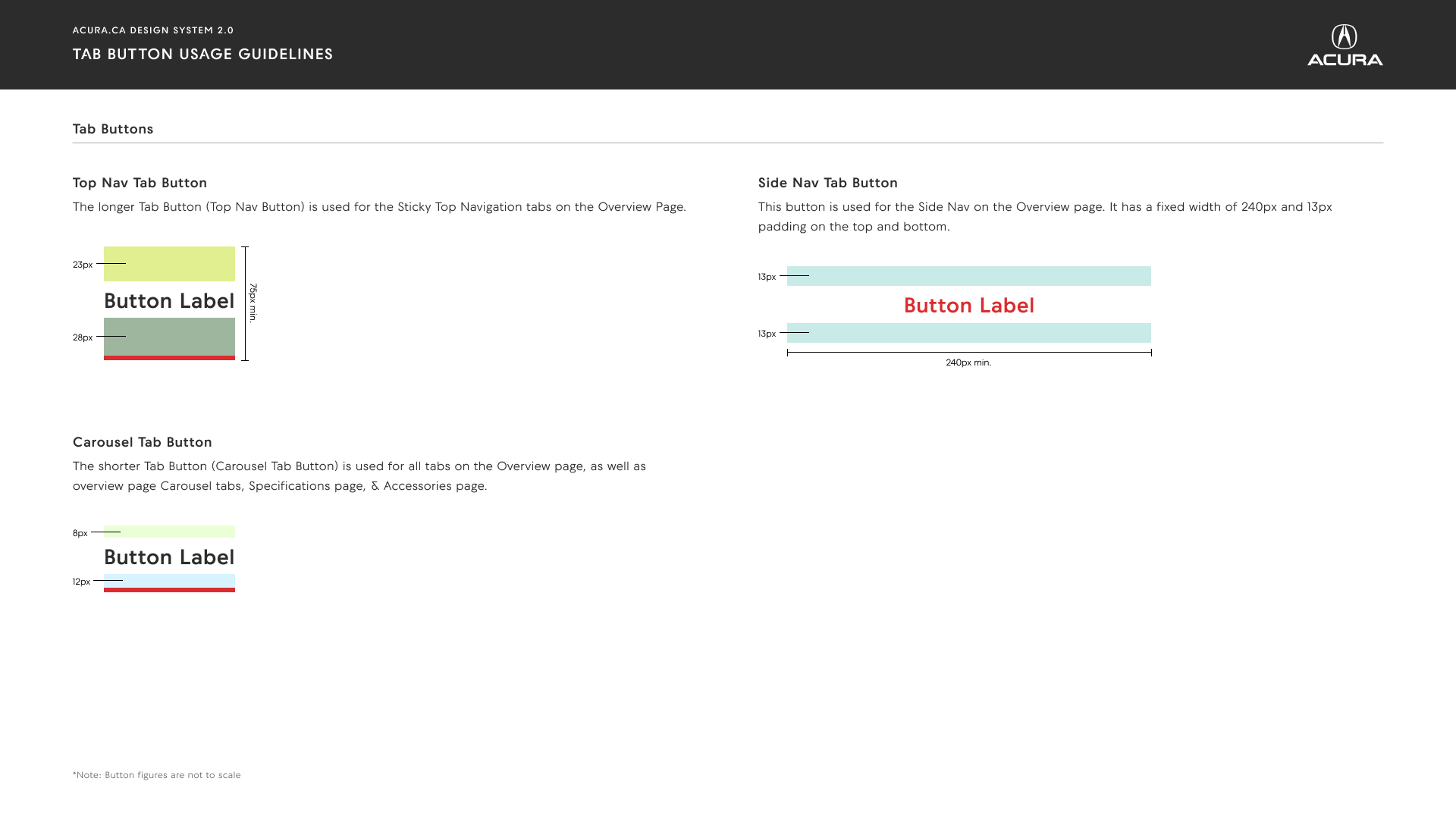
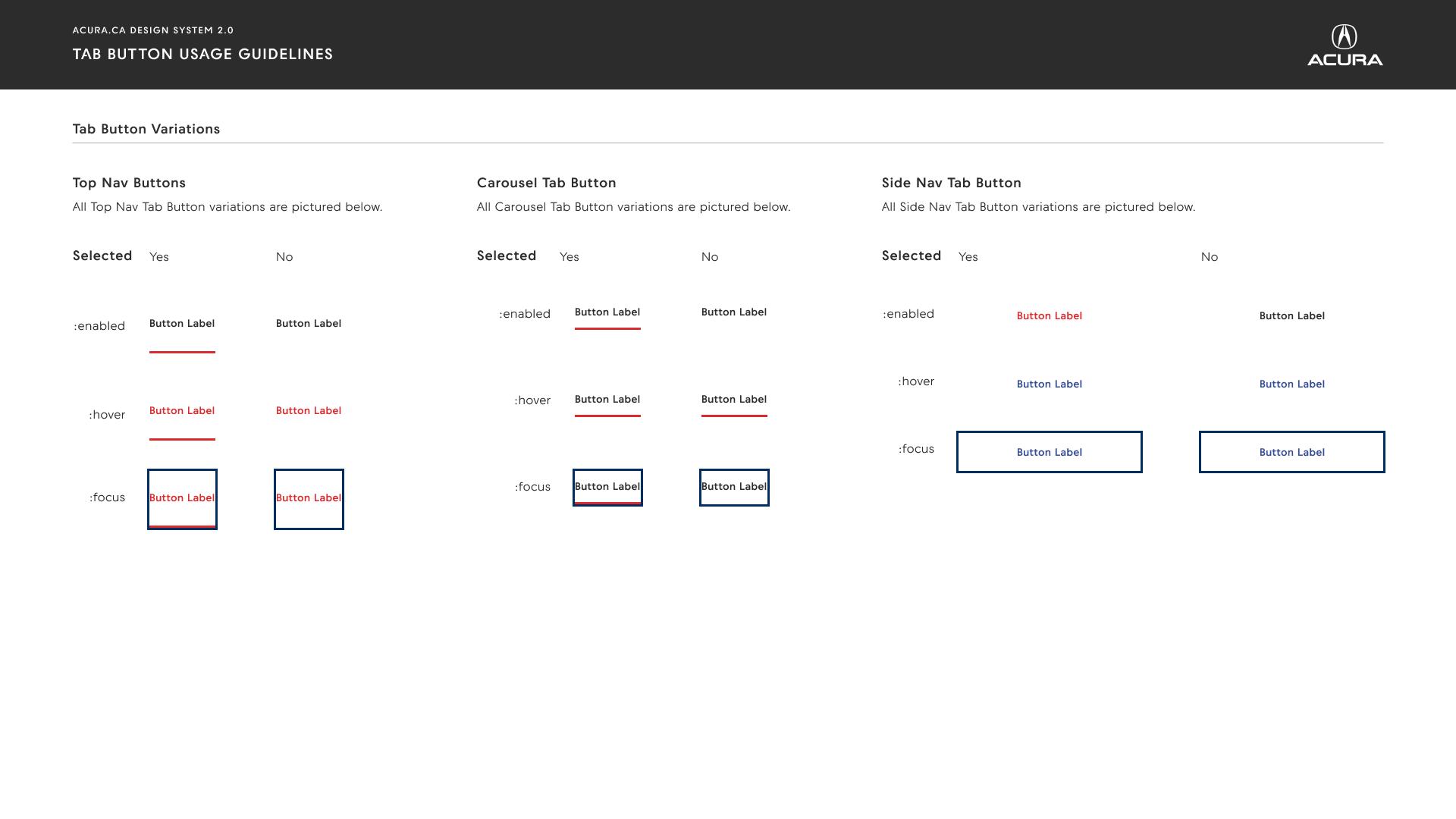
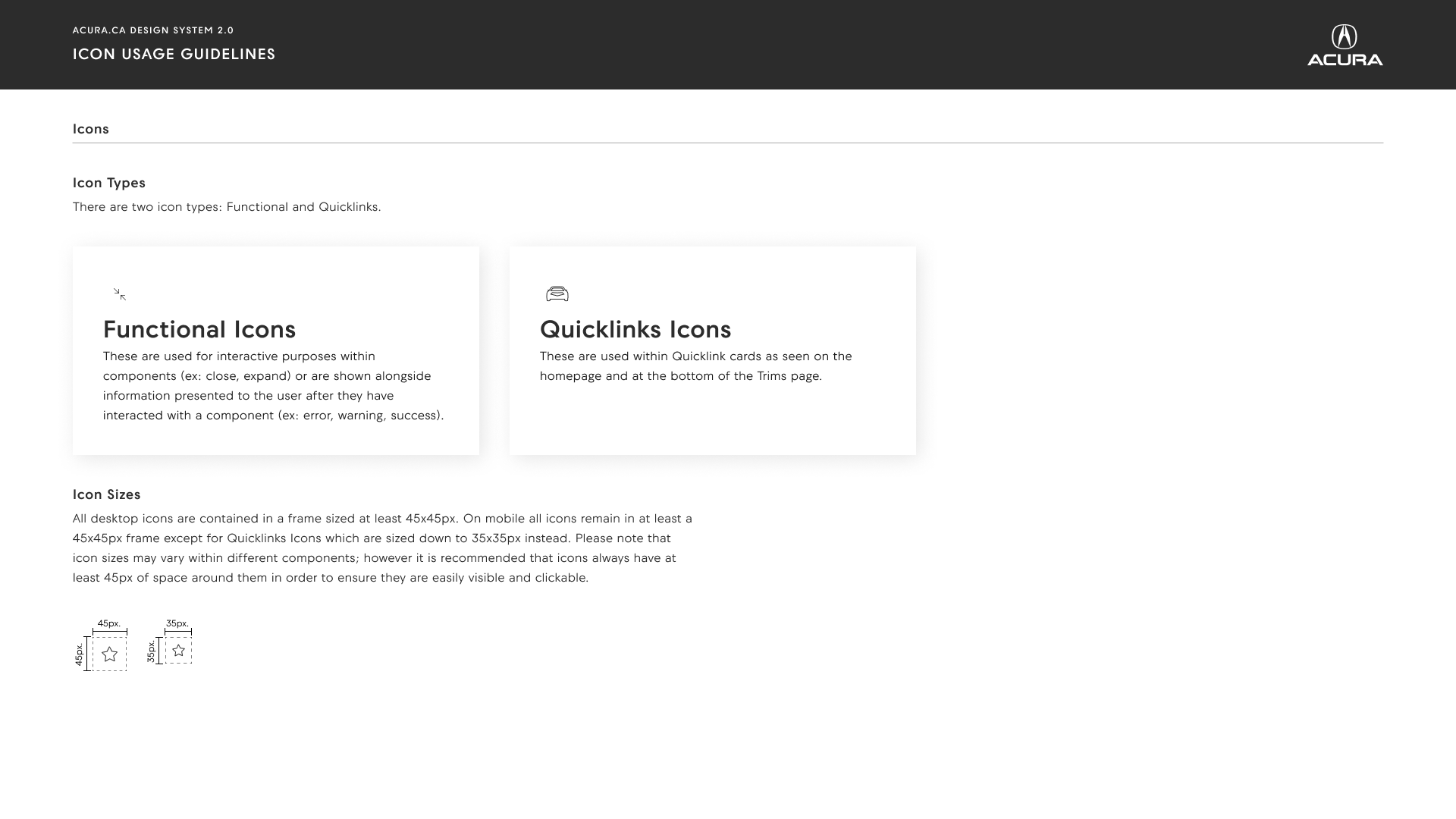
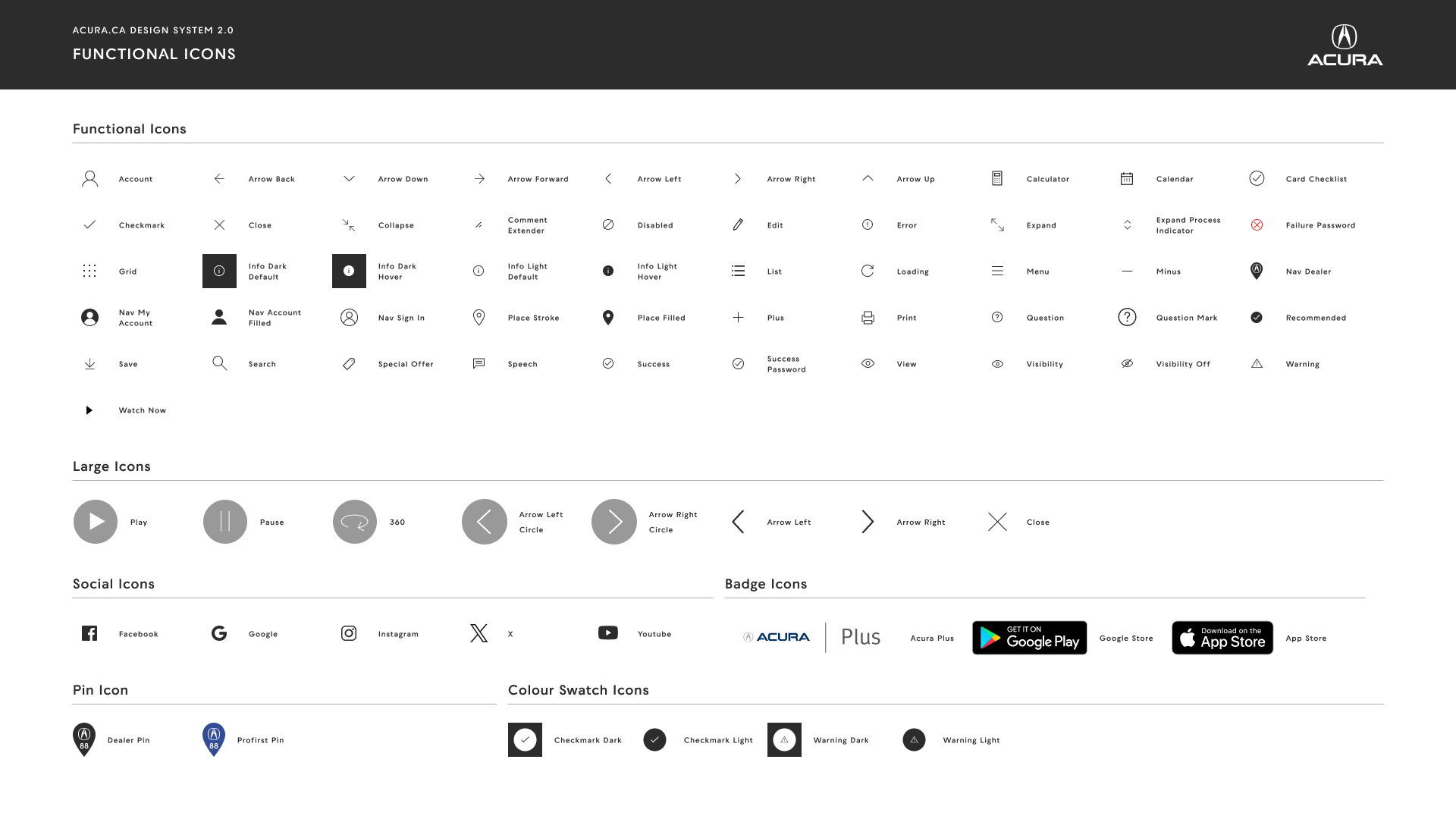
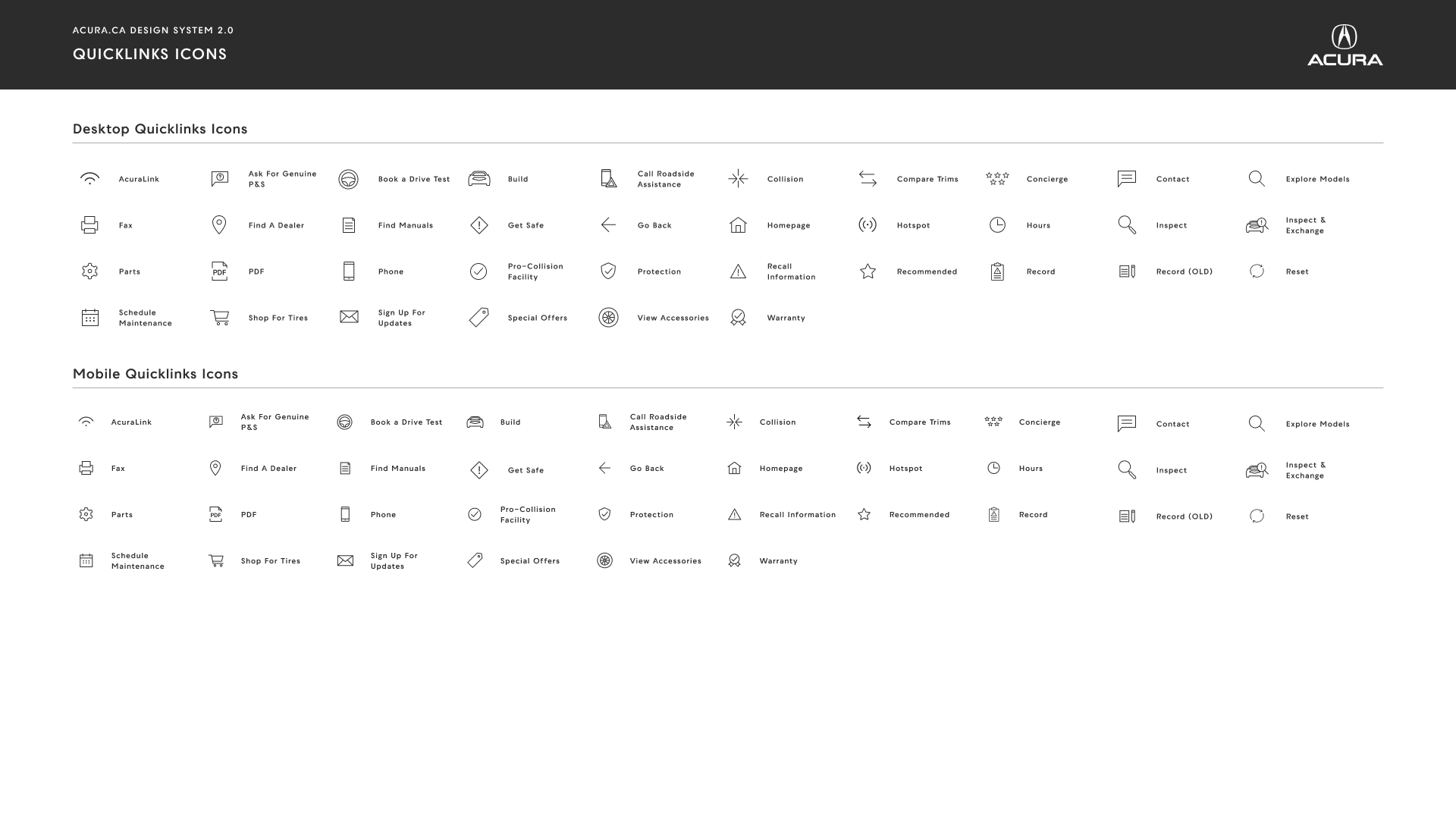
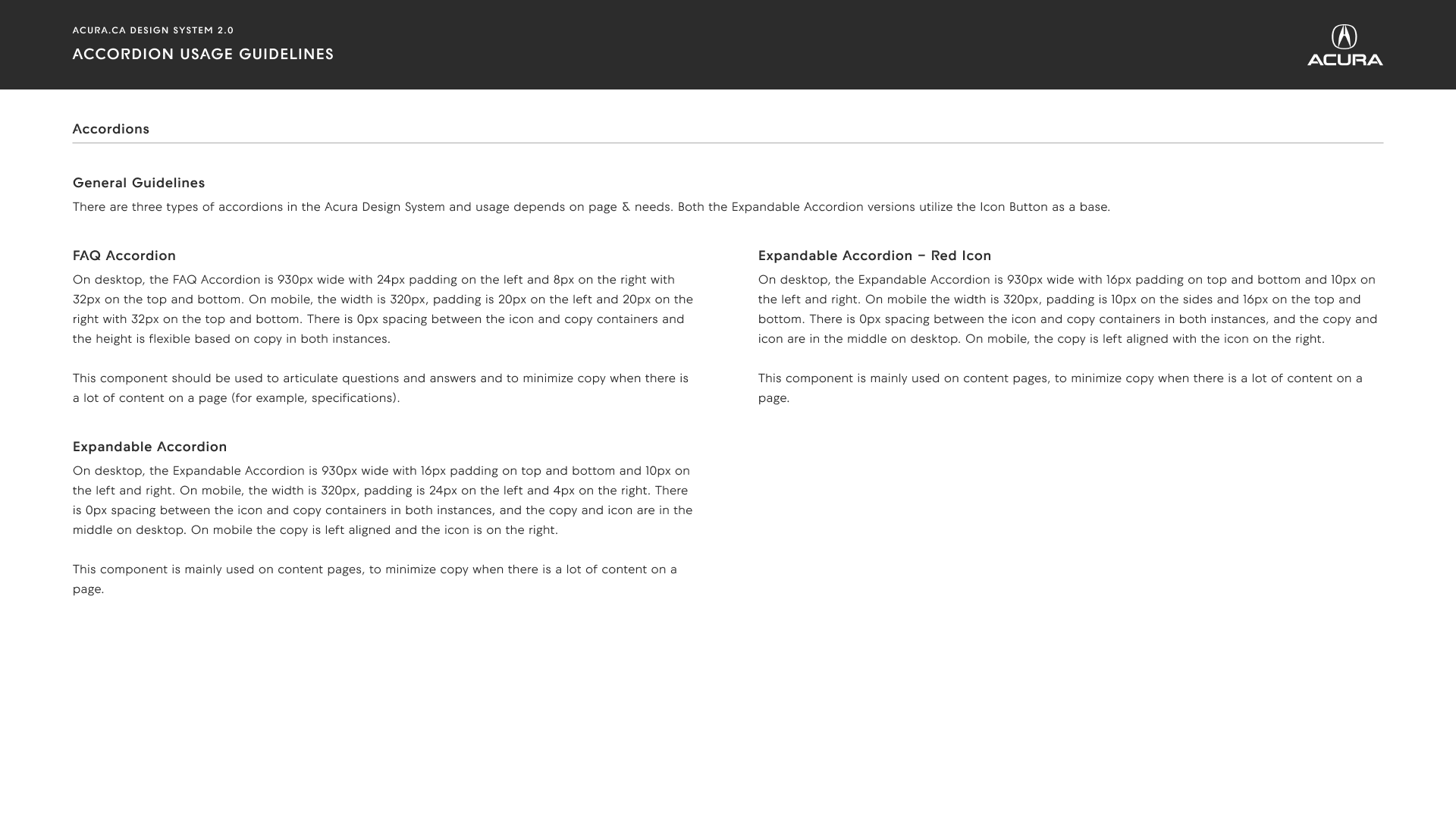
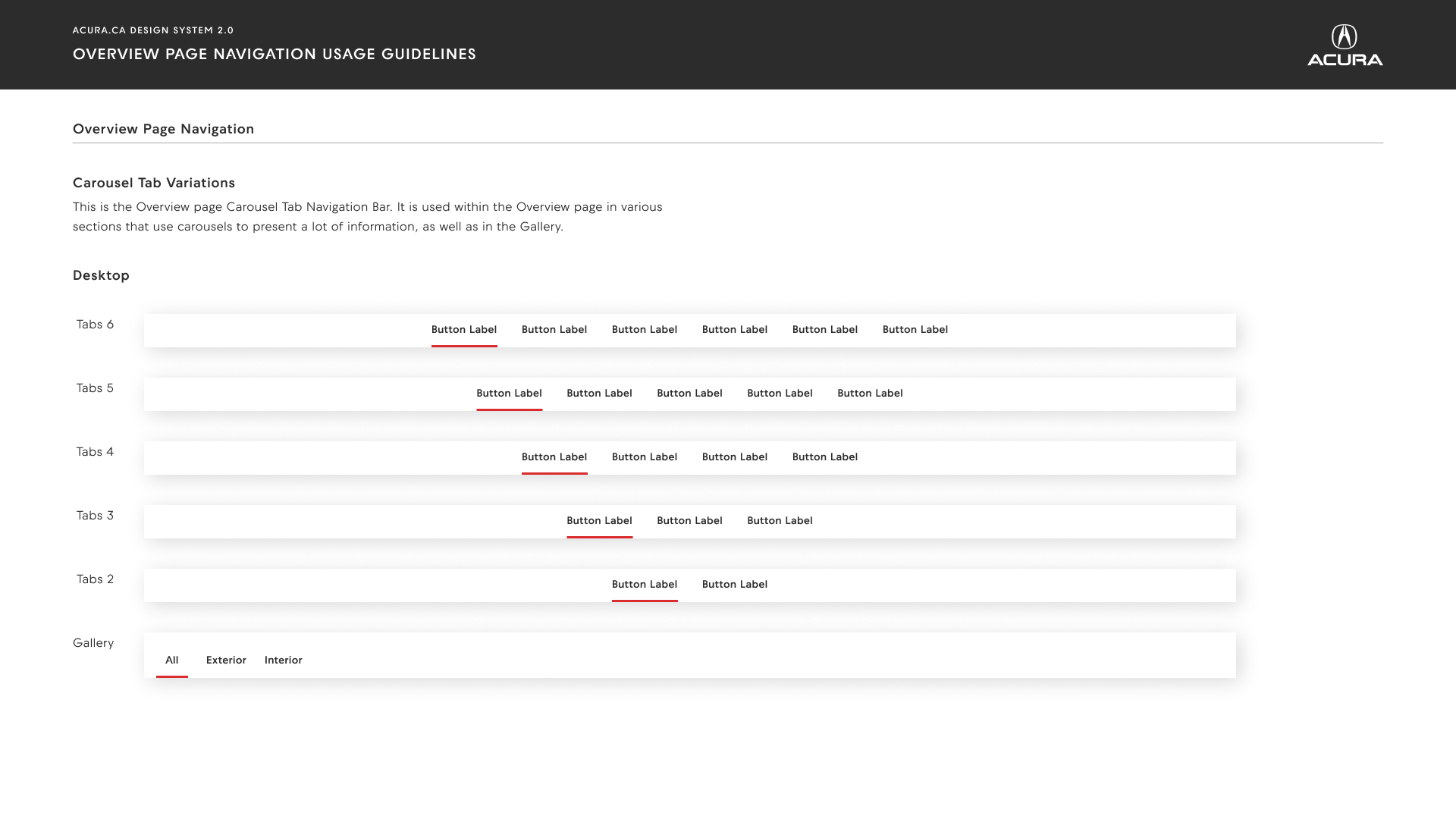
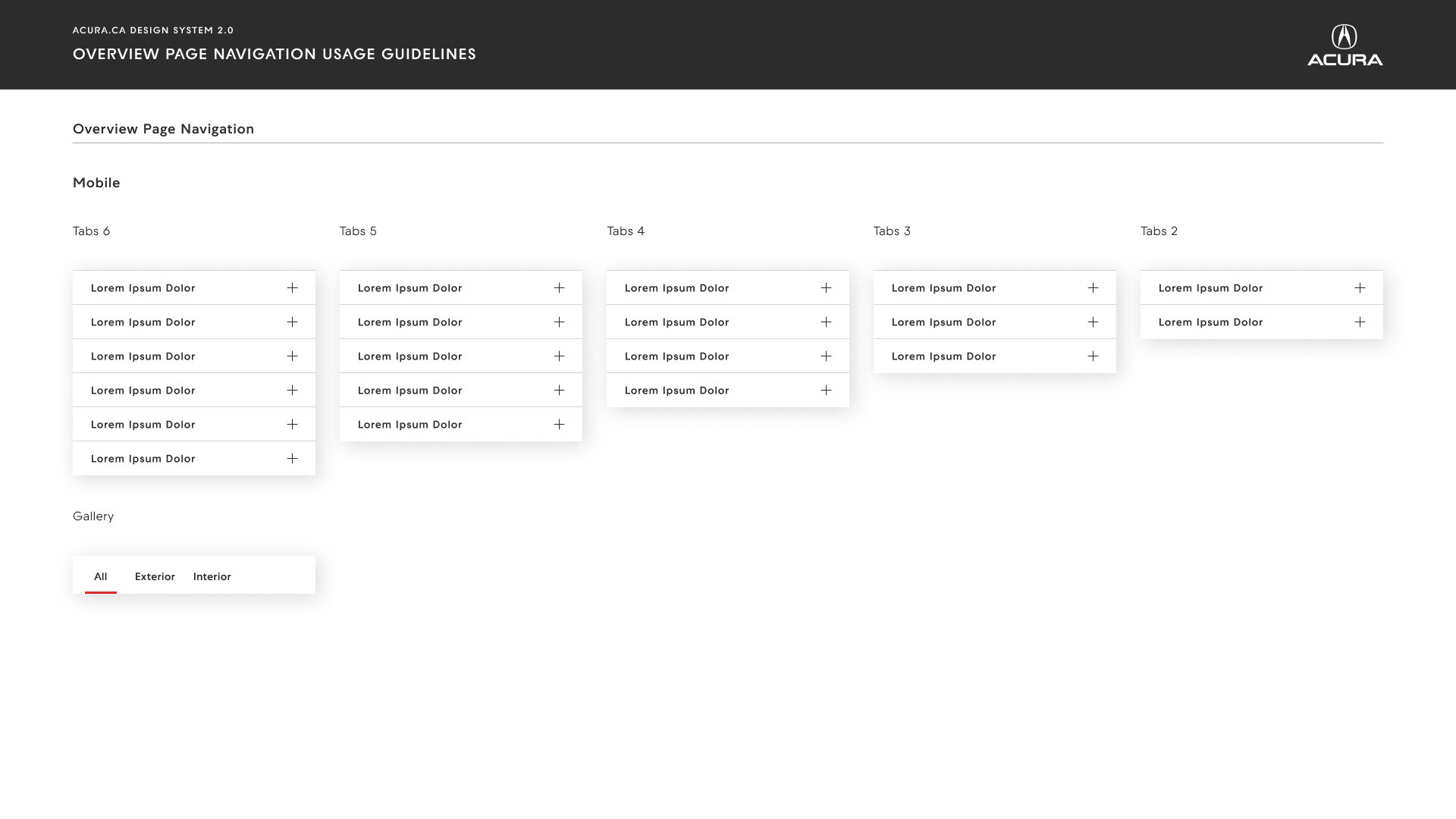
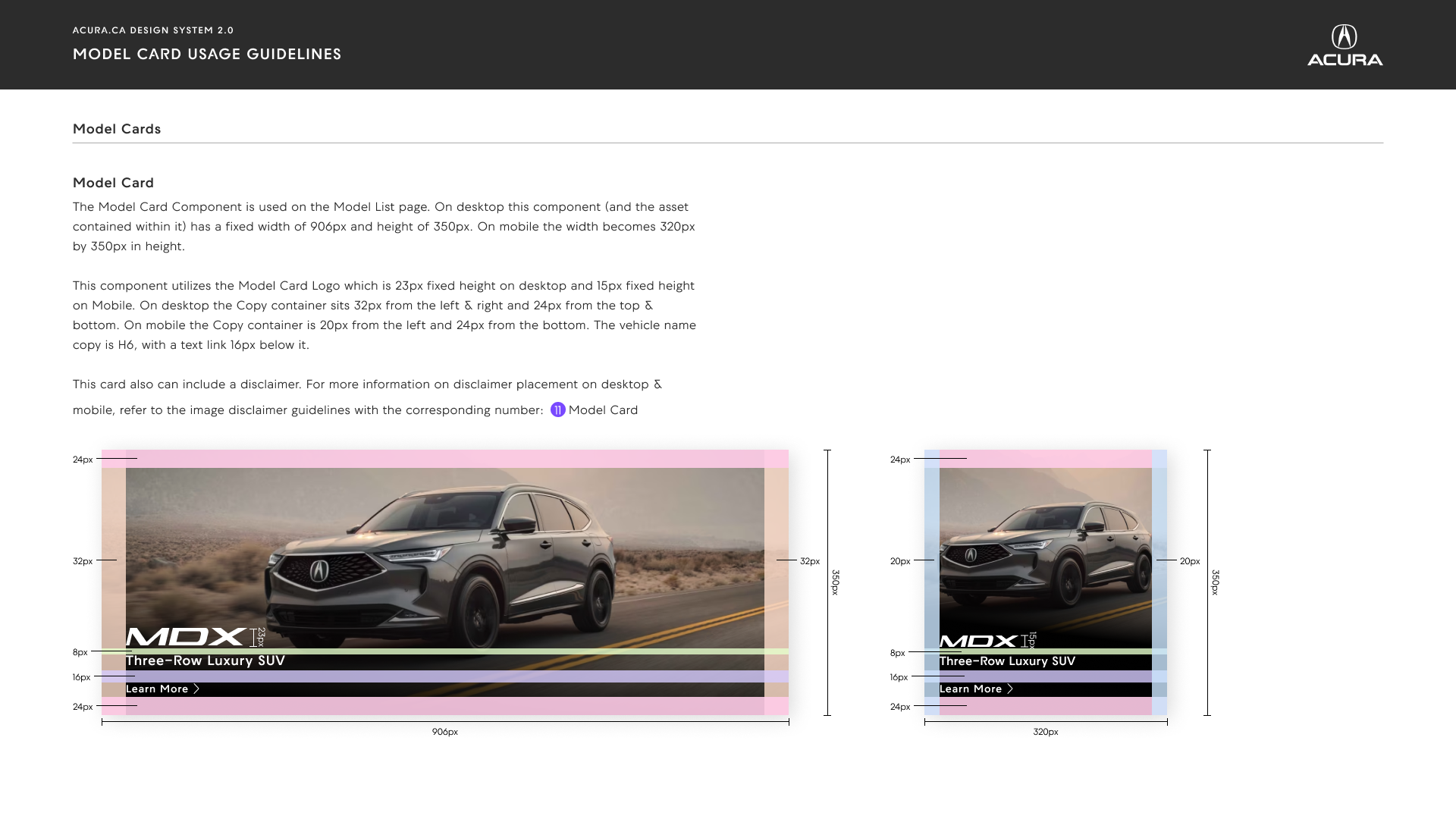
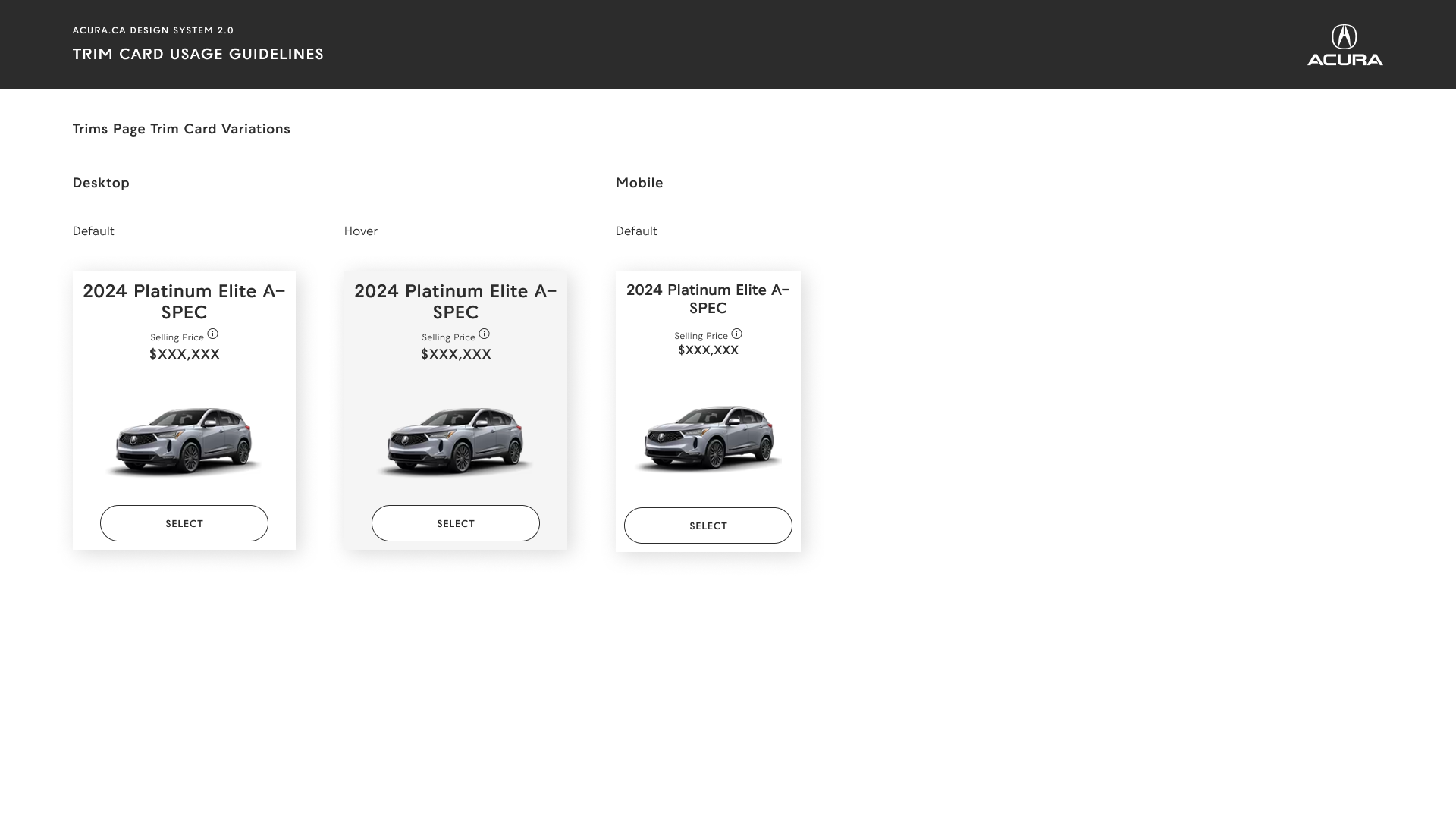
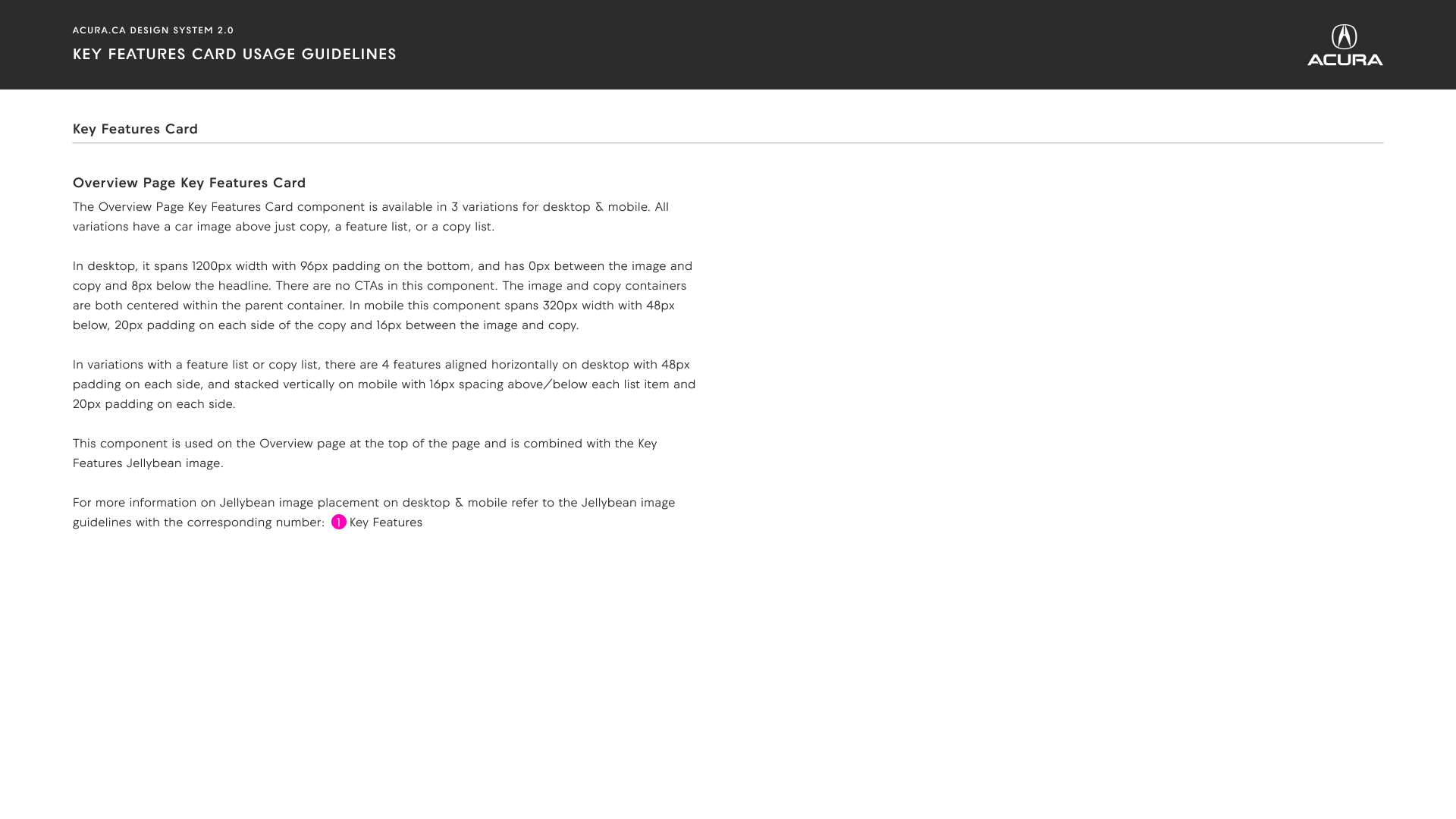
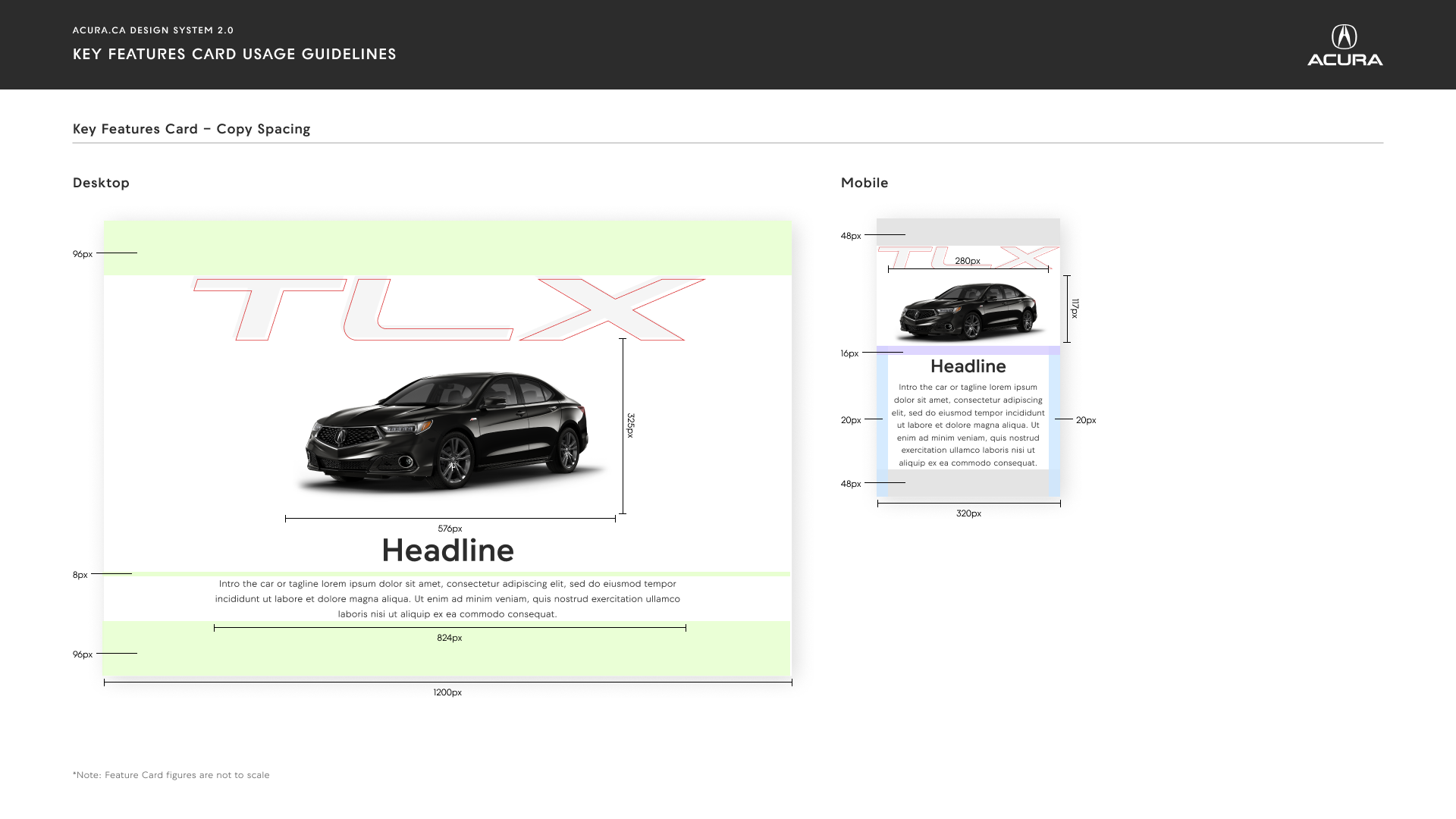
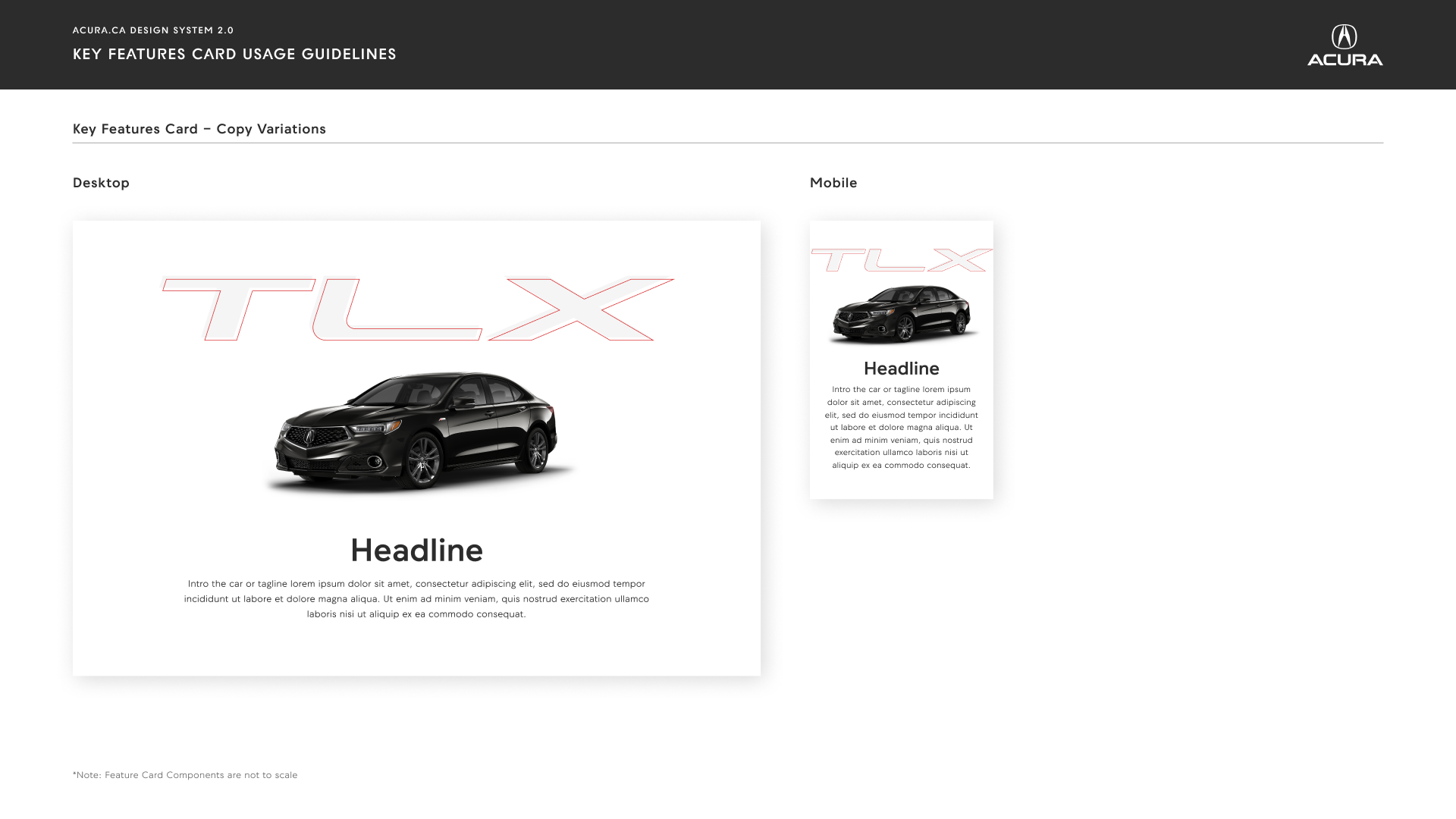
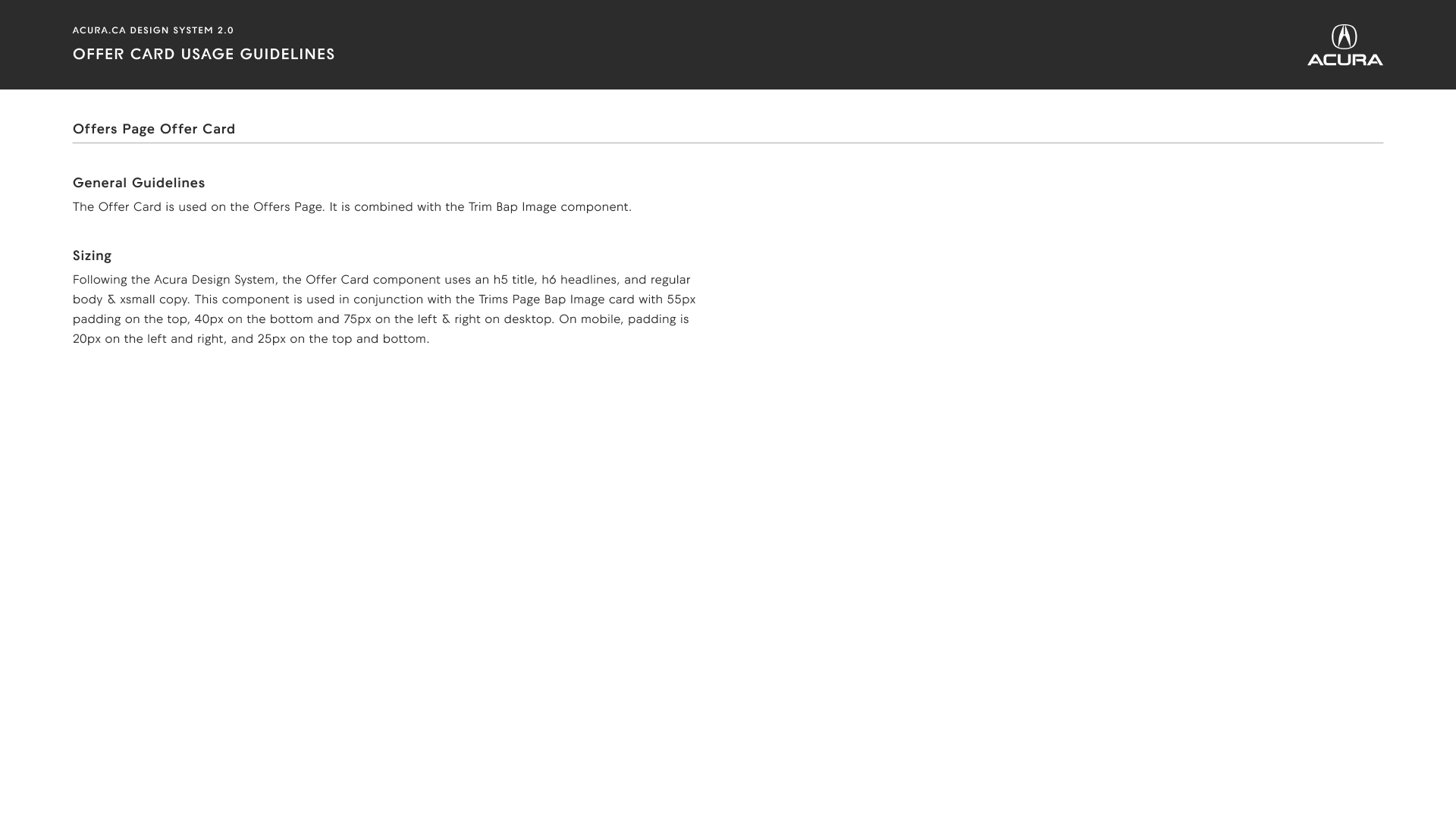
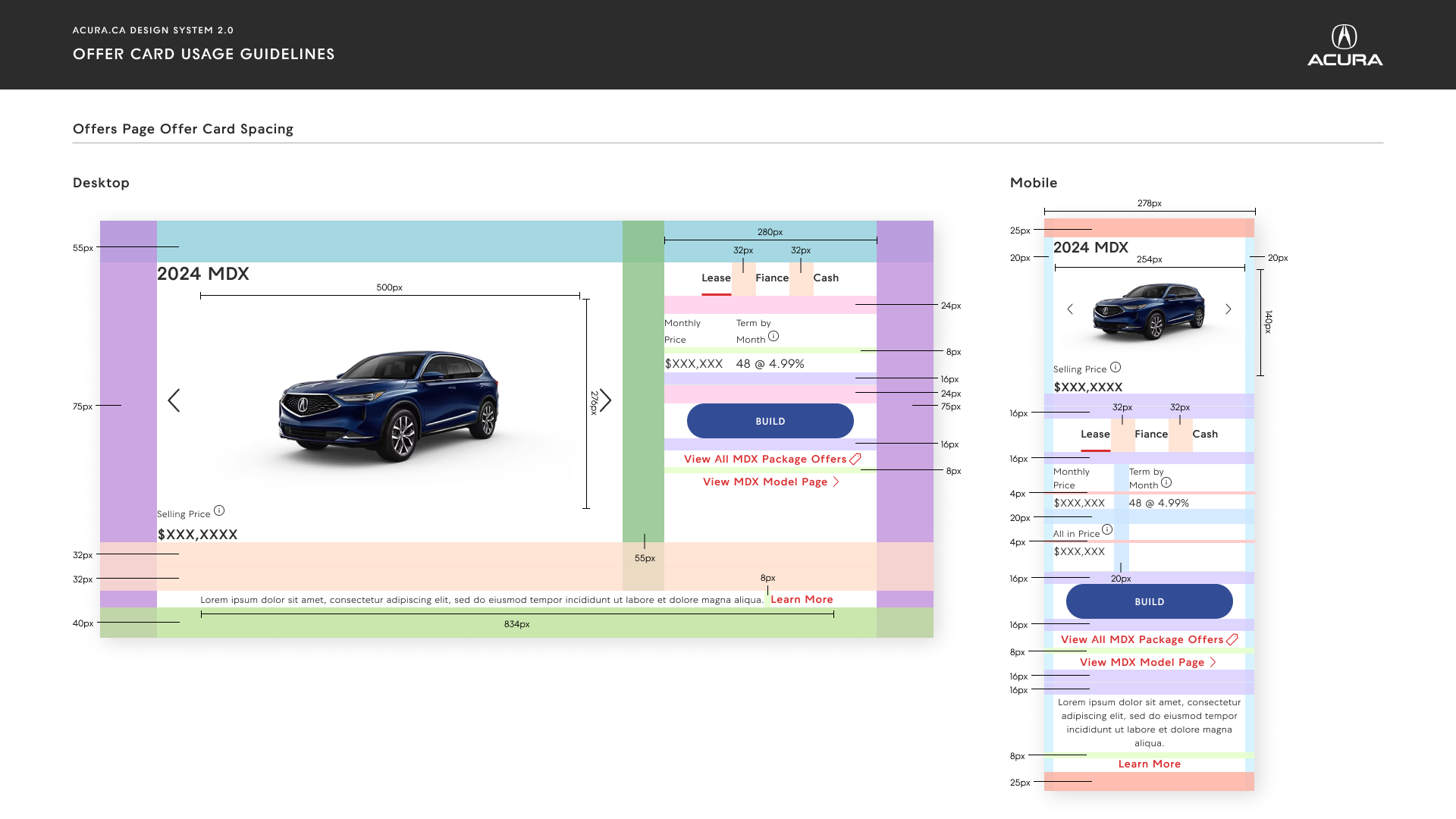
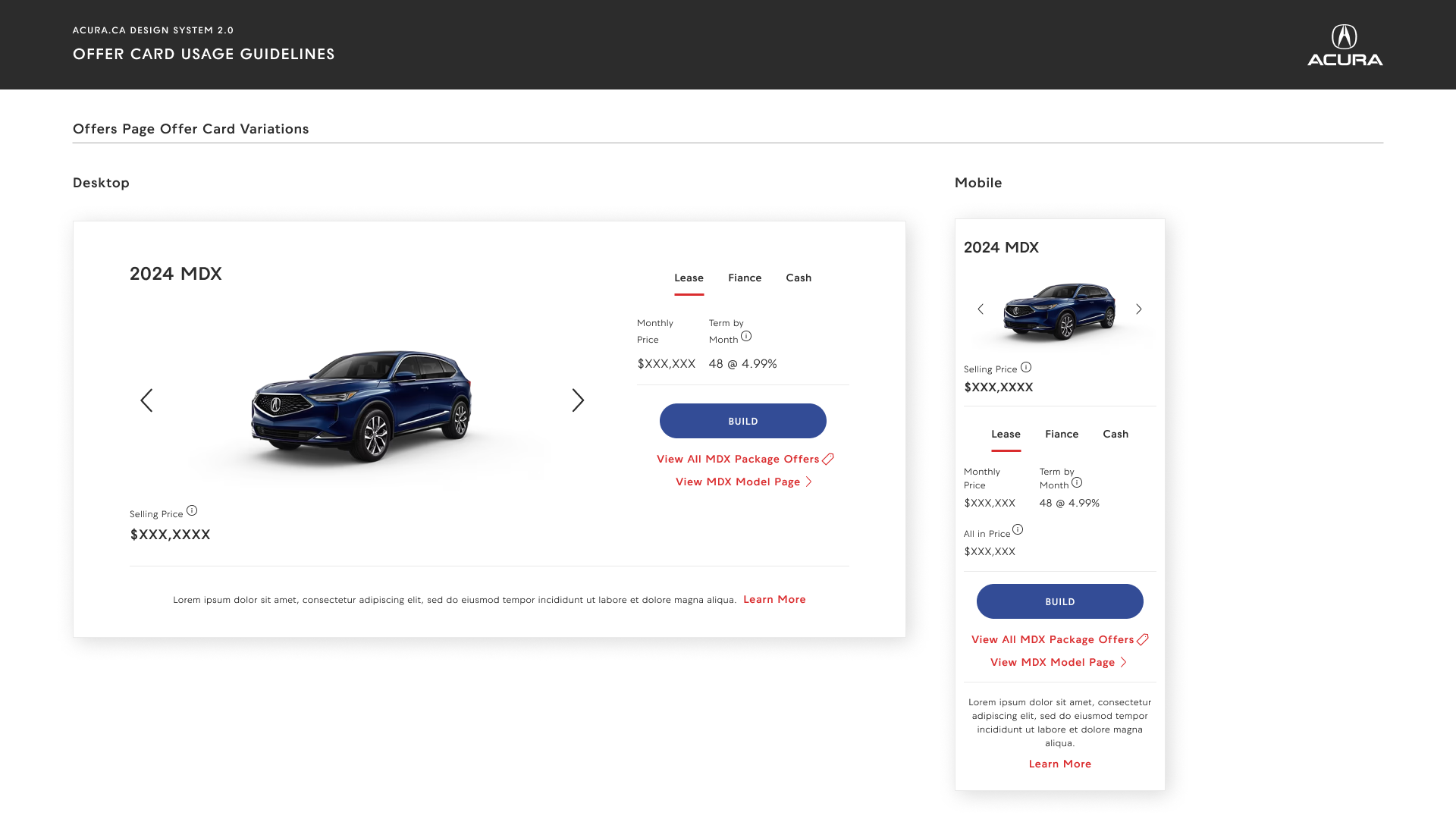
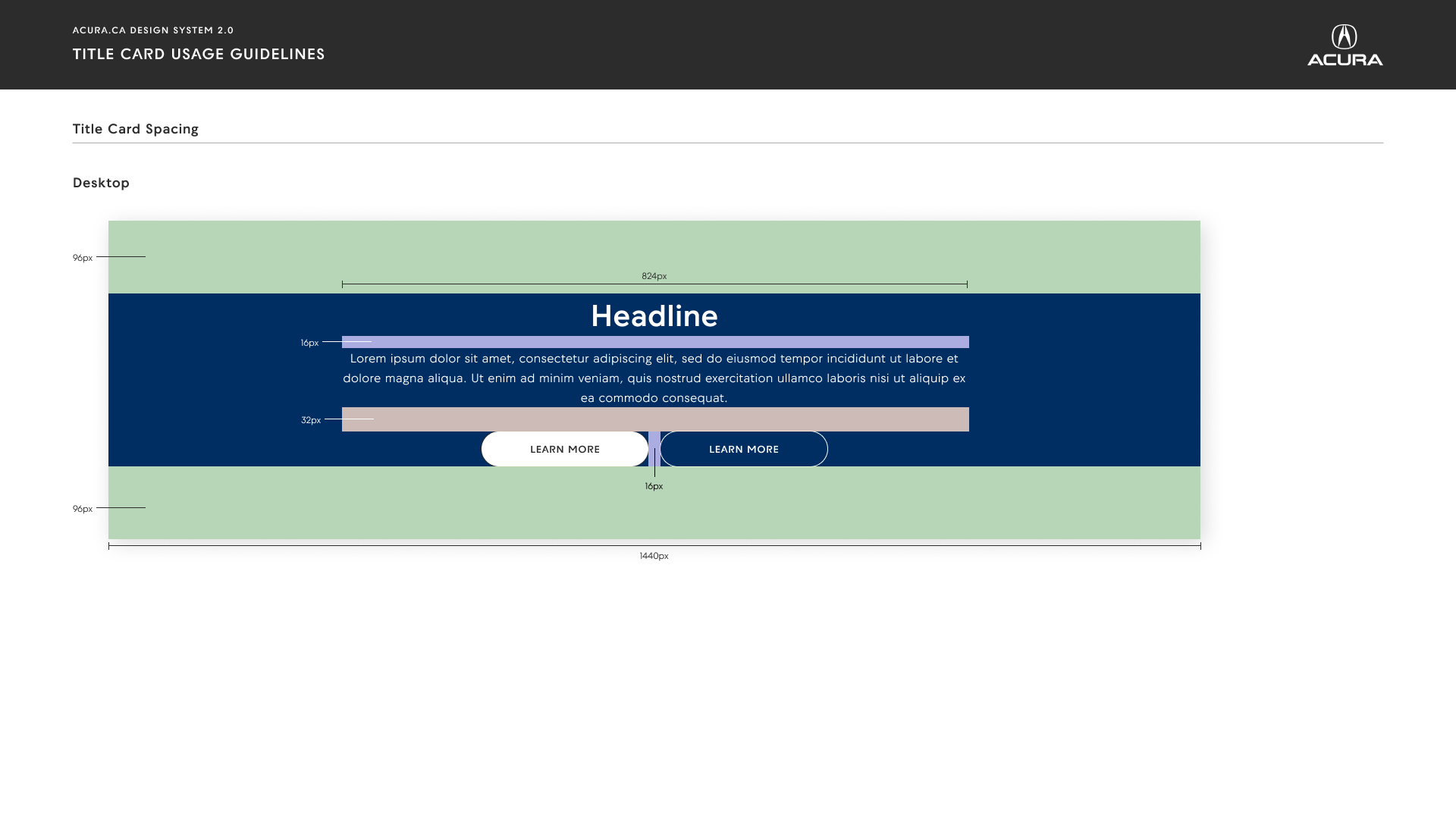
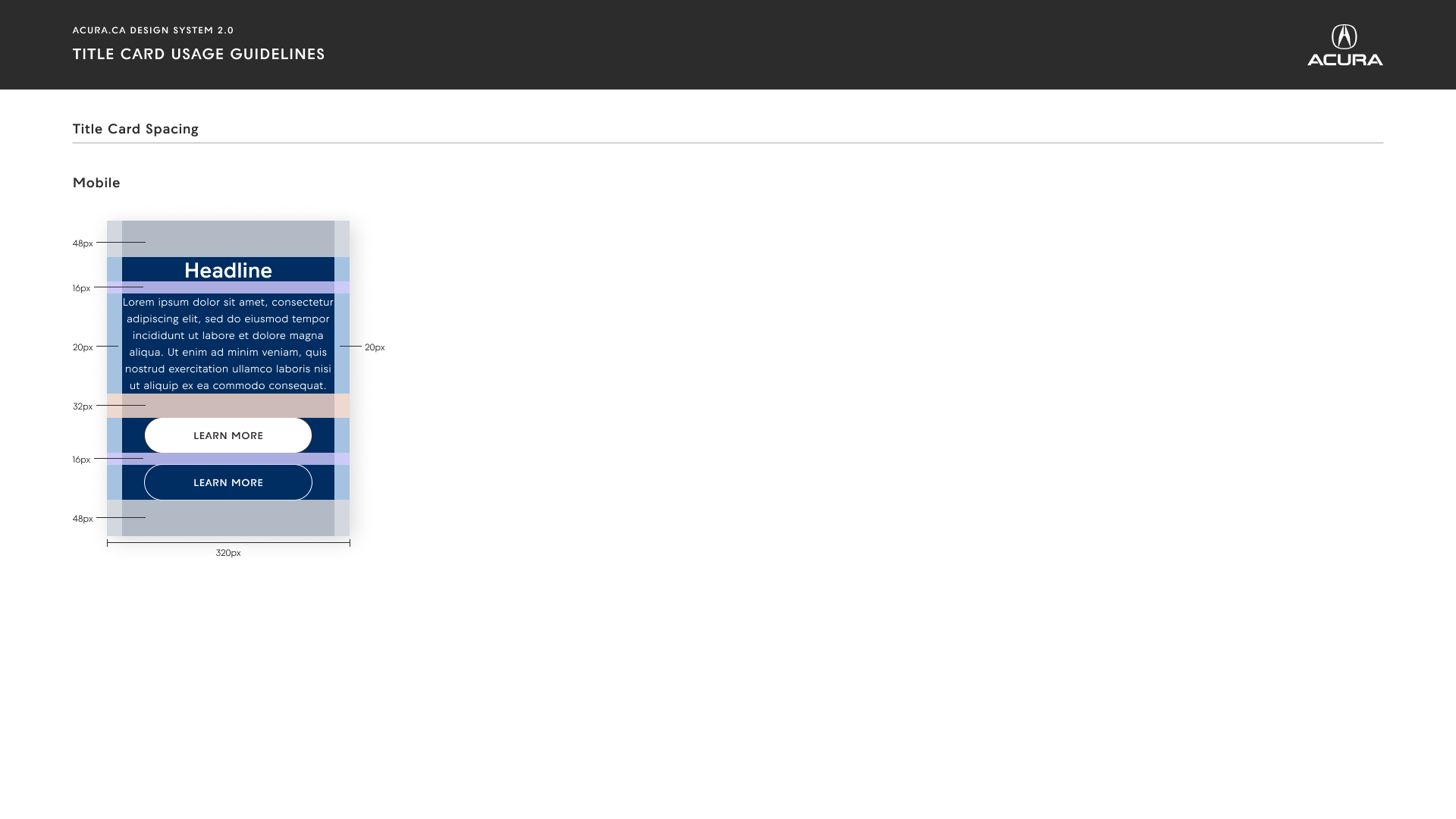
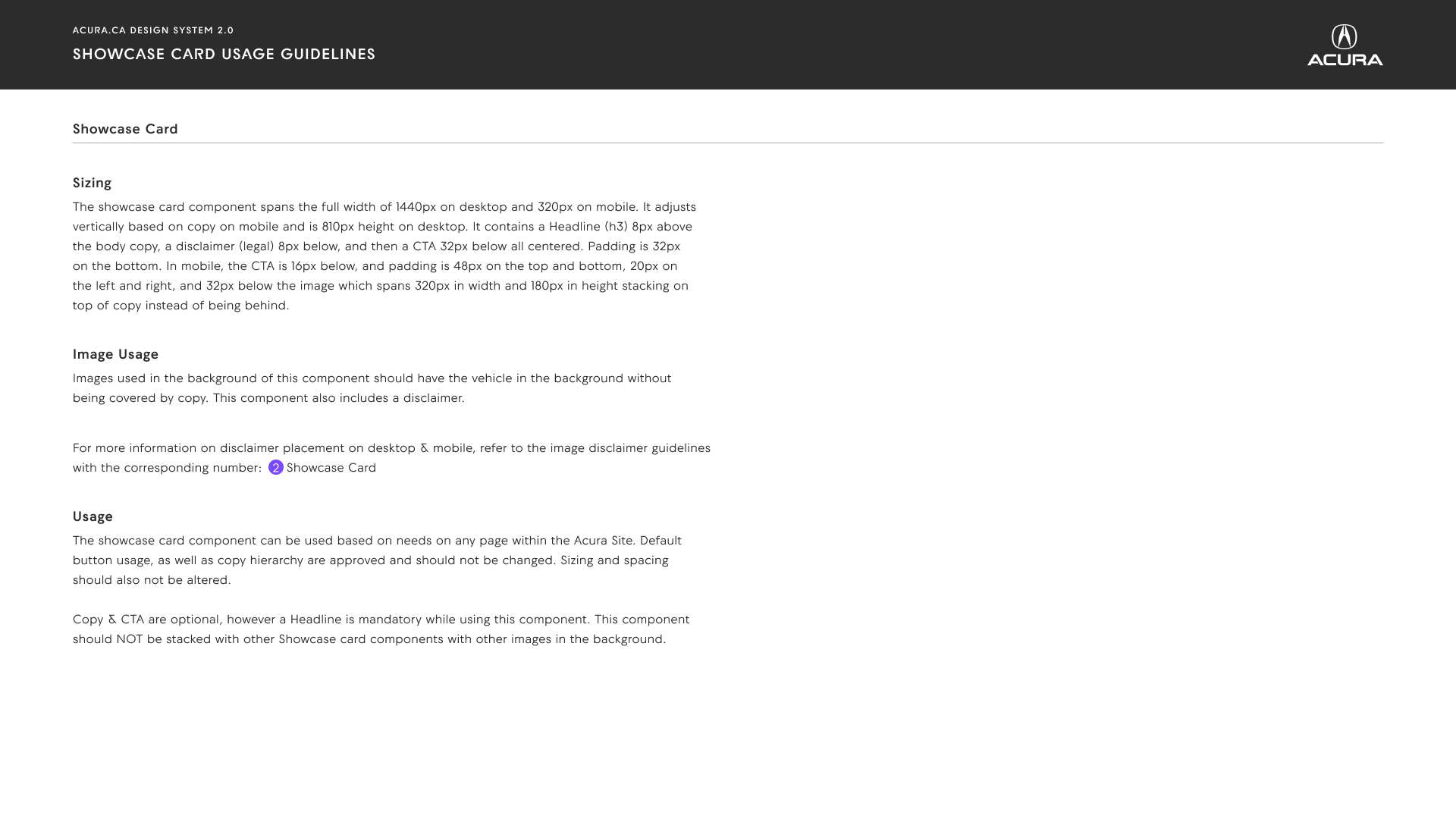
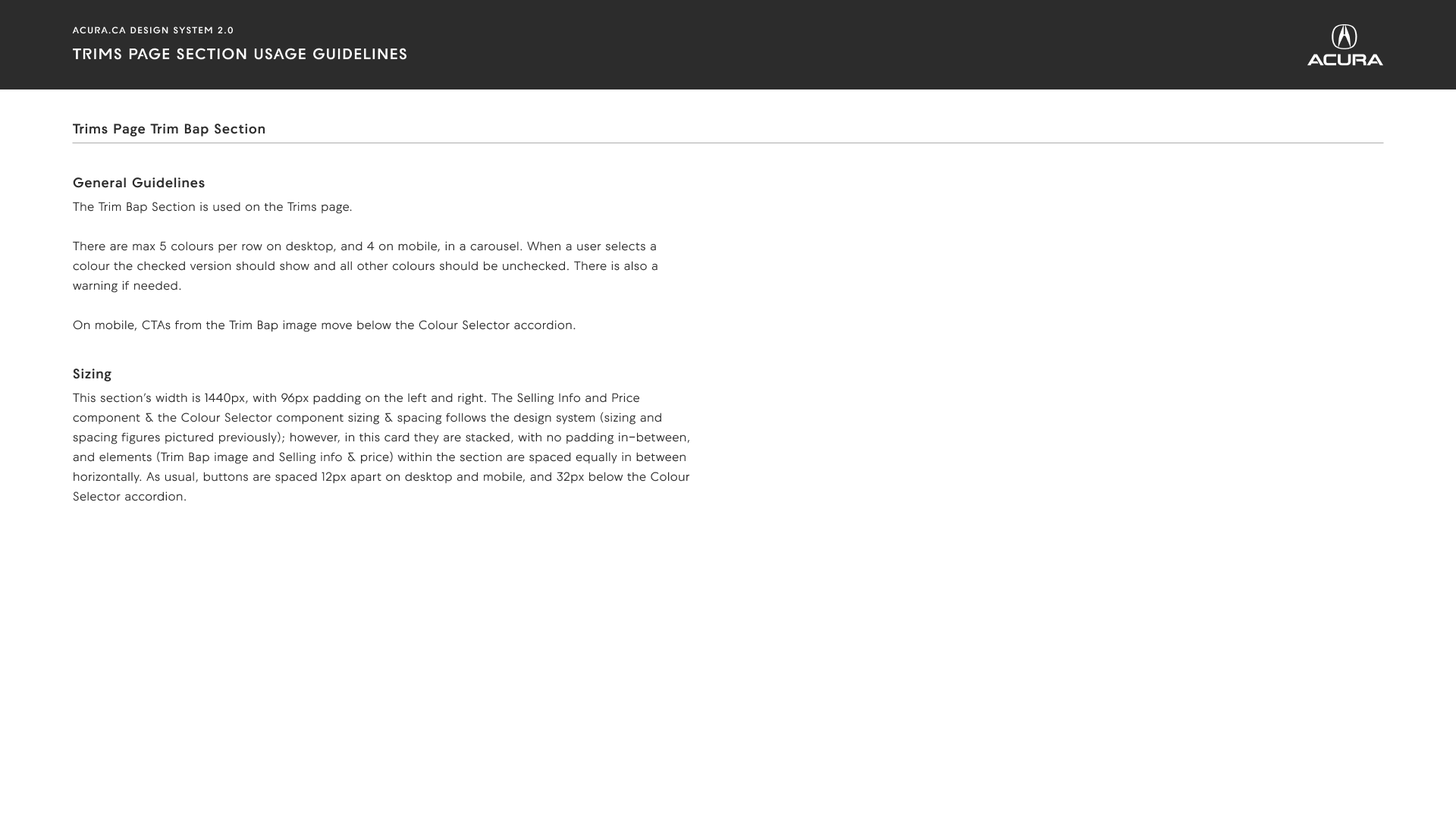
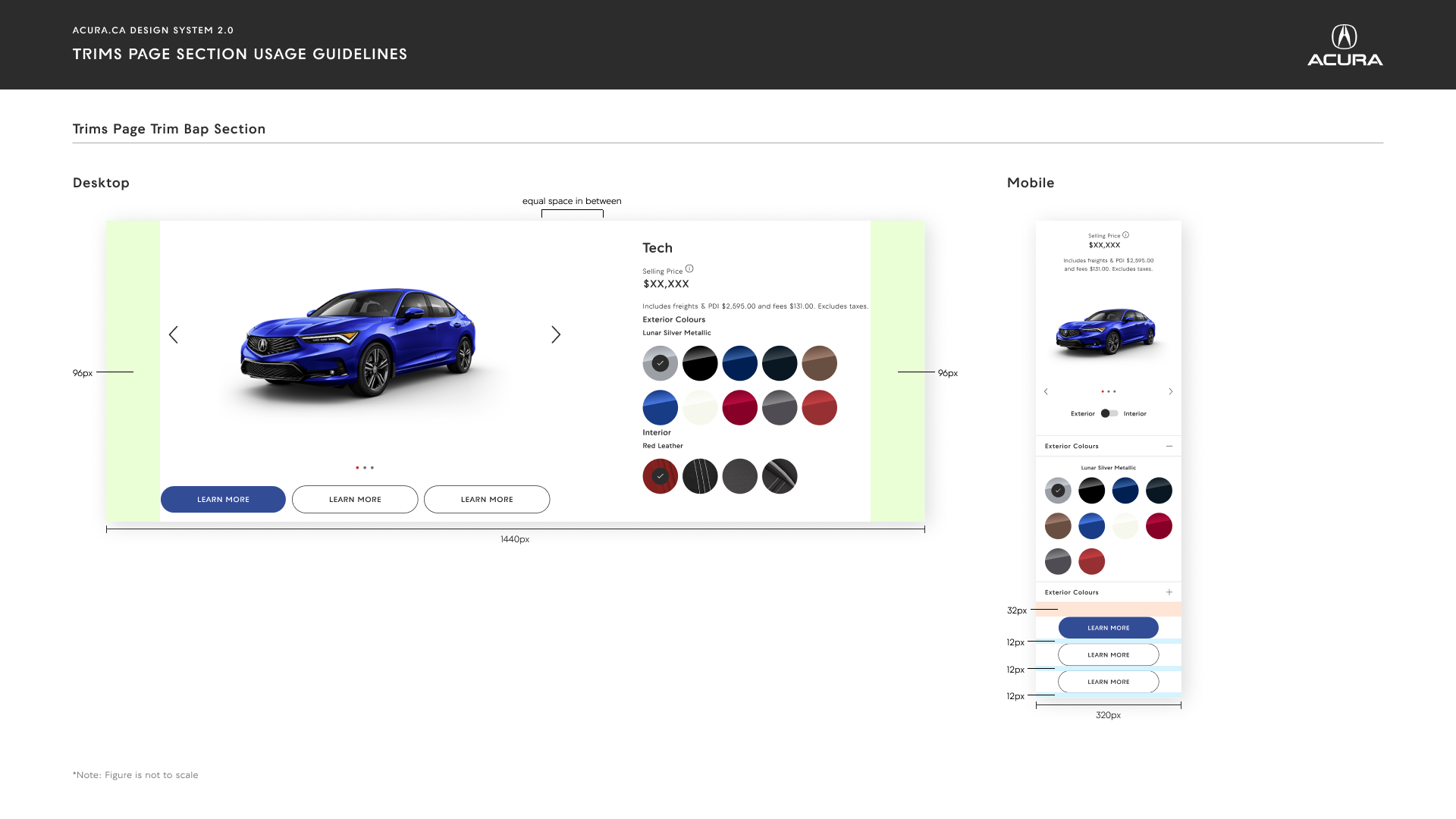
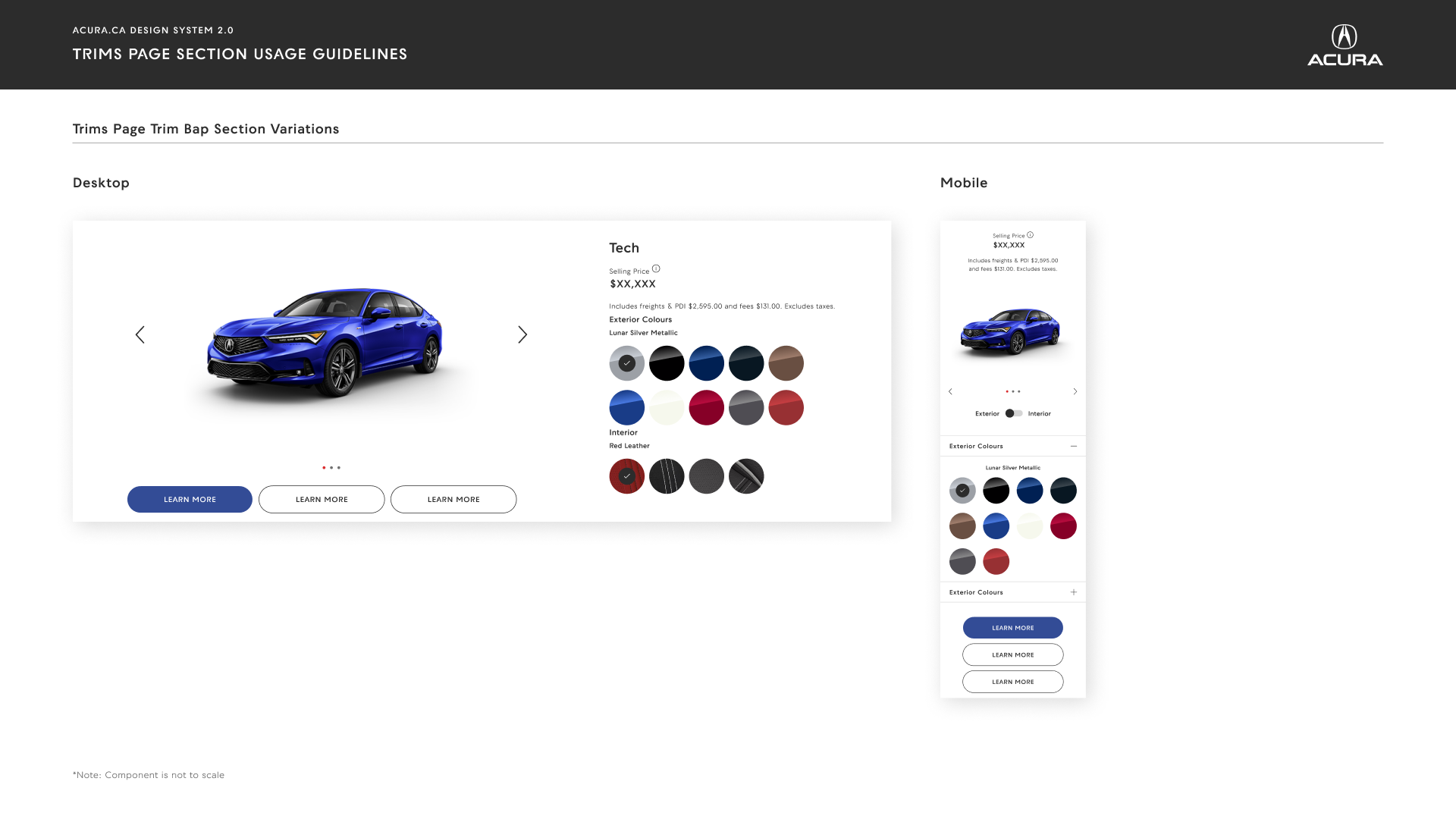
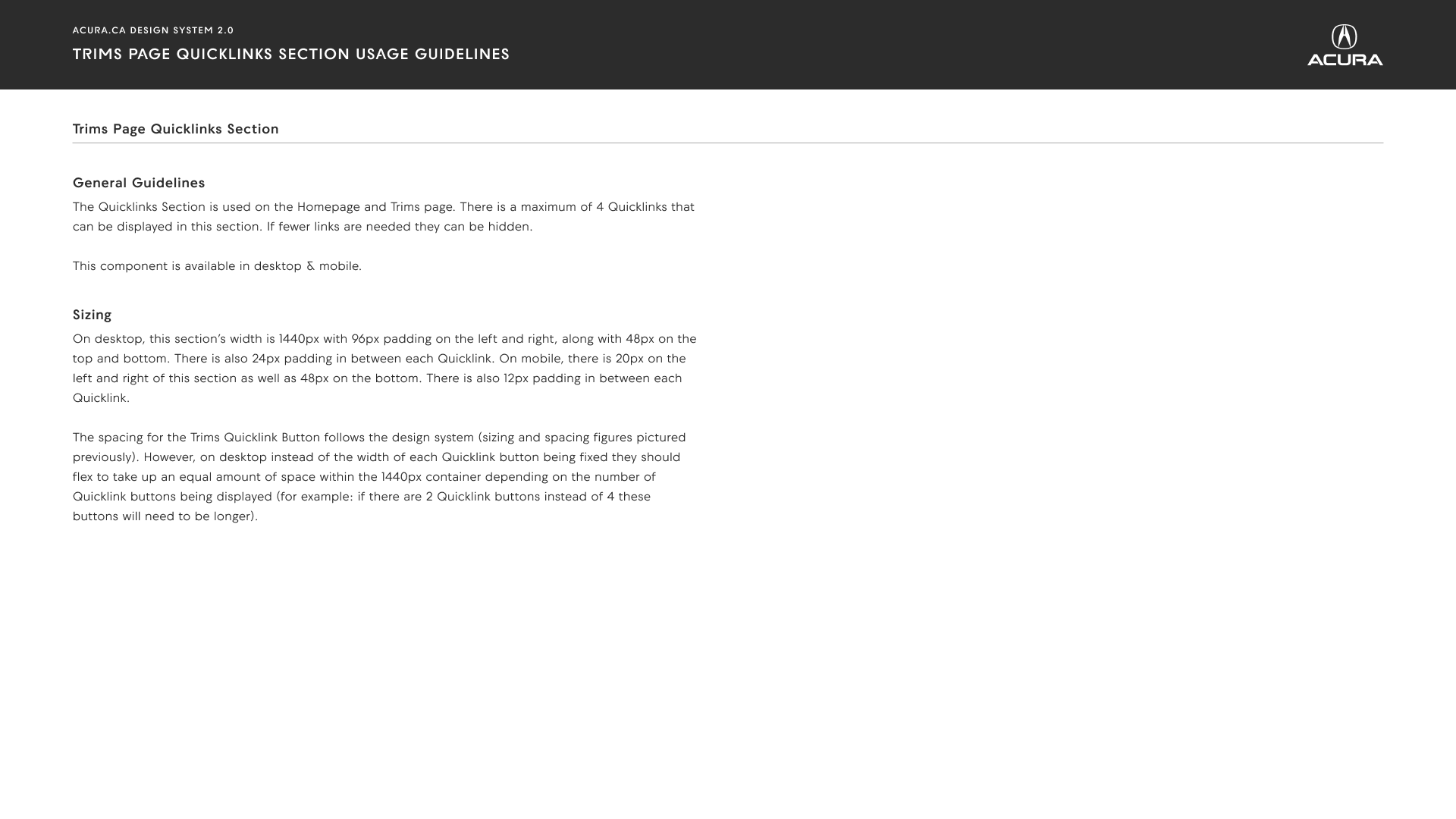
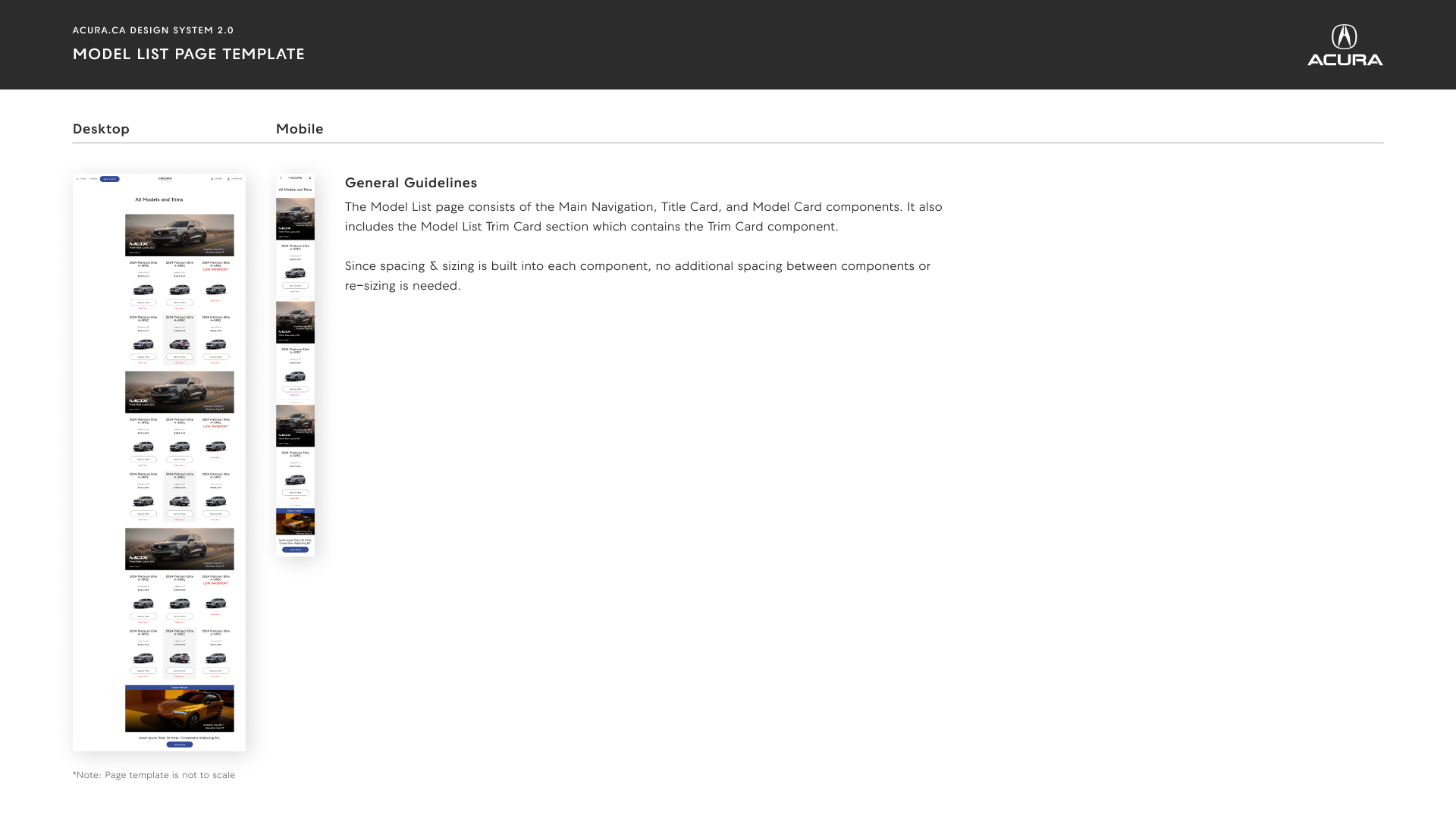
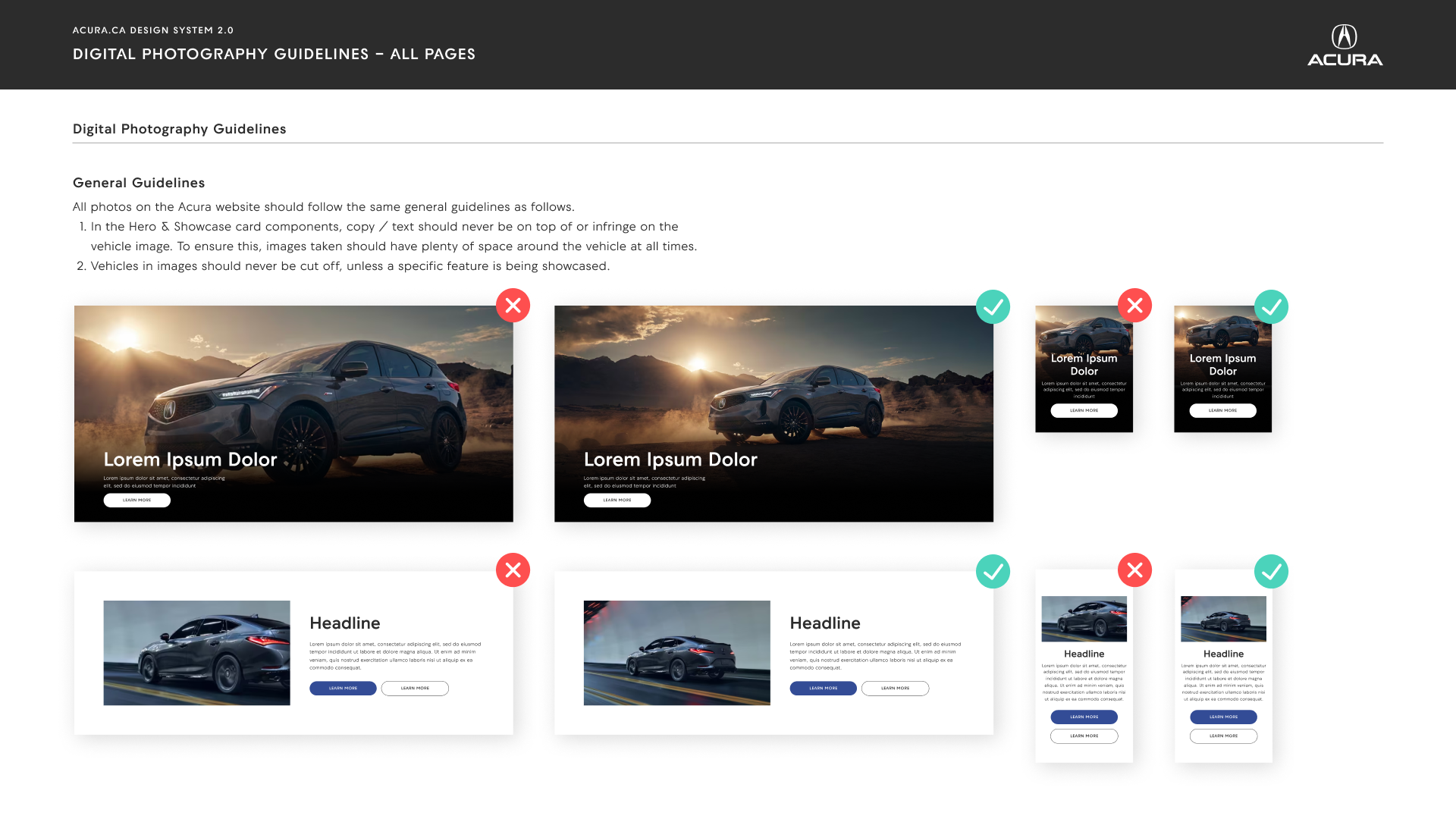
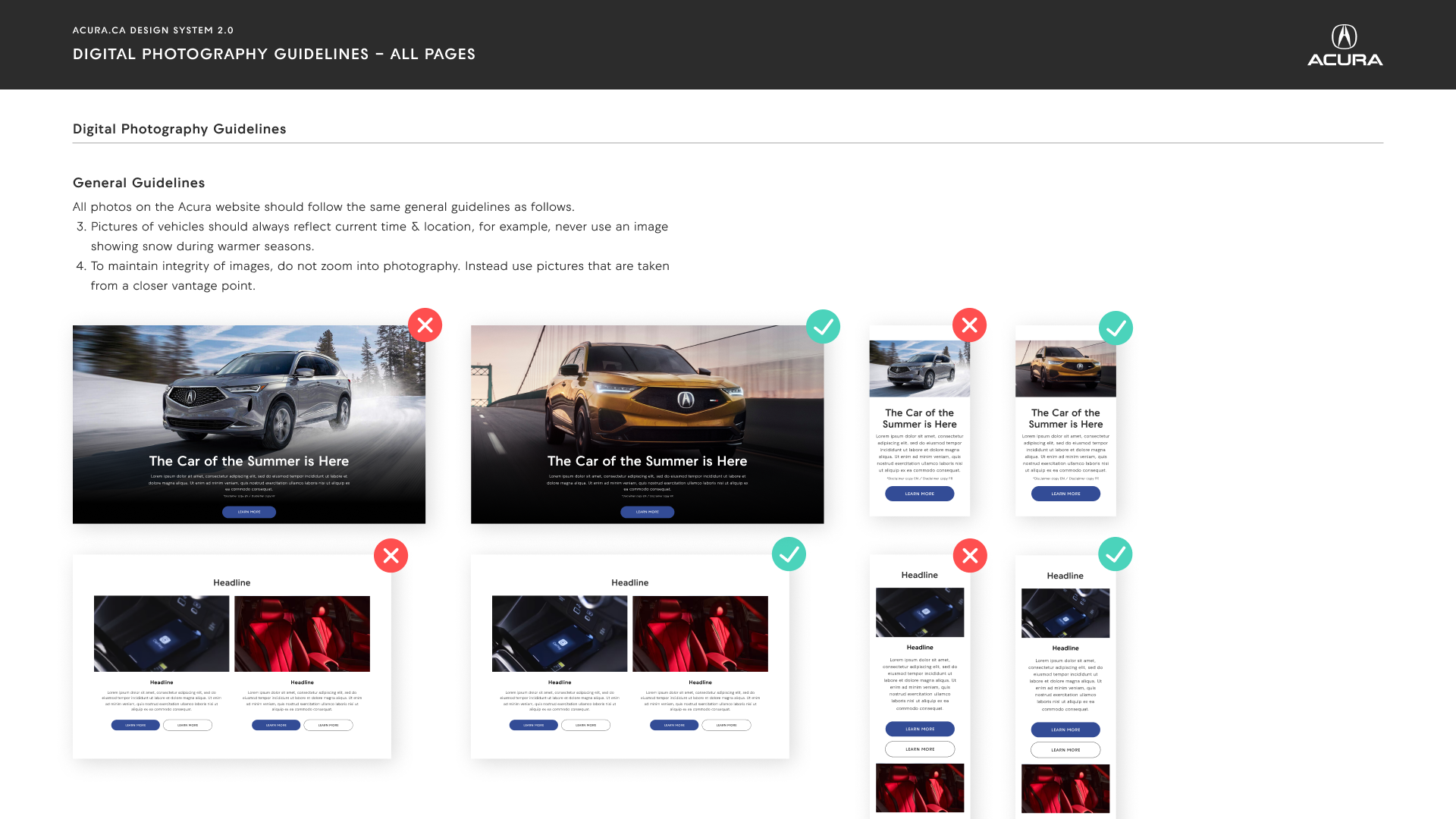
Design System 2.0 Documentation
Once phase one was complete, we started on documentation
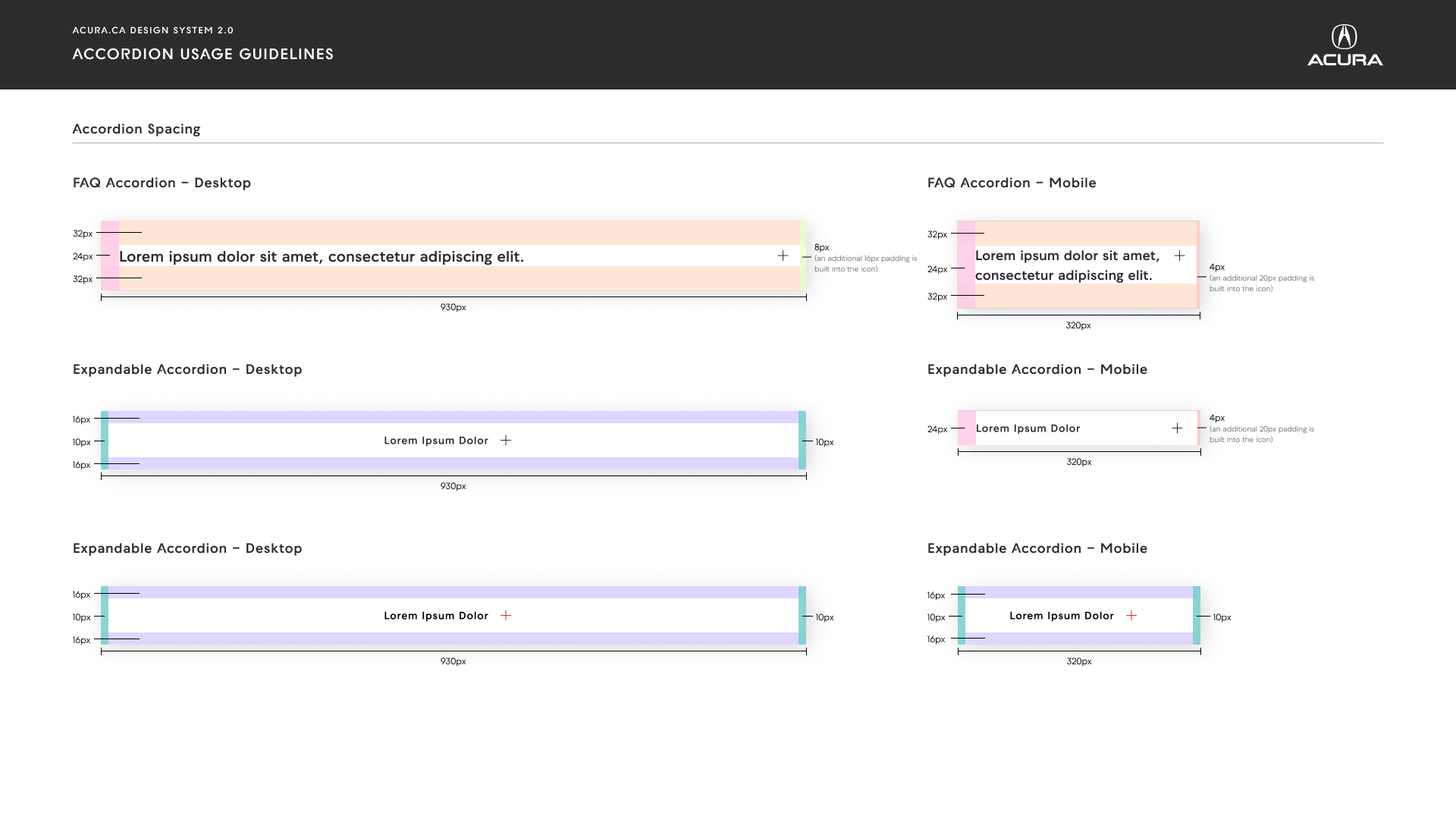
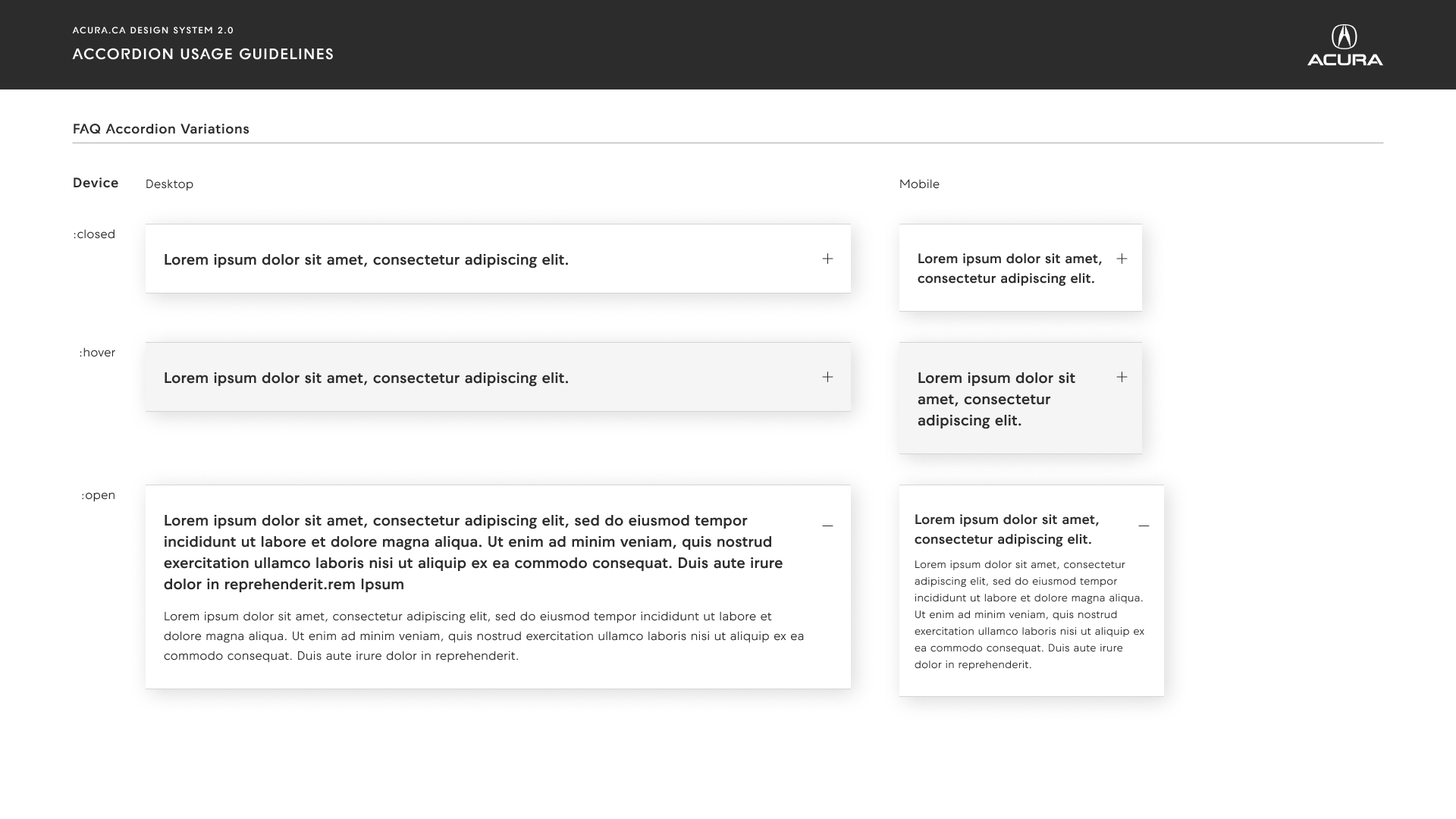
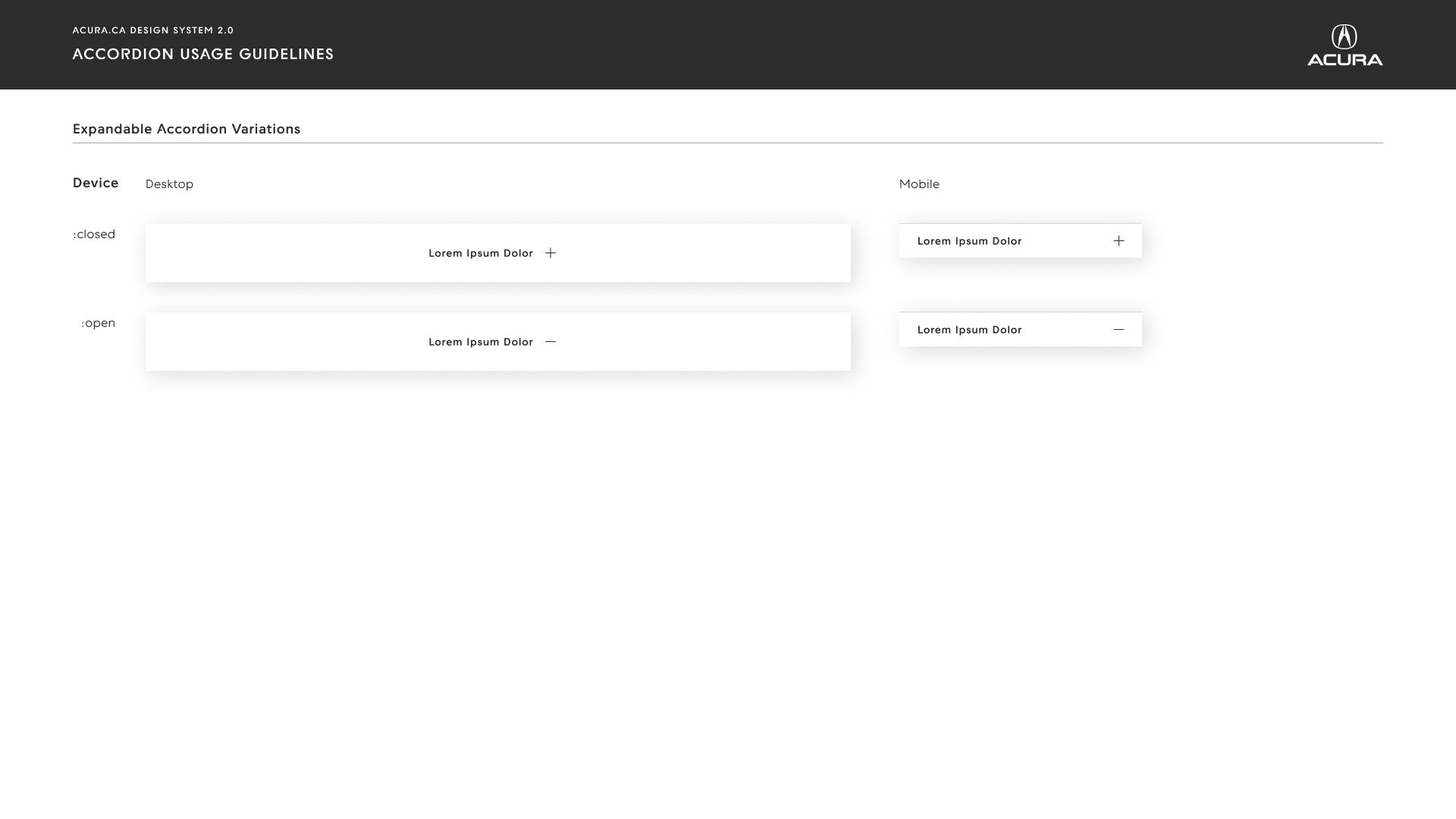
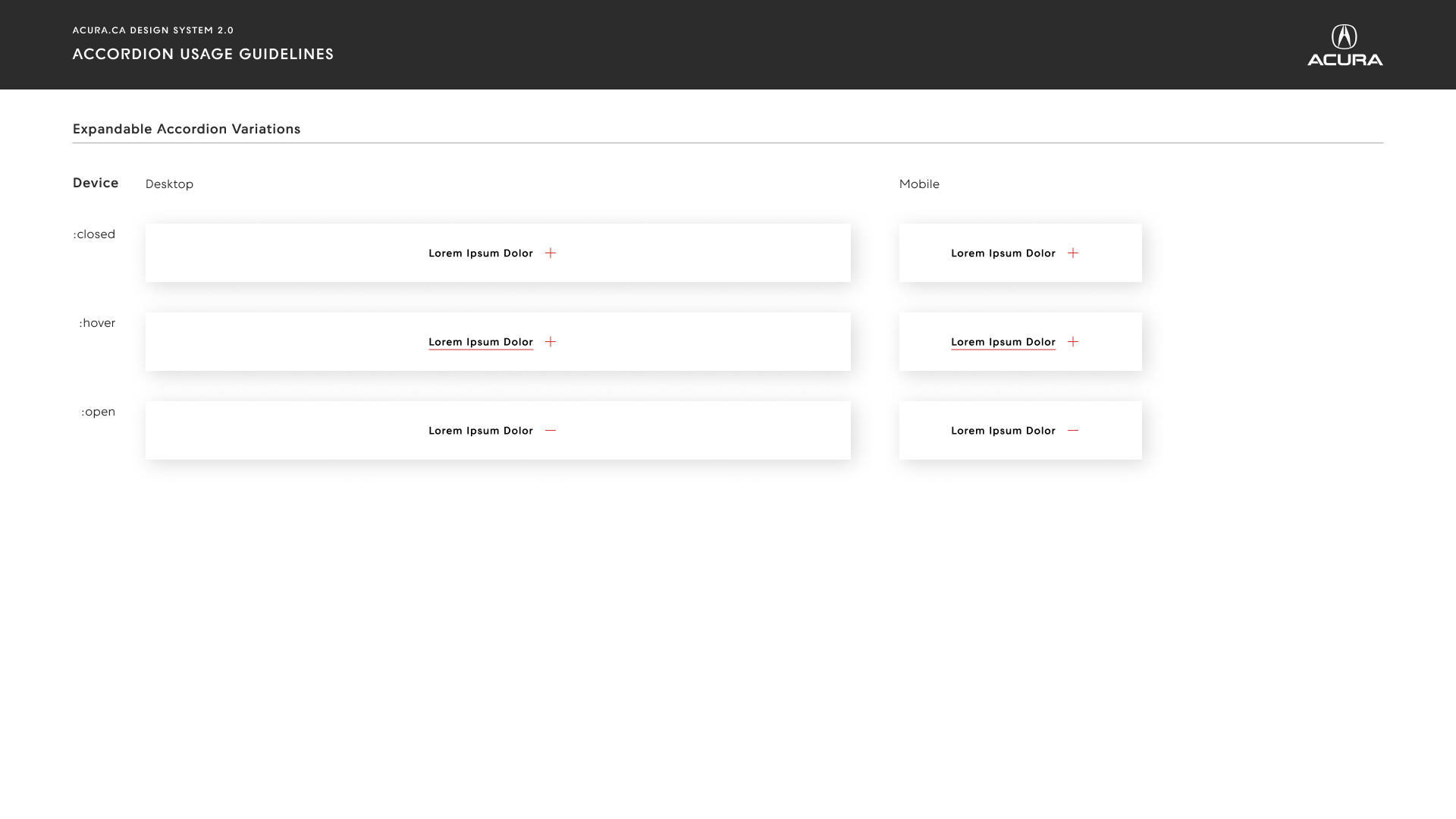
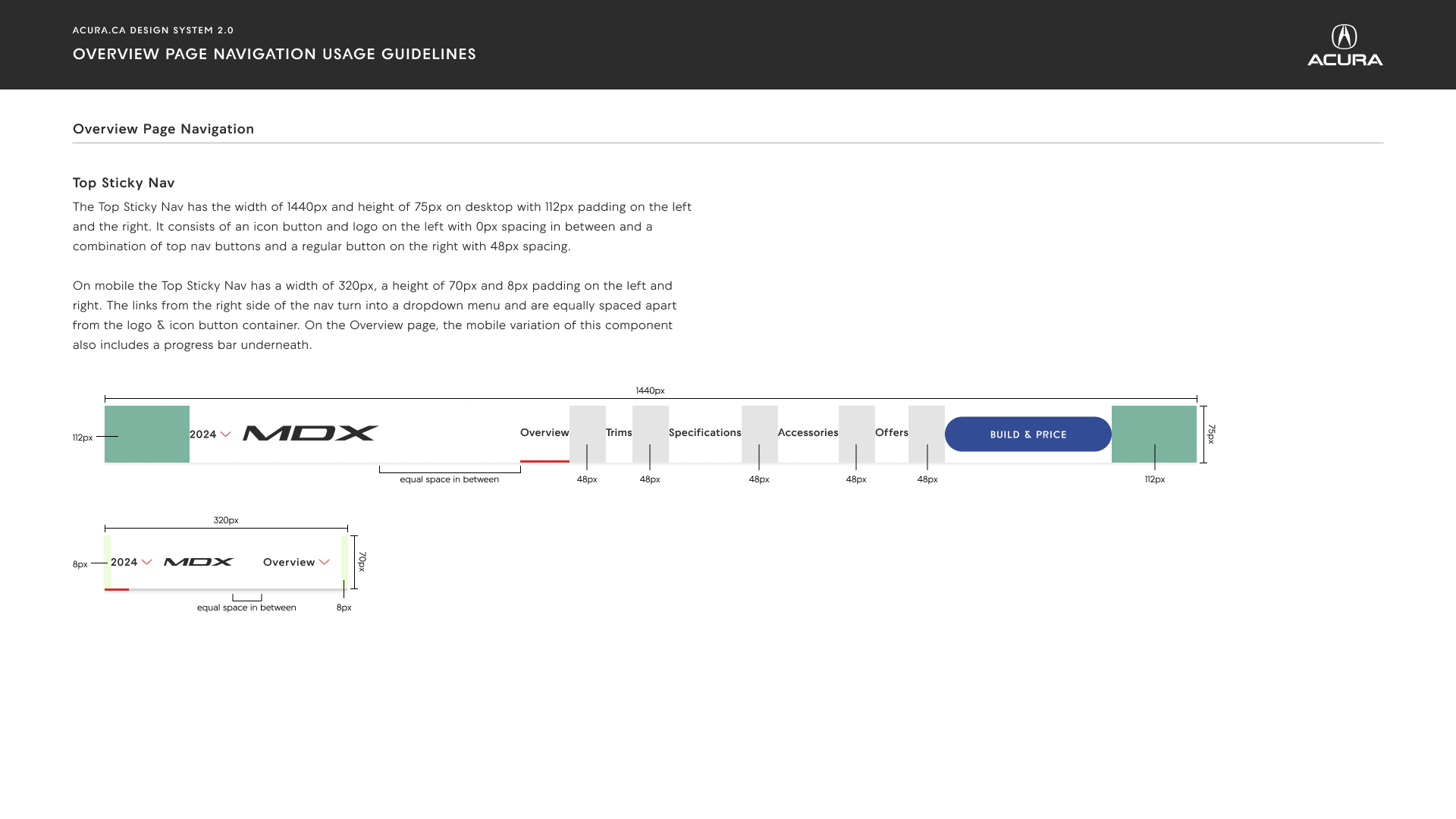
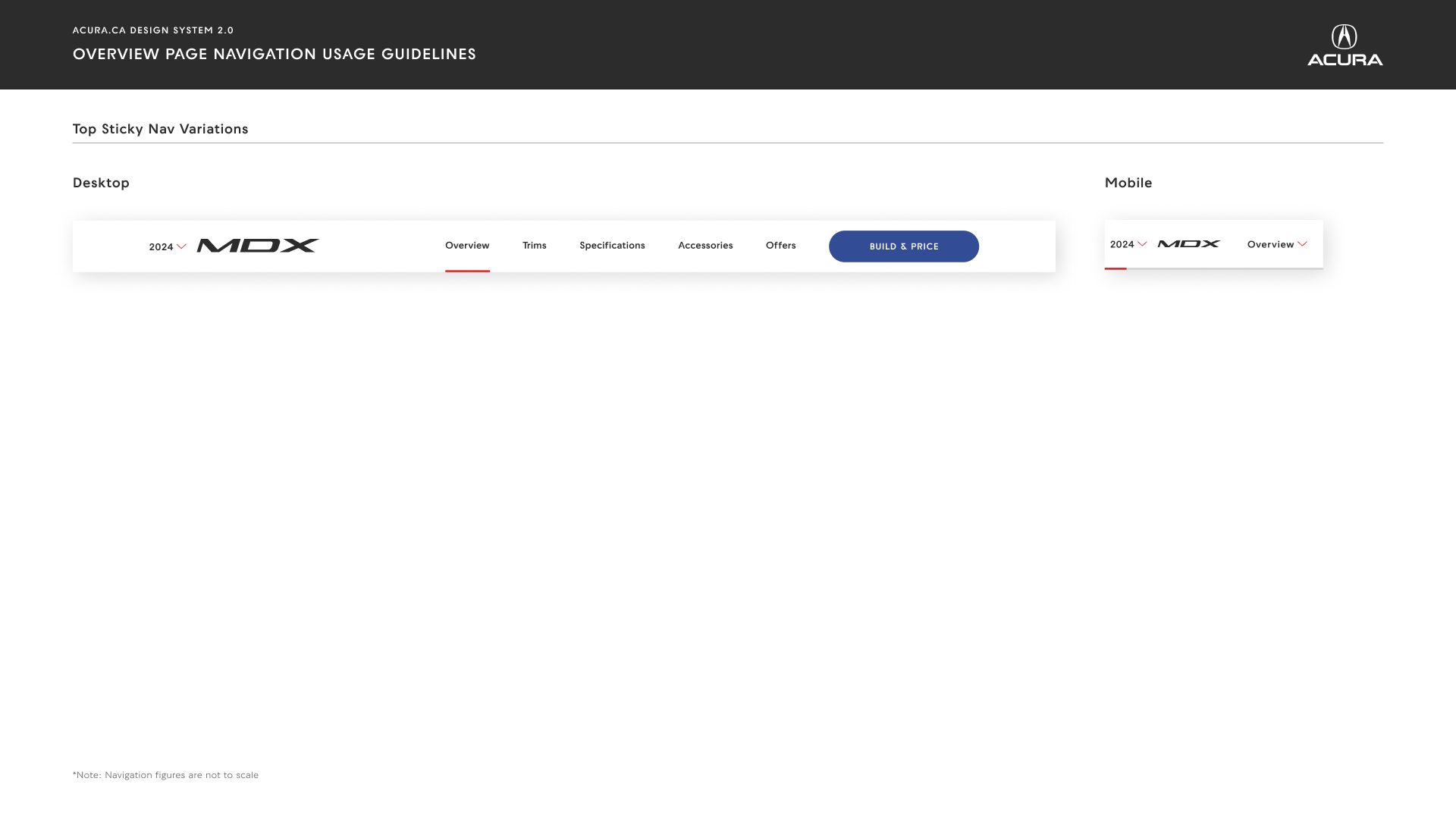
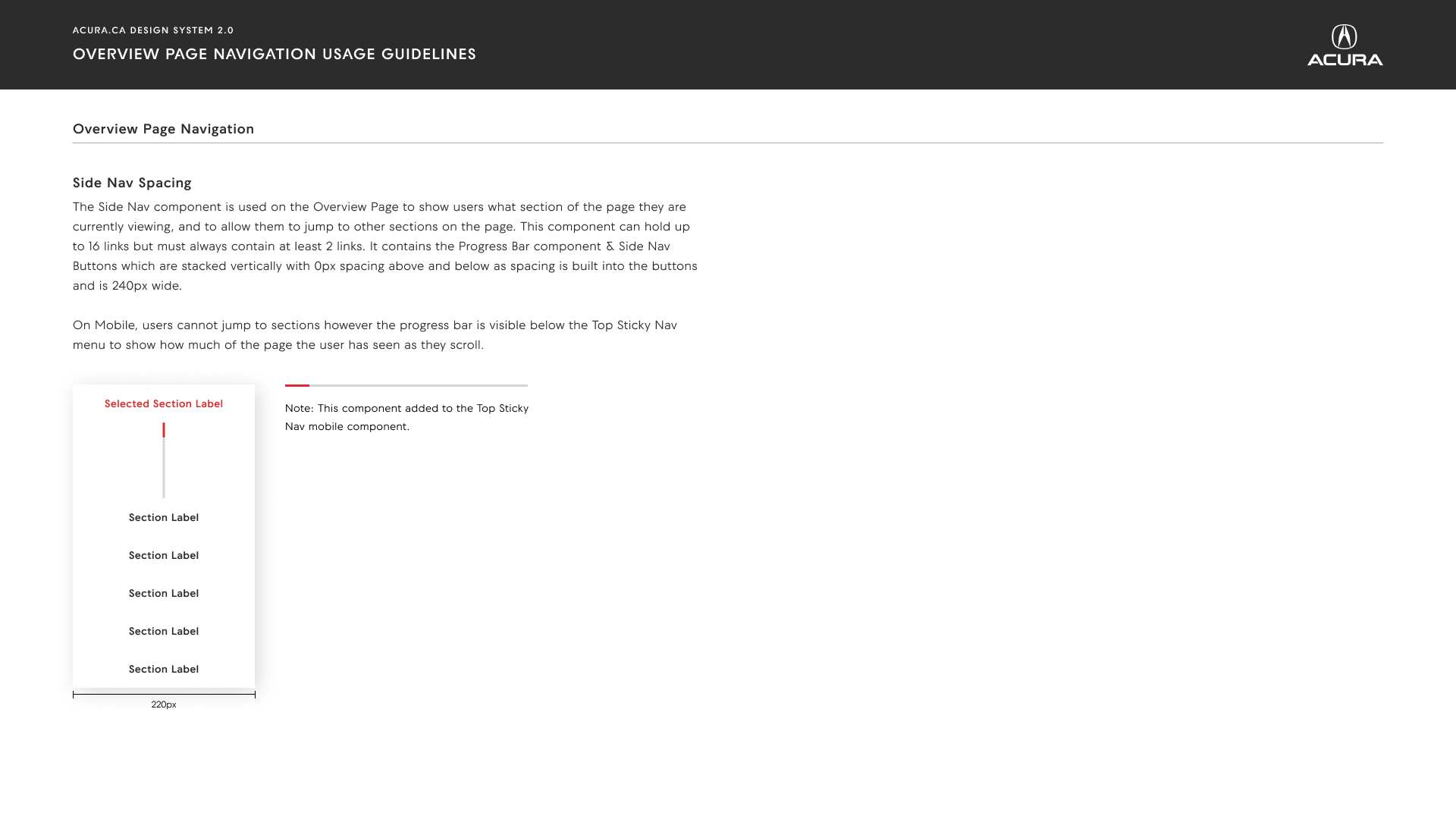
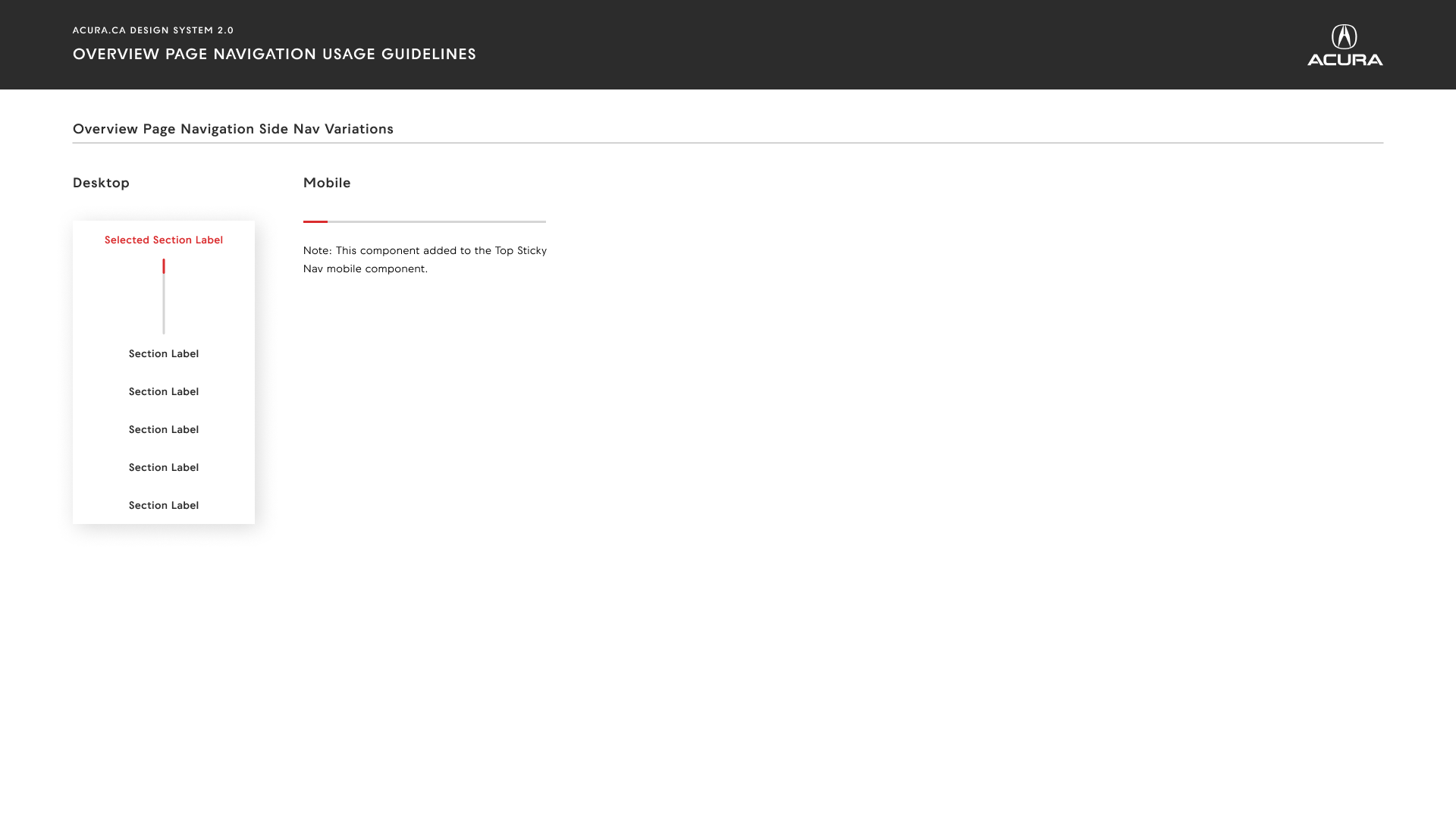
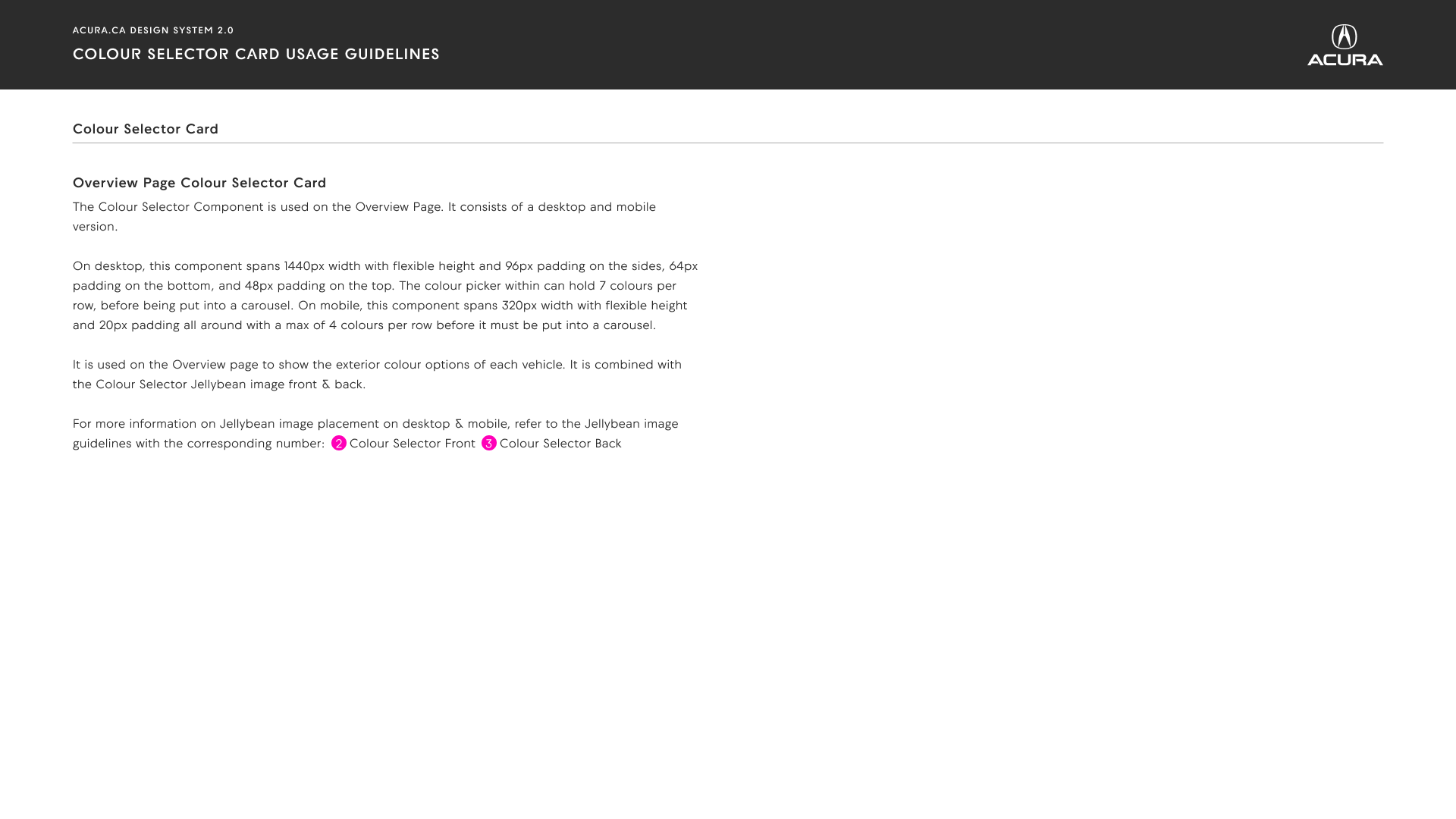
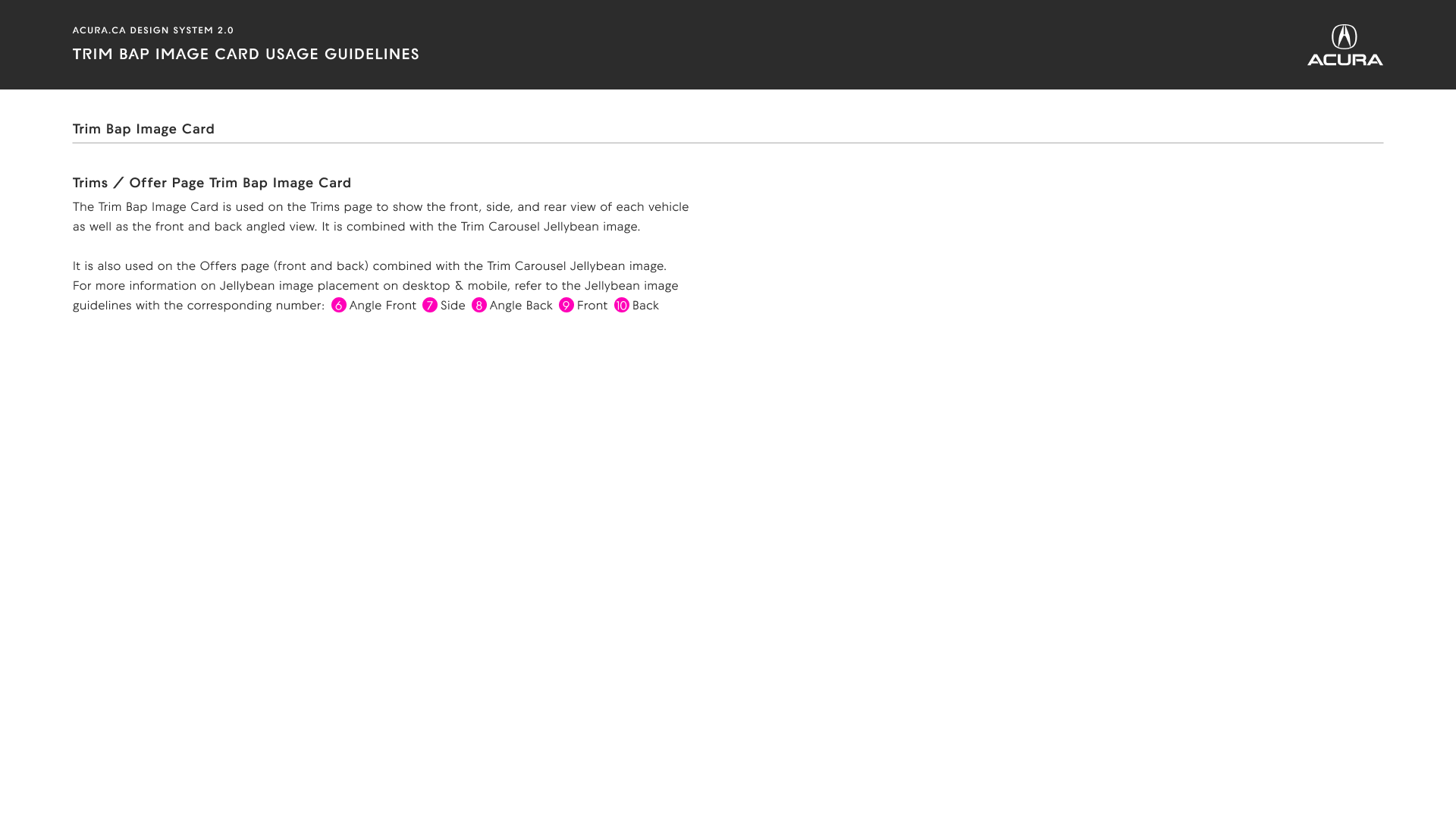
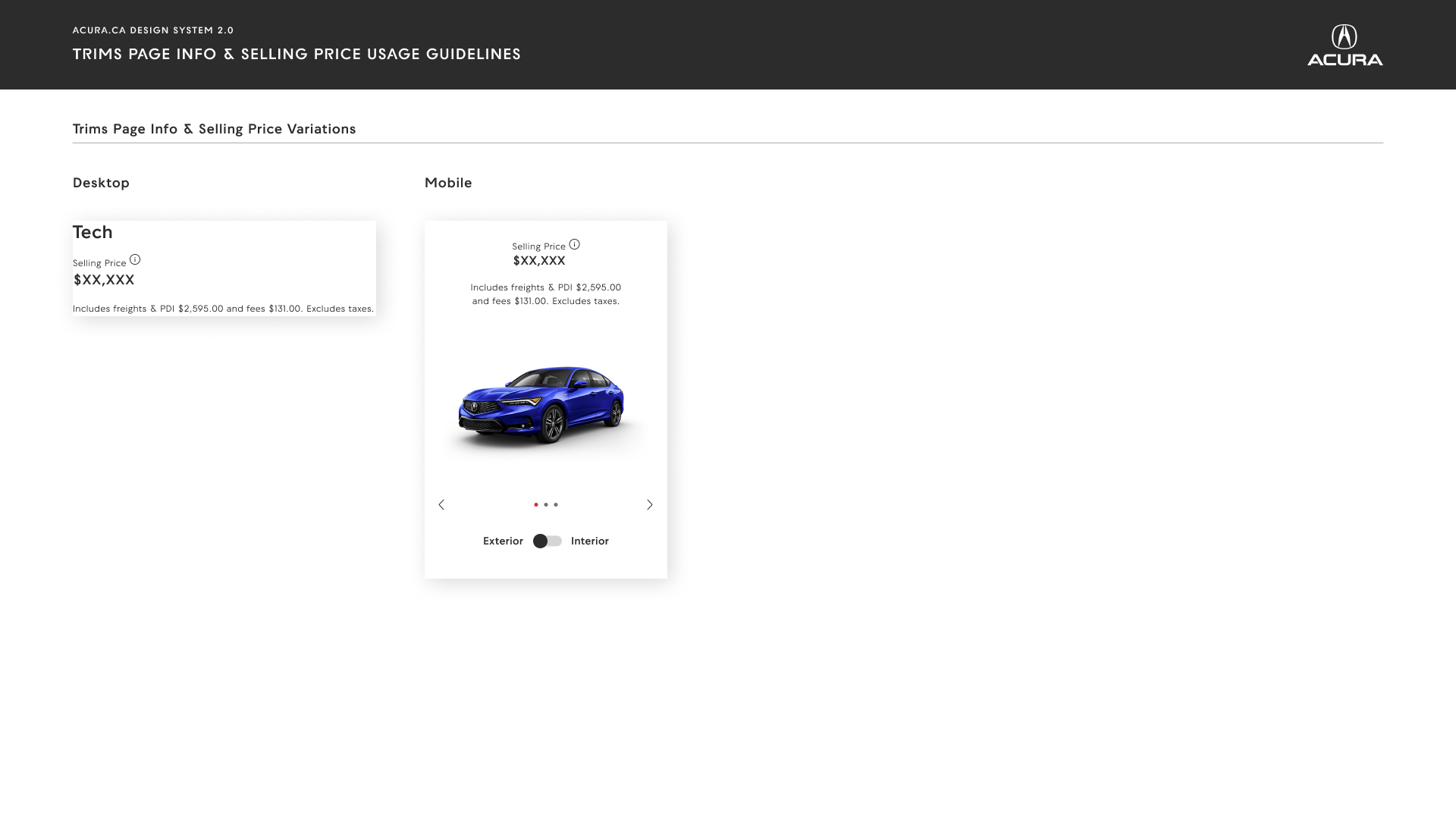
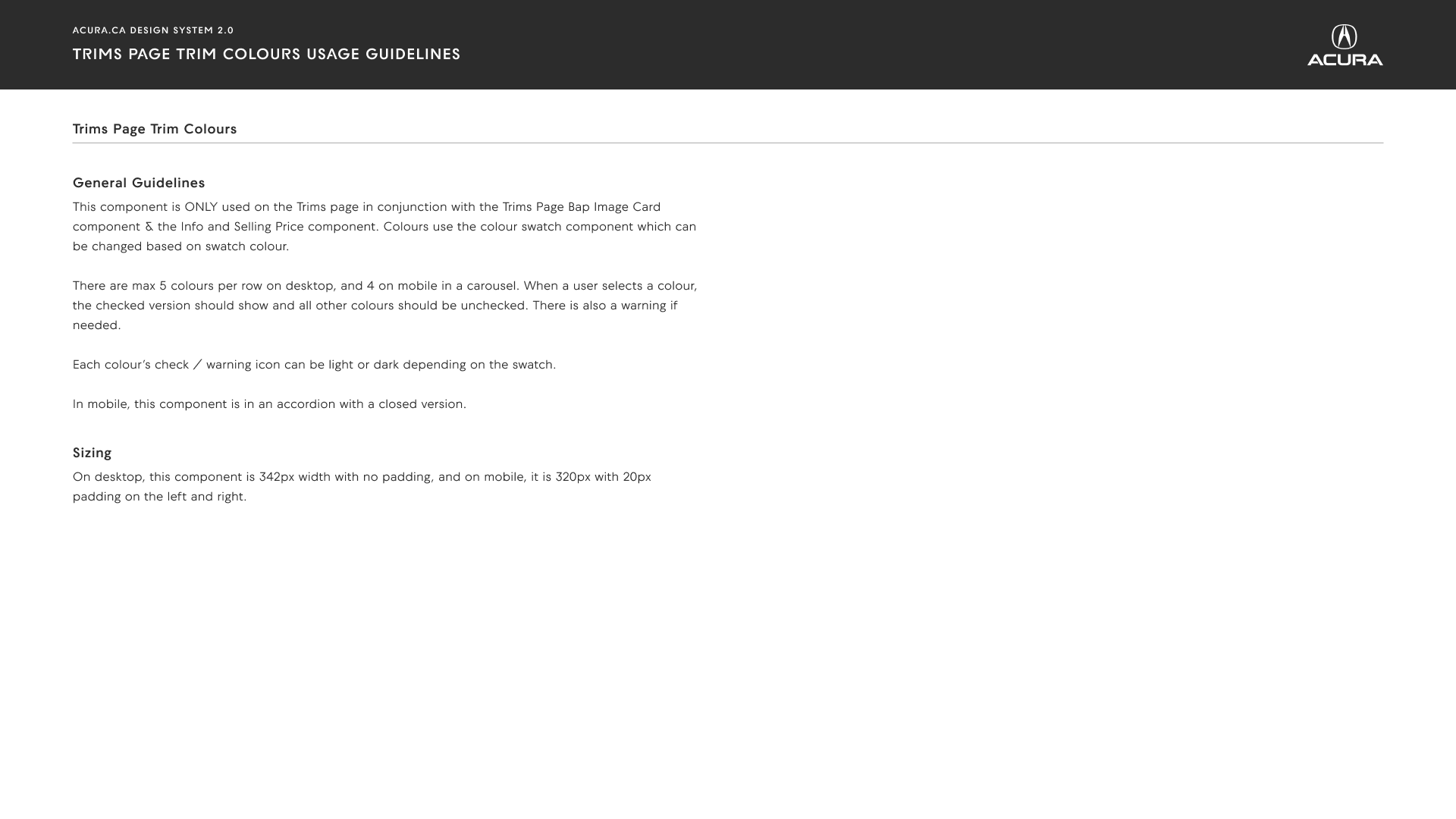
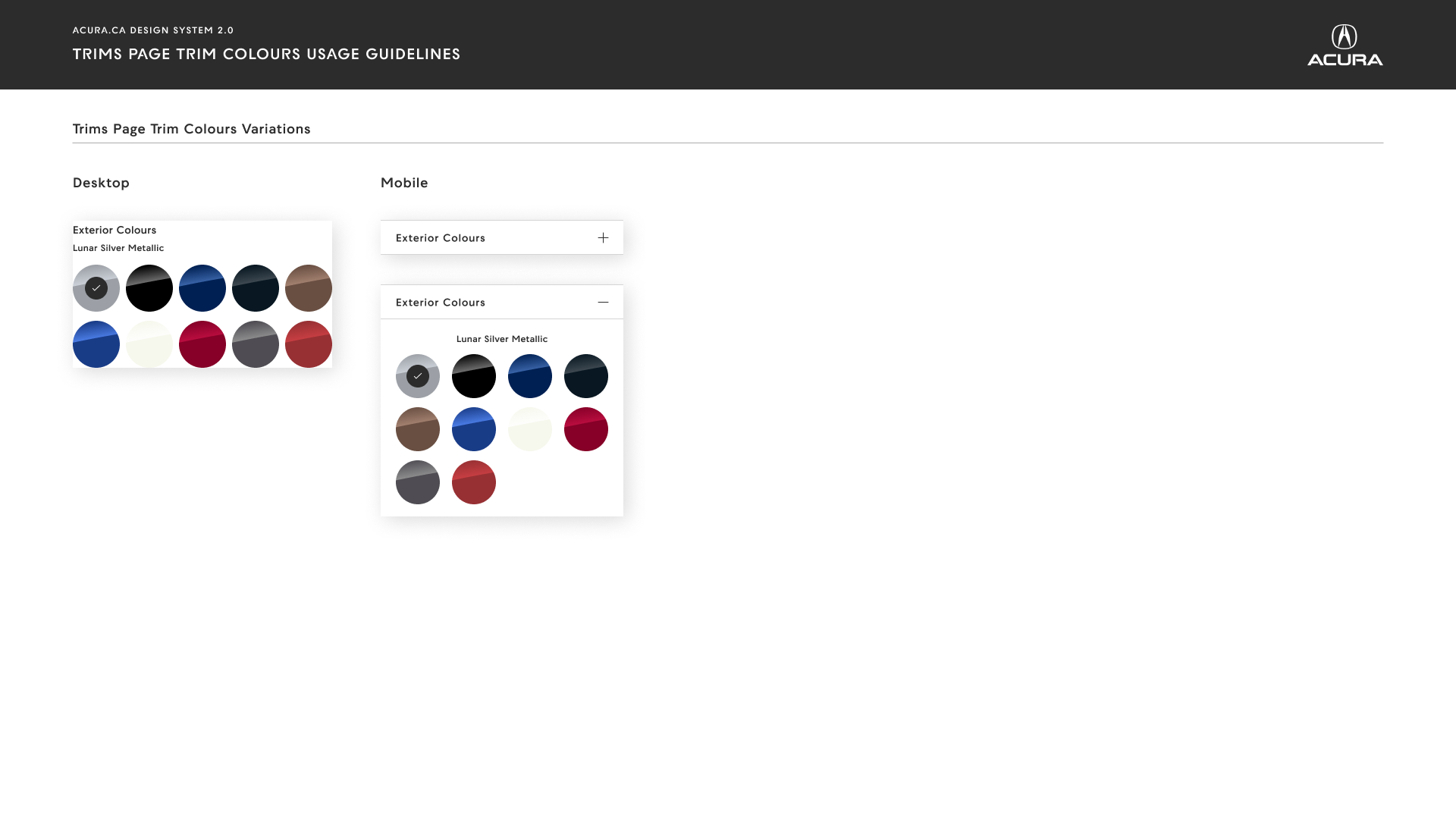
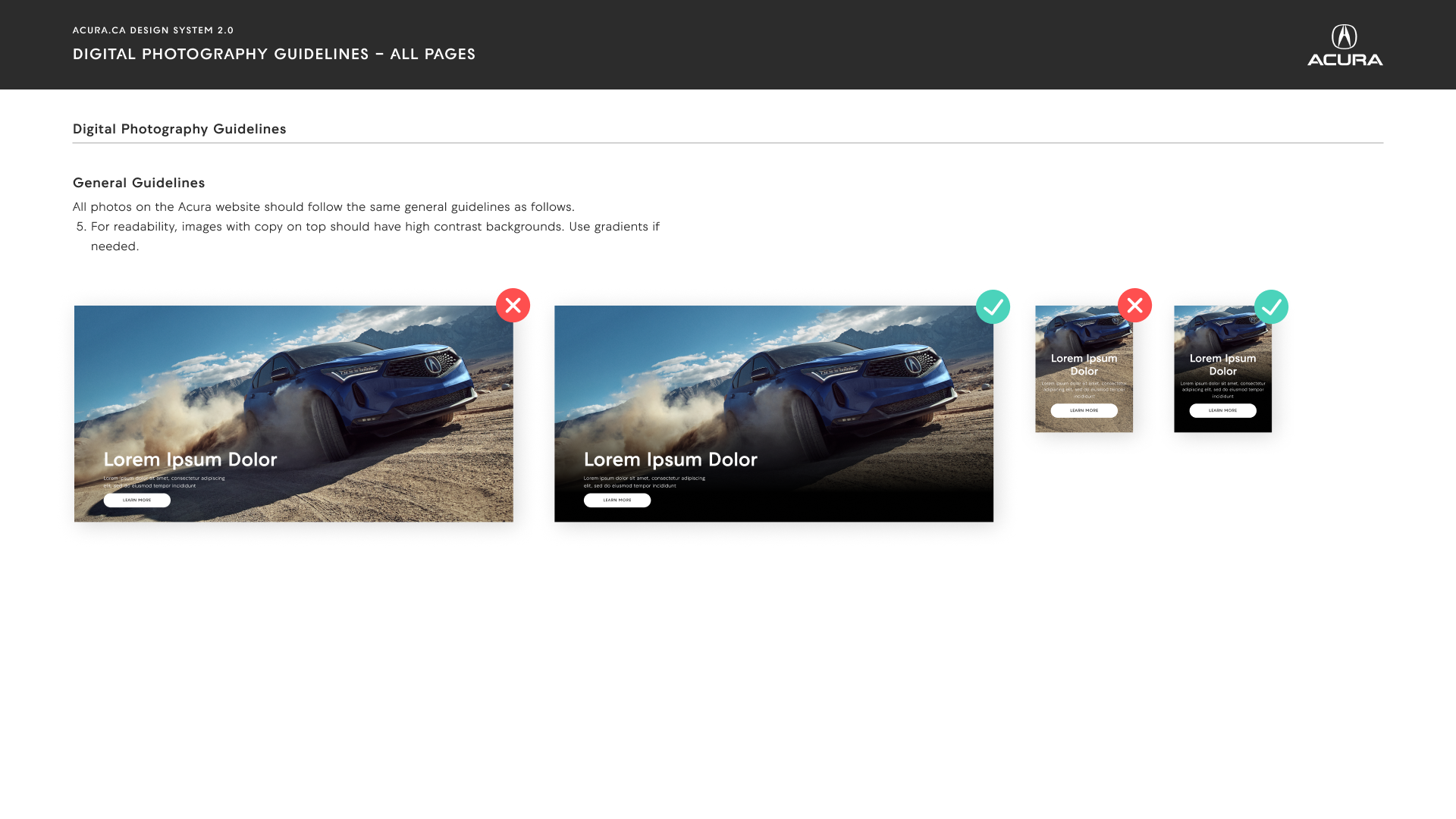
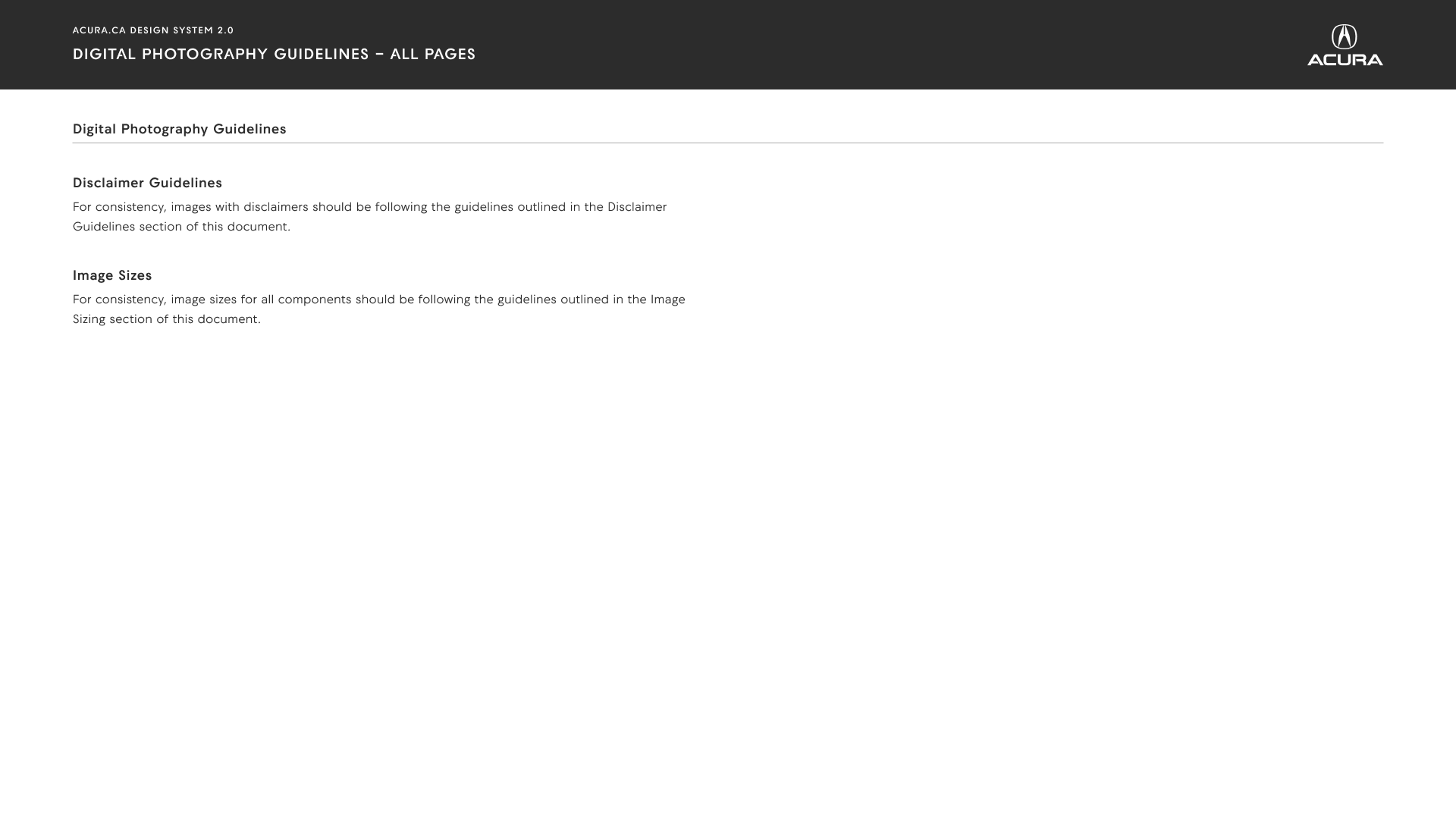
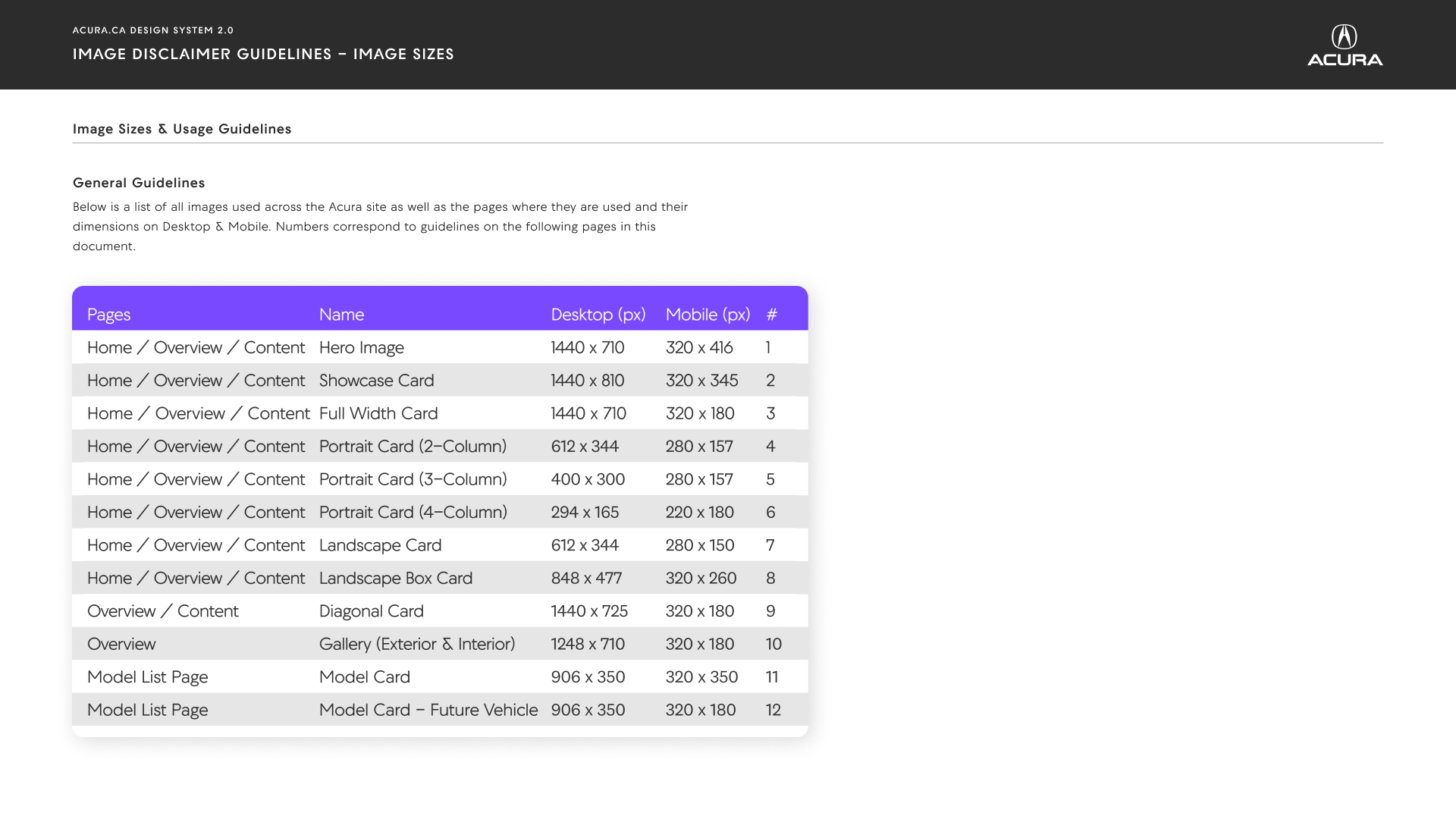
There was some documentation, however most of it was new. As dealers needed to adopt the new design system, and branding style, we needed to provide as much information as we could.
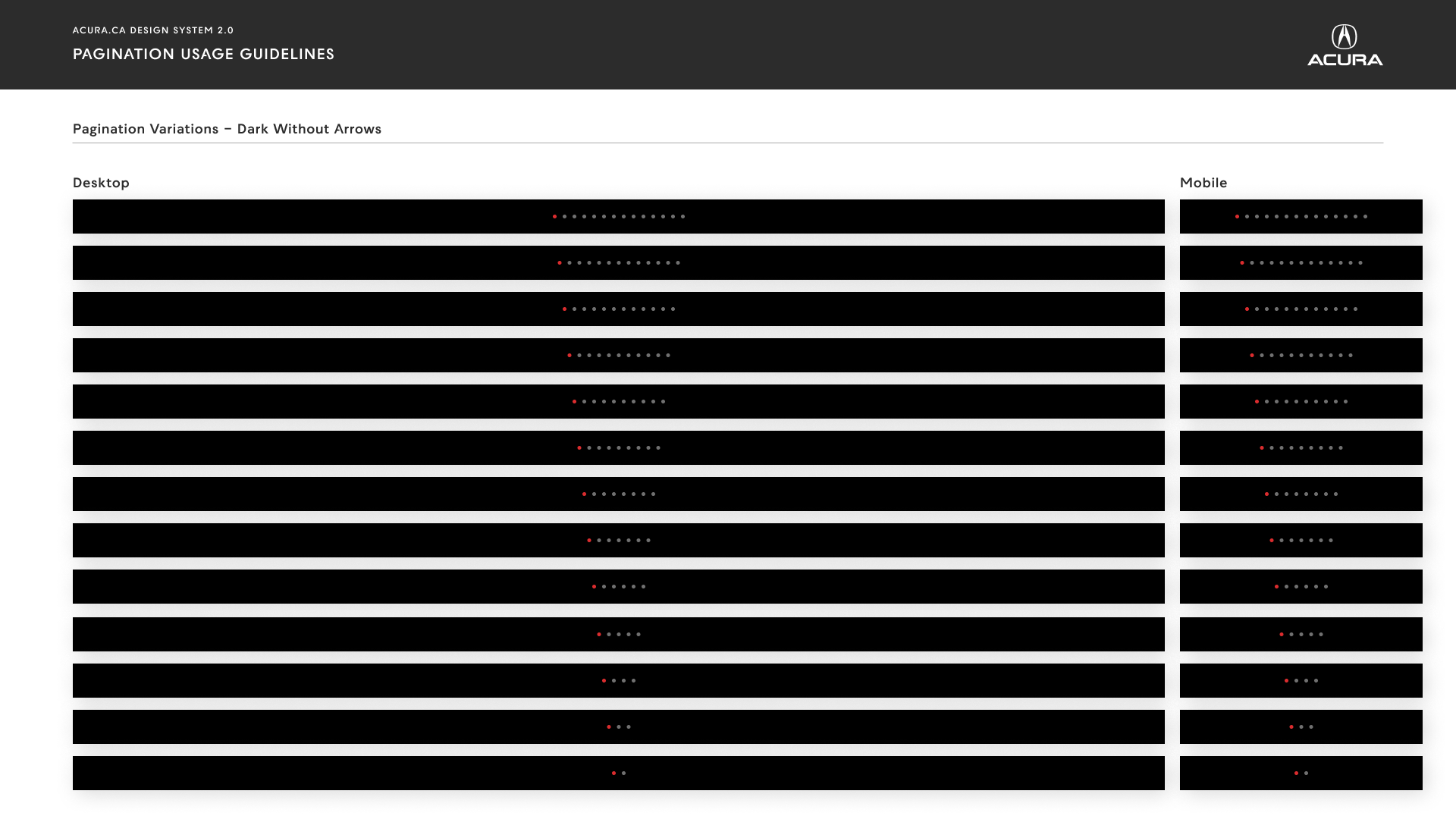
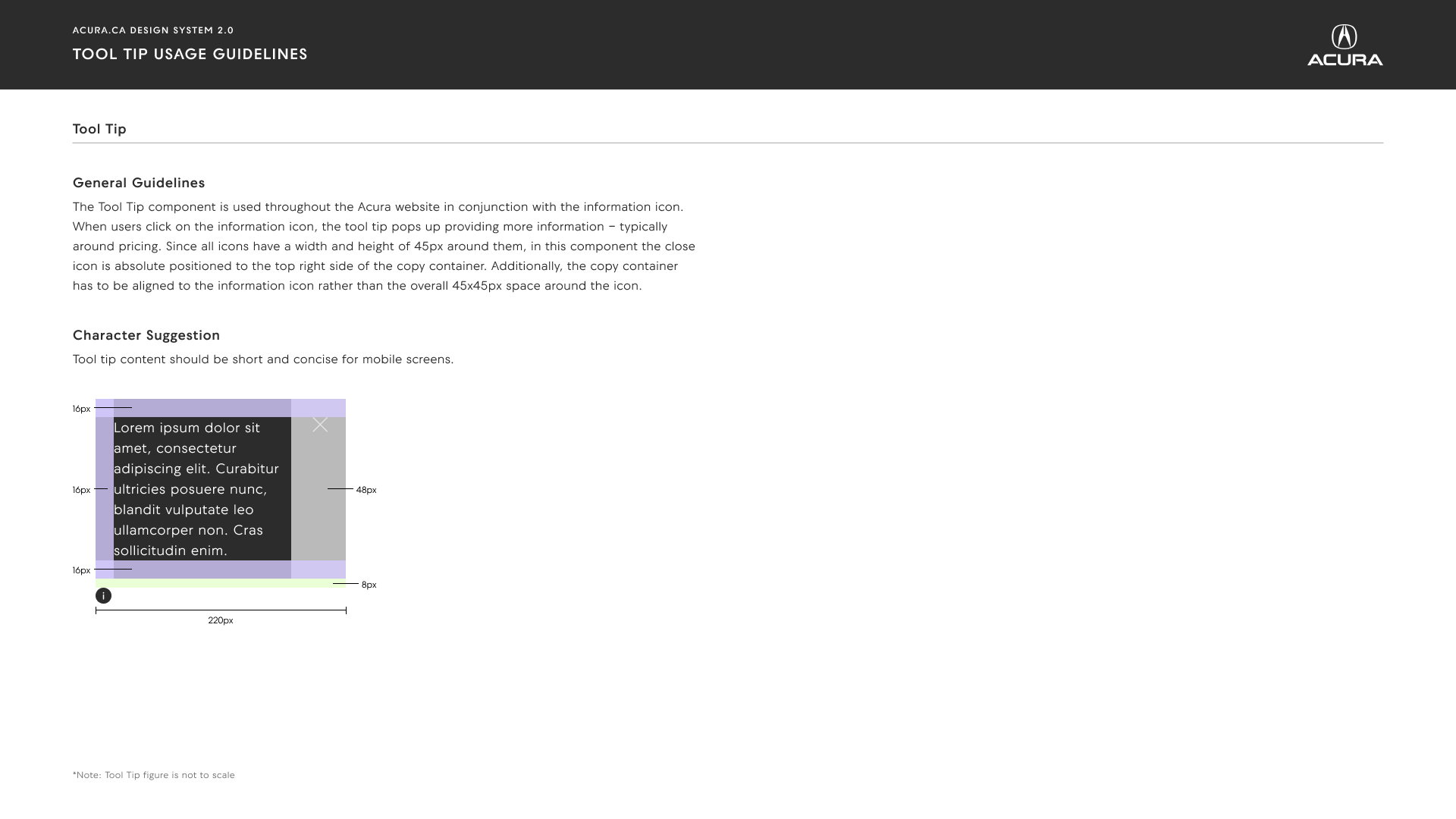
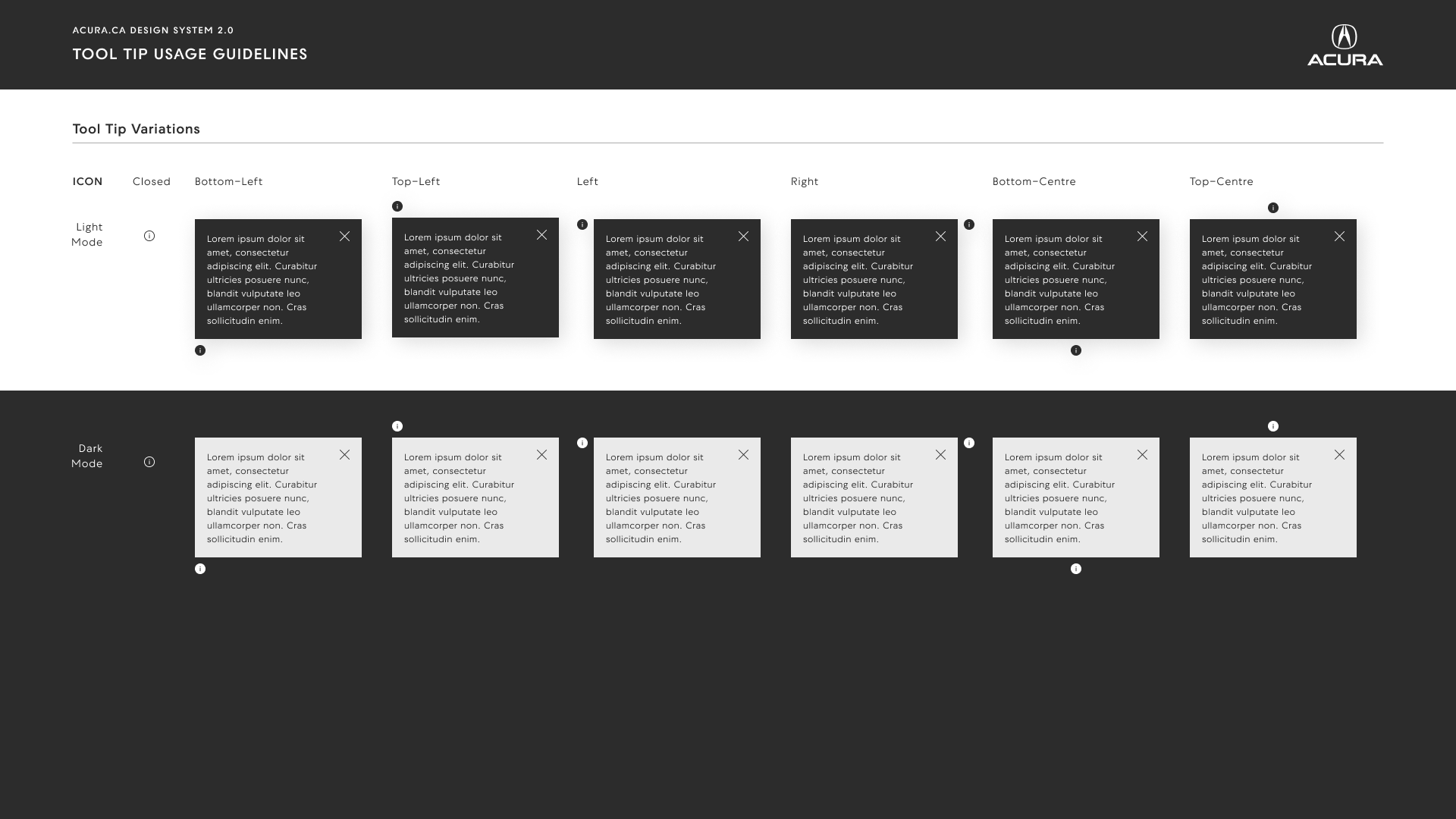
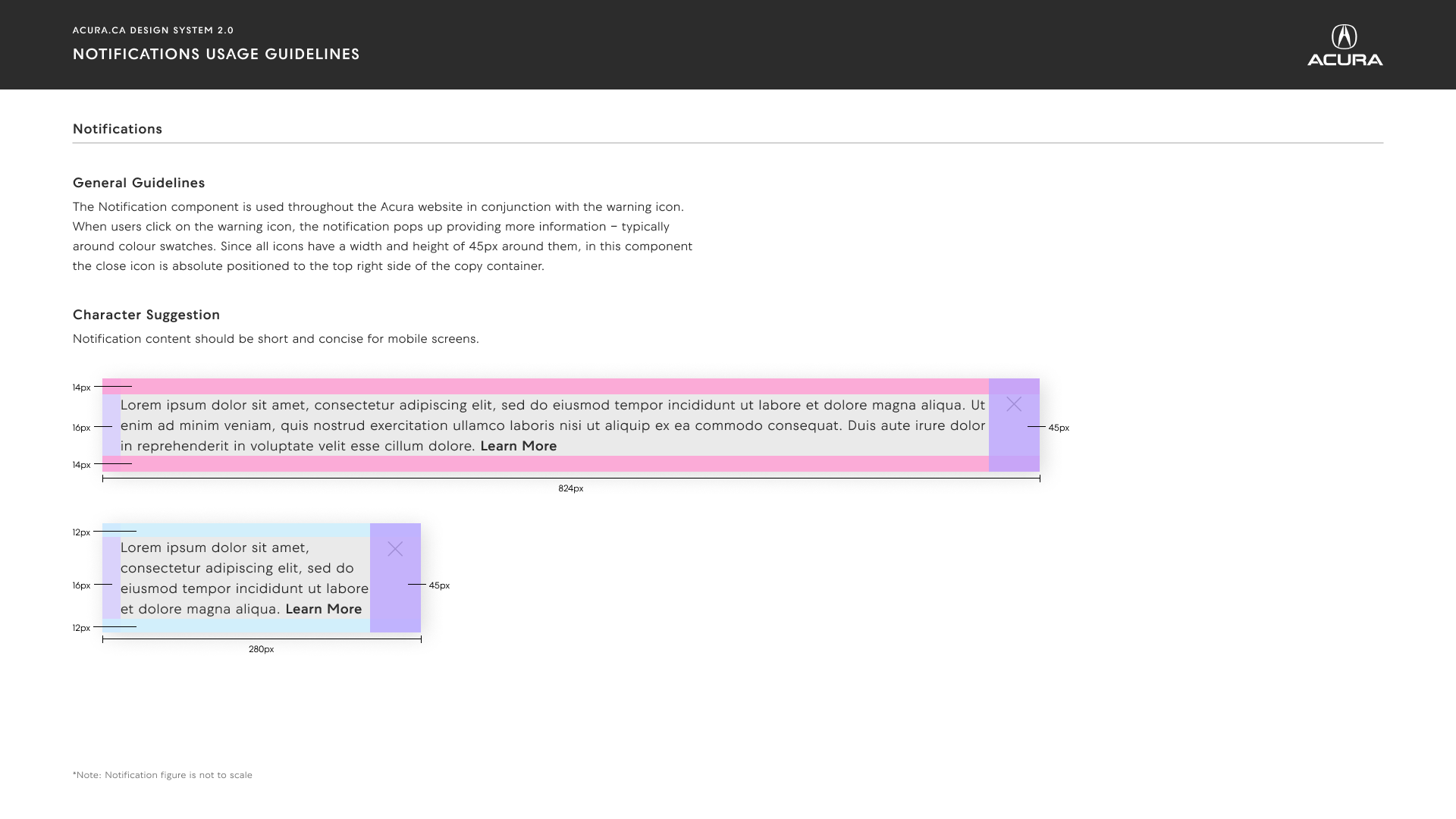
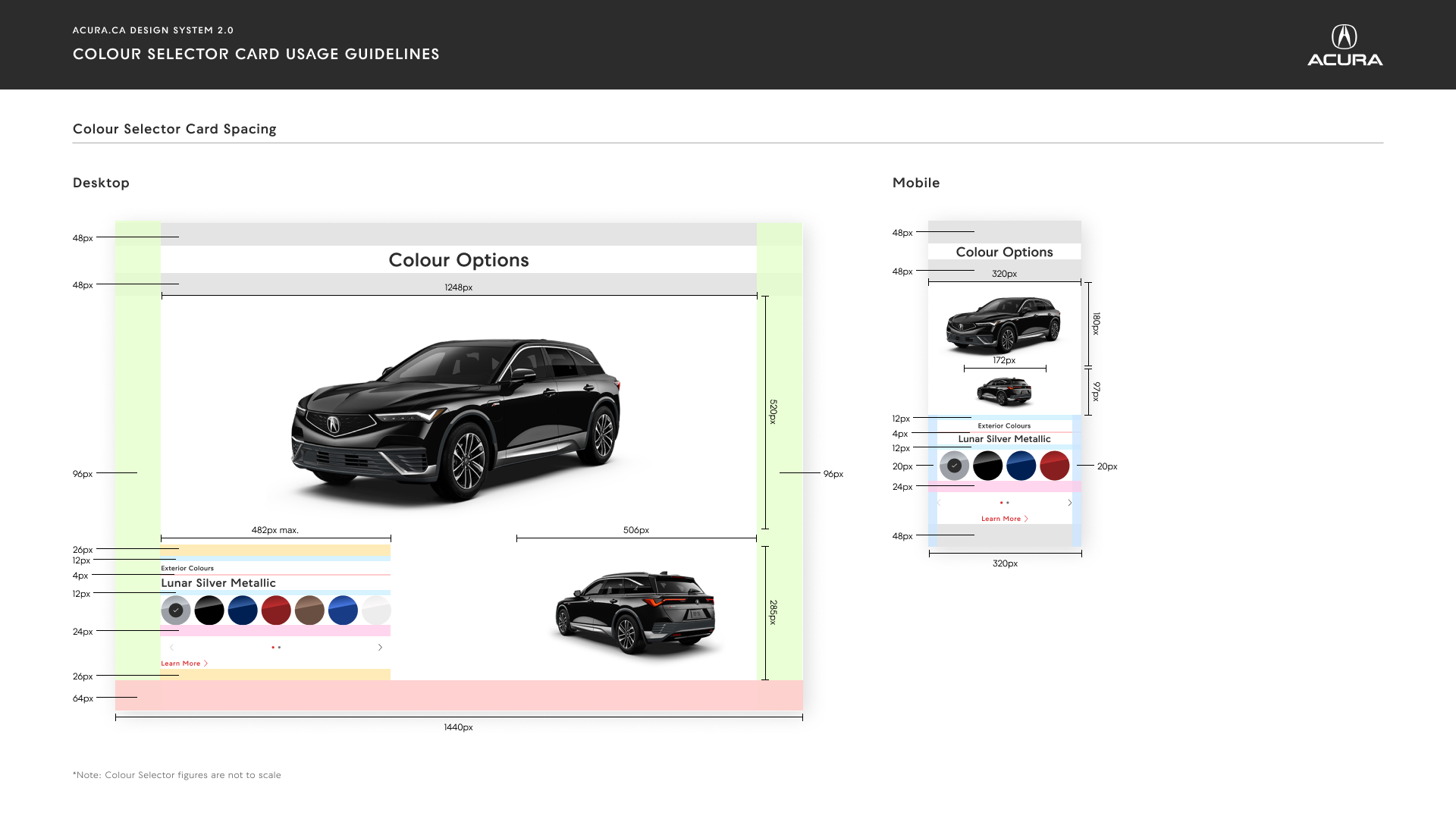
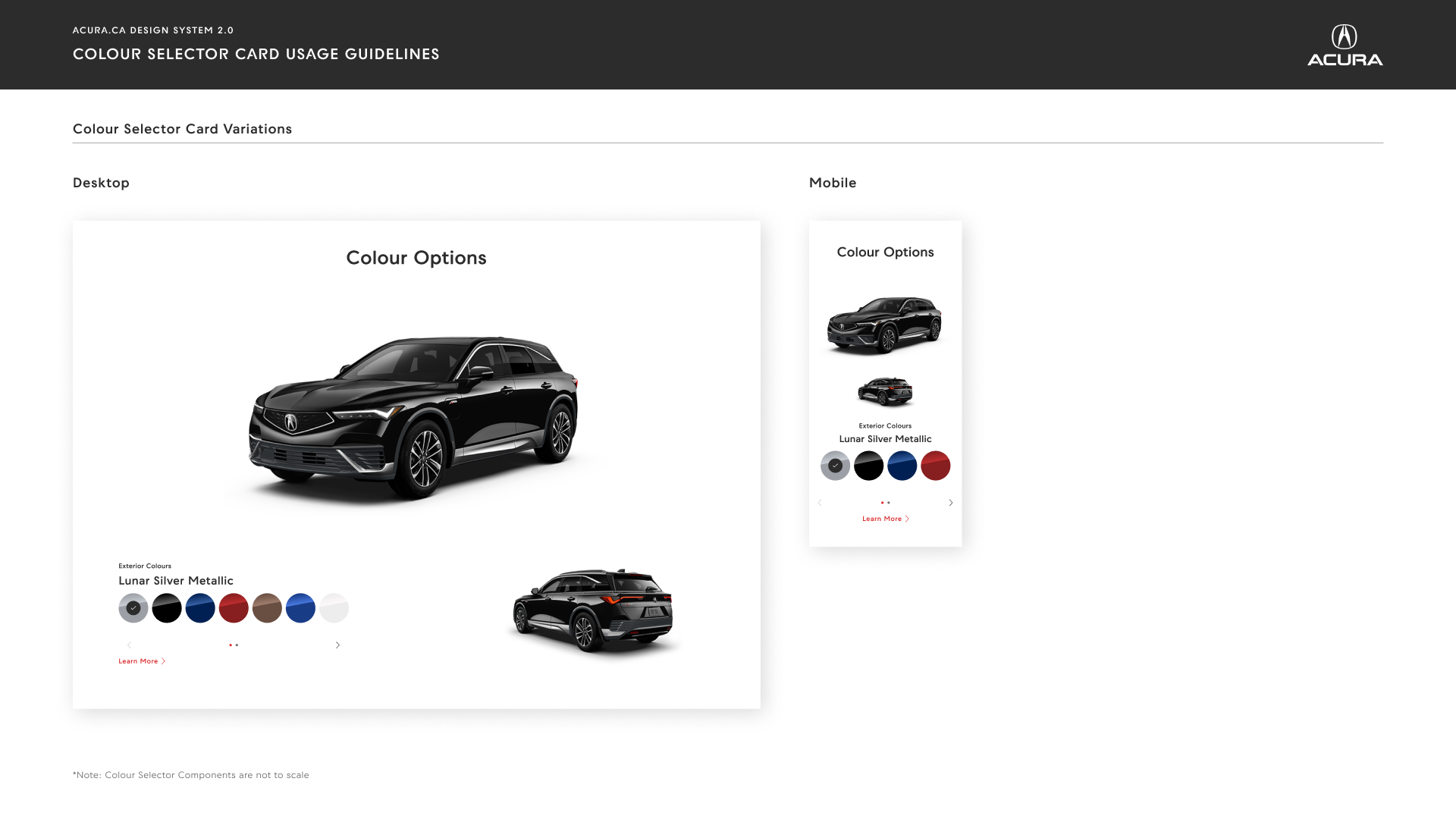
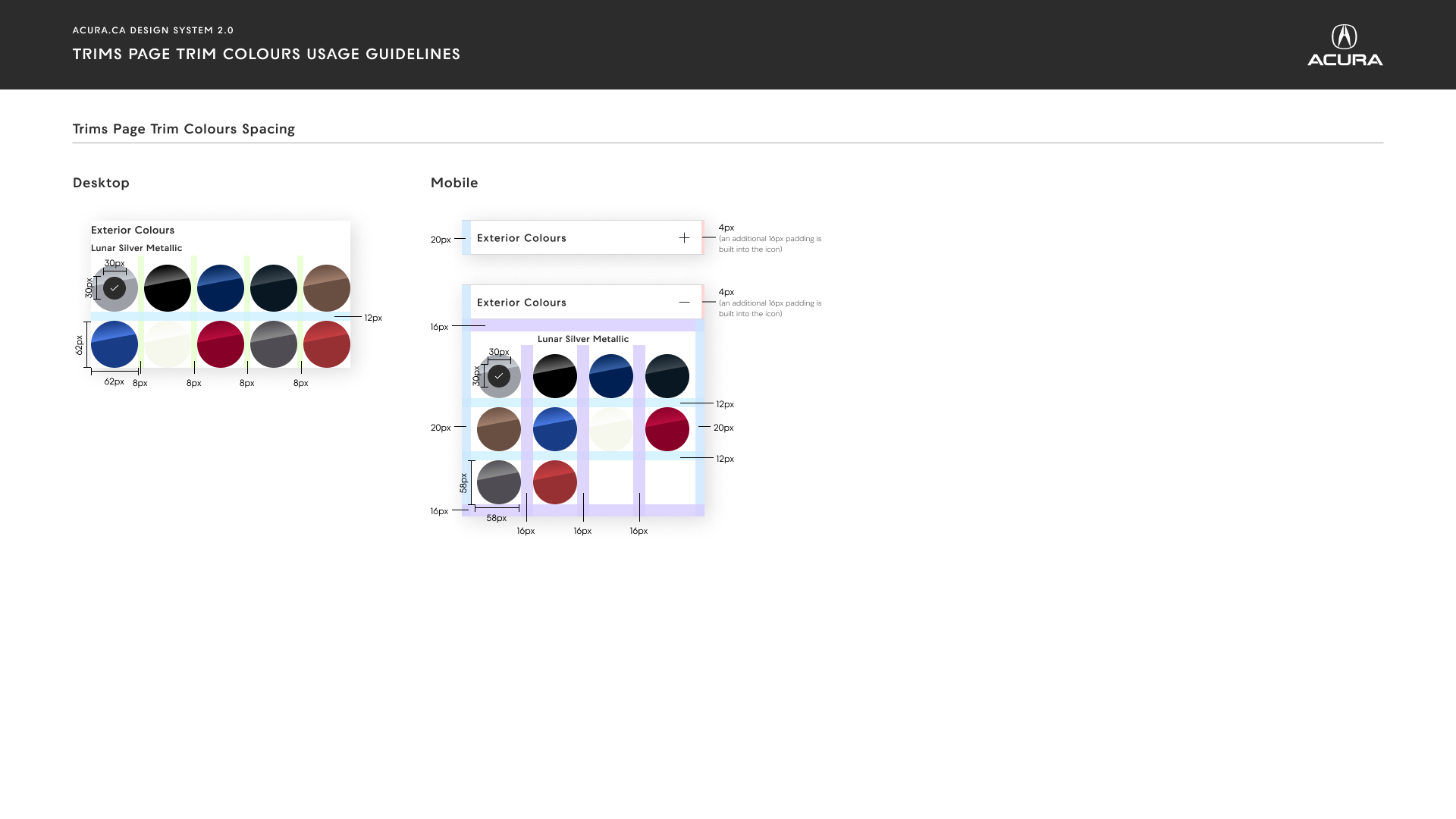
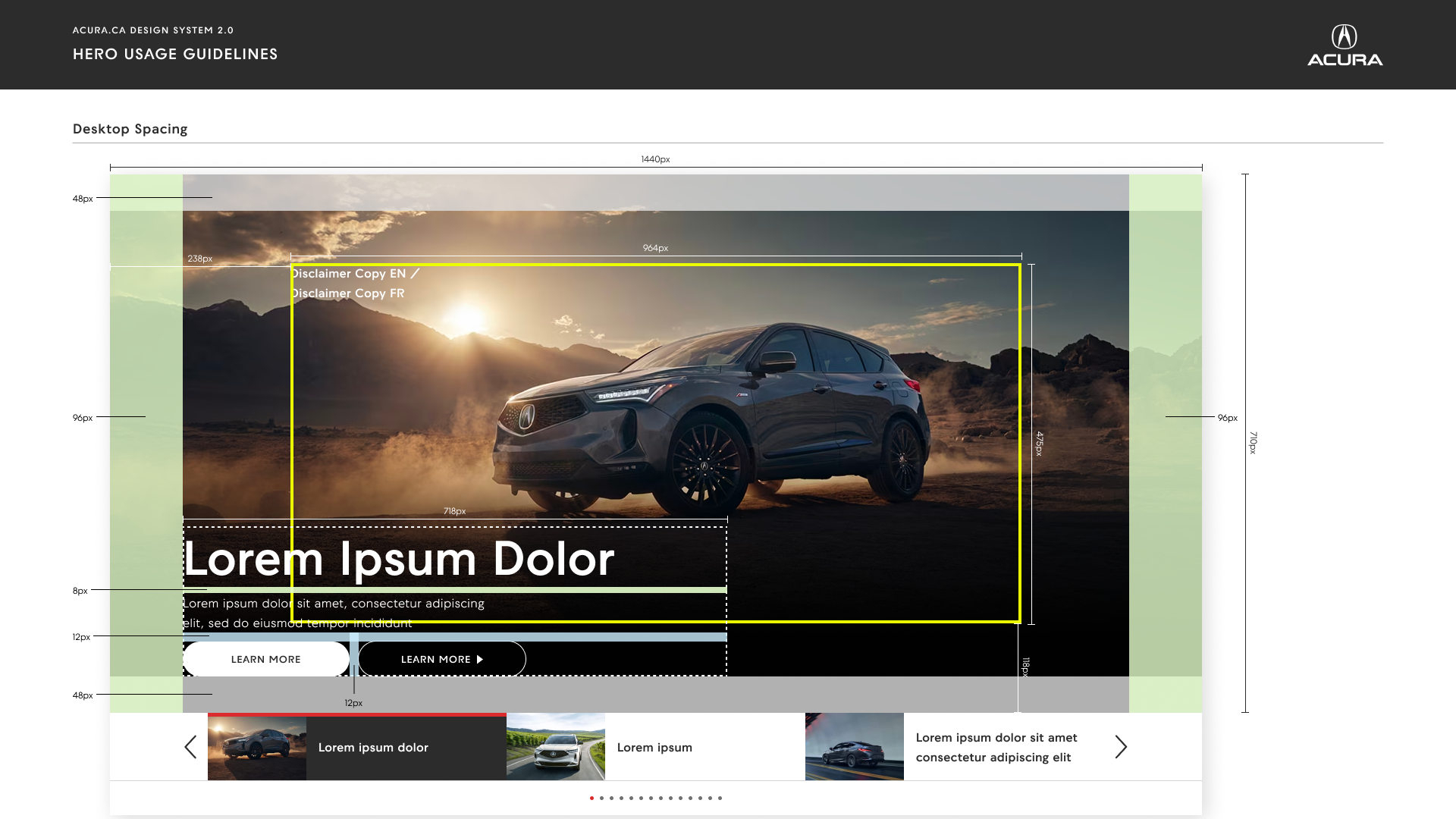
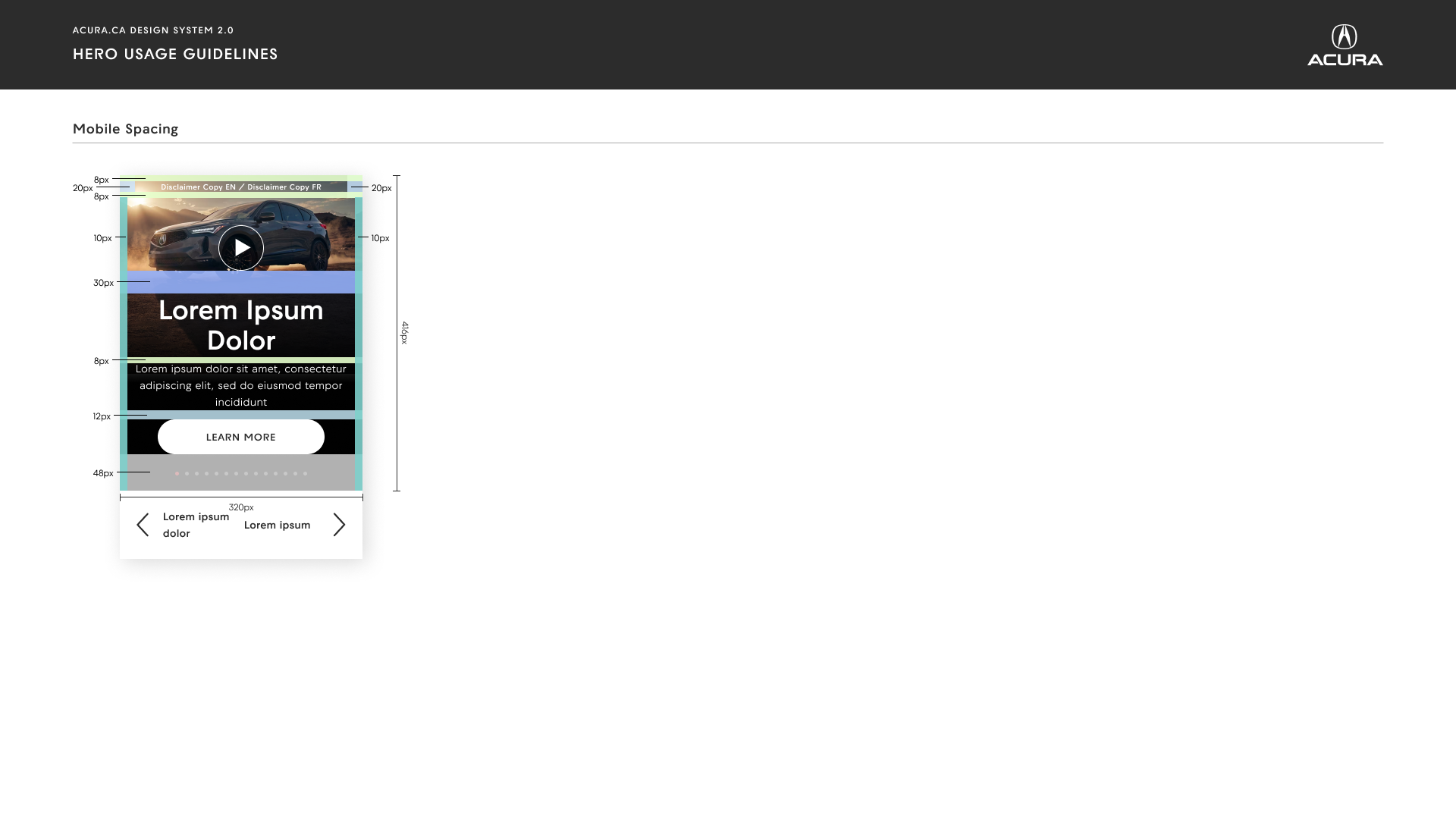
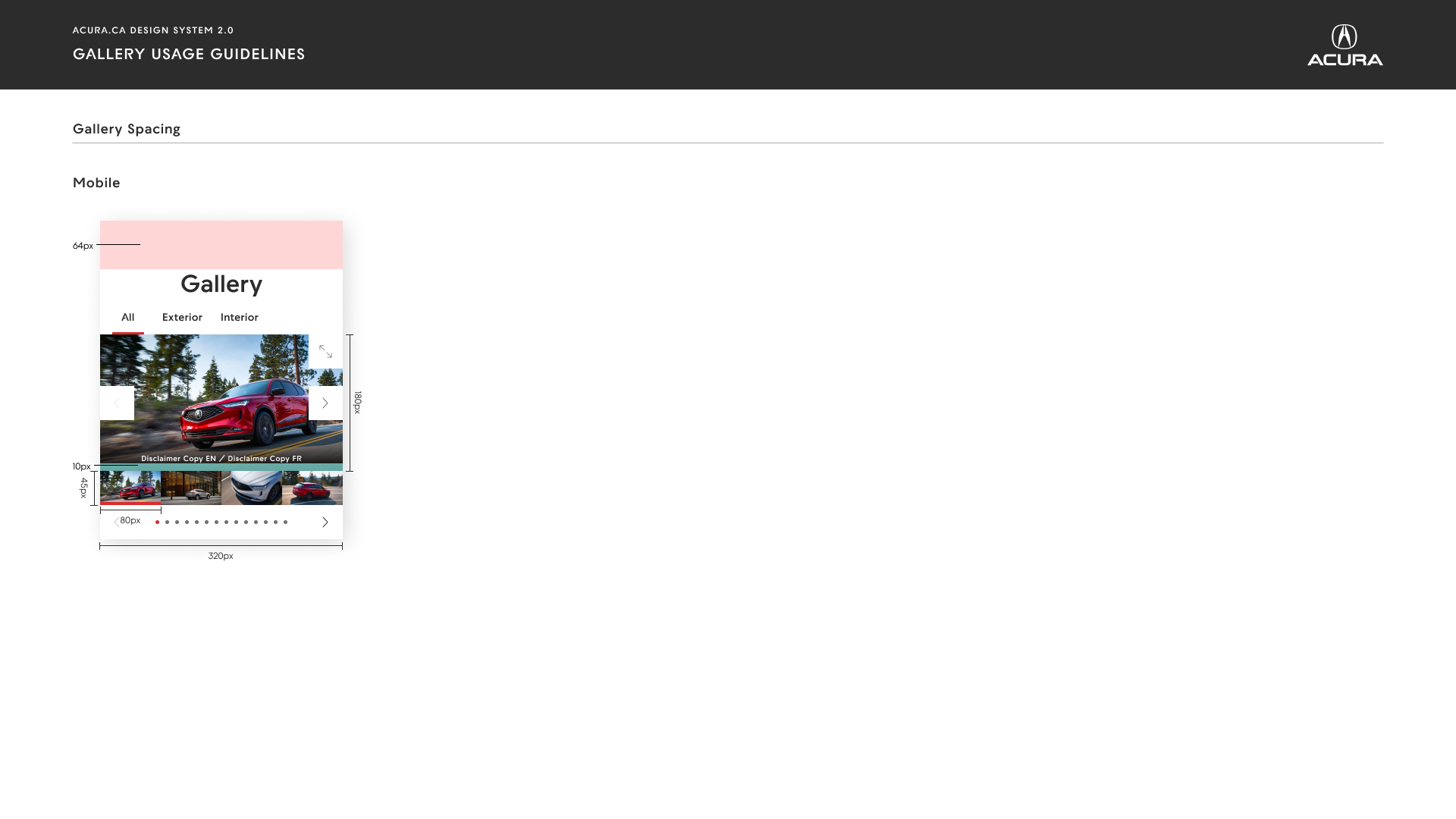
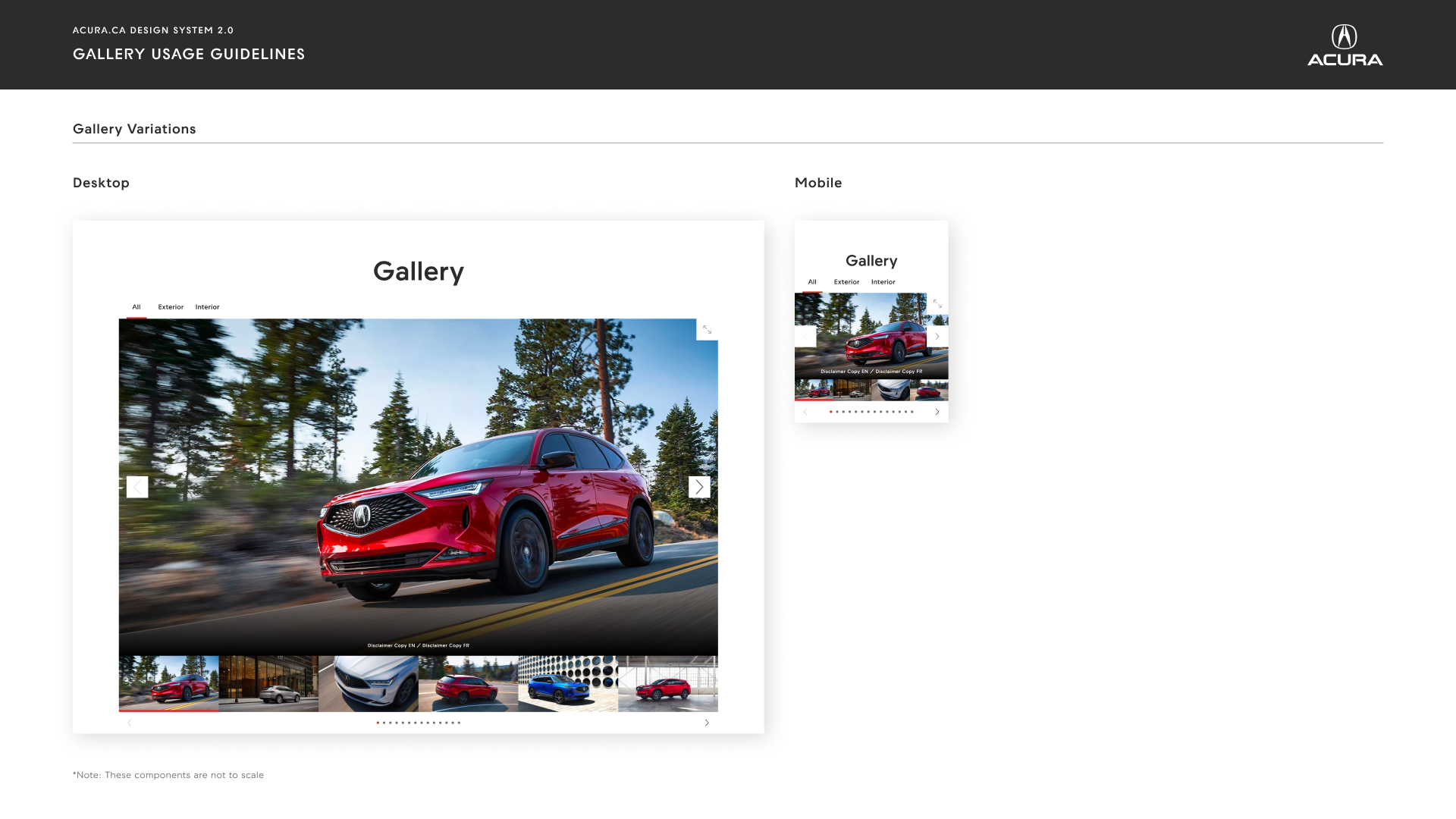
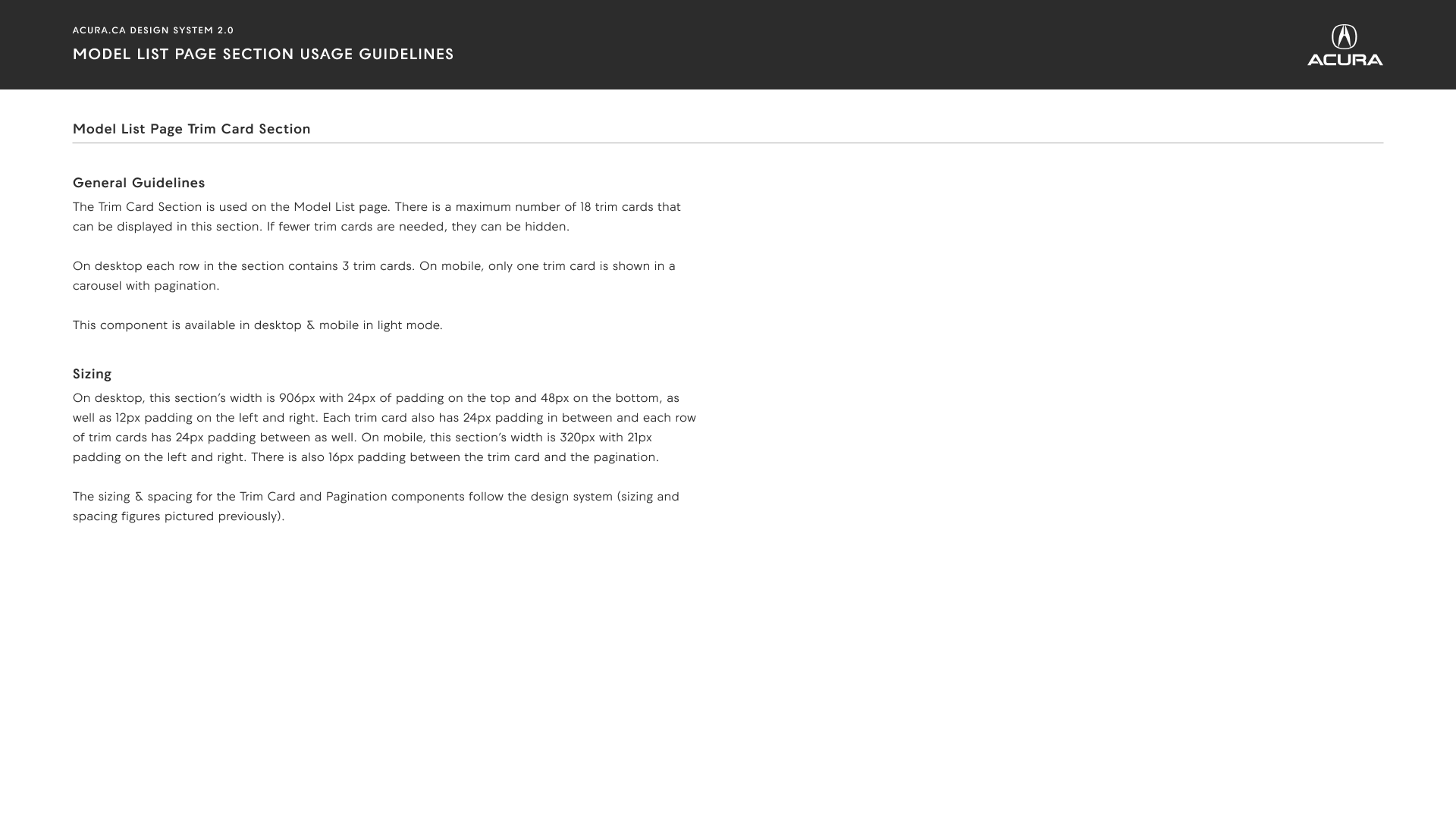
We also did not know the design capacity of the teams implementing the system so we worked tirelessly putting together documentation for all the components including spacing diagrams and any instructions we thought would be helpful..
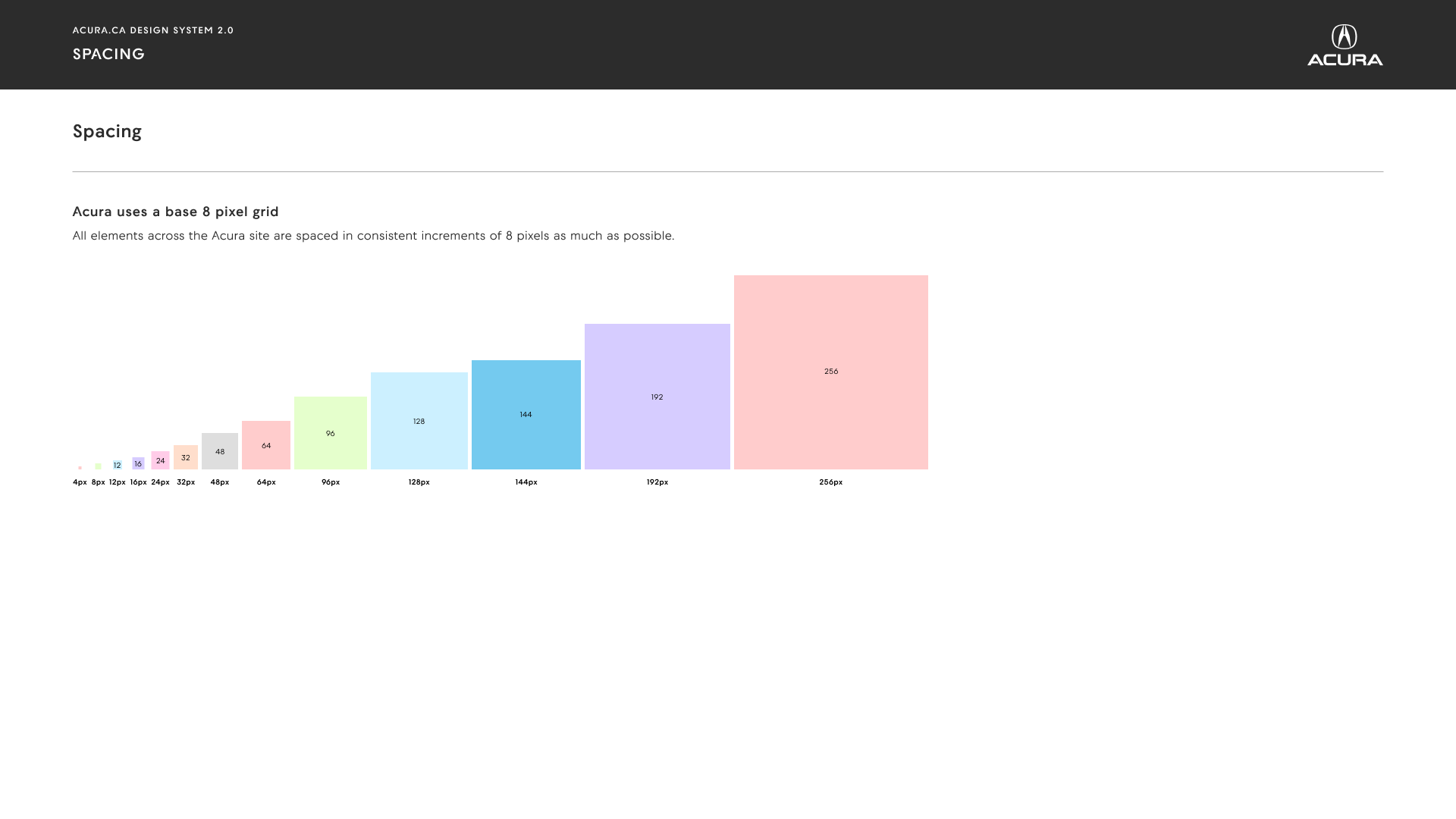
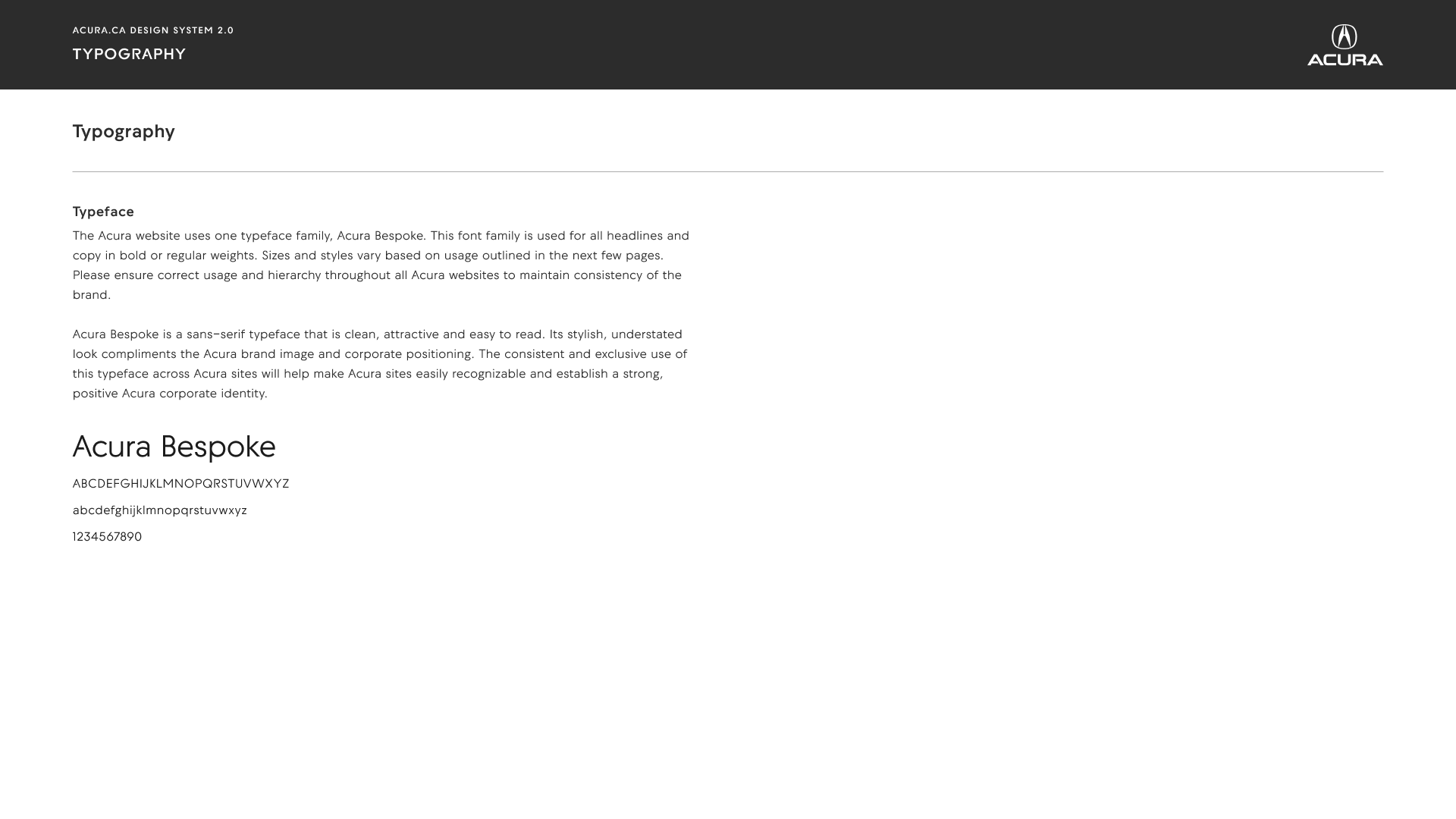
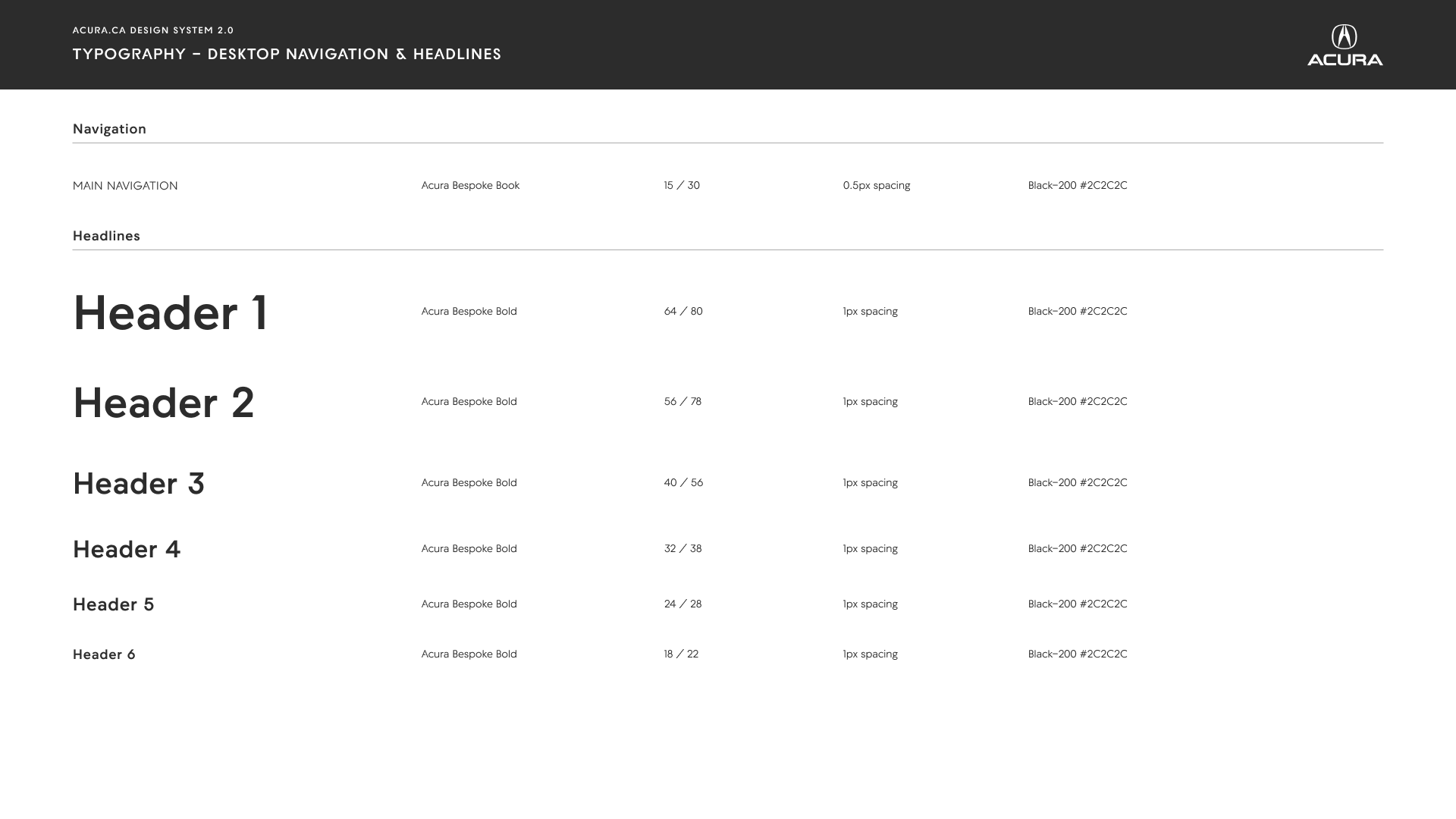
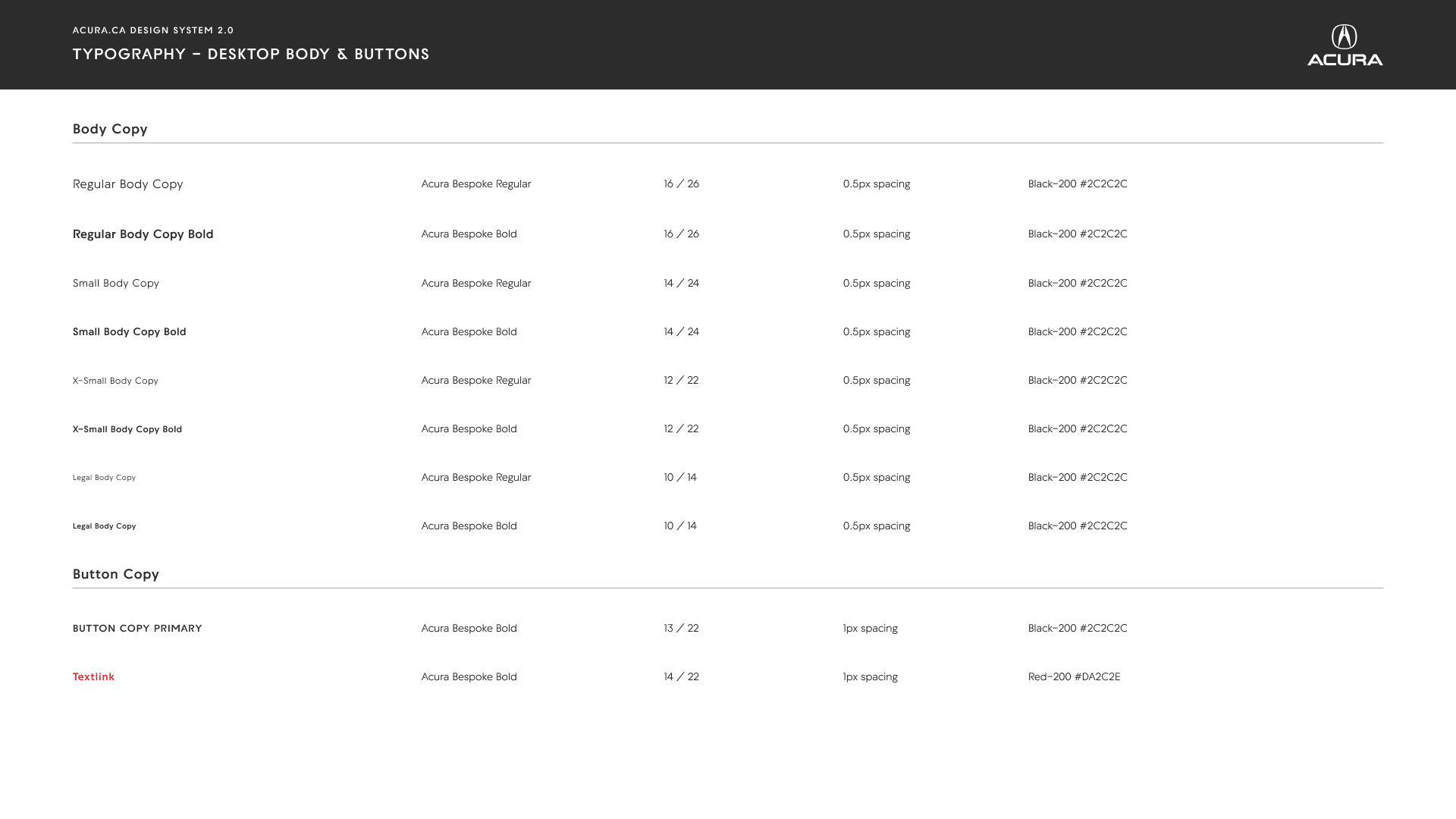
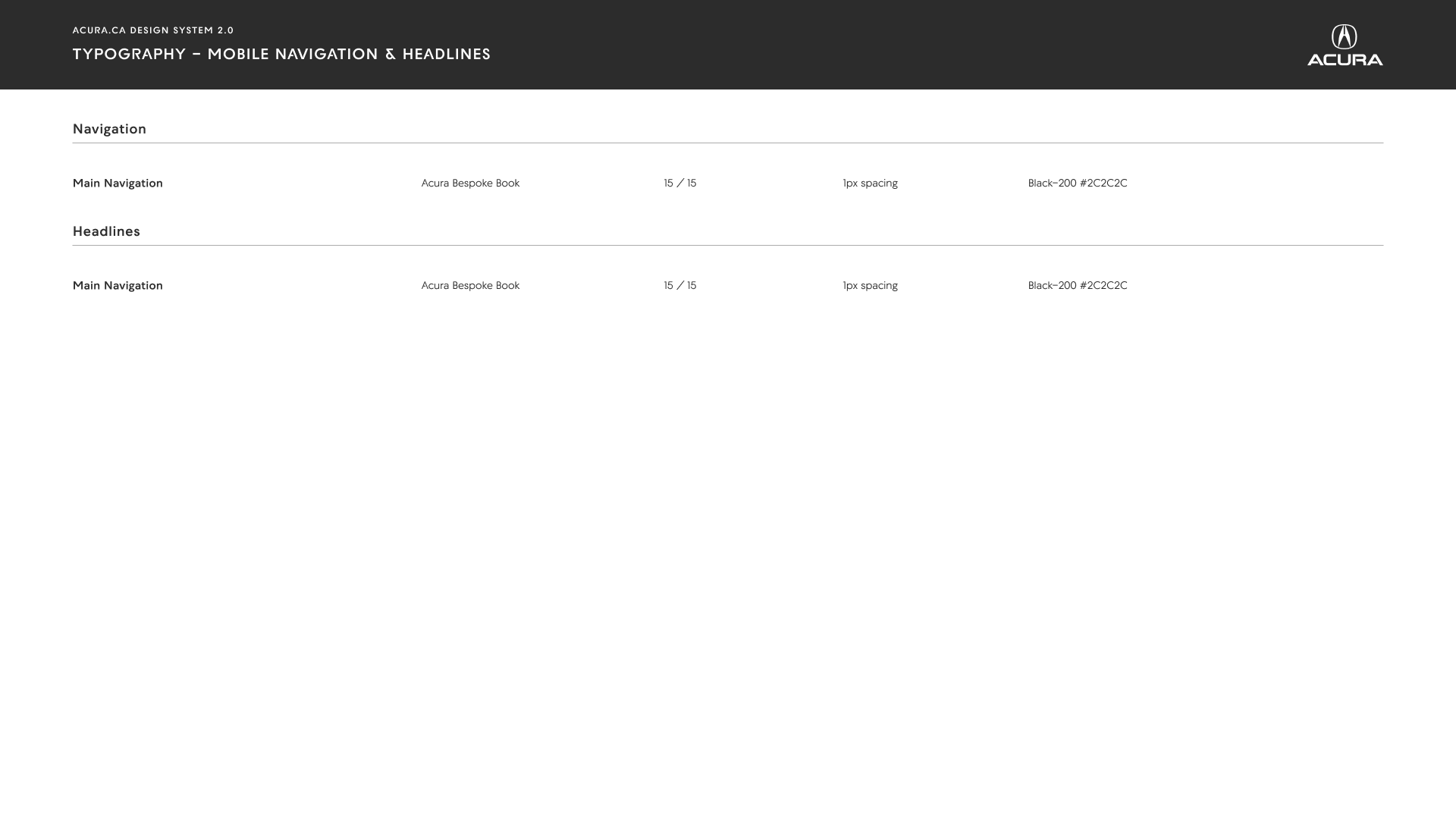
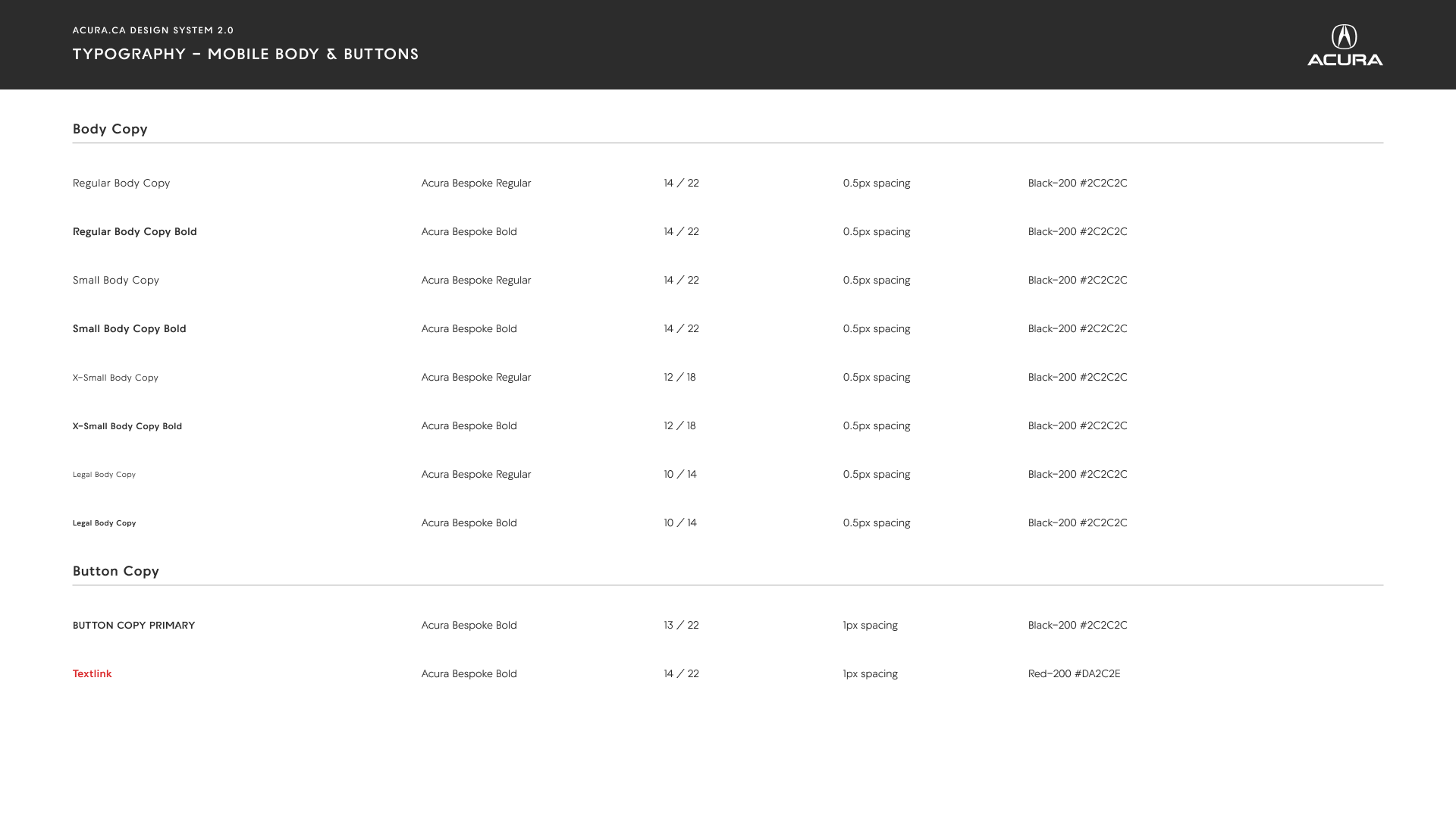
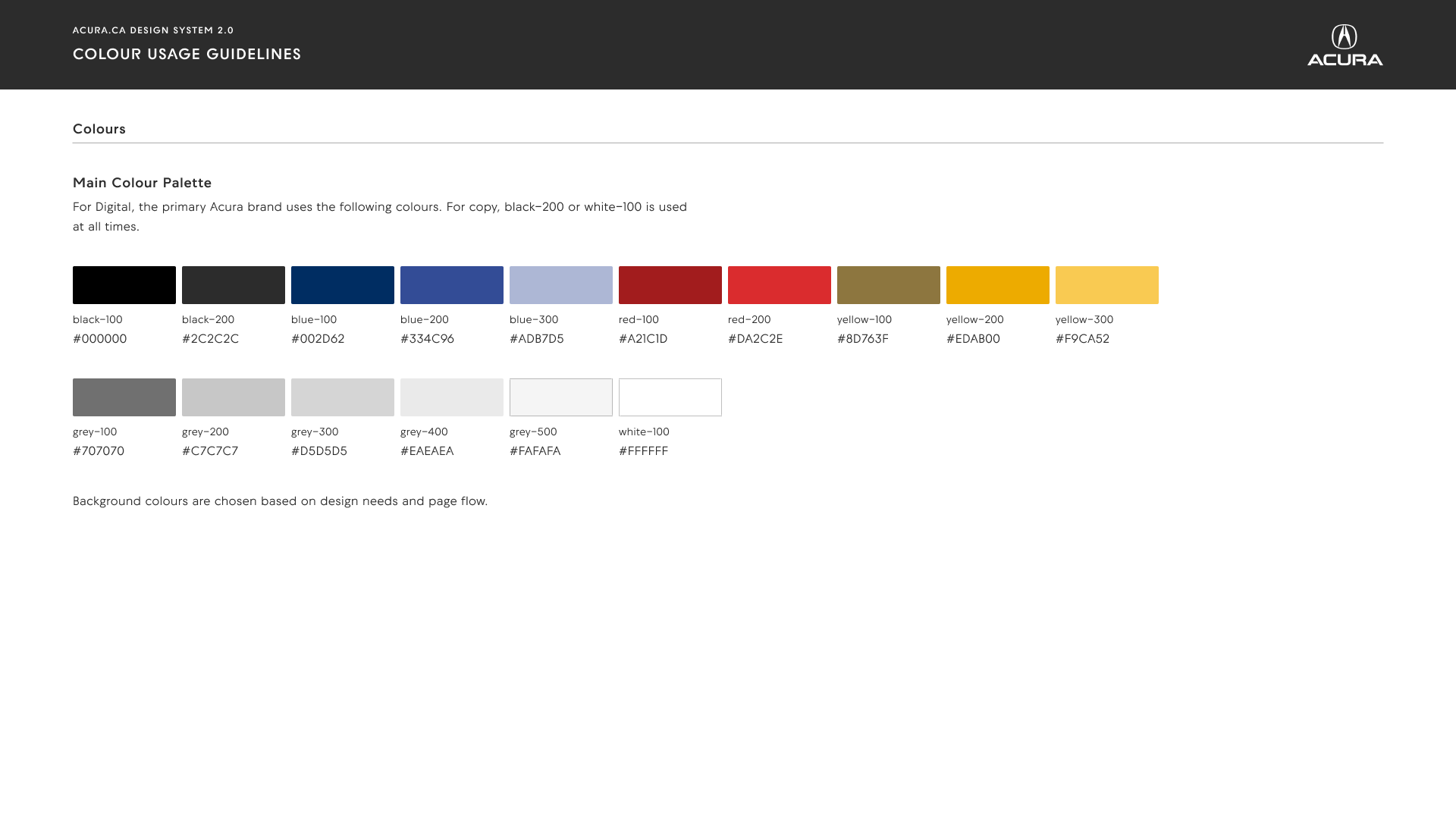
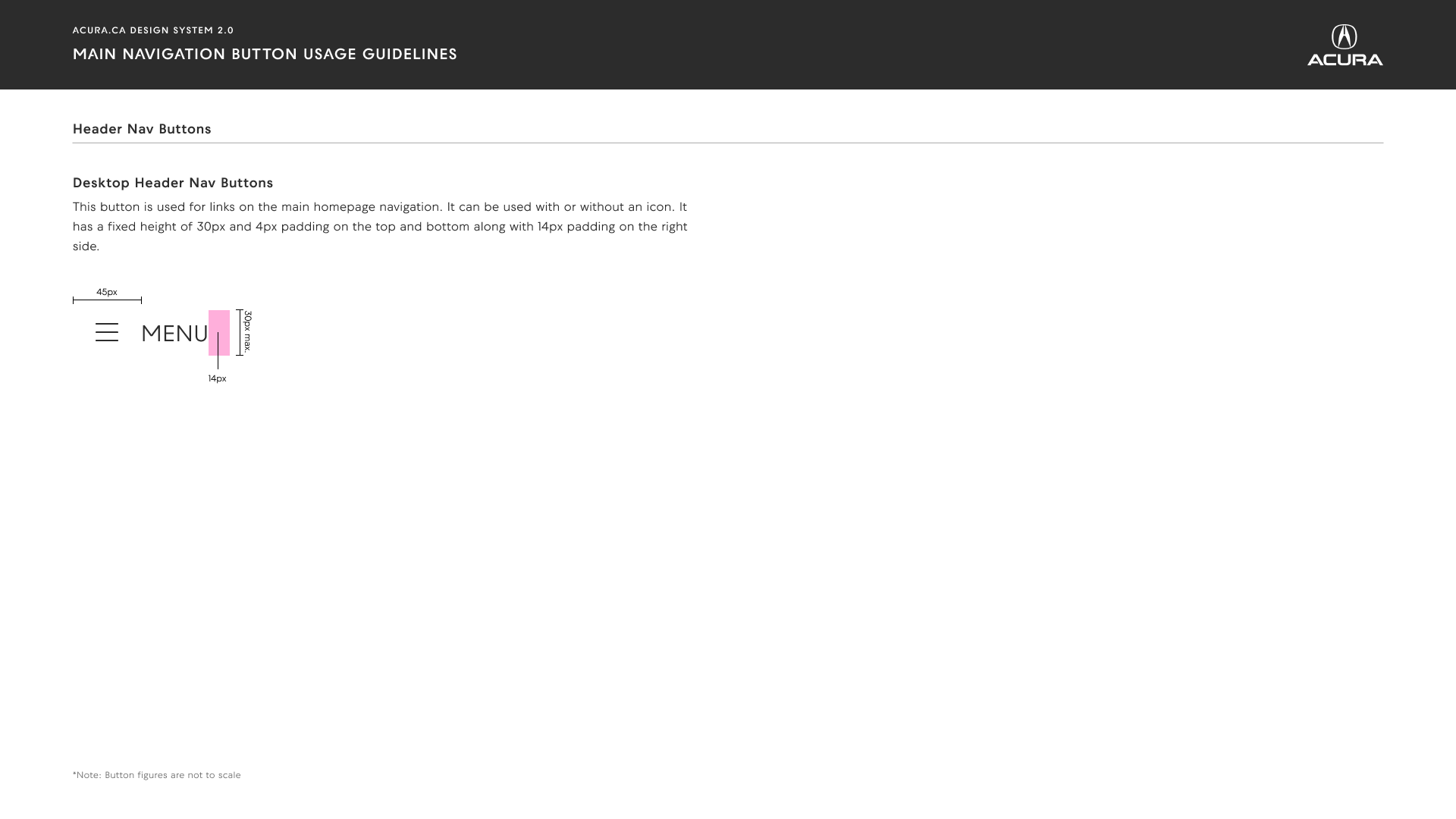
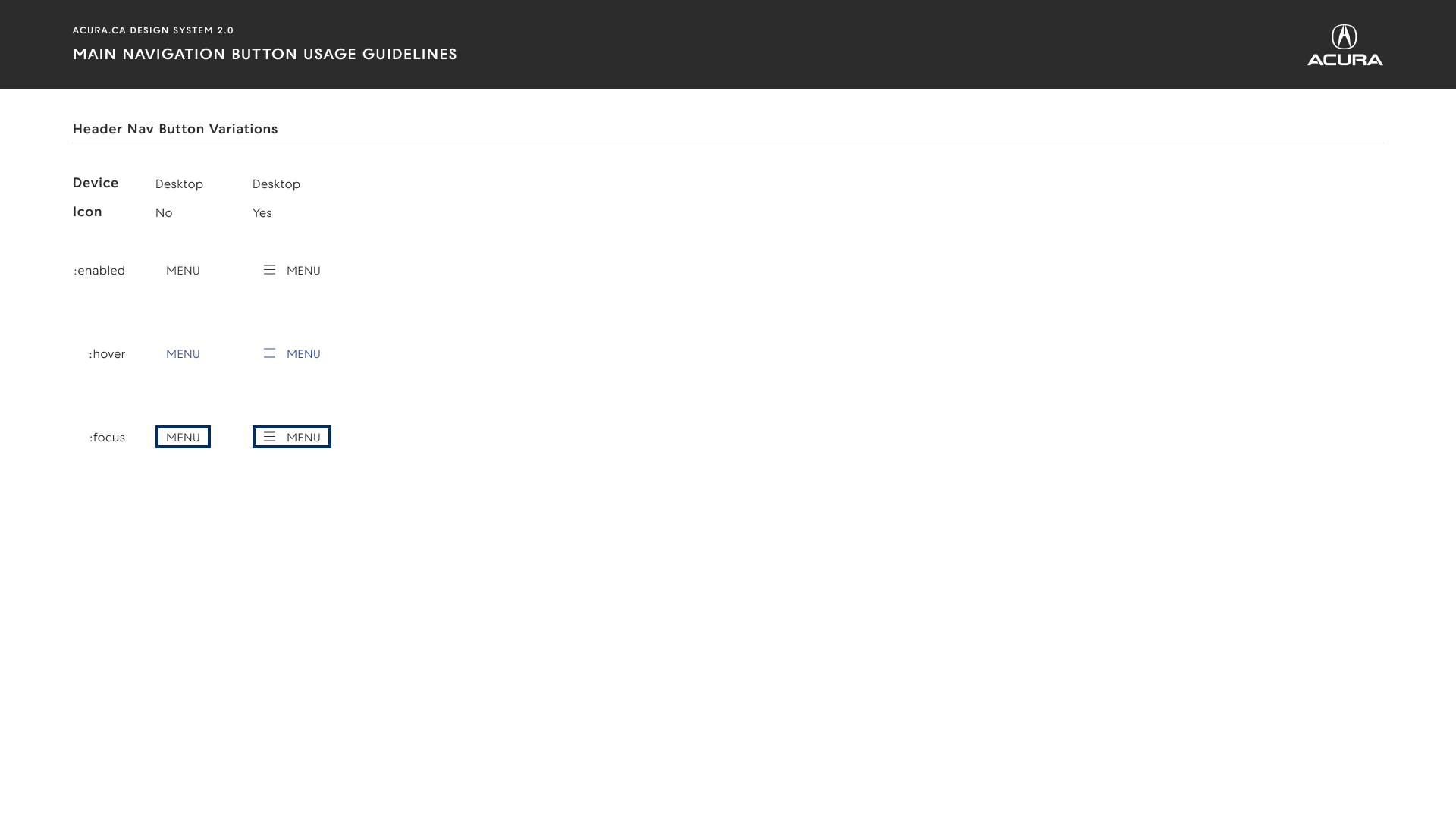
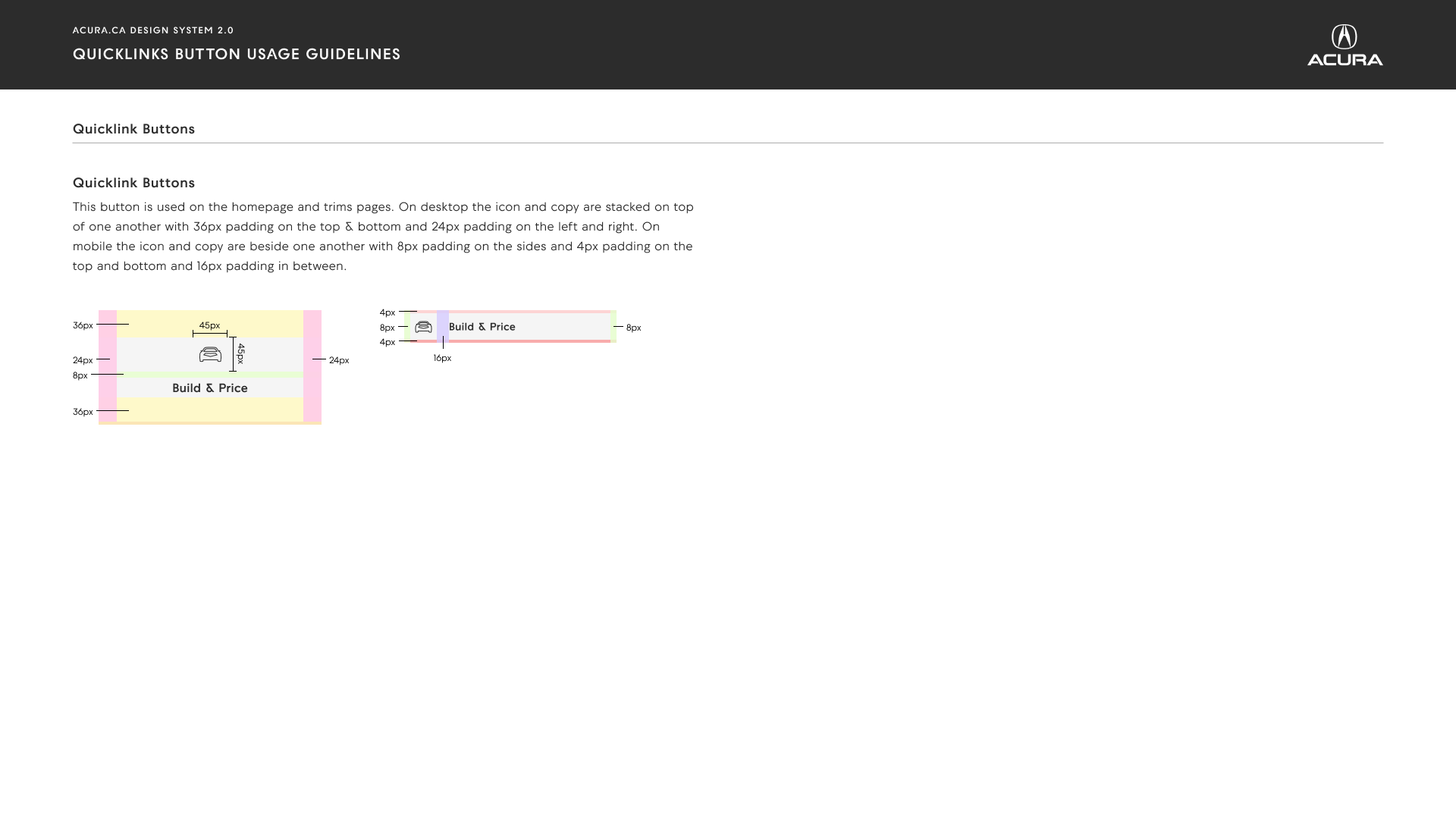
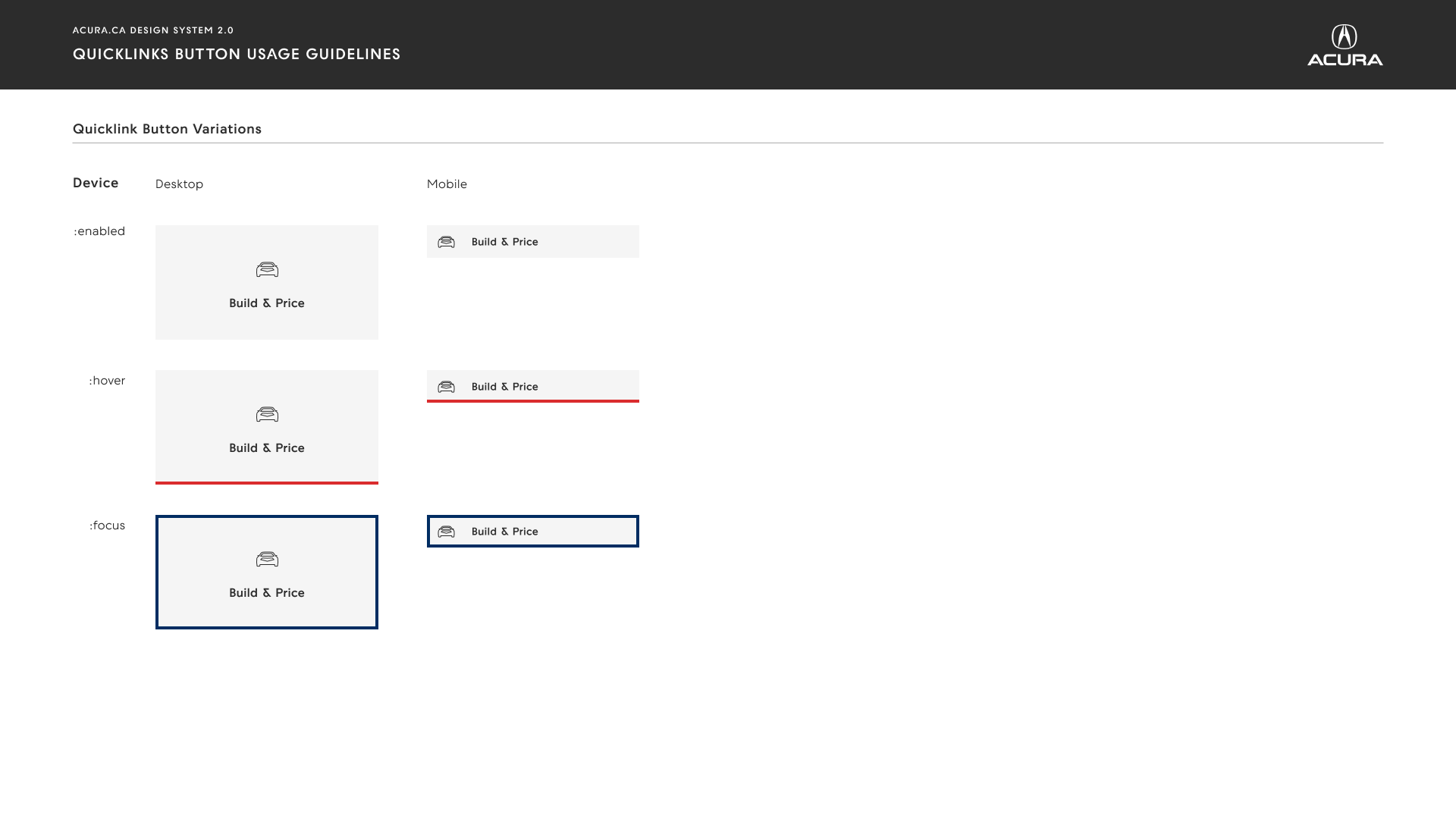
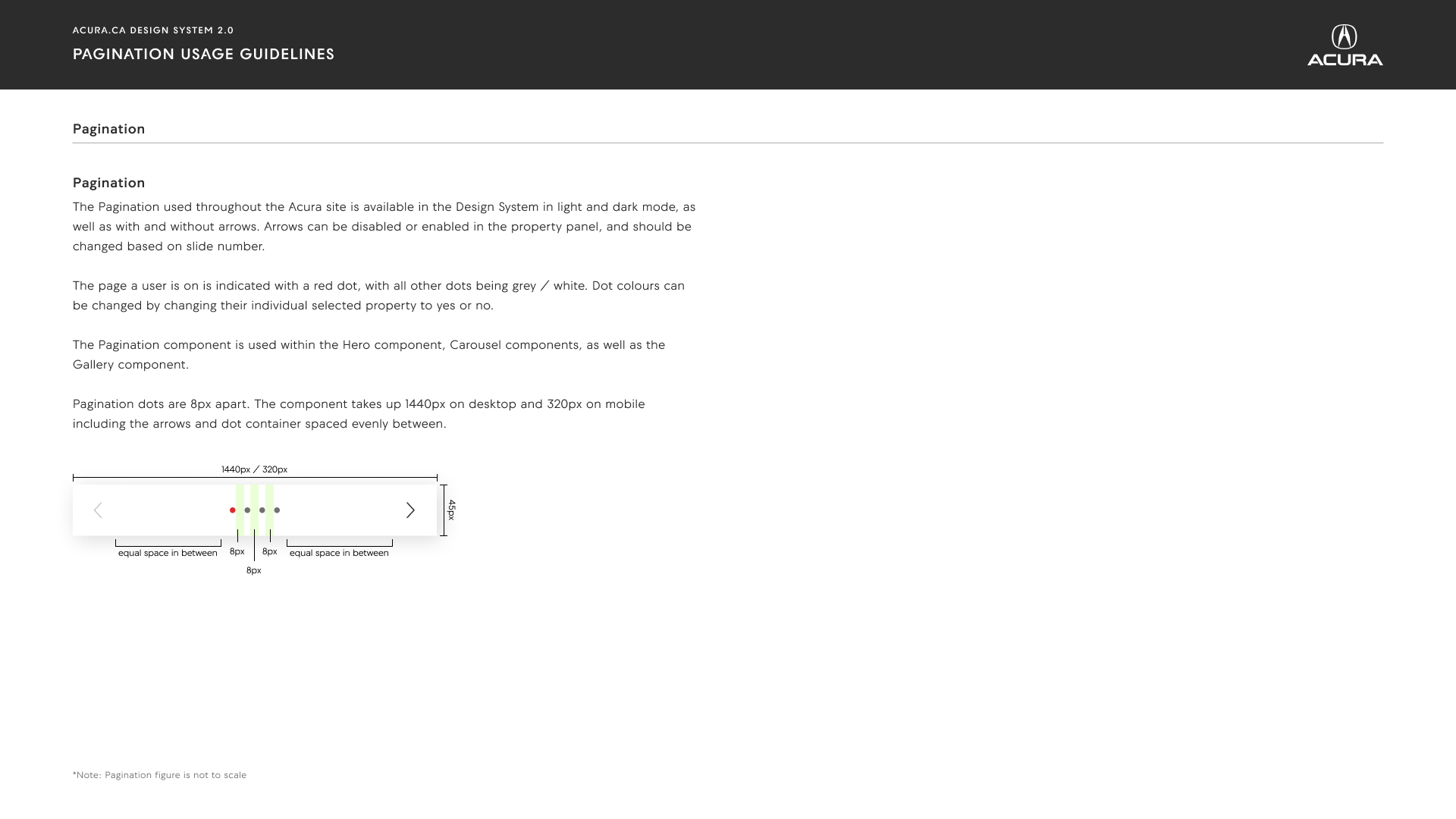
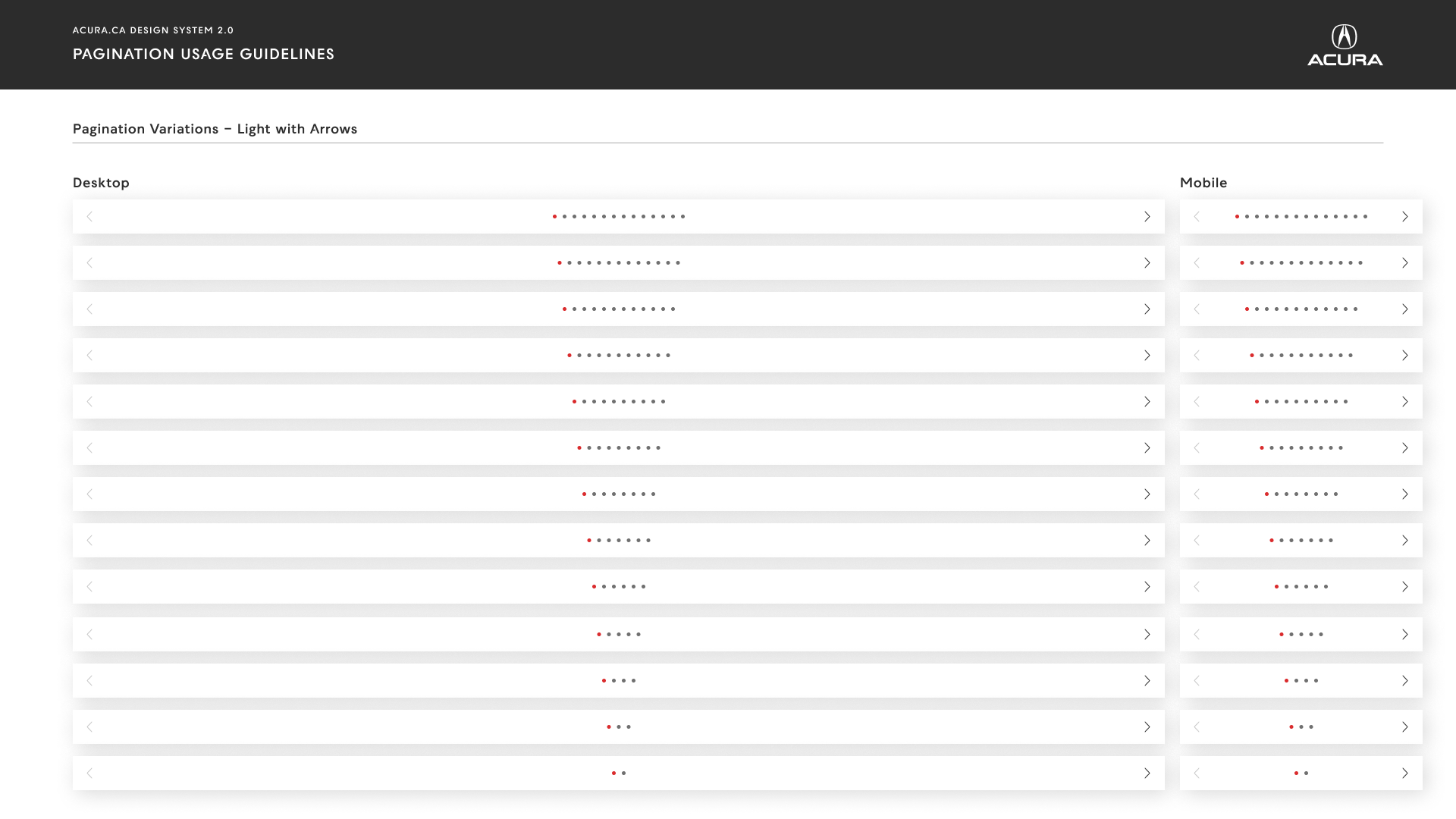
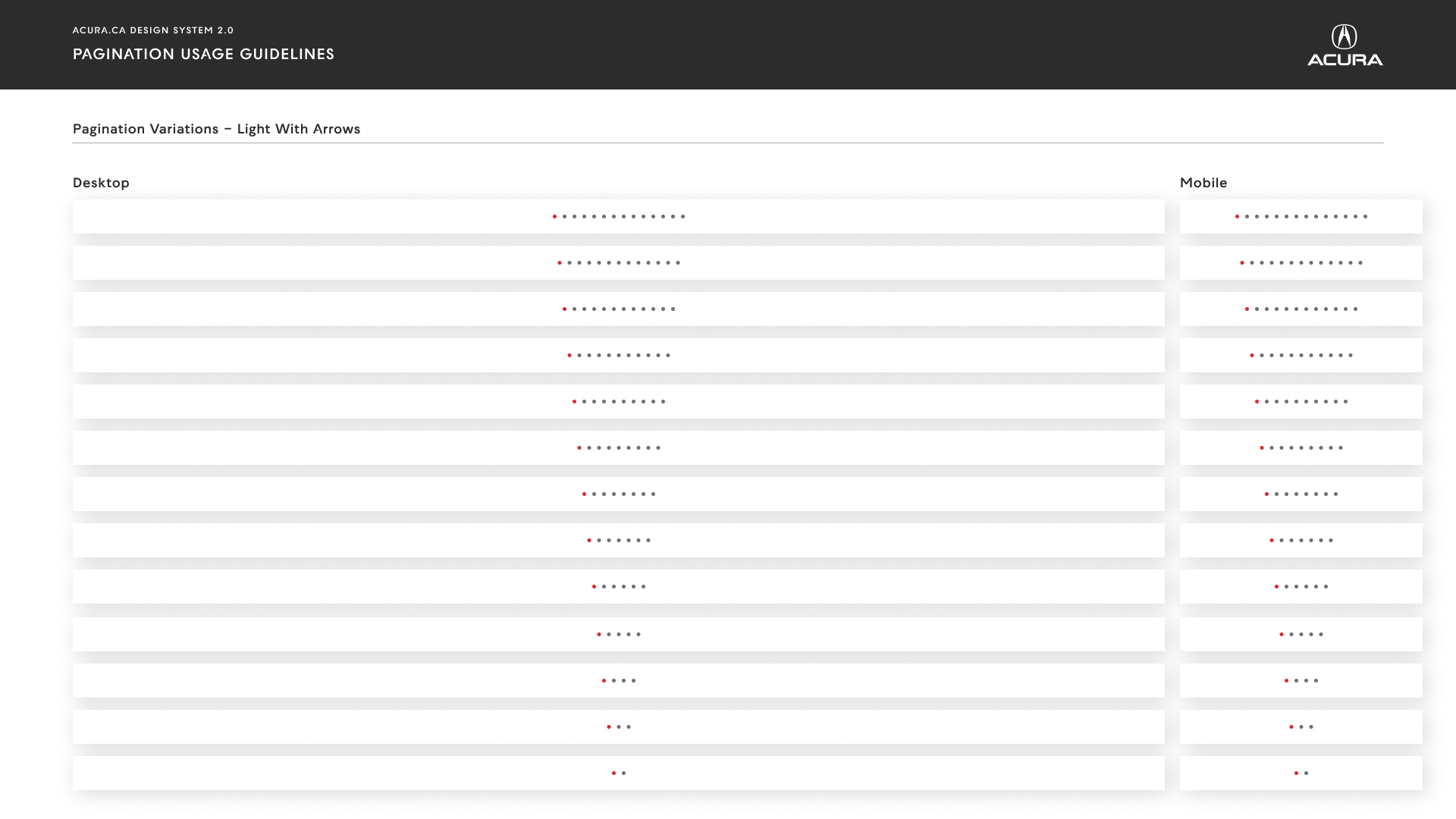
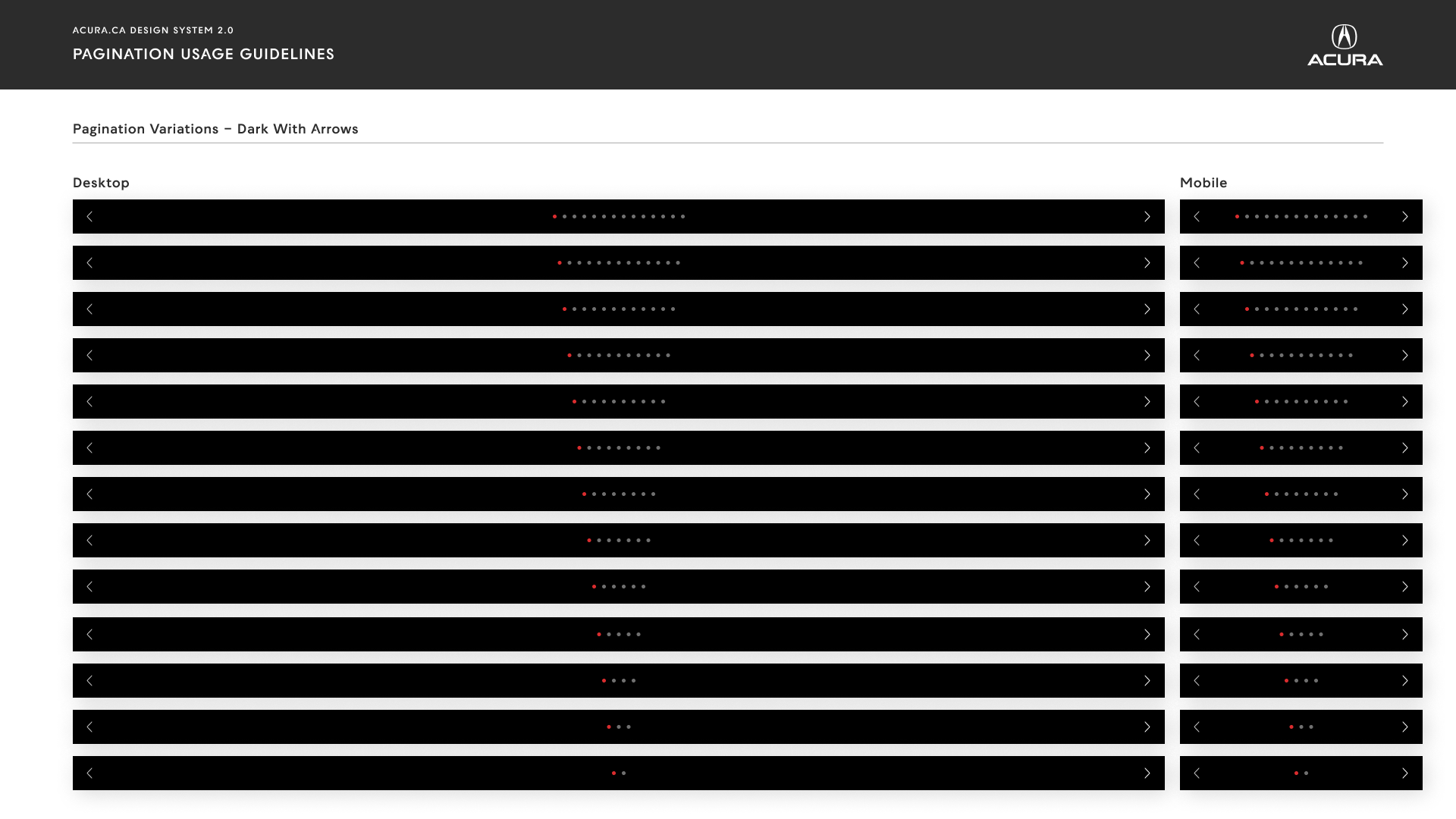
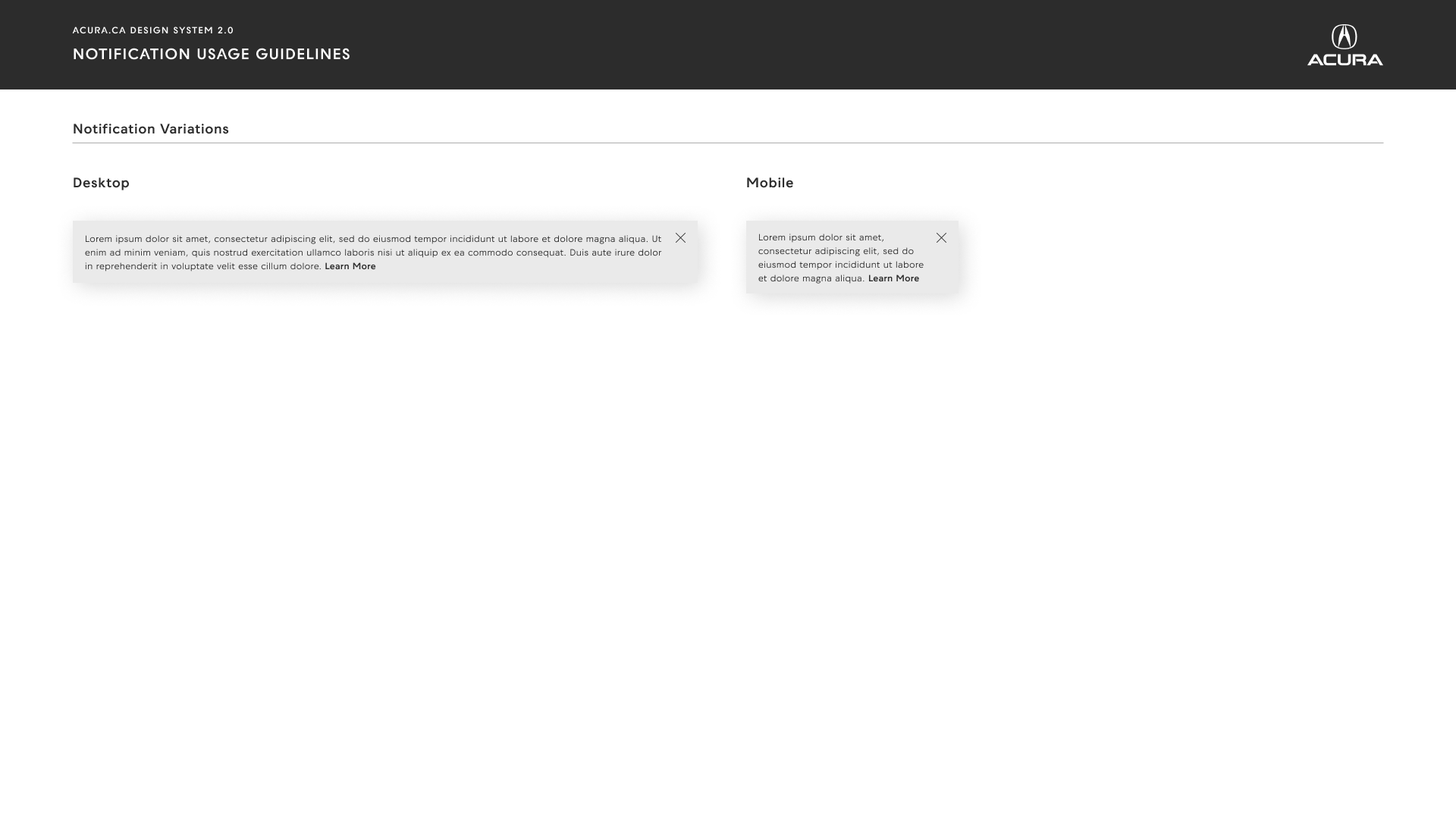
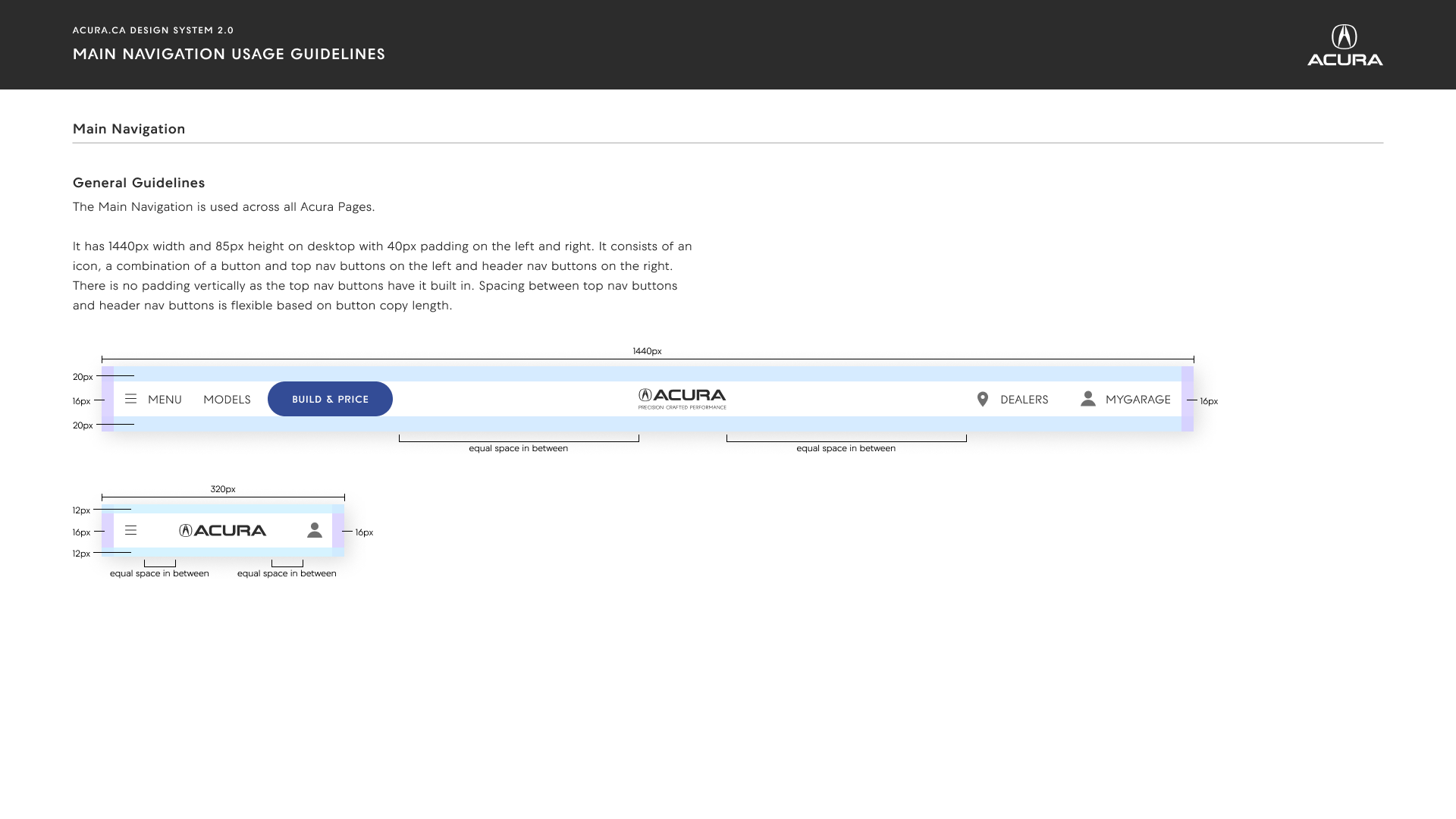
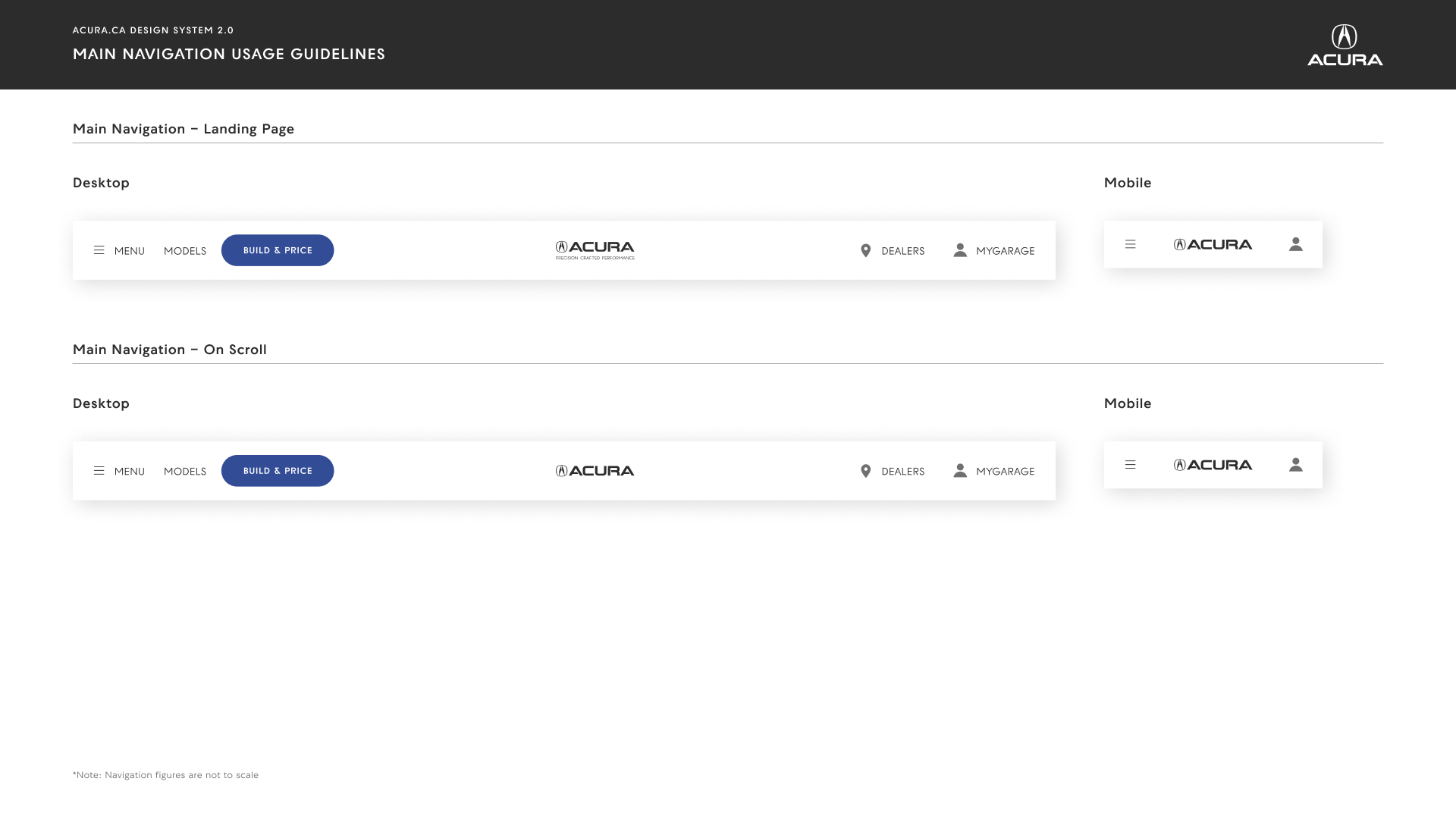
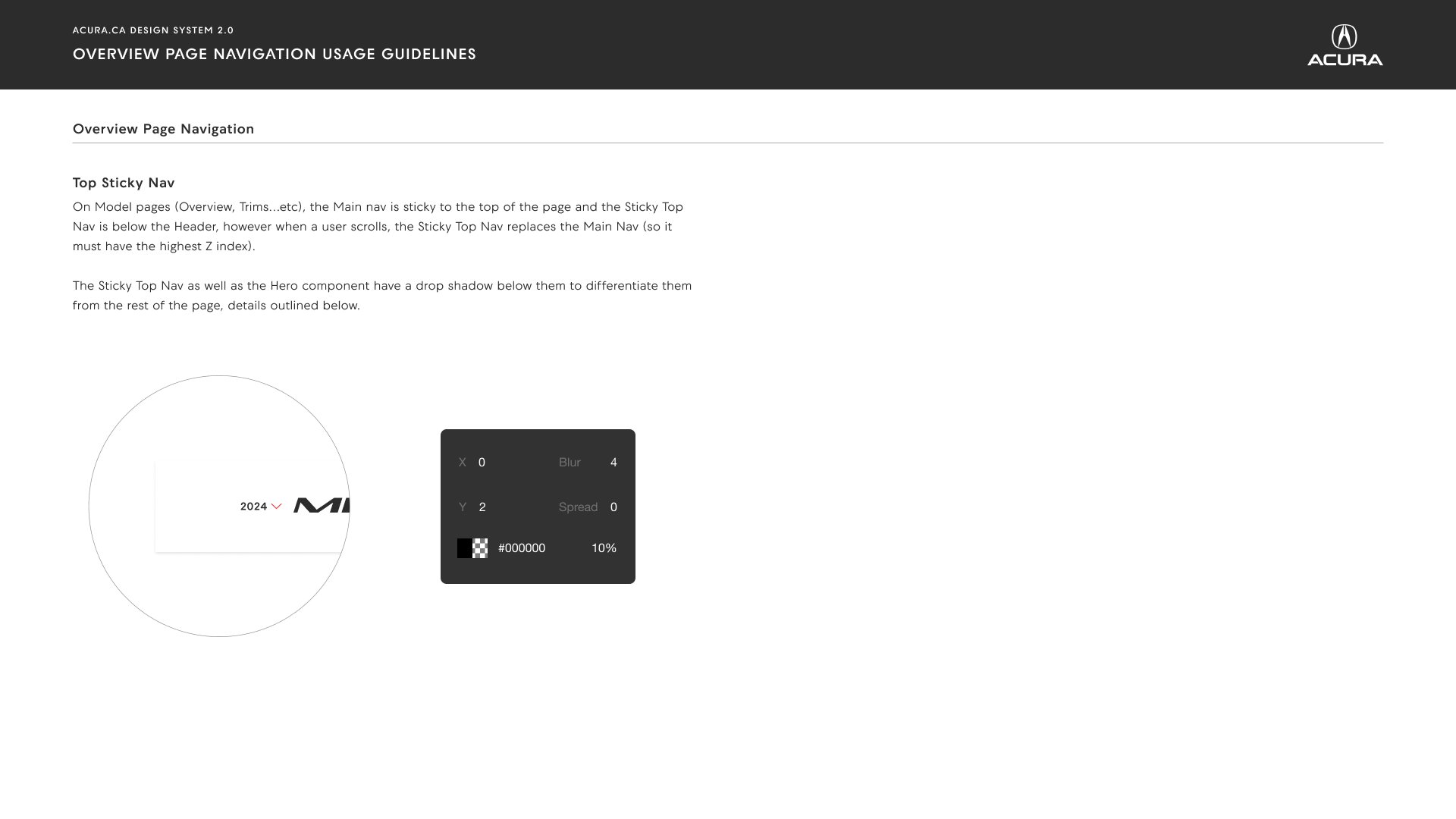
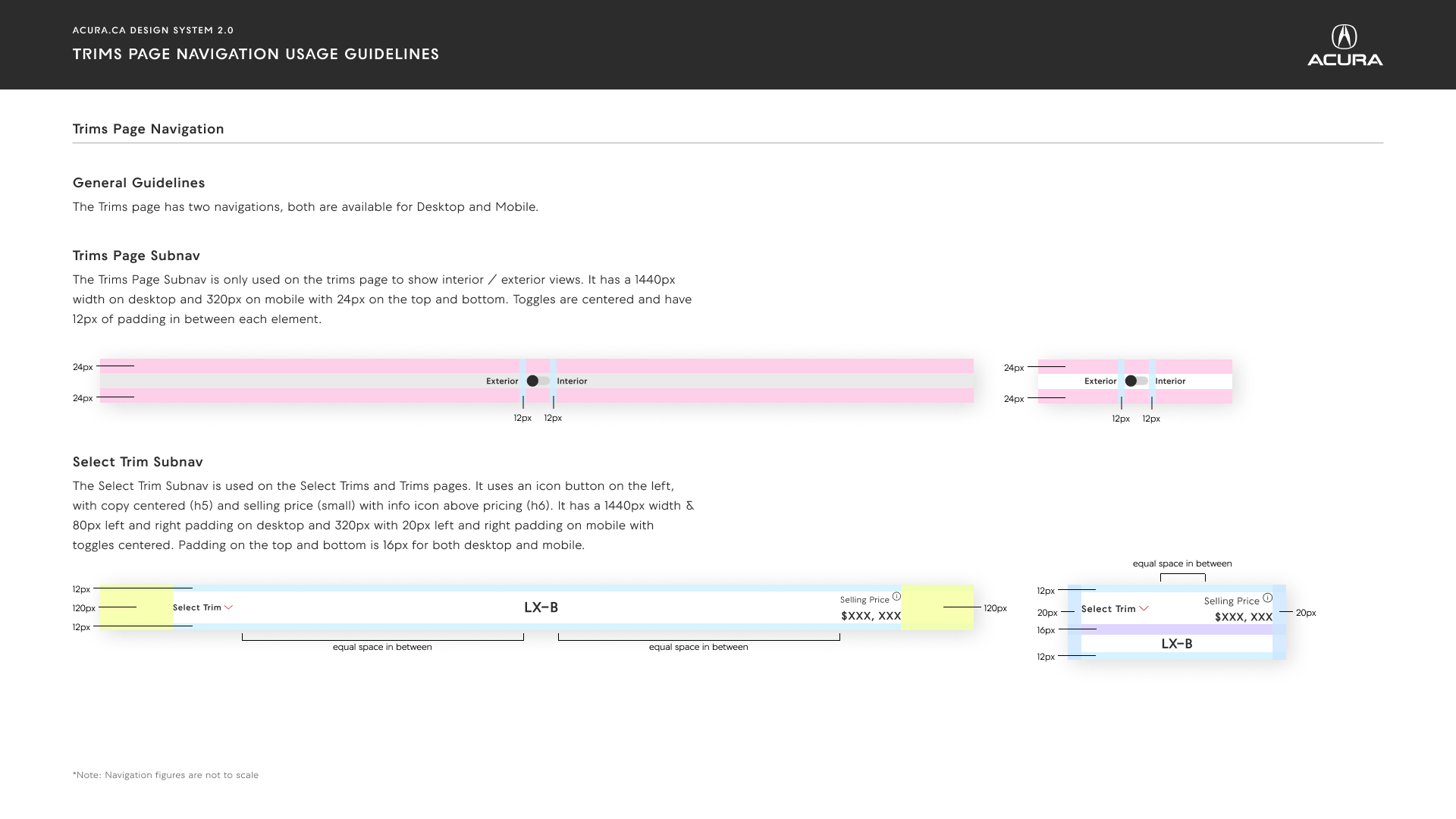
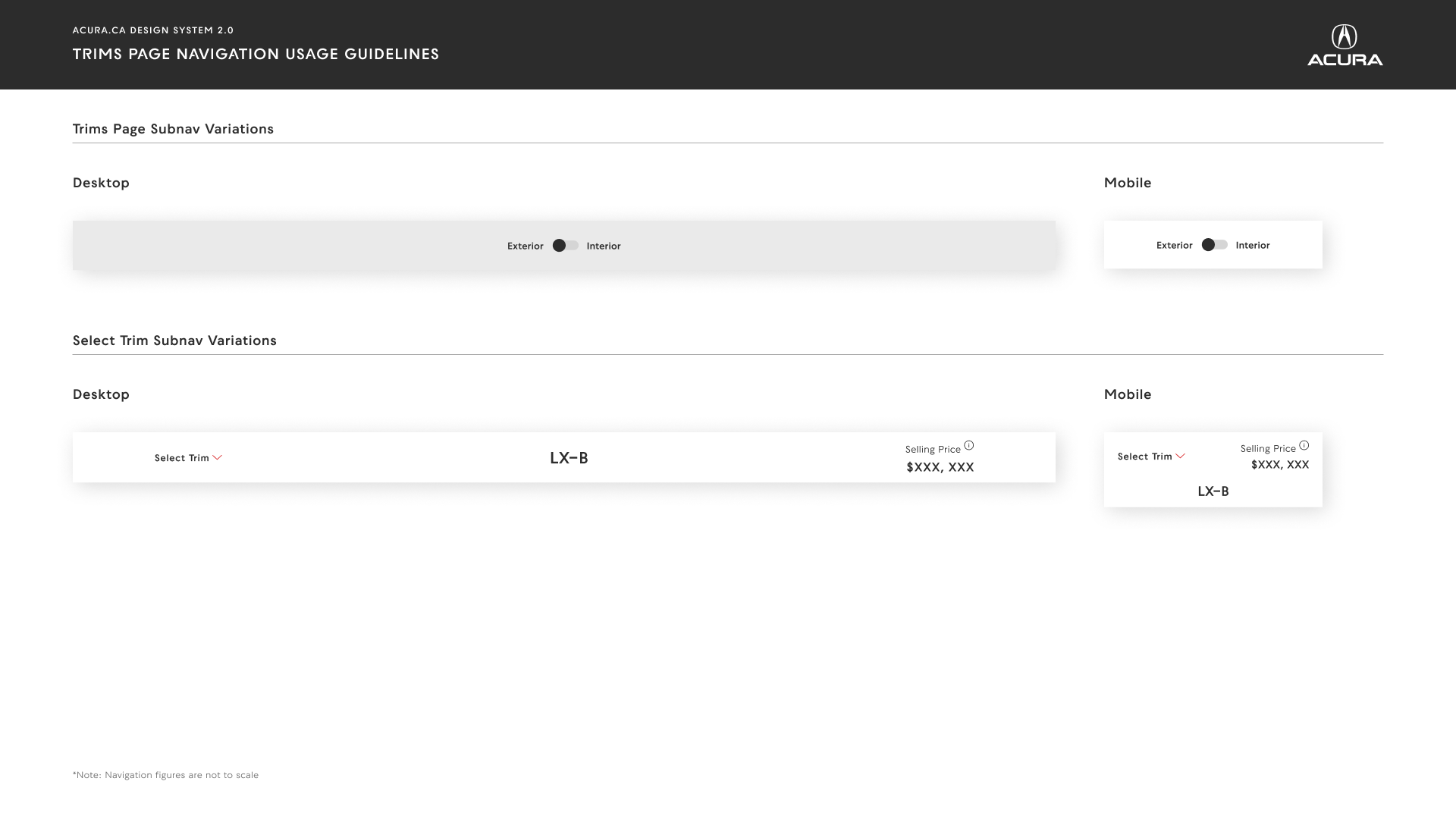
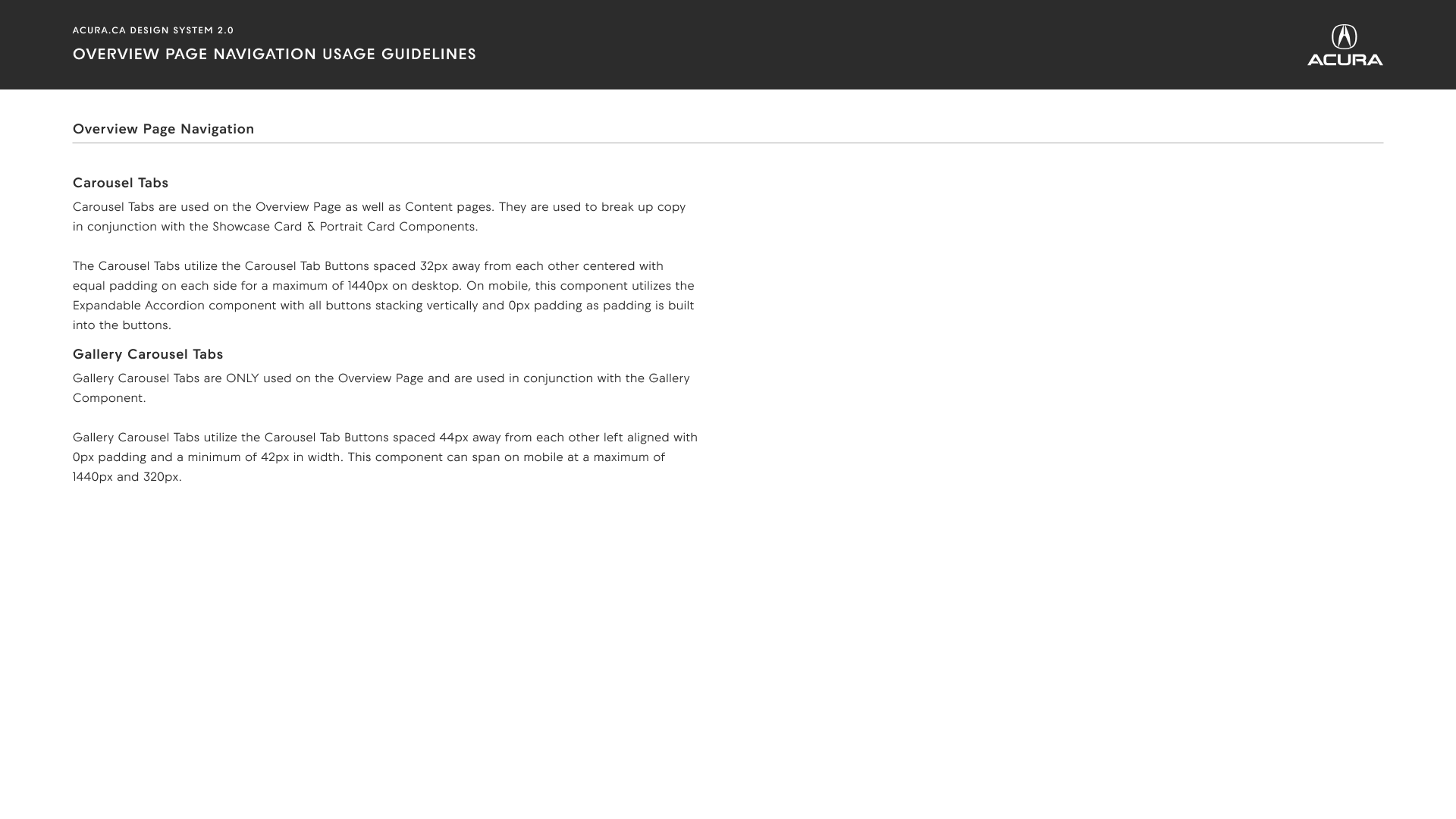
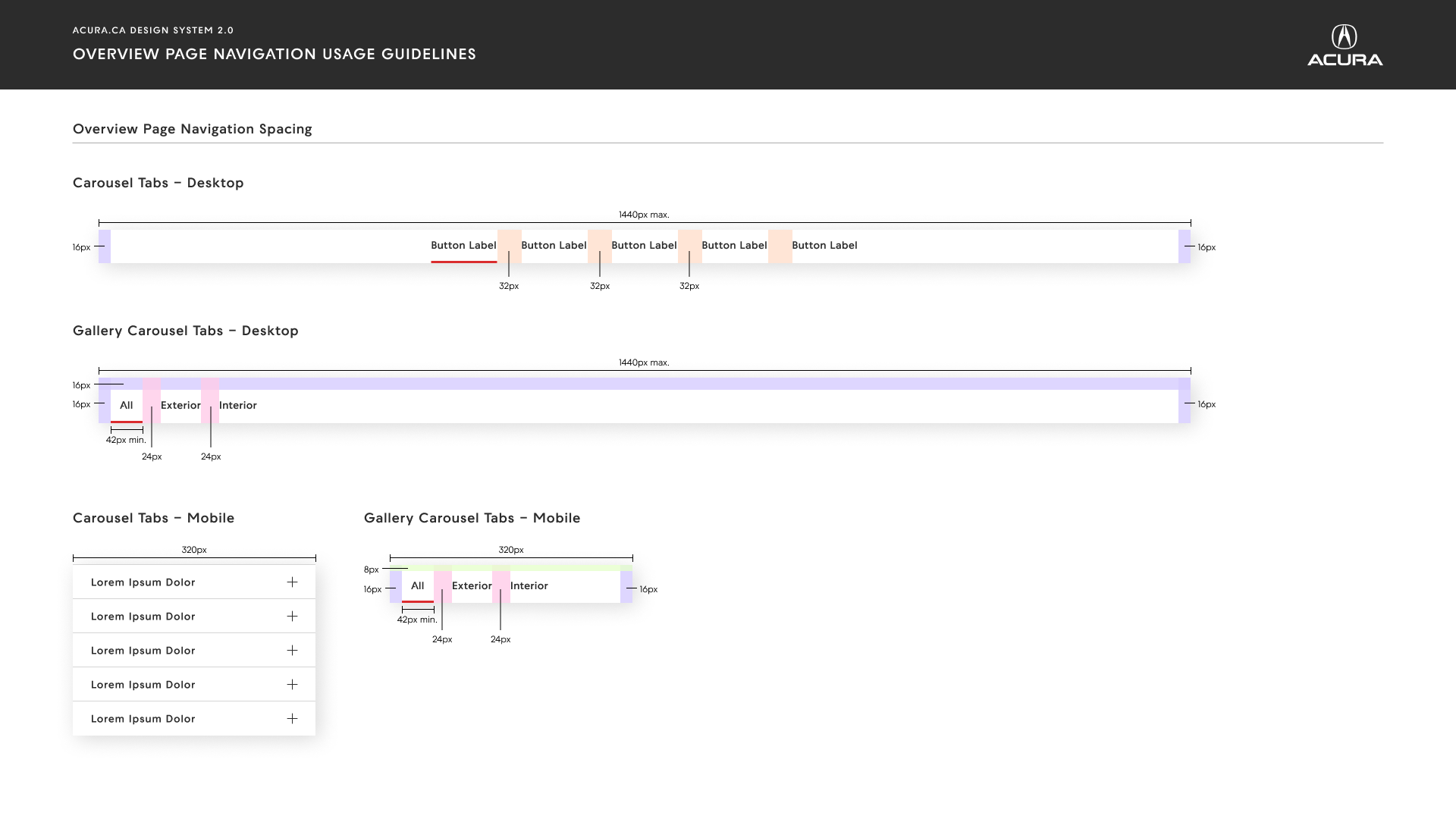
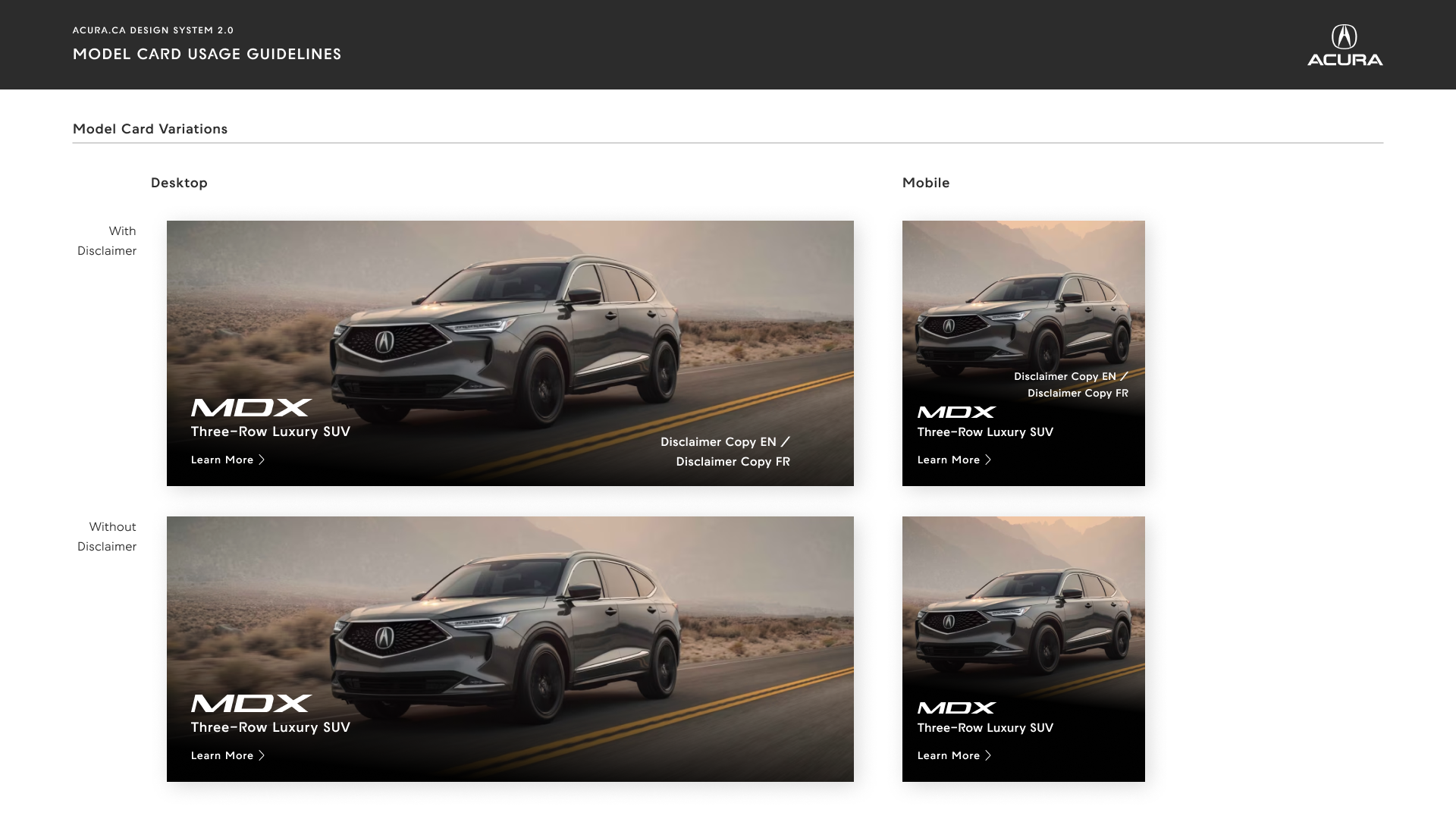
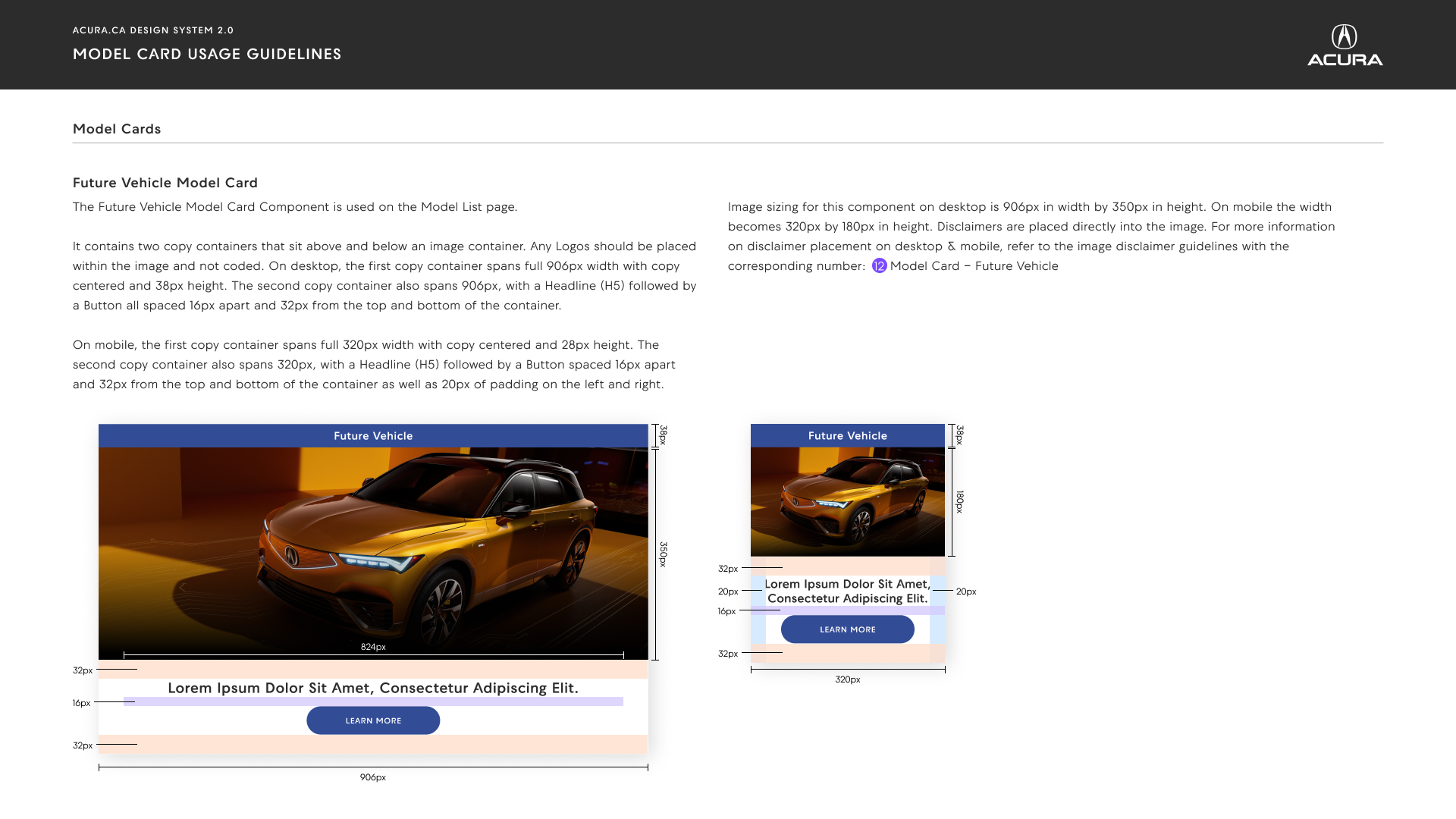
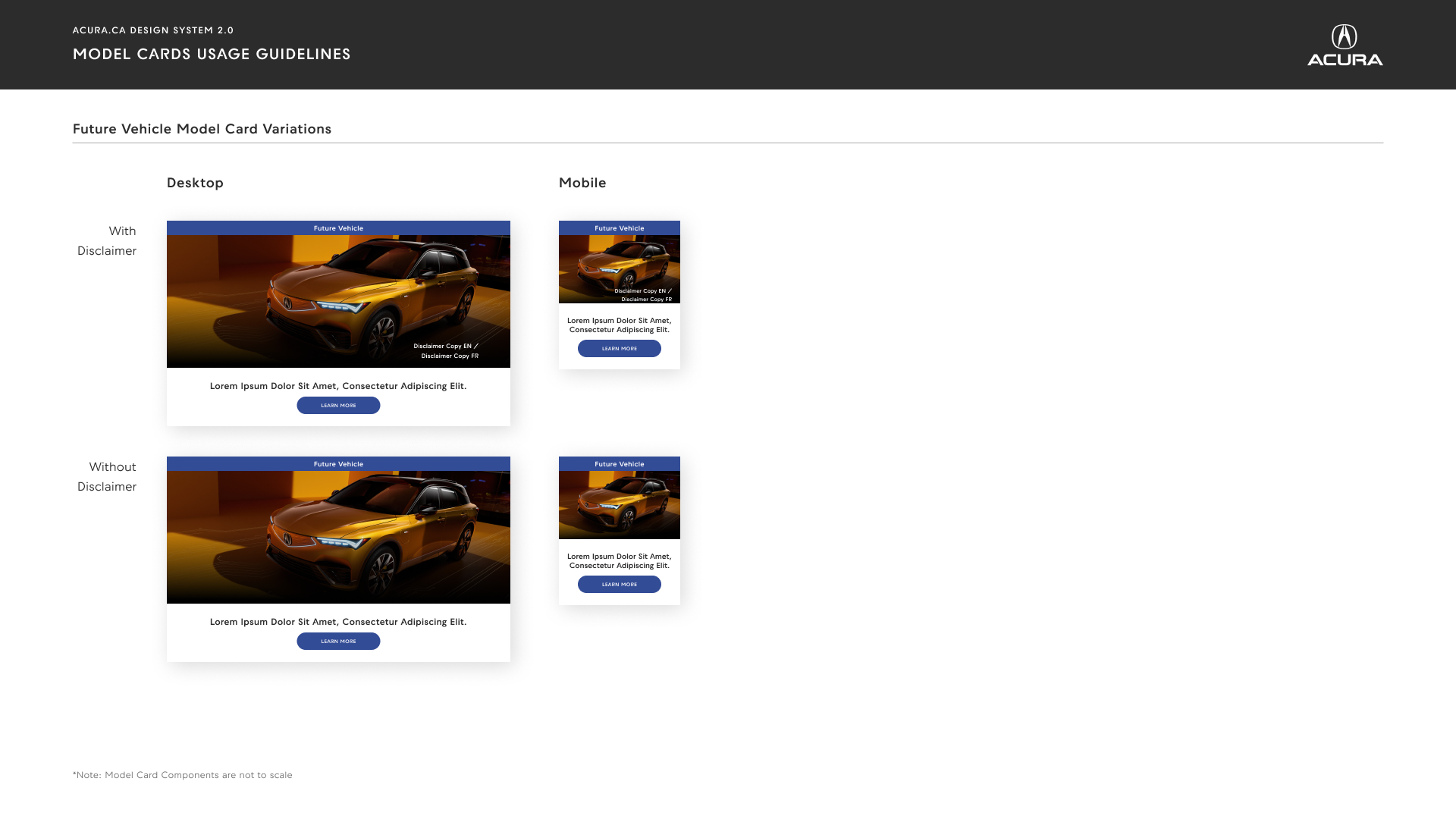
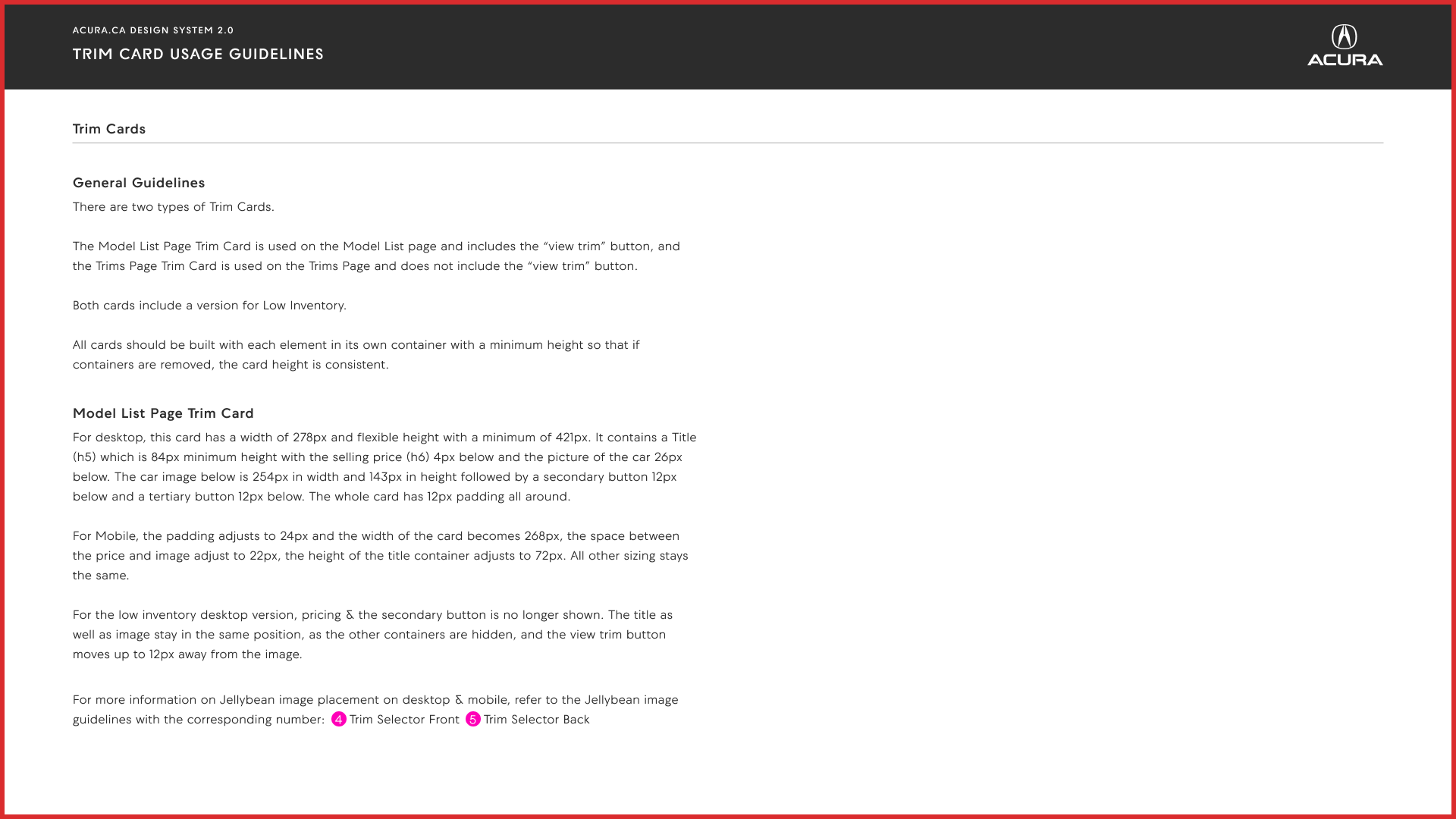
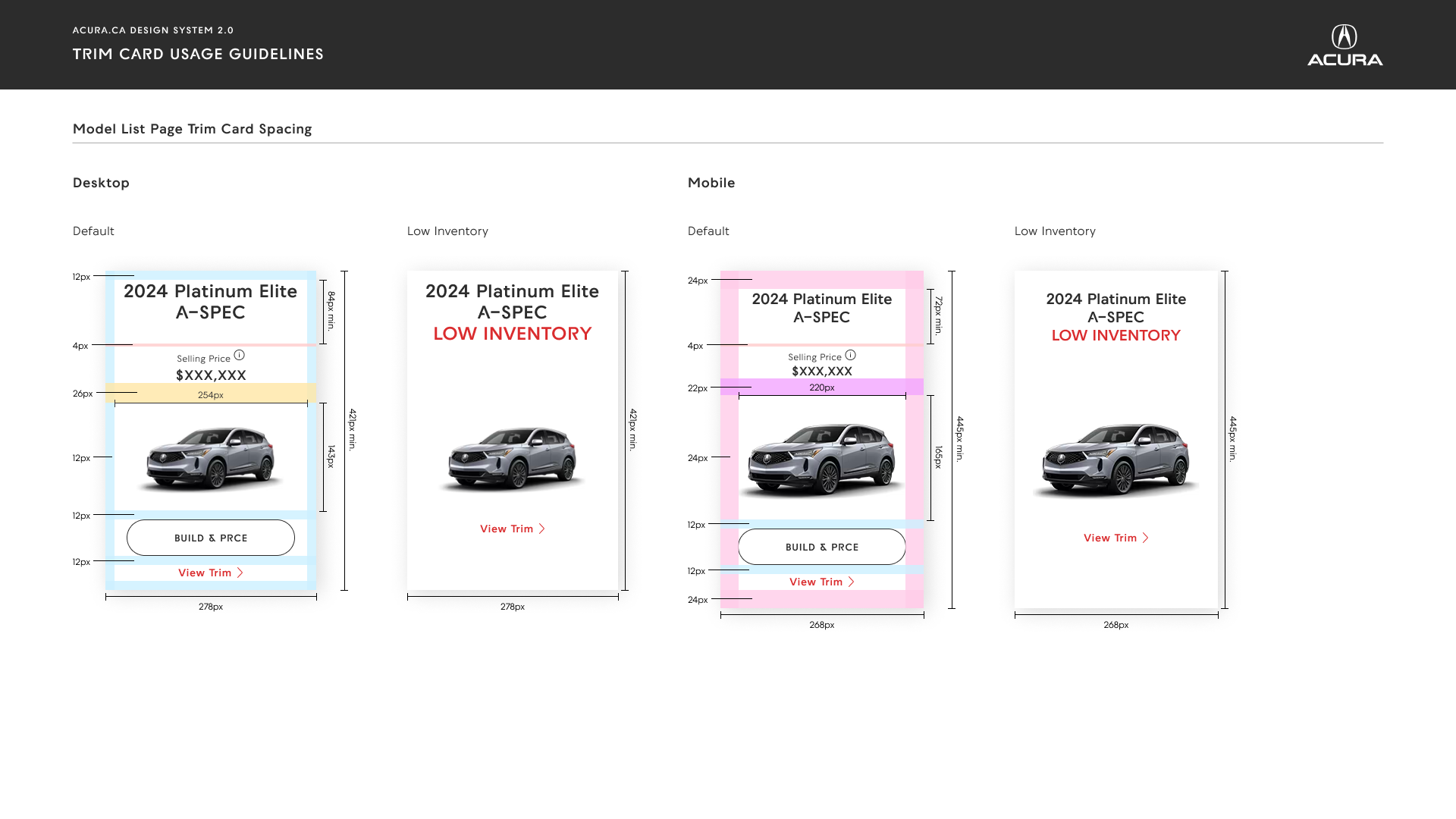
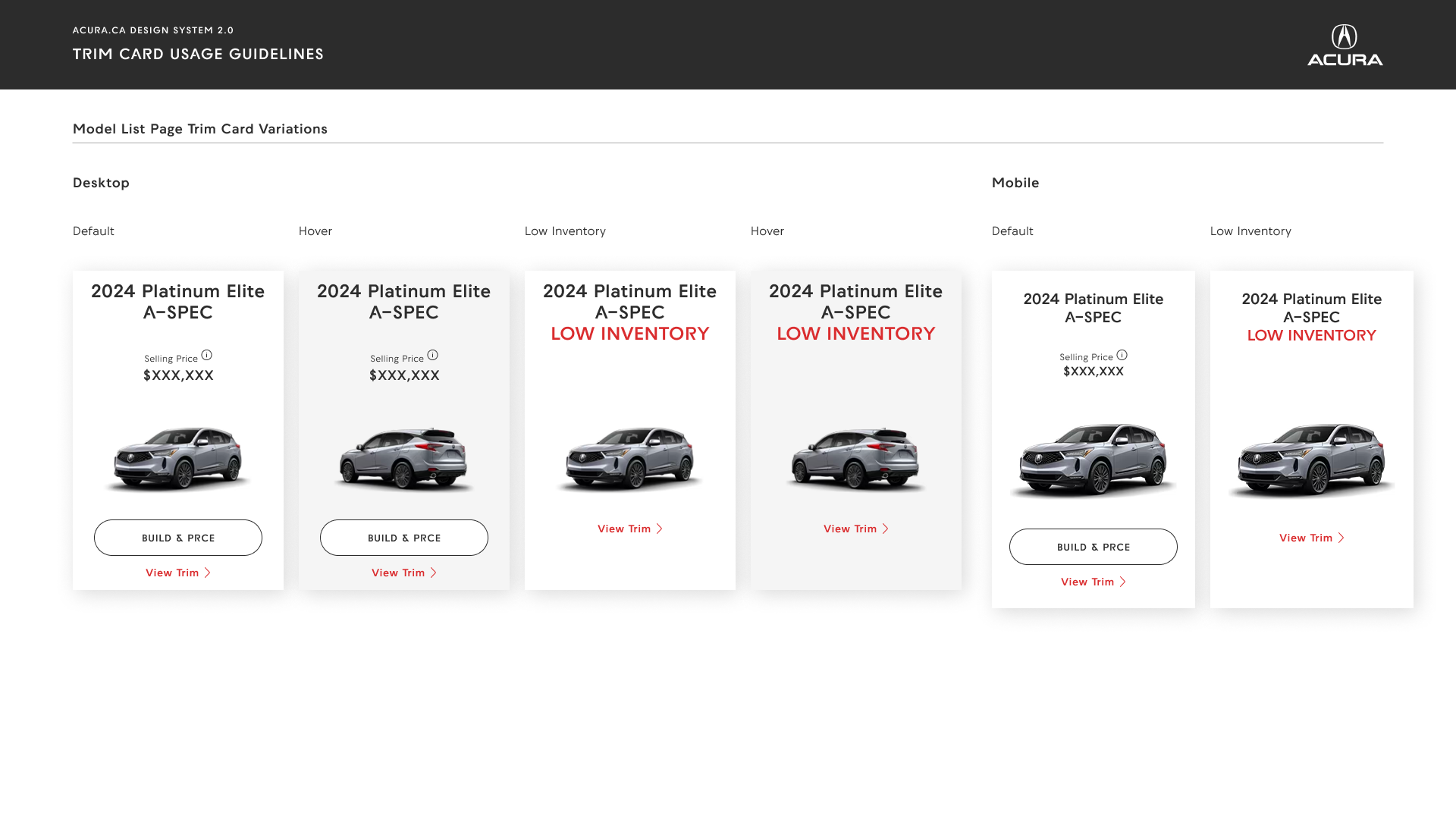
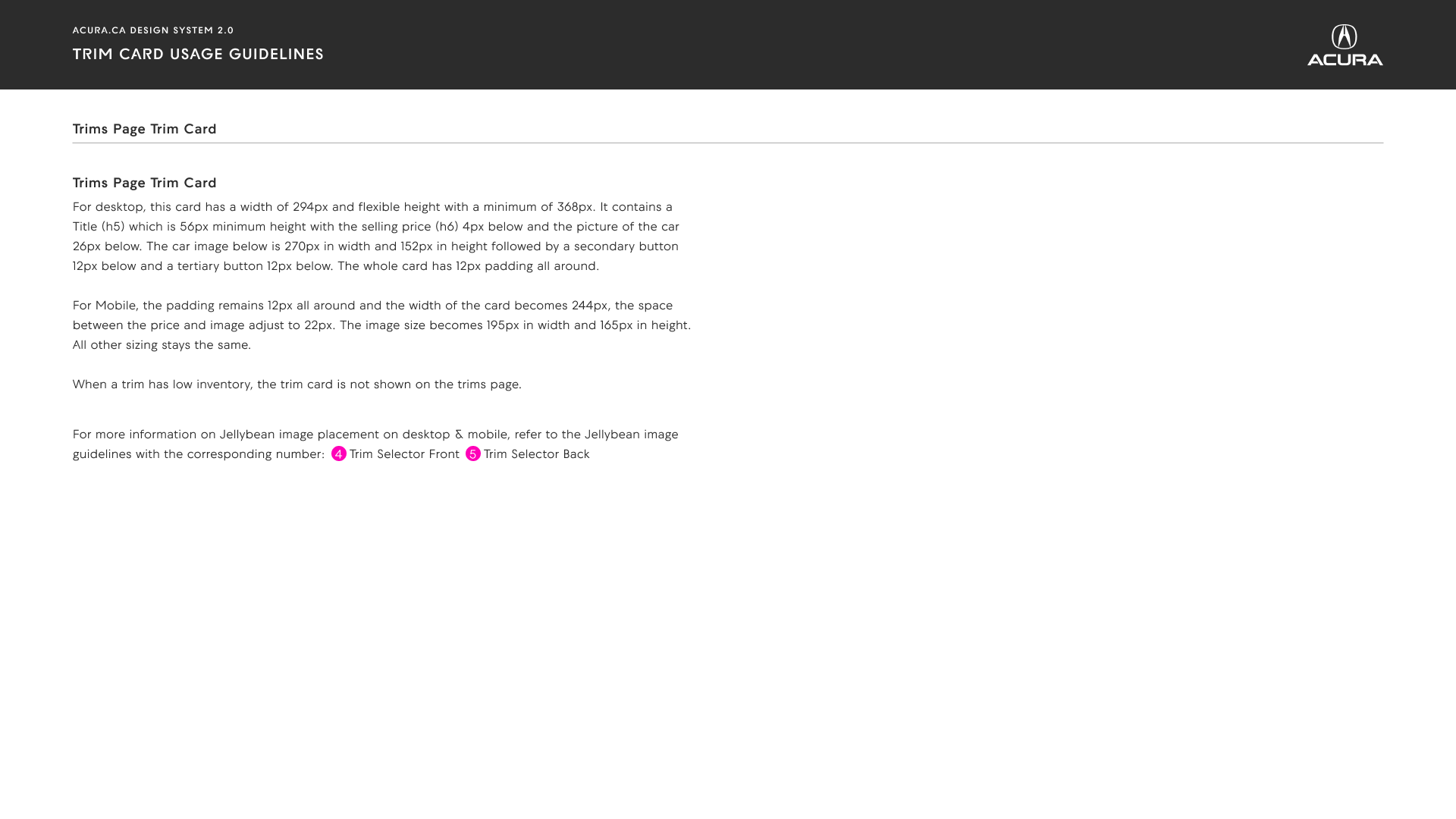
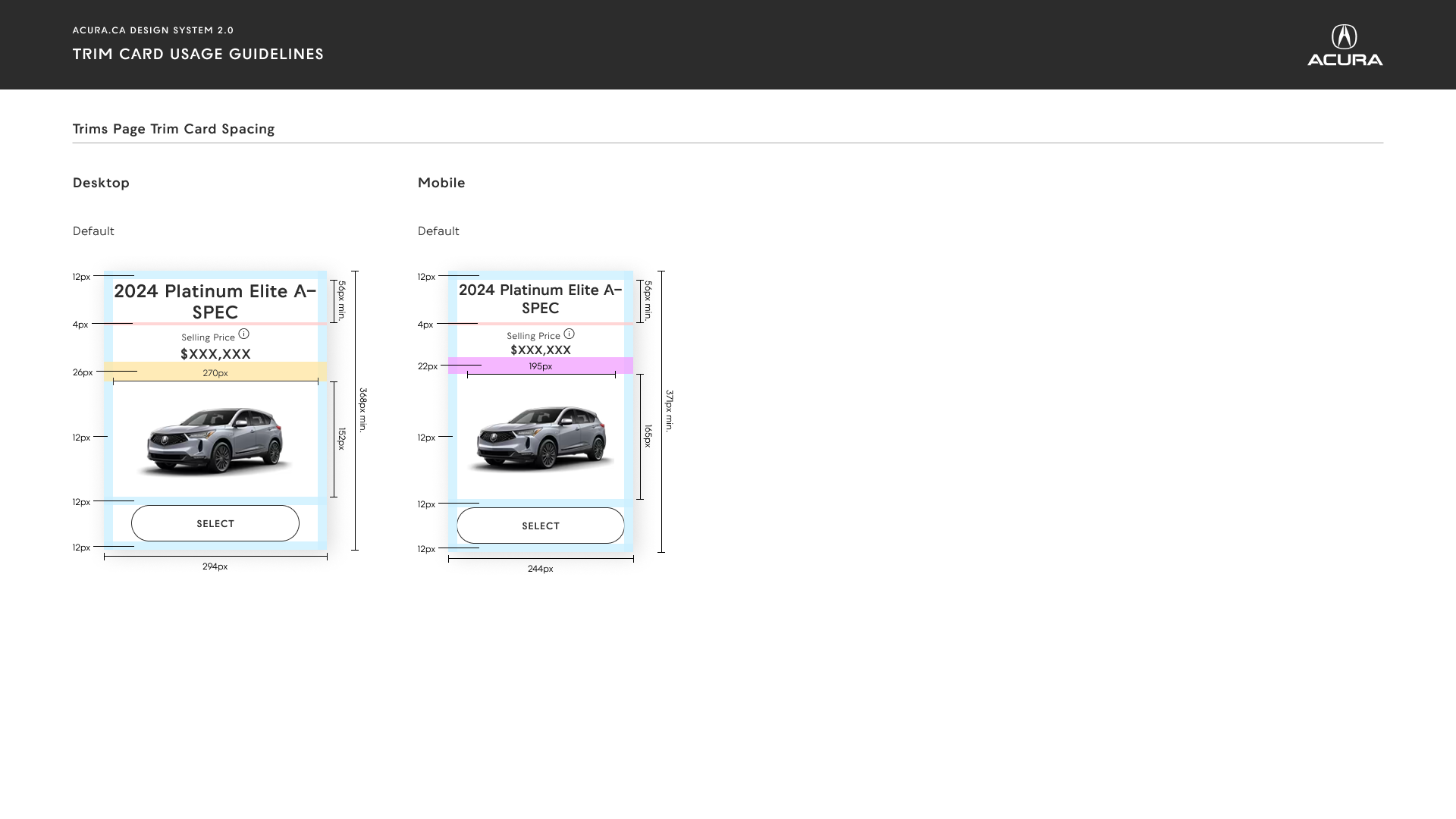
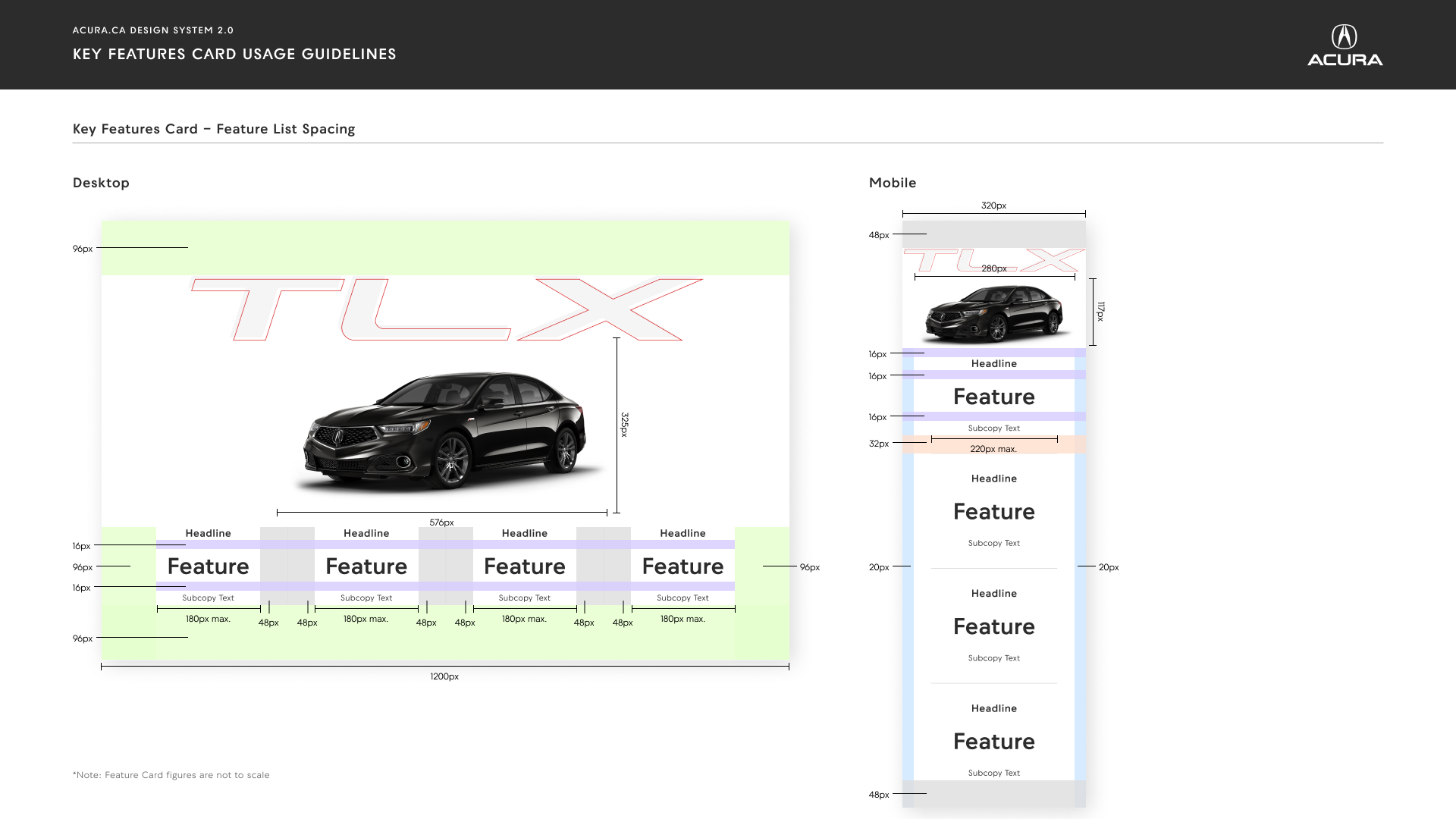
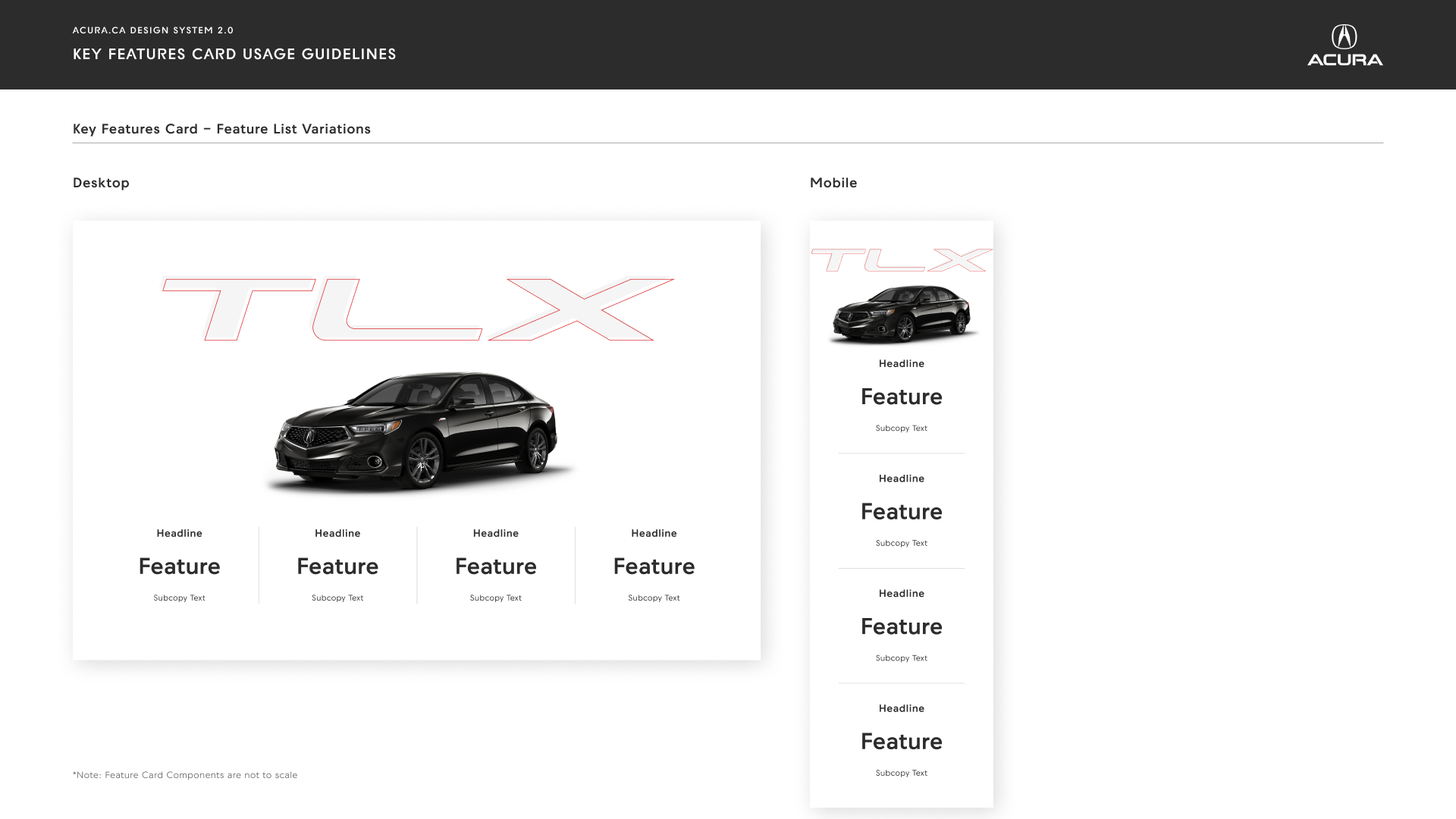
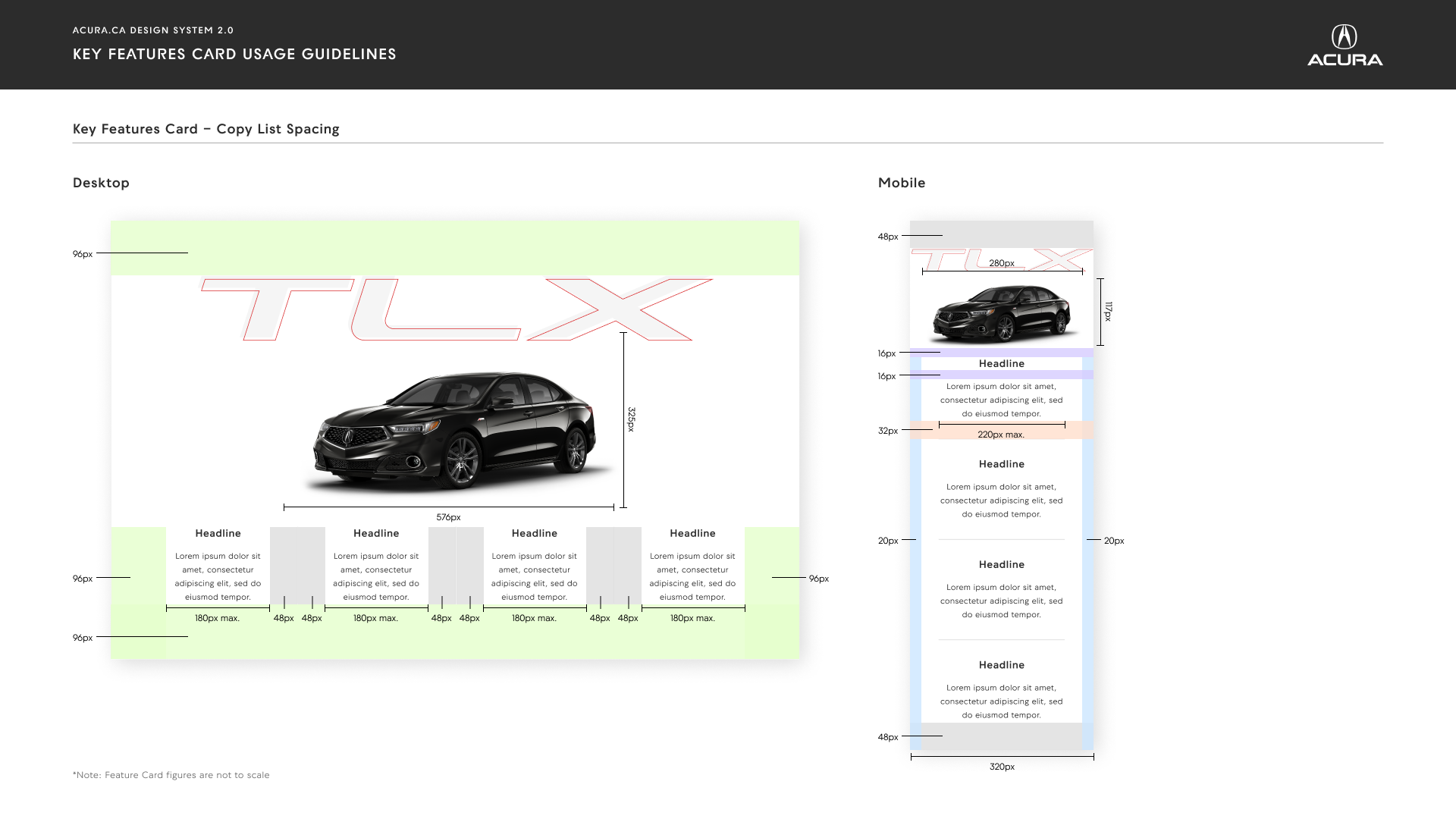
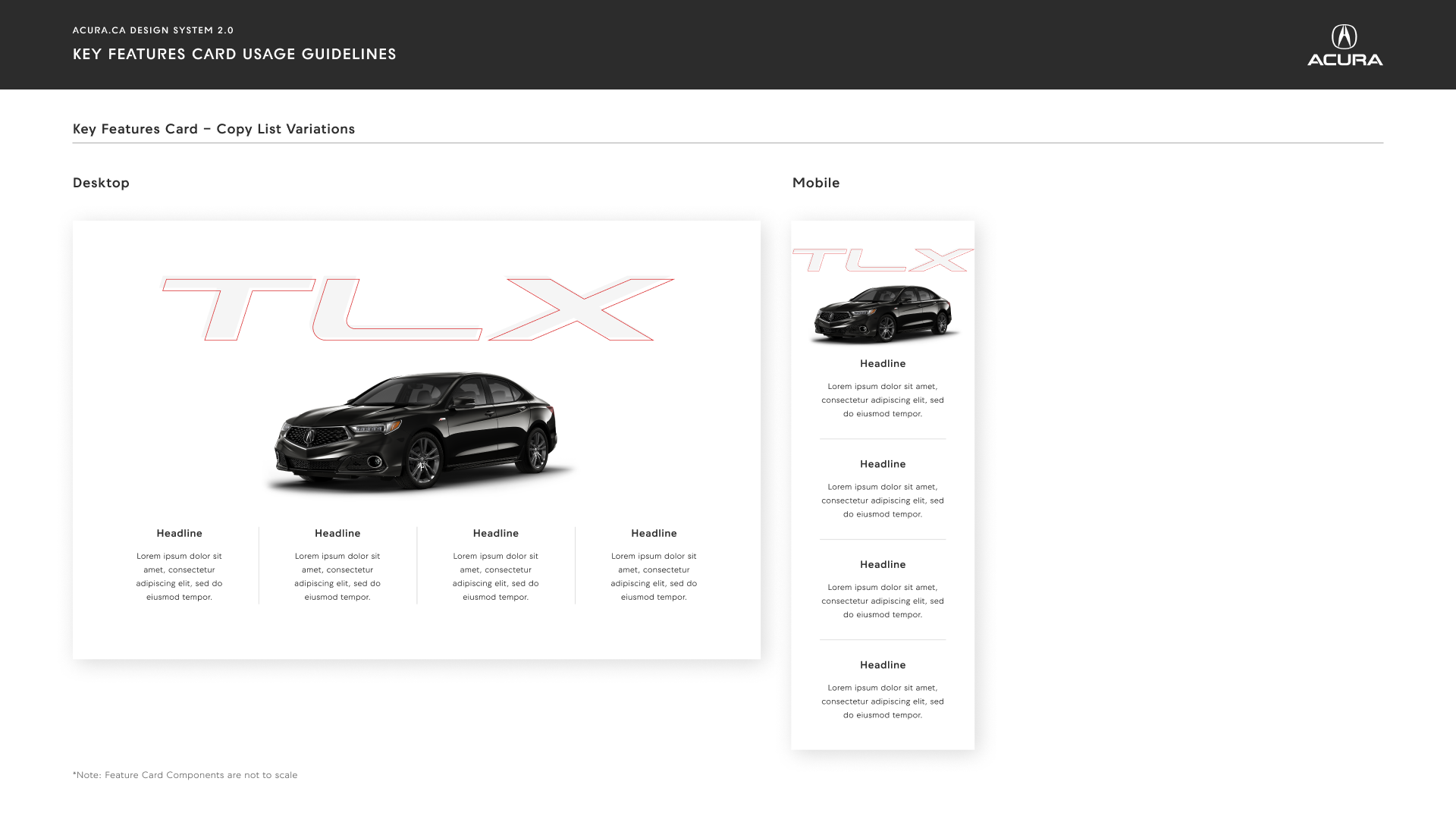
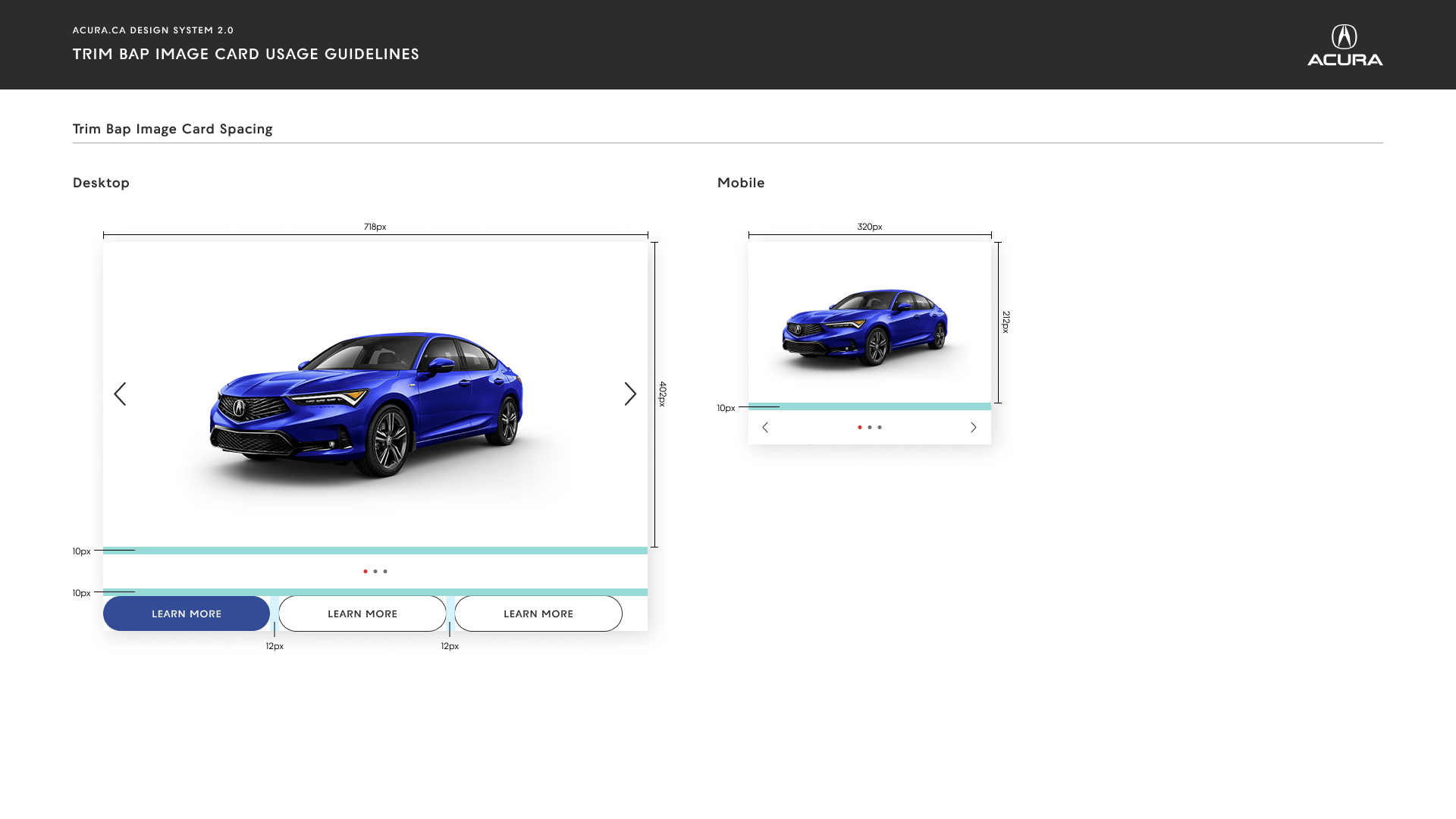
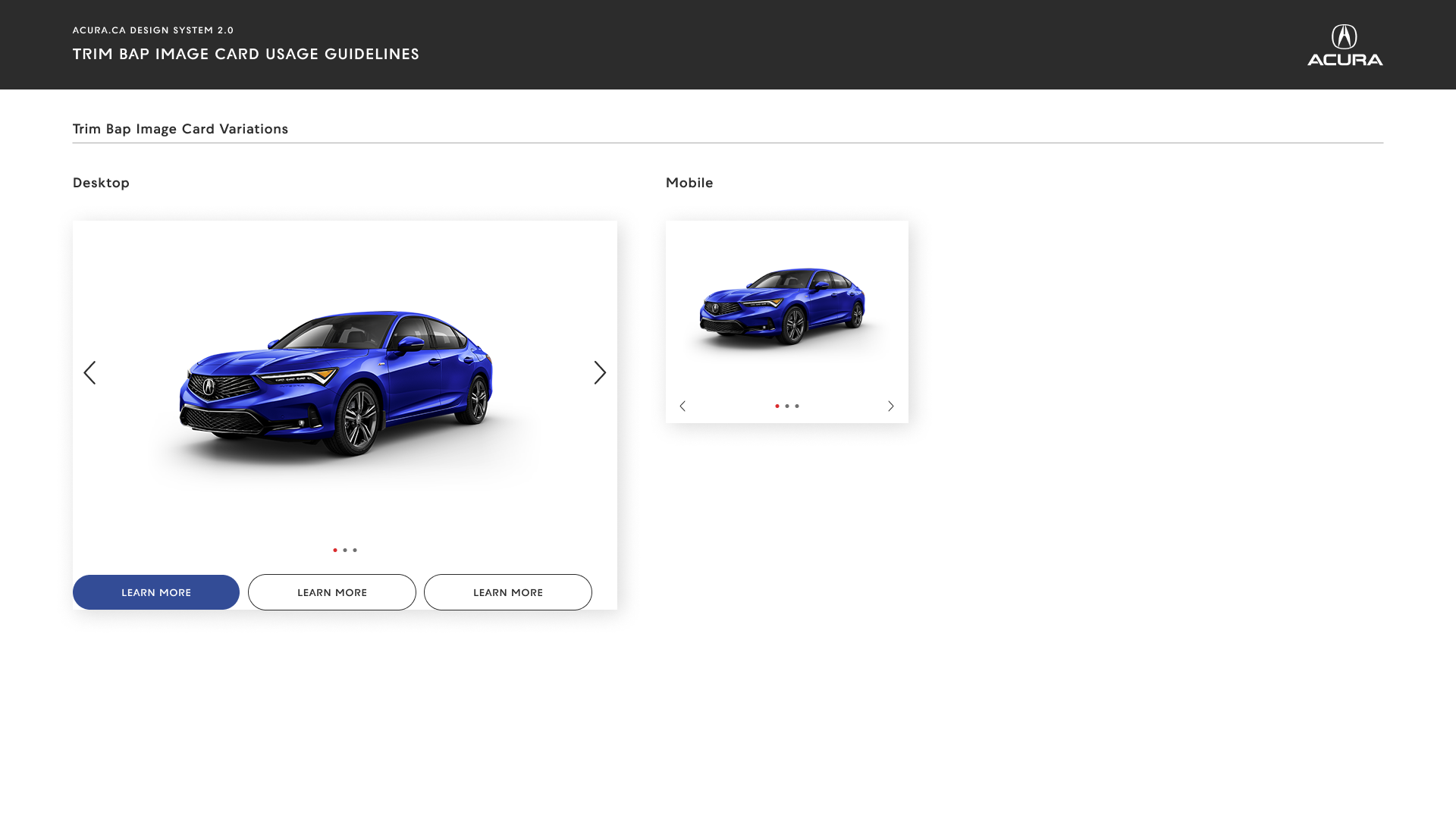
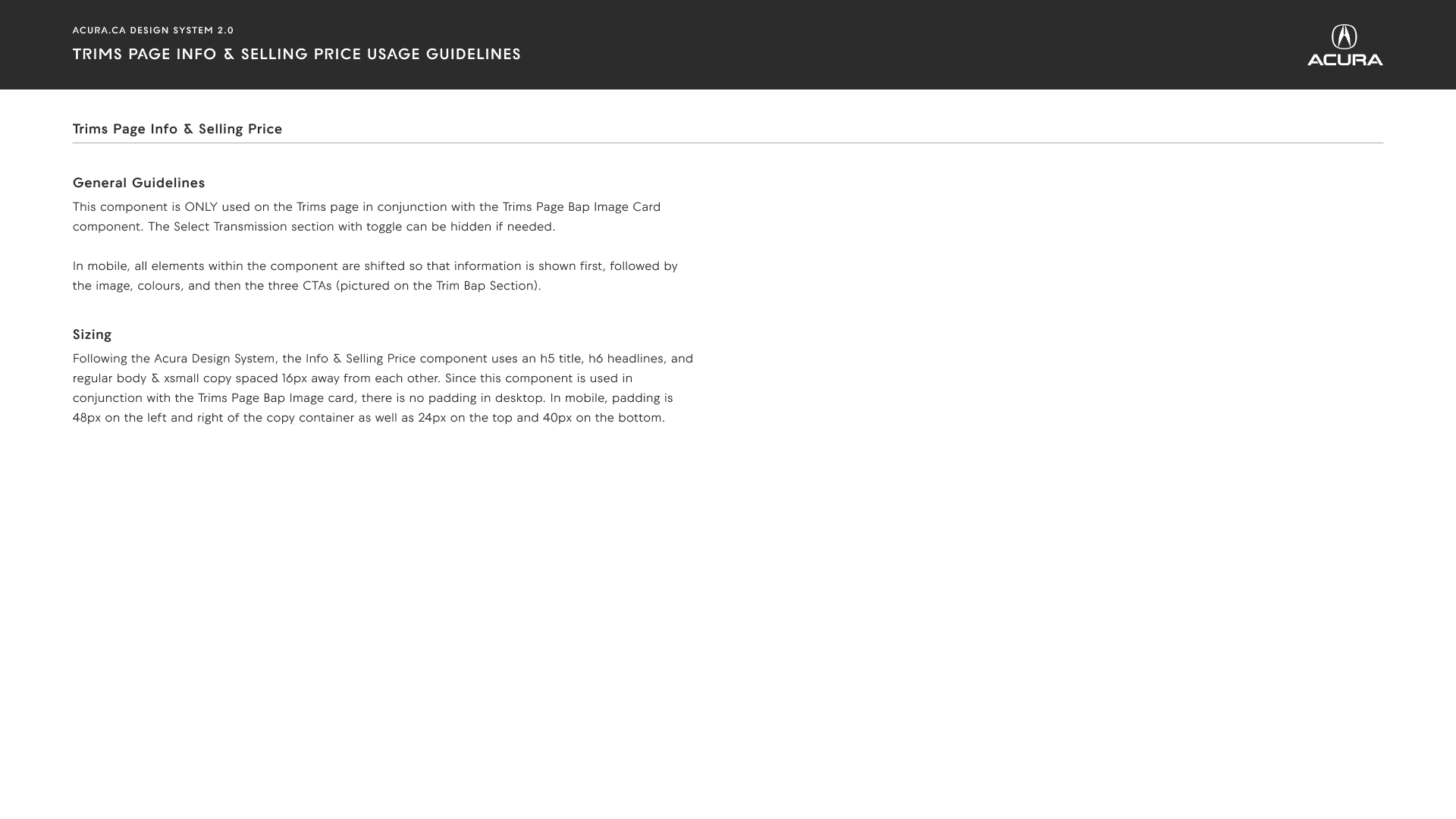
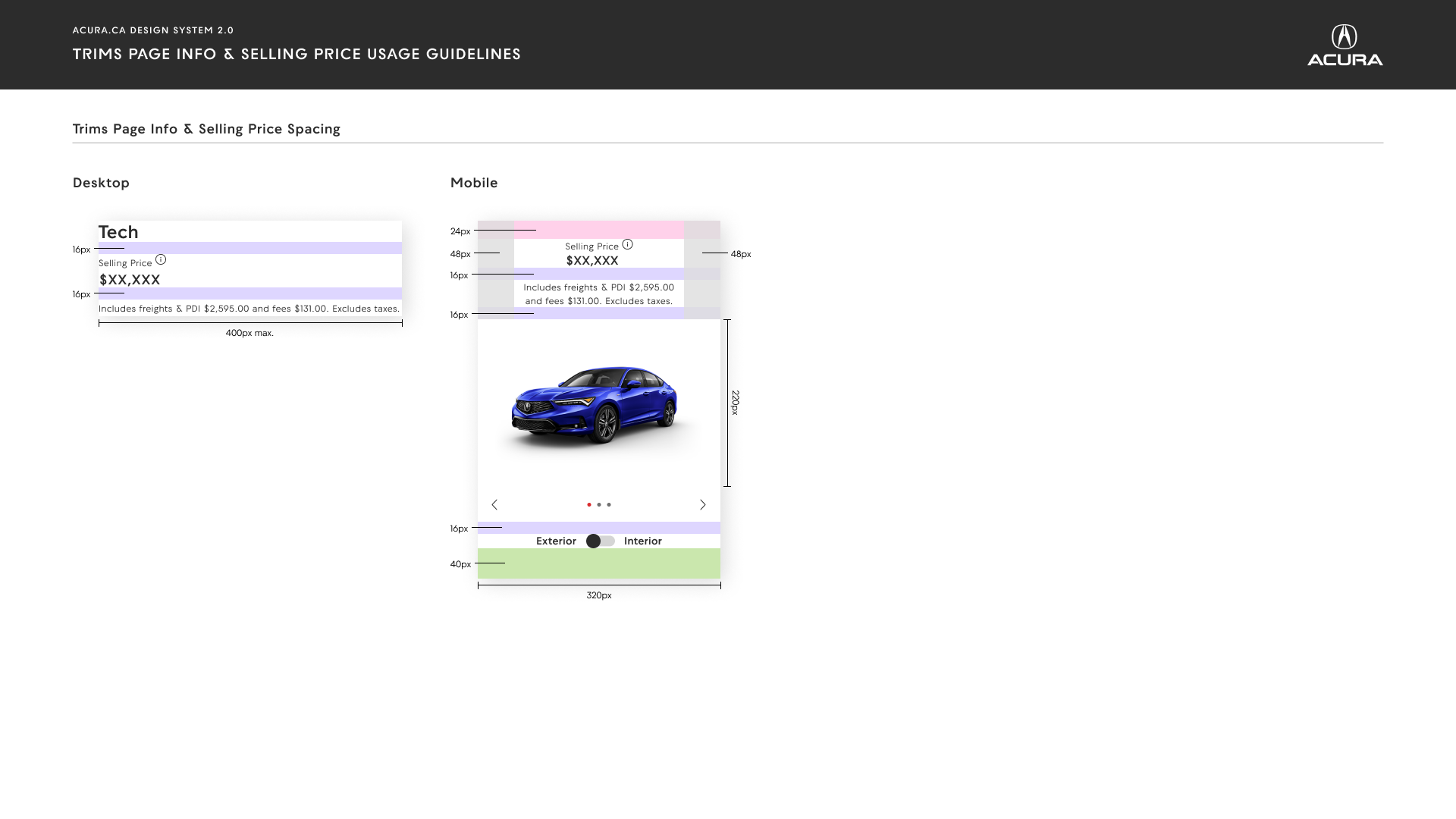
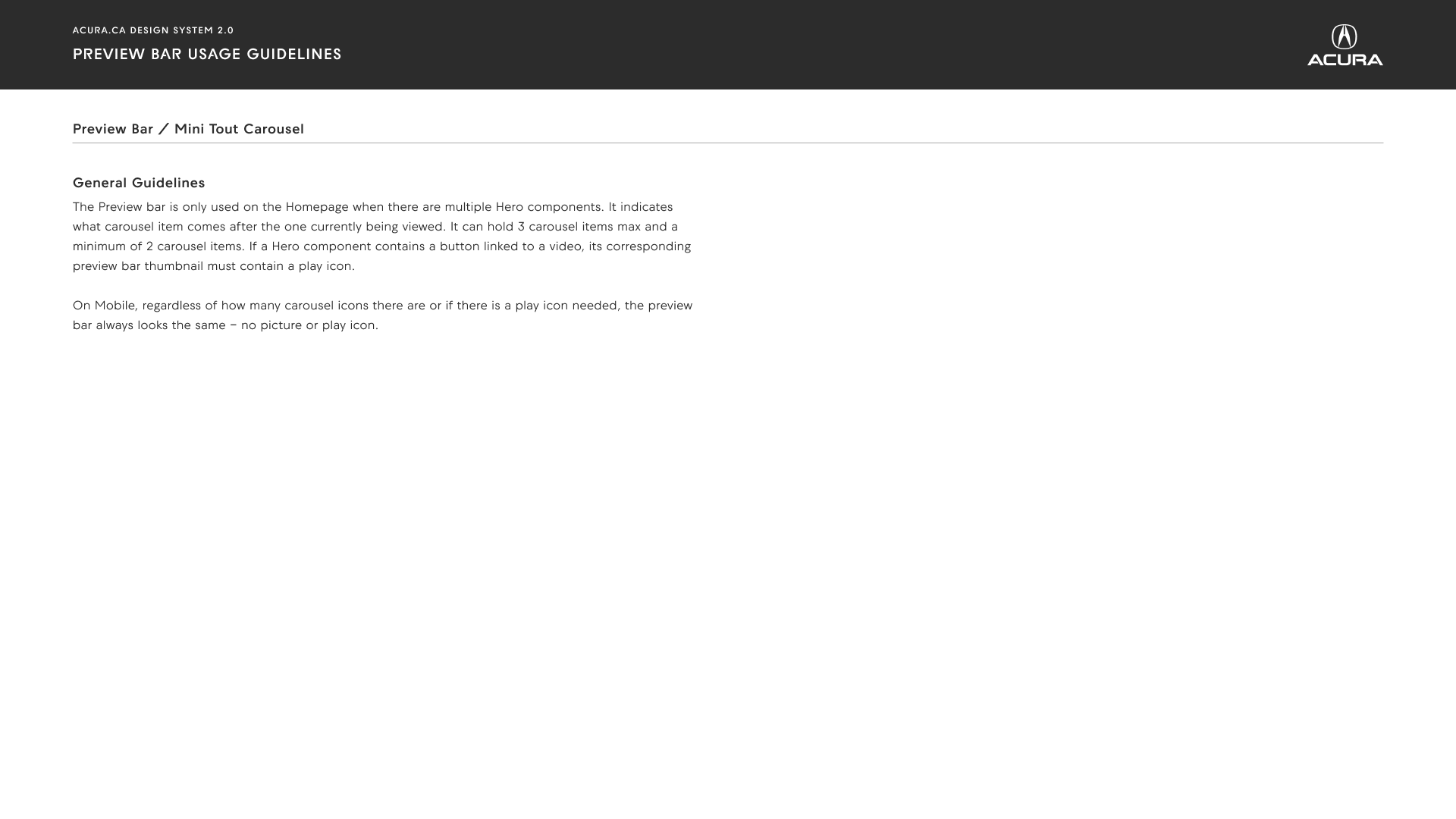
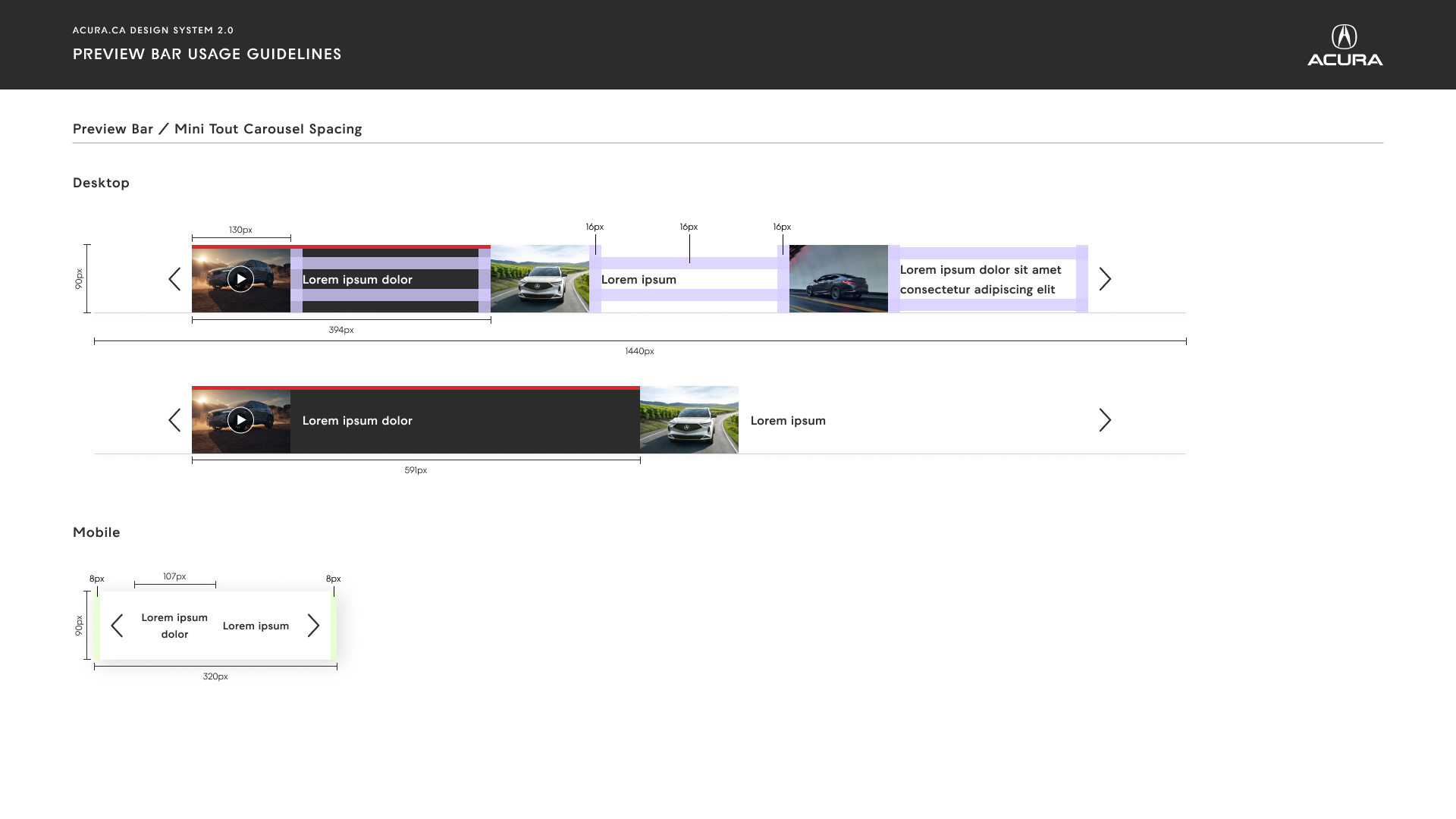
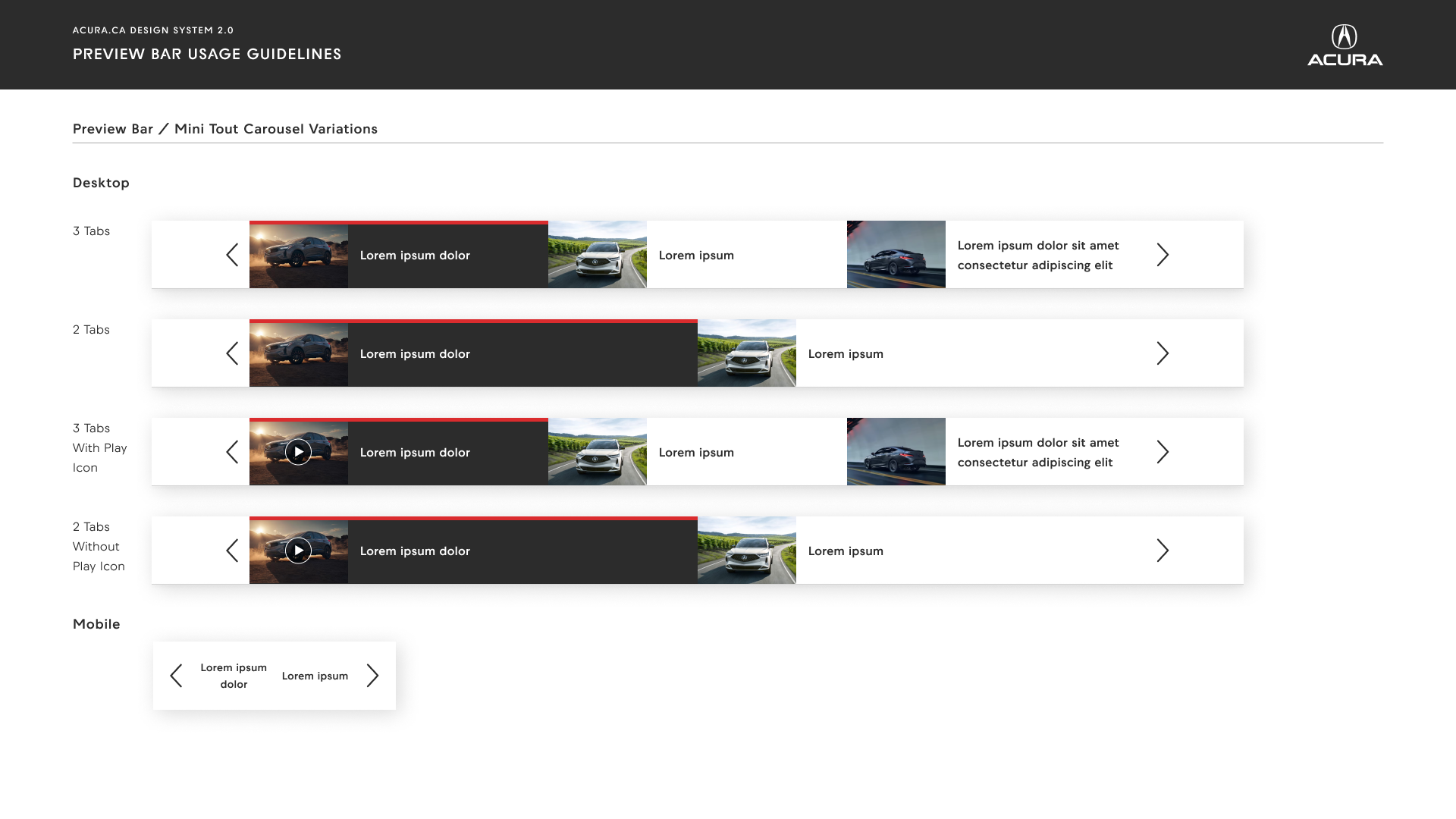
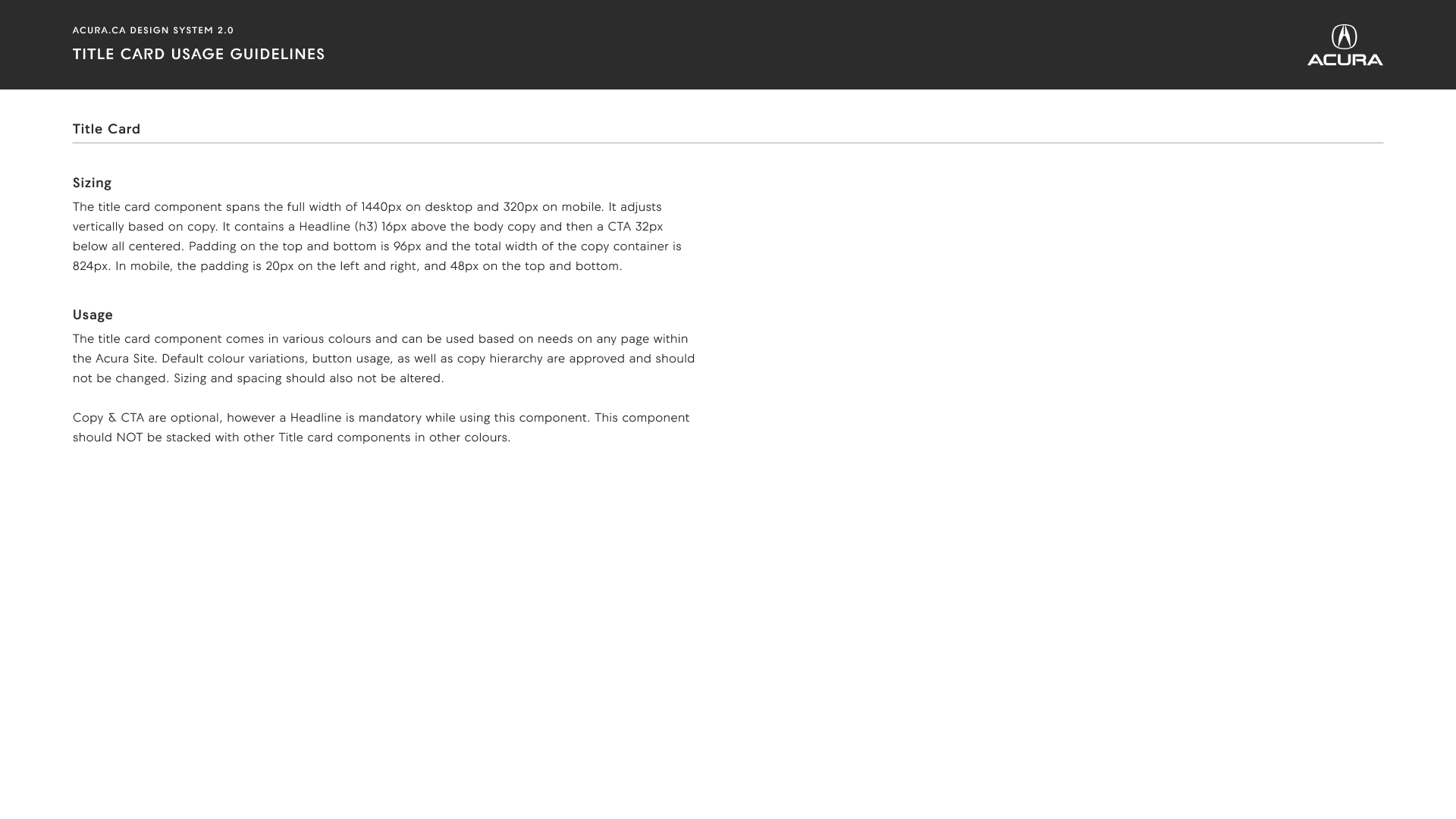
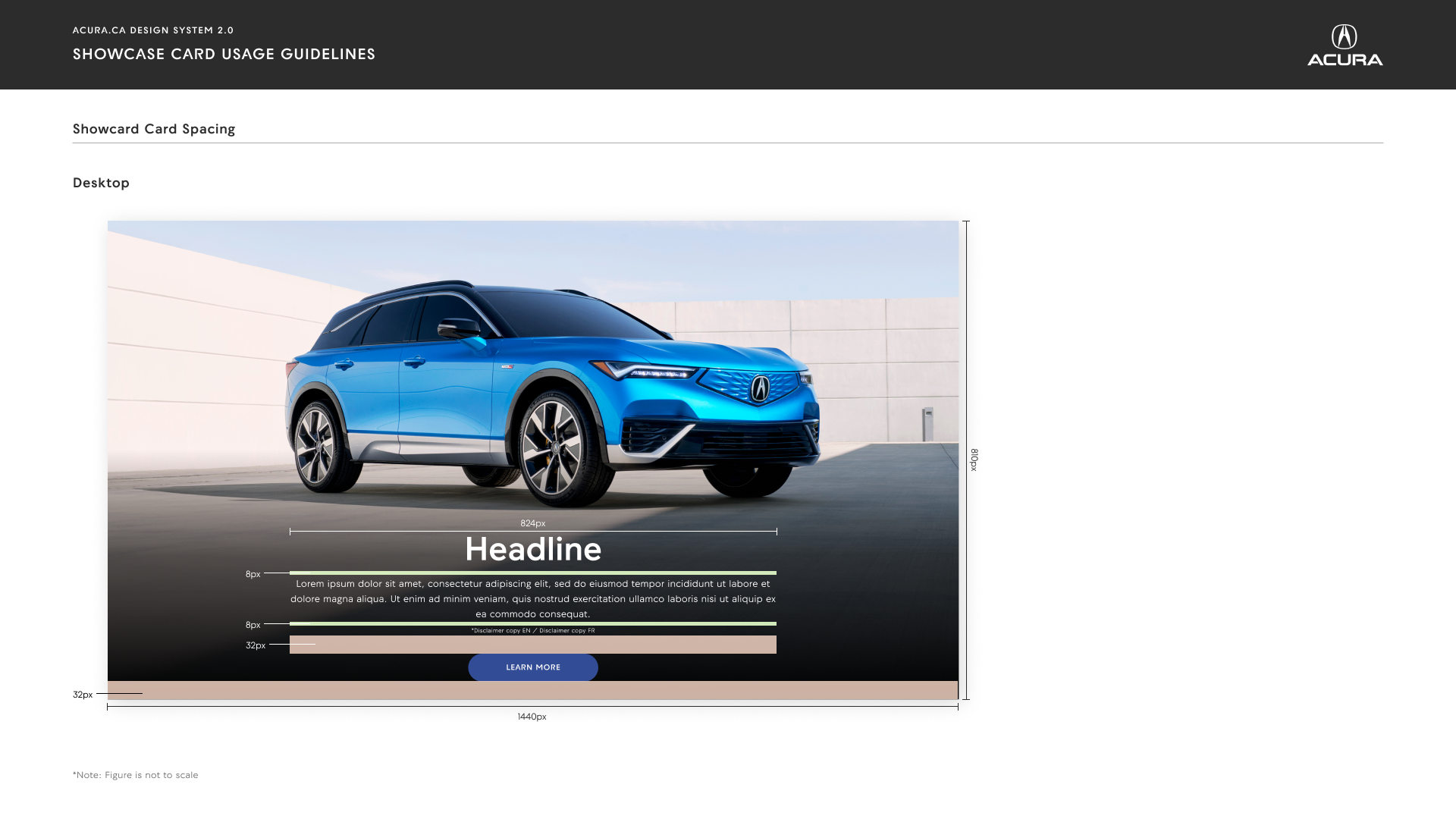
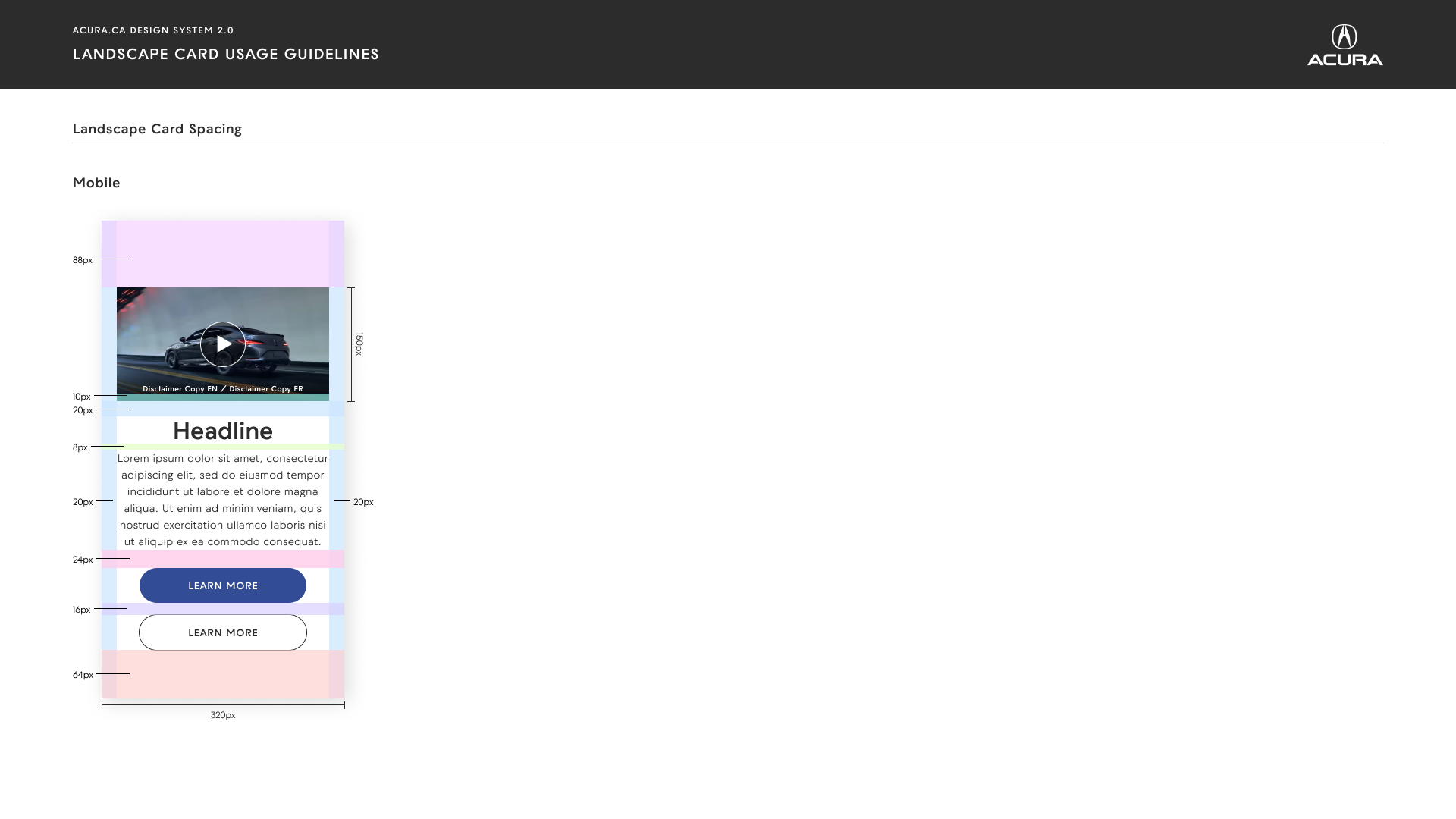
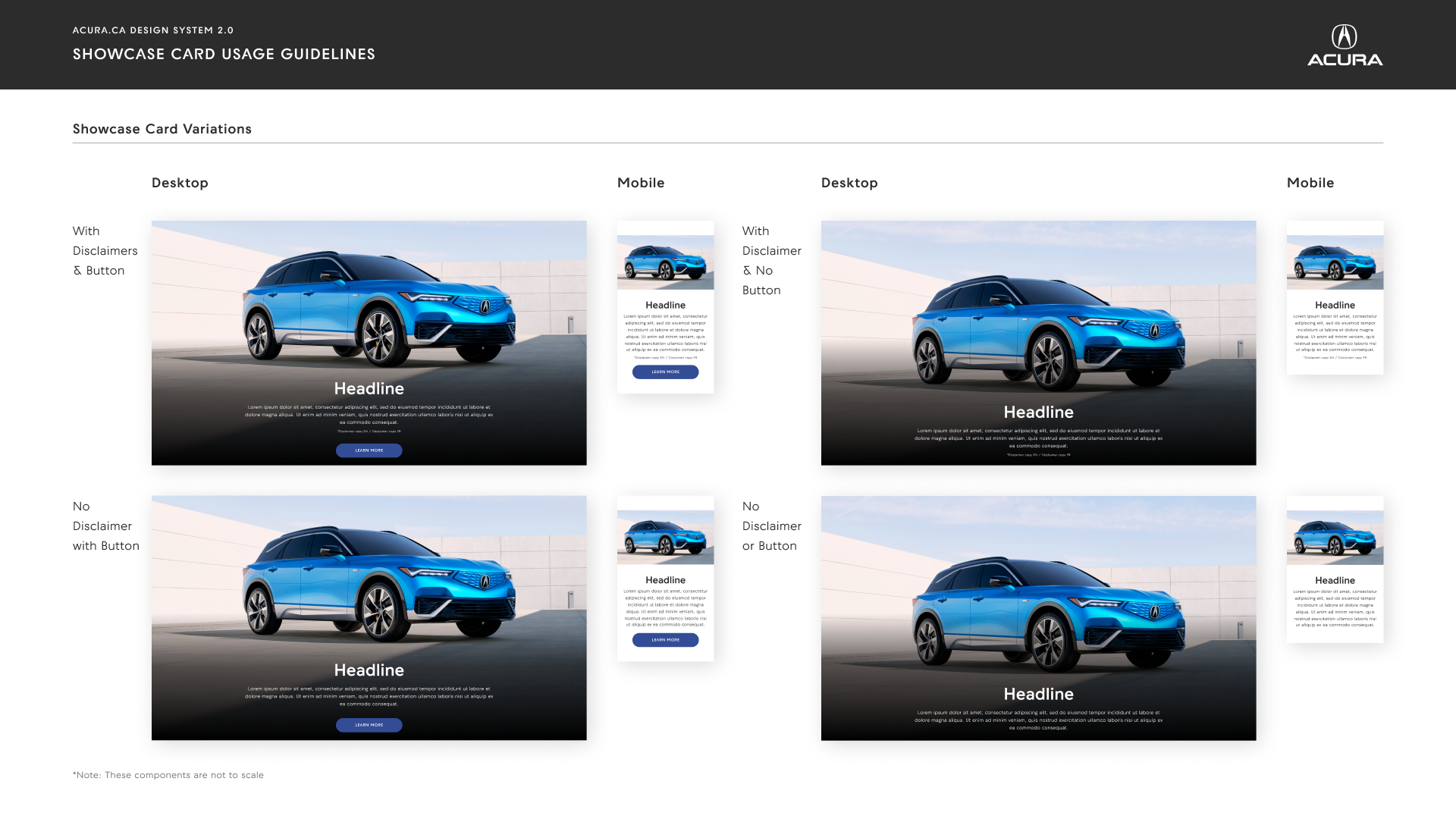
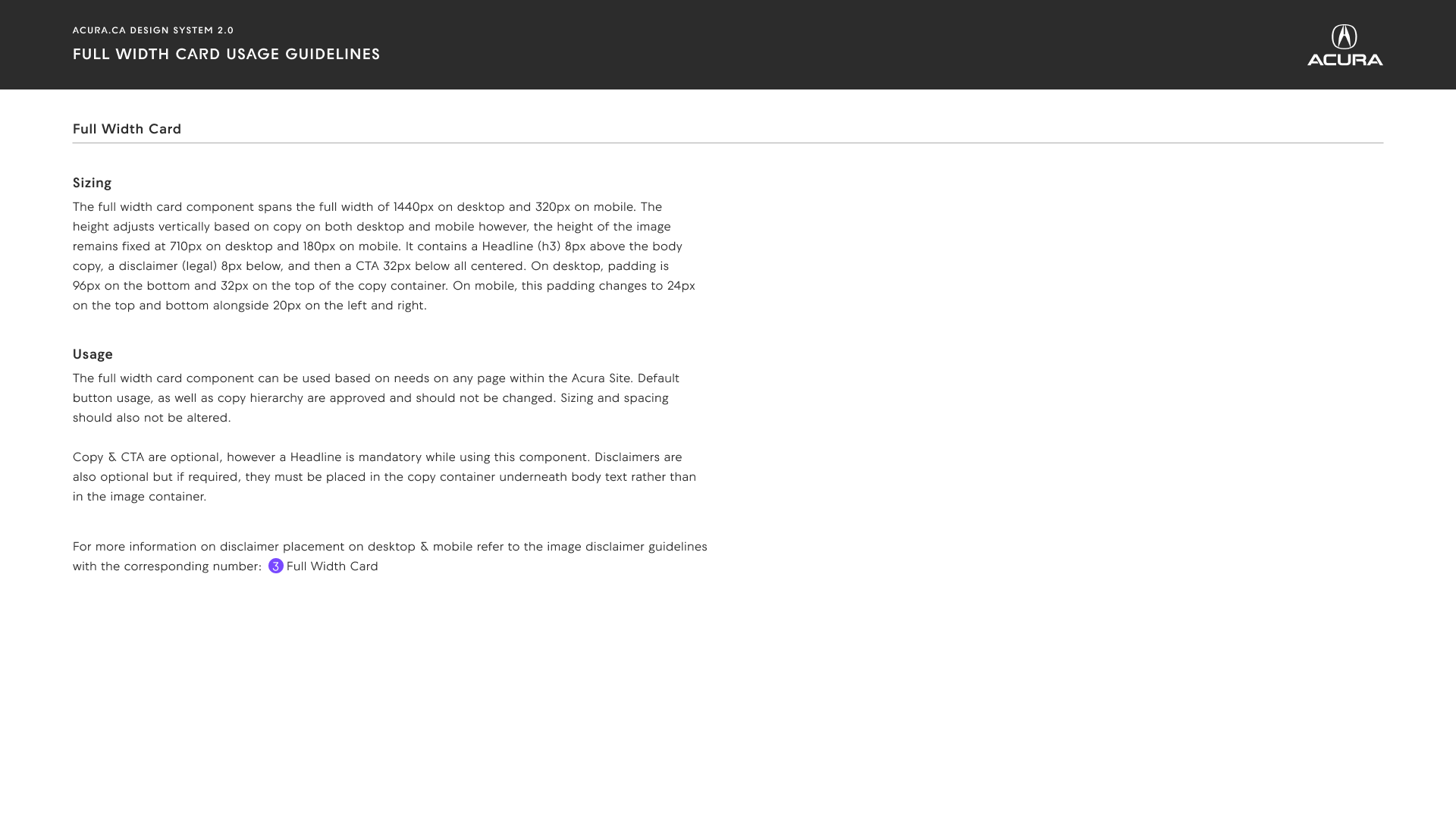
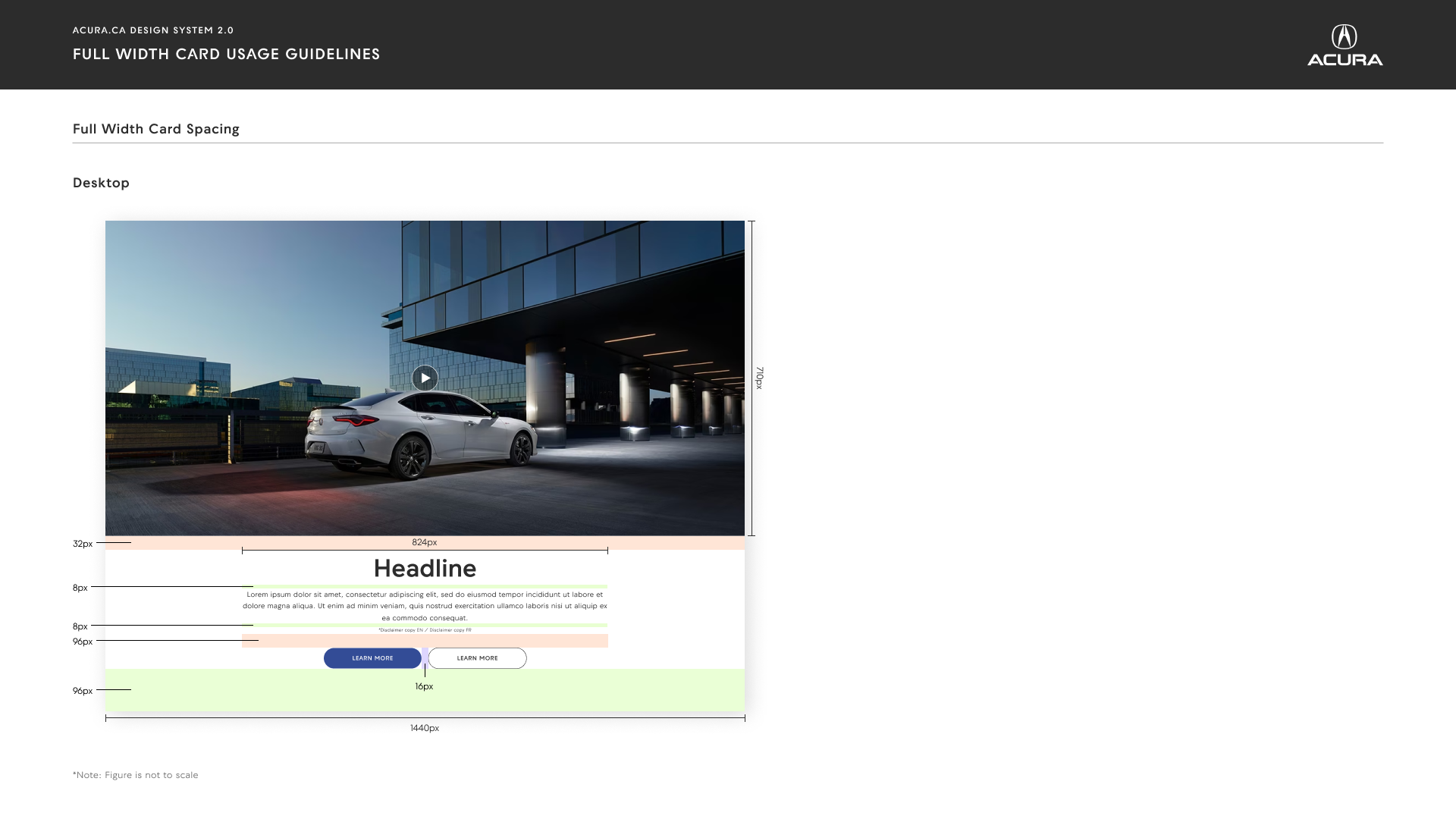
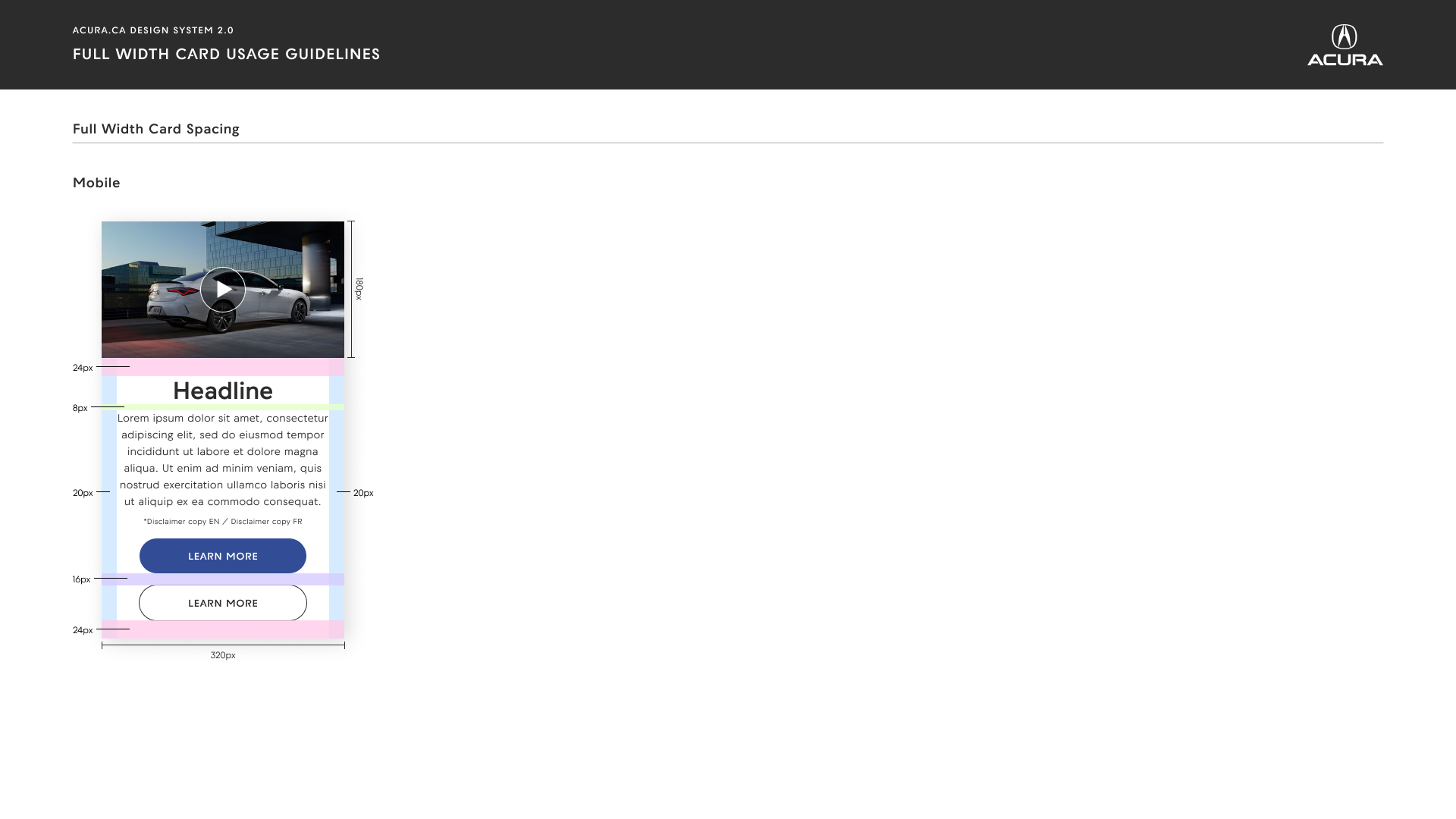
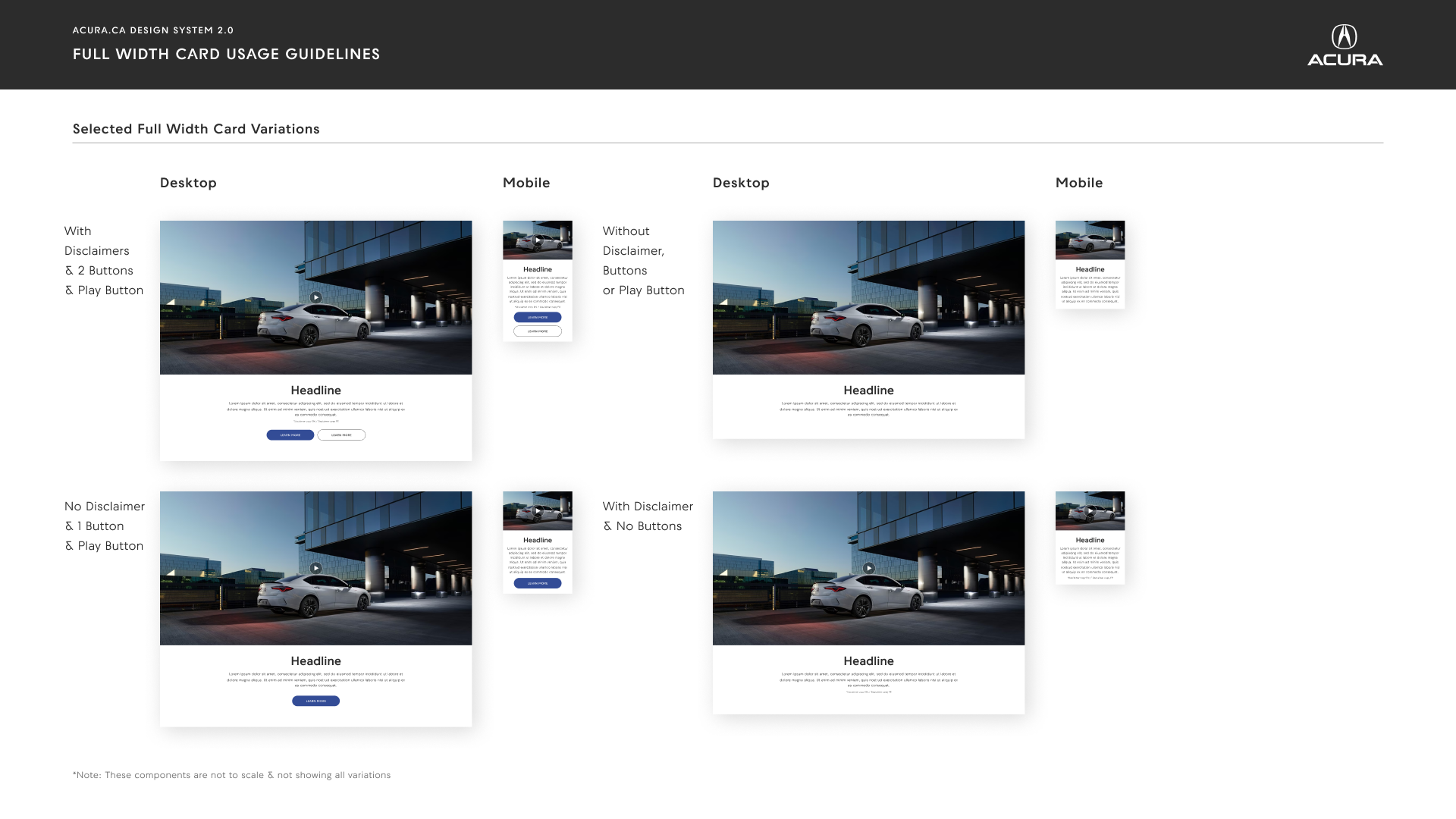
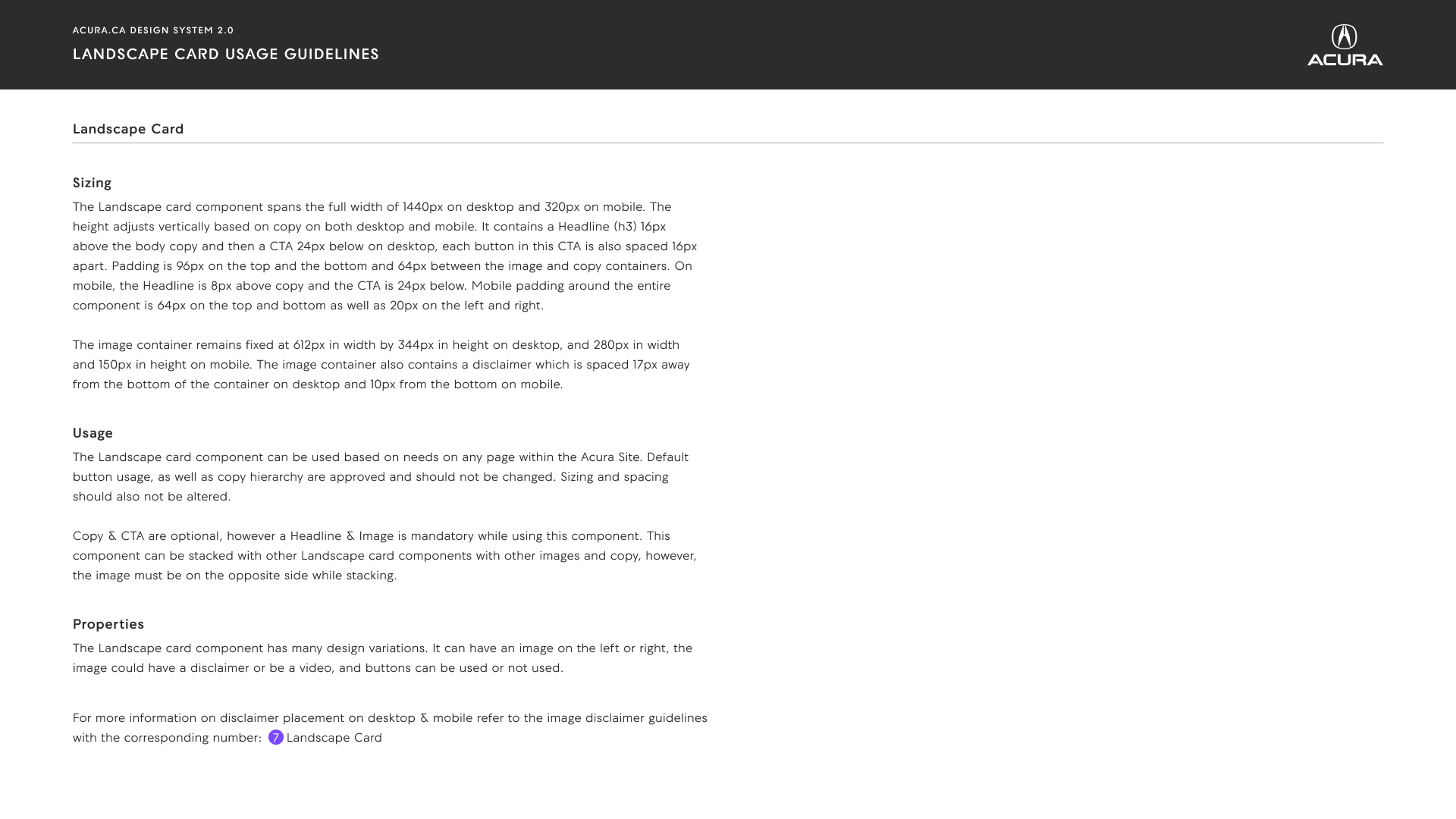
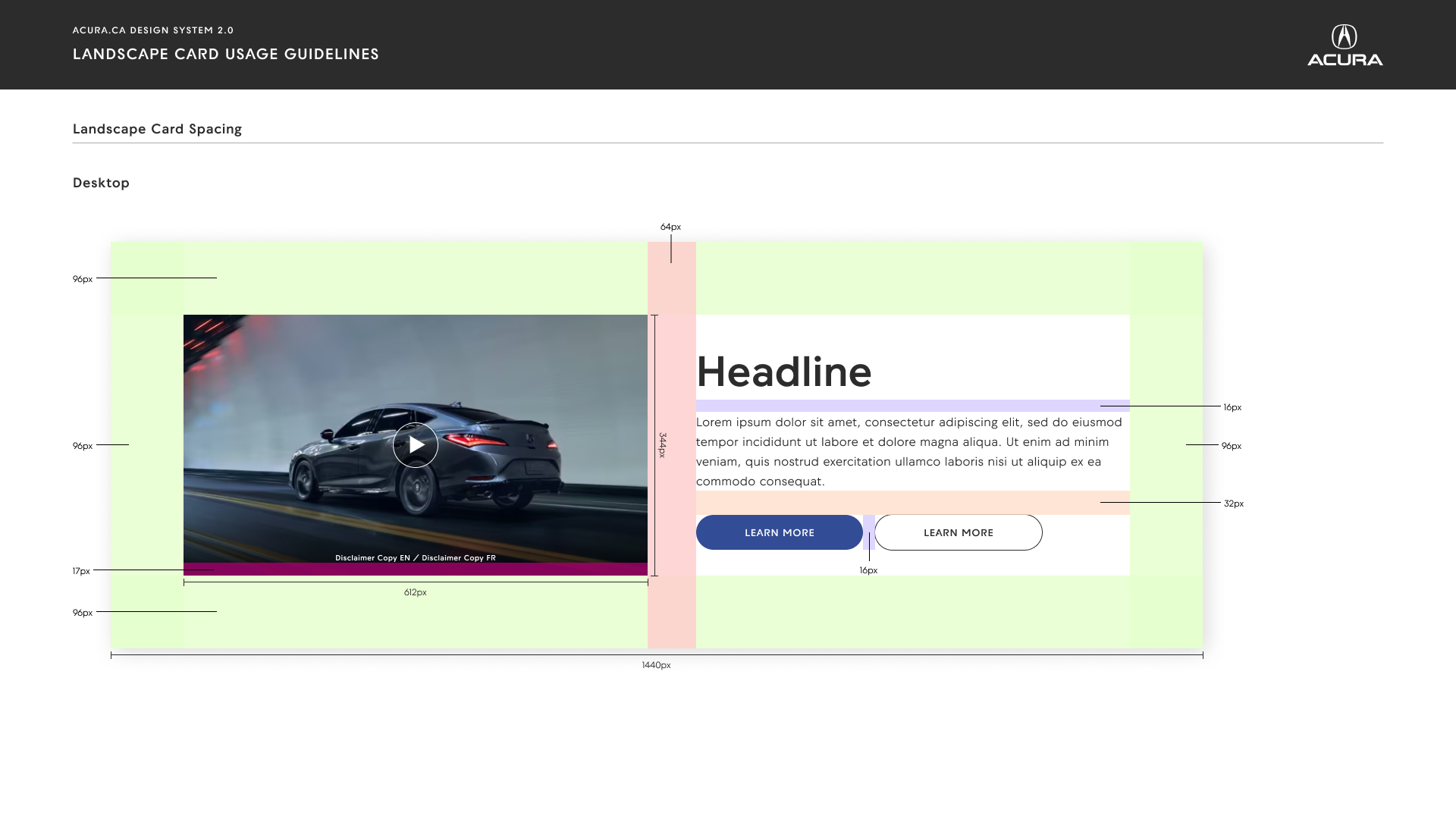
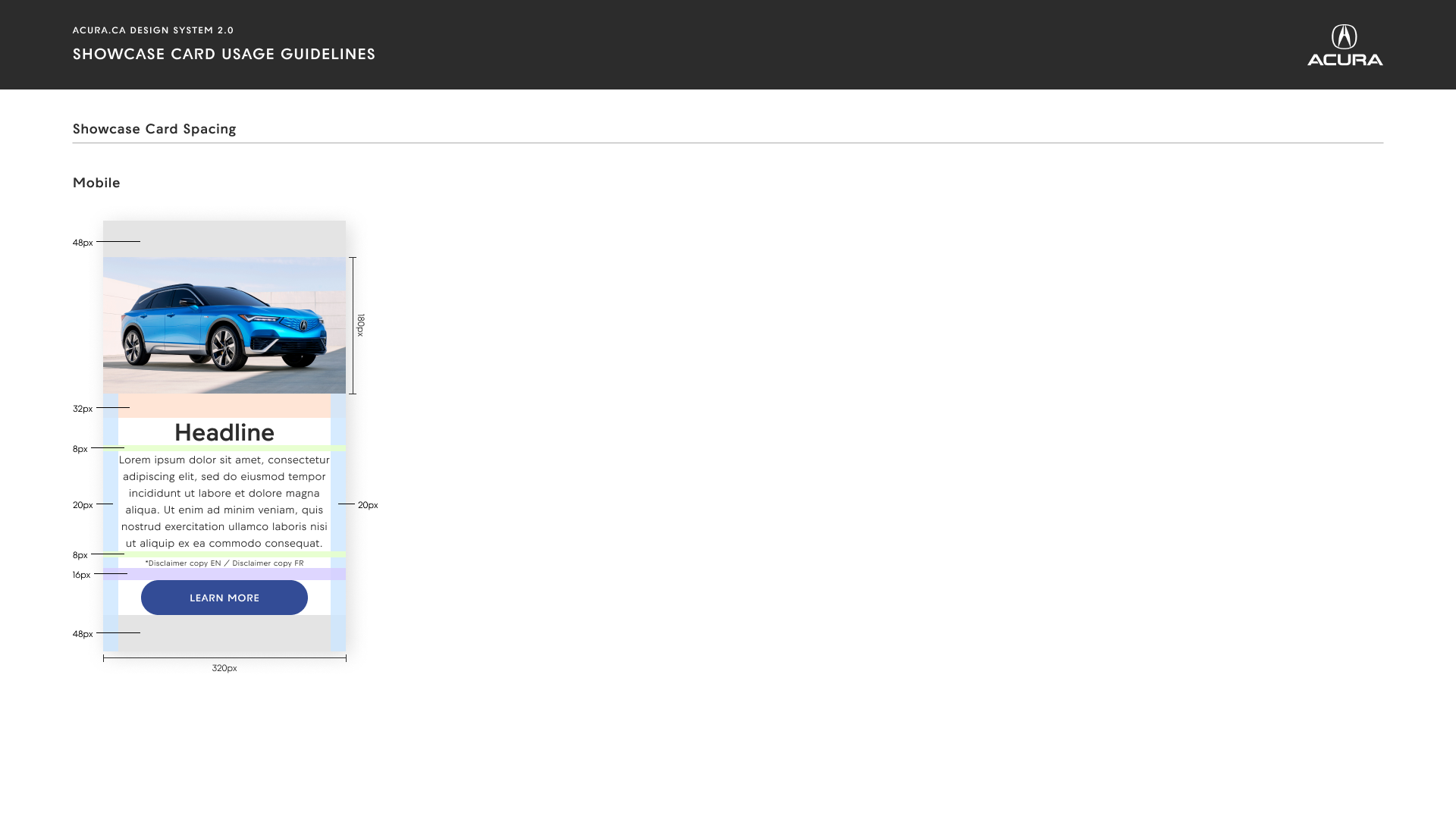
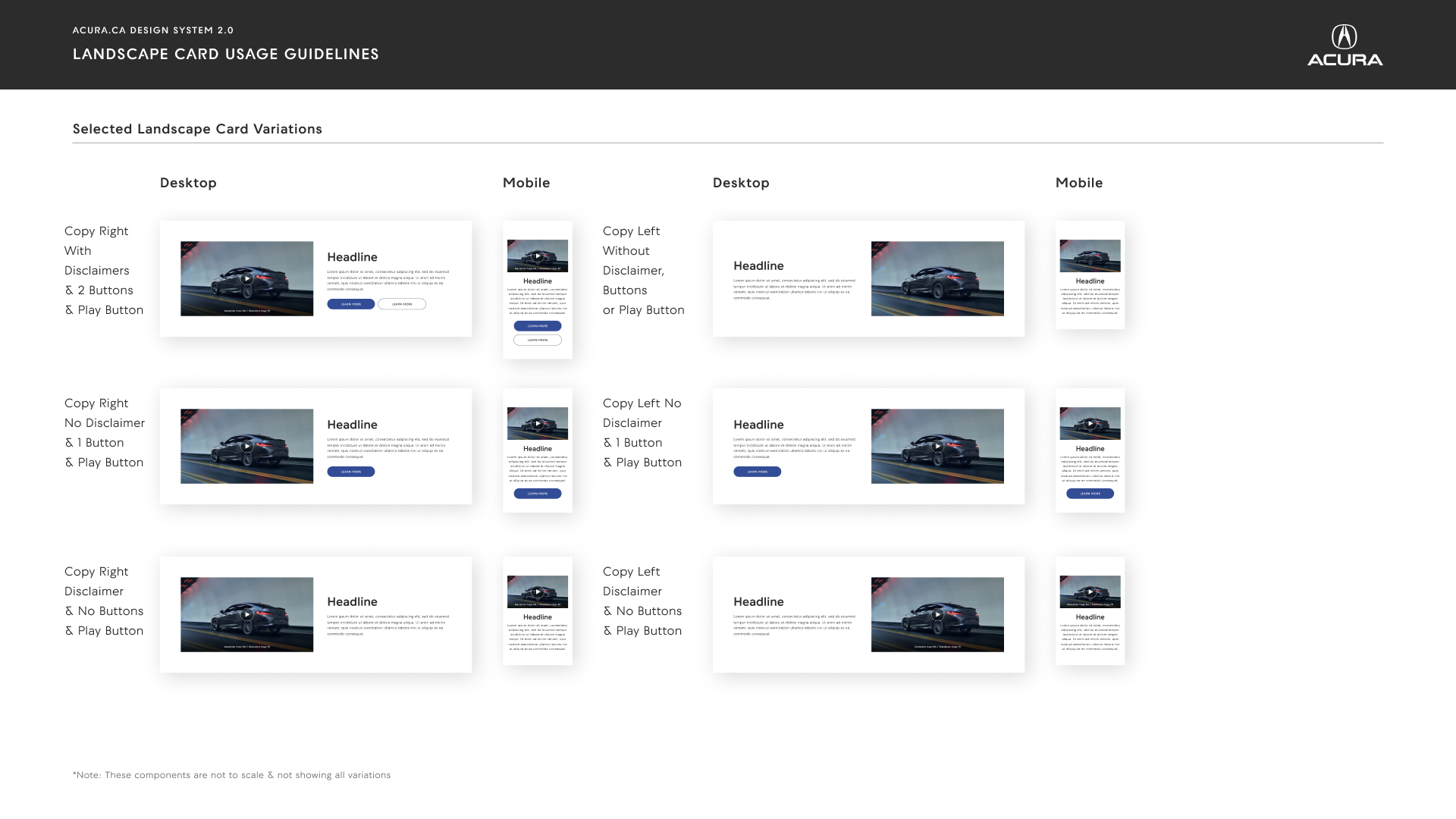
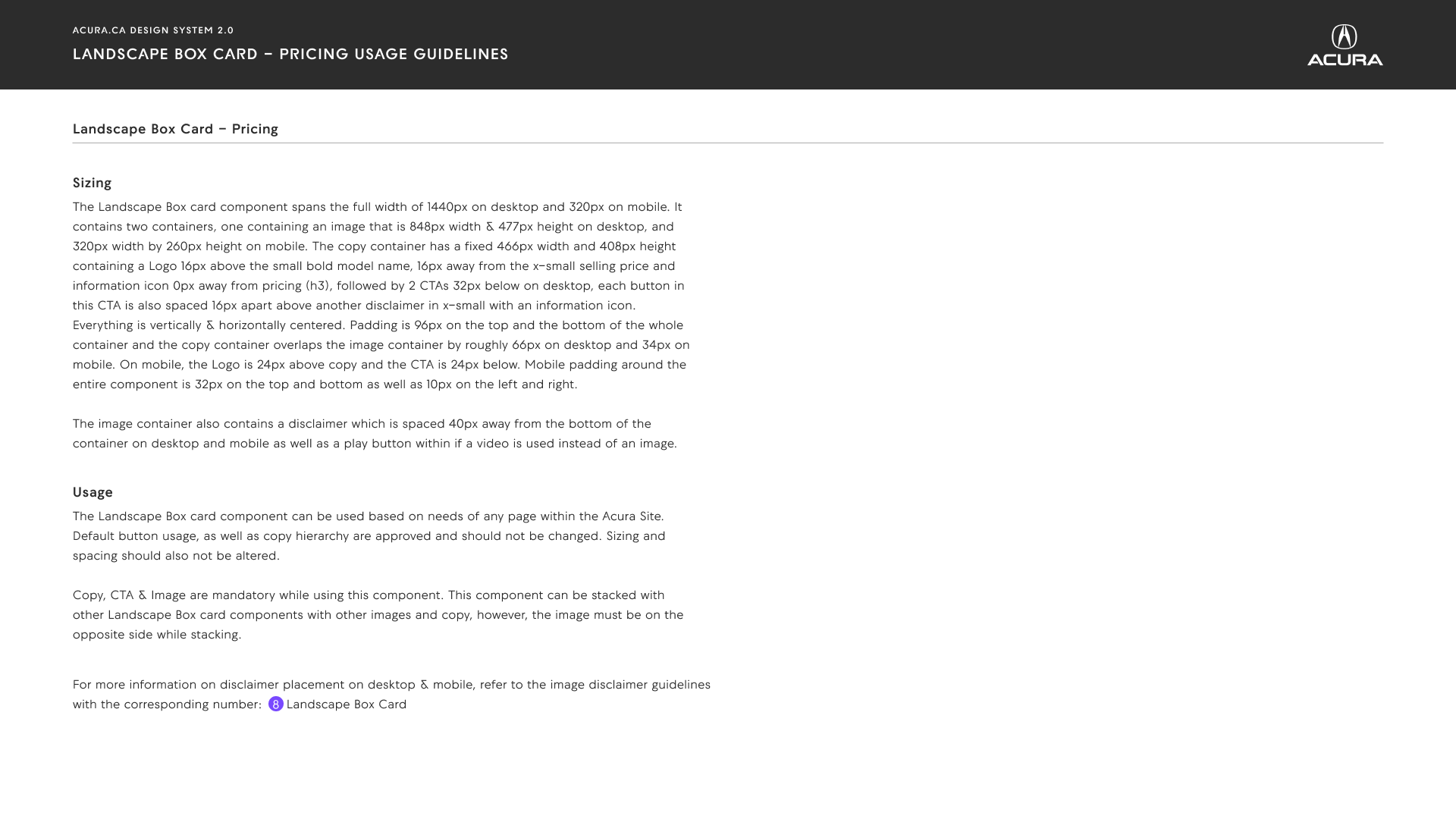
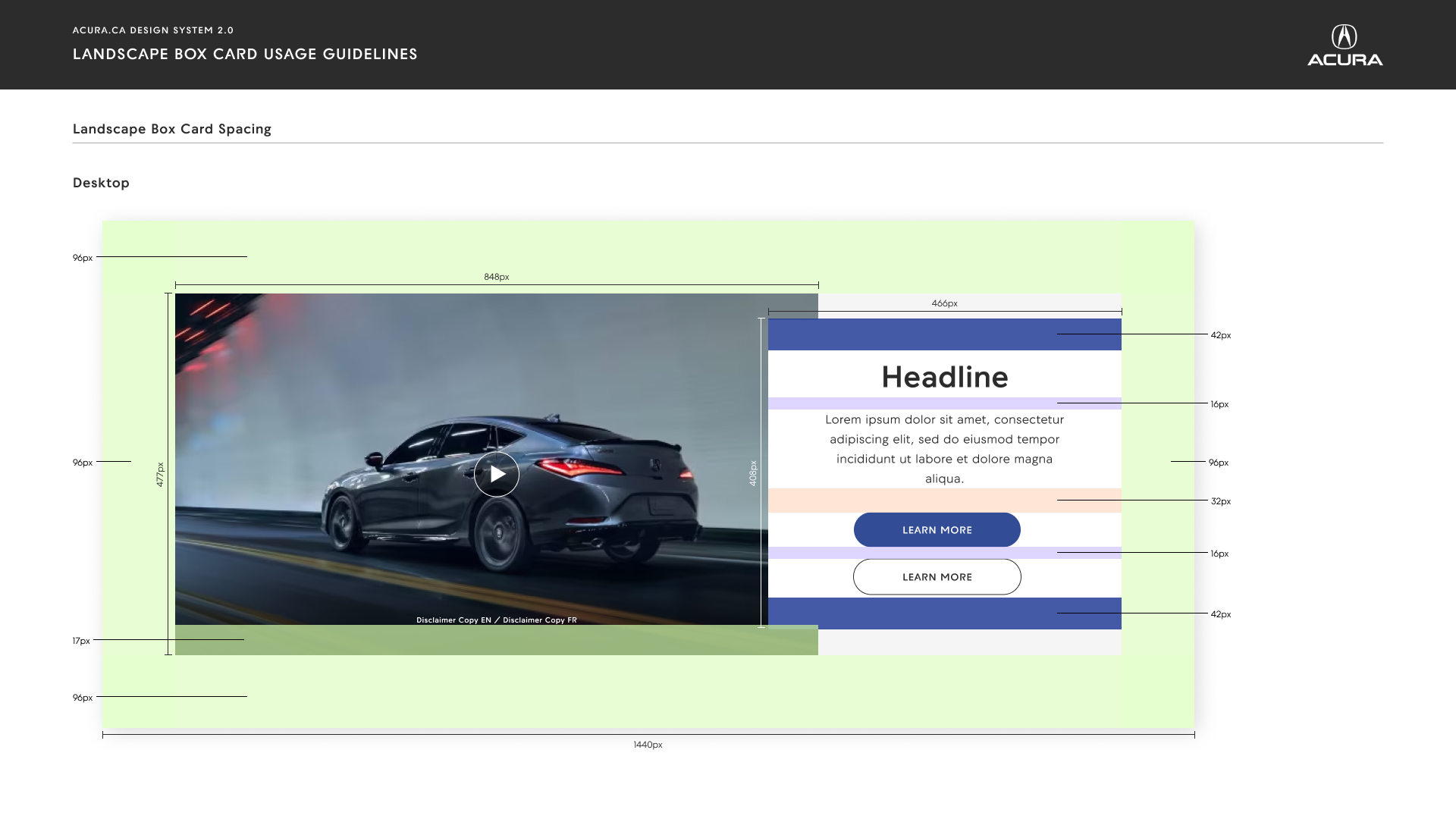
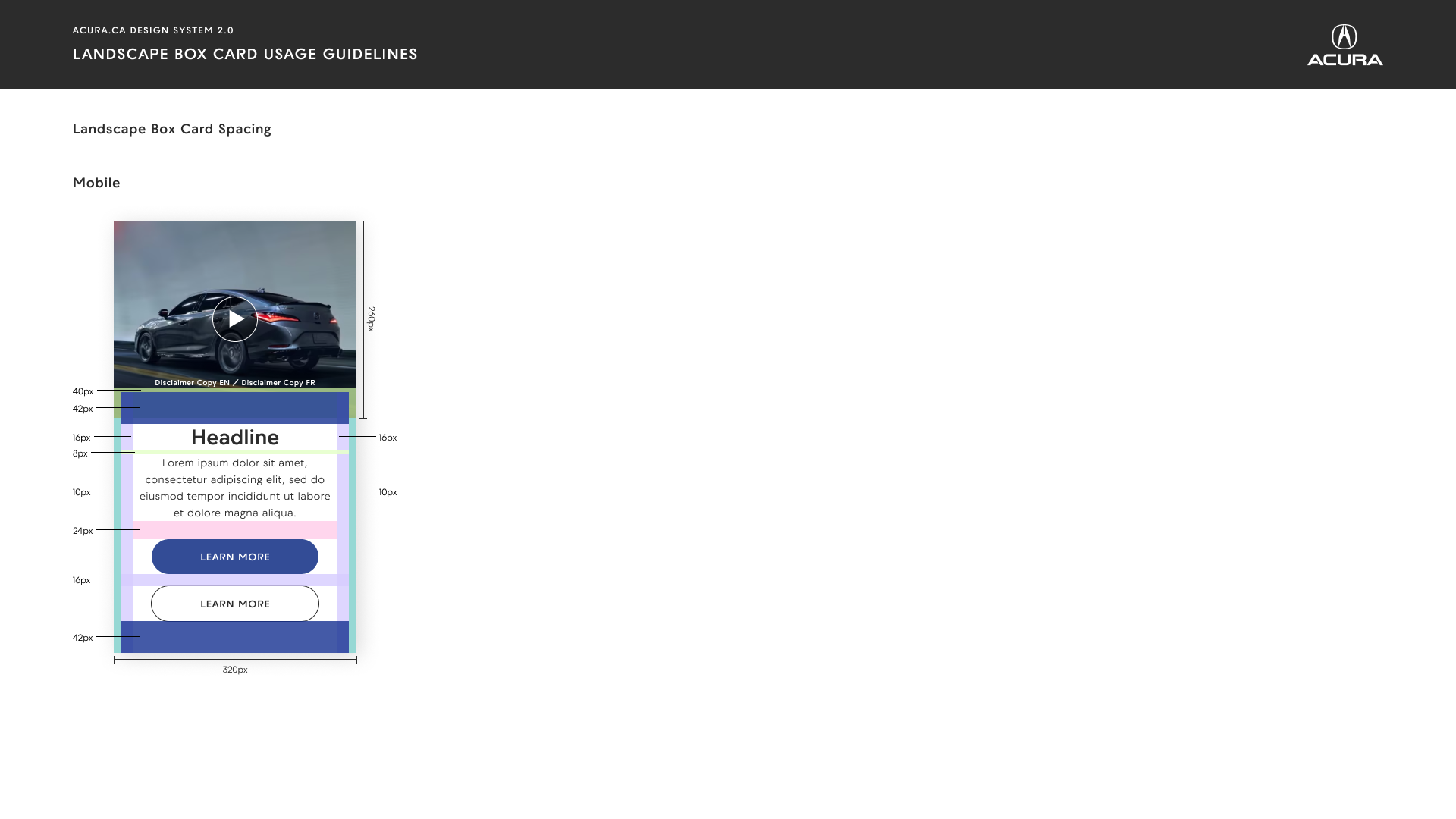
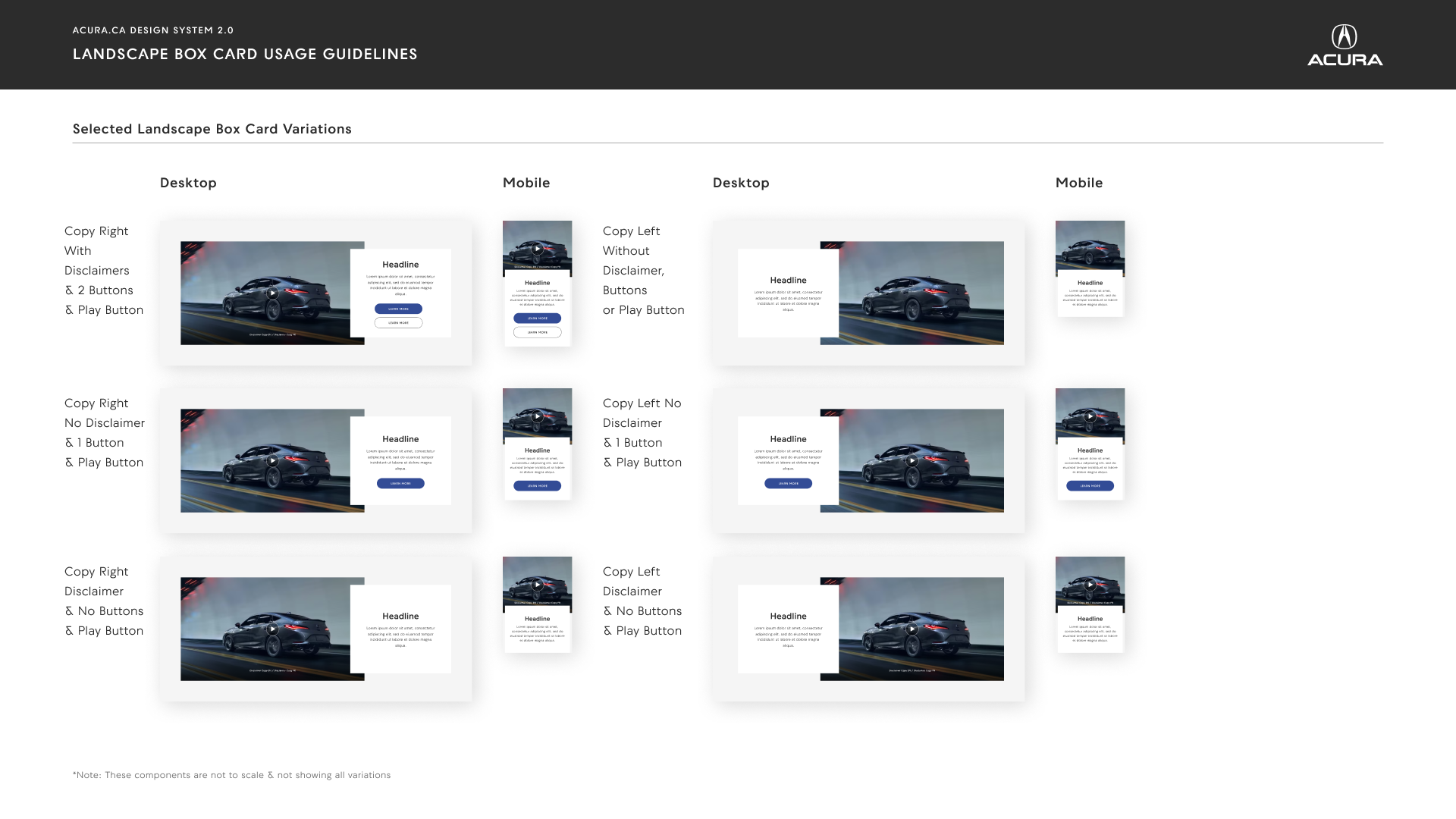
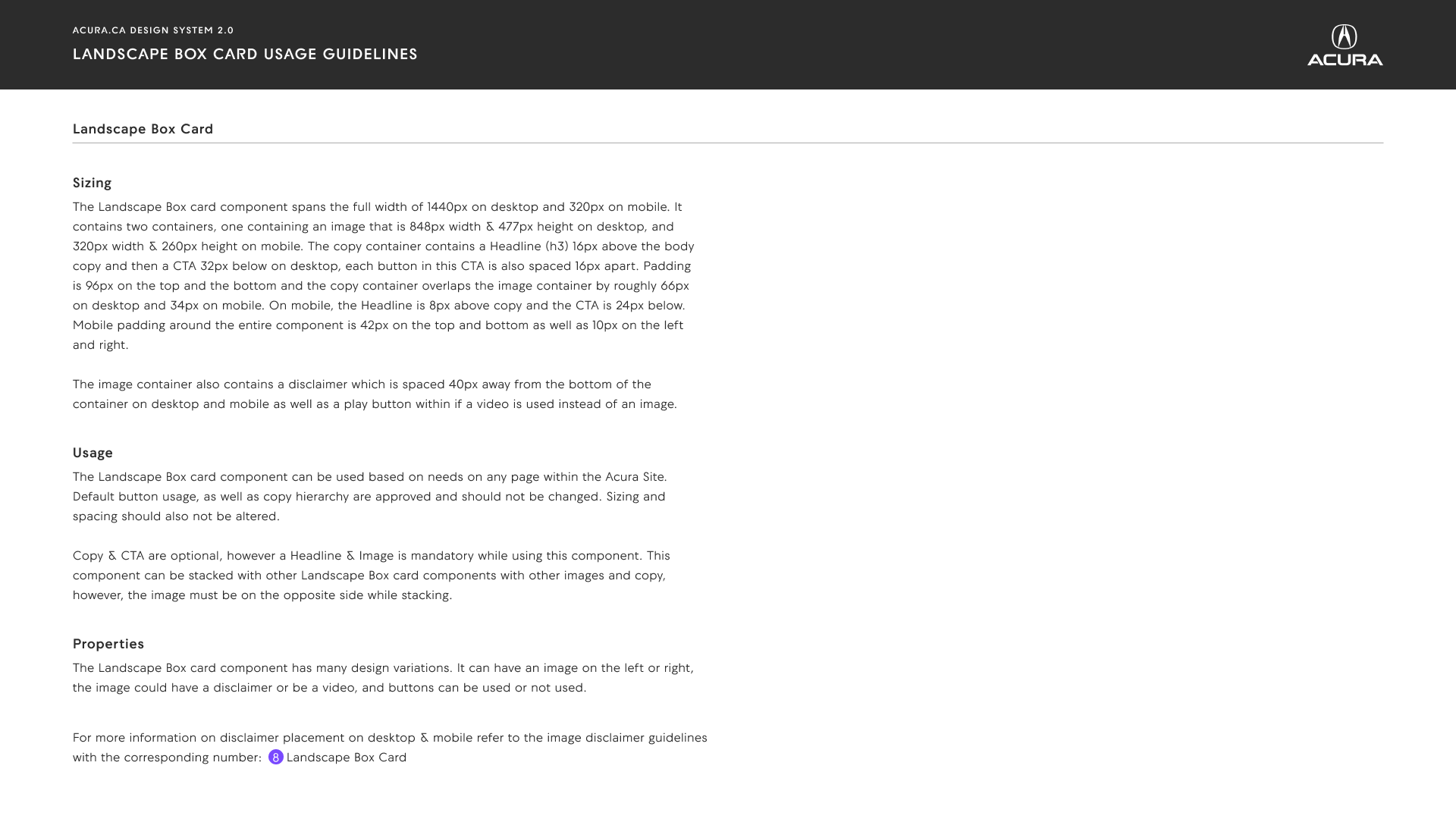
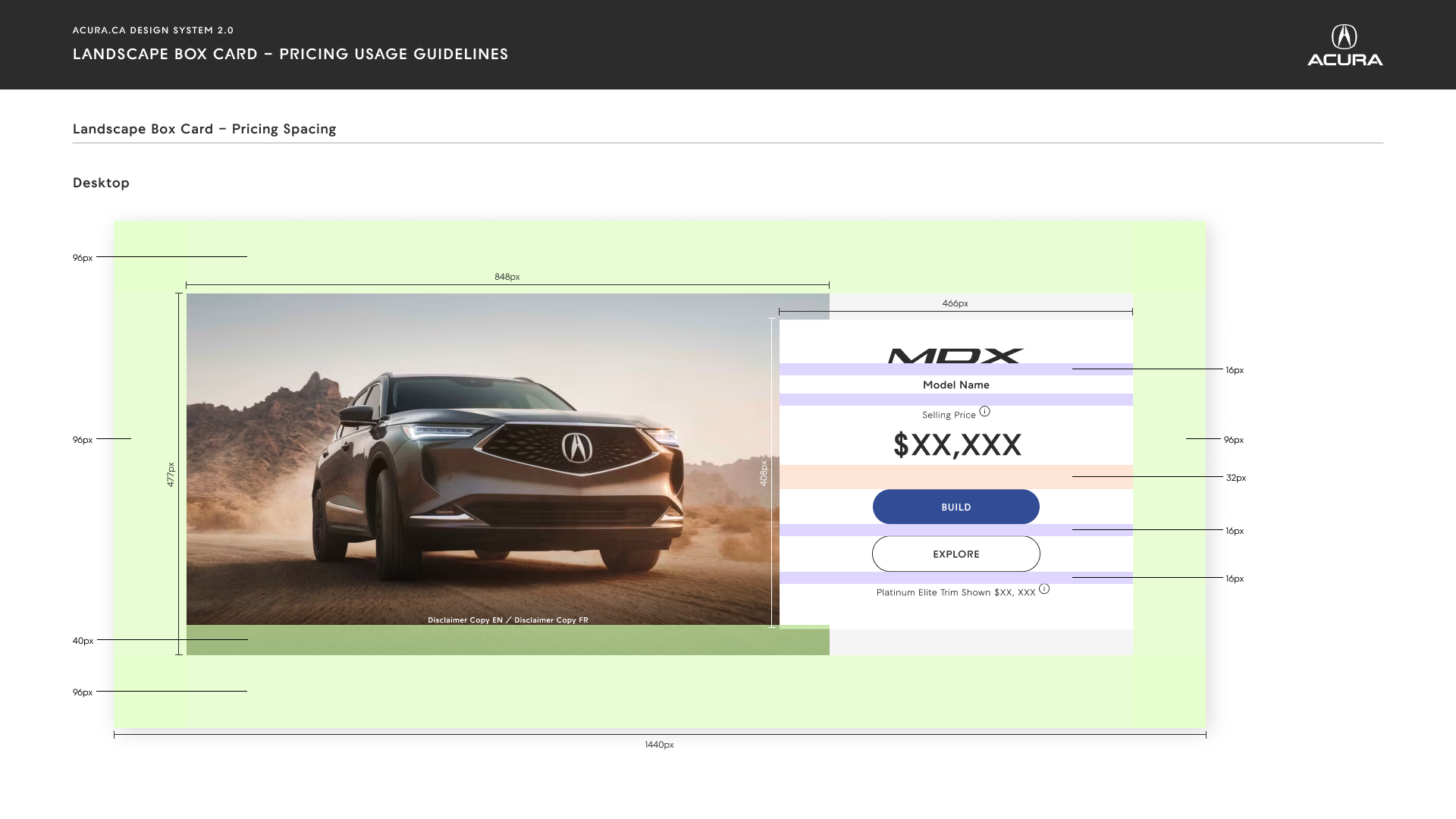
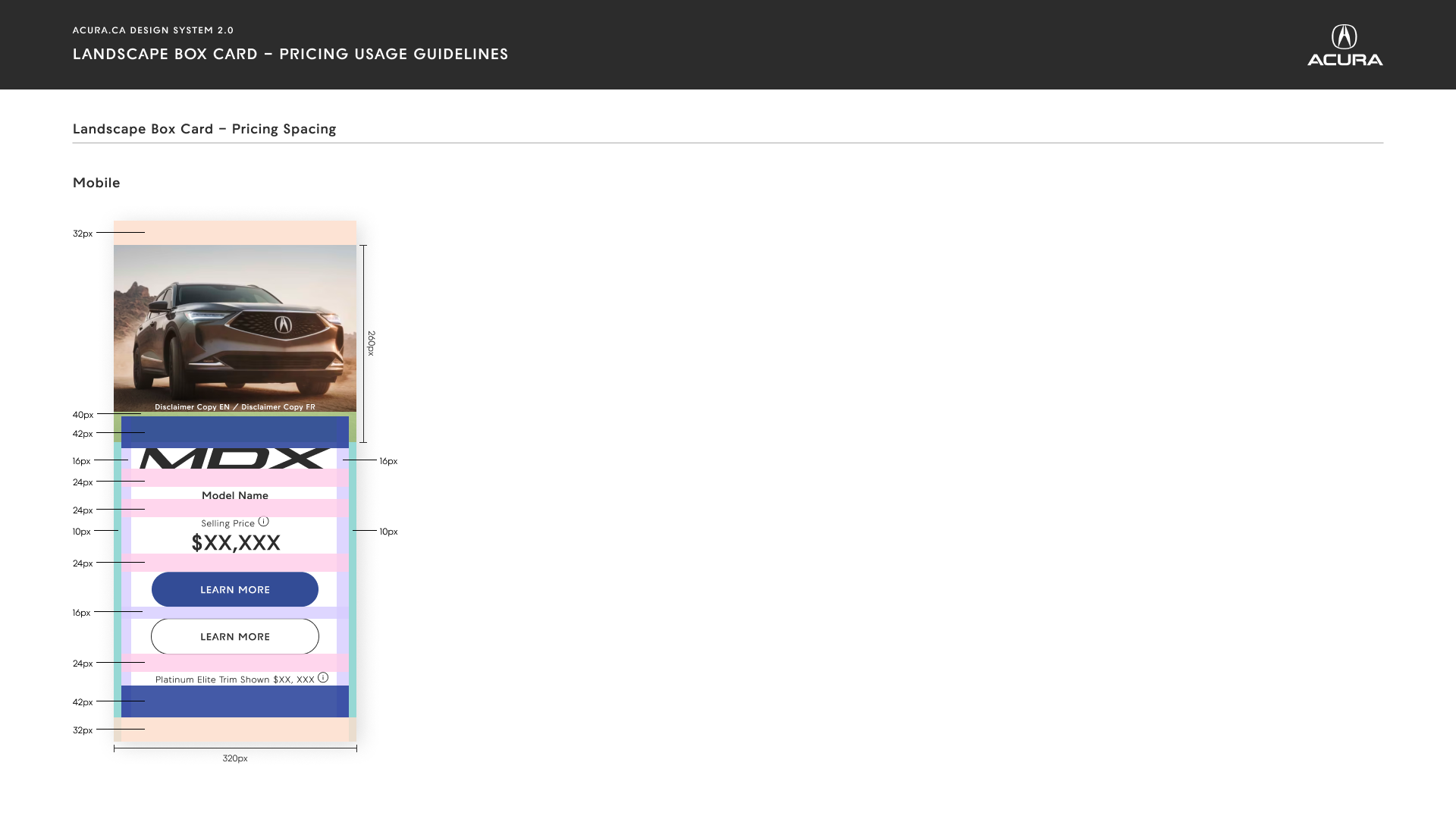
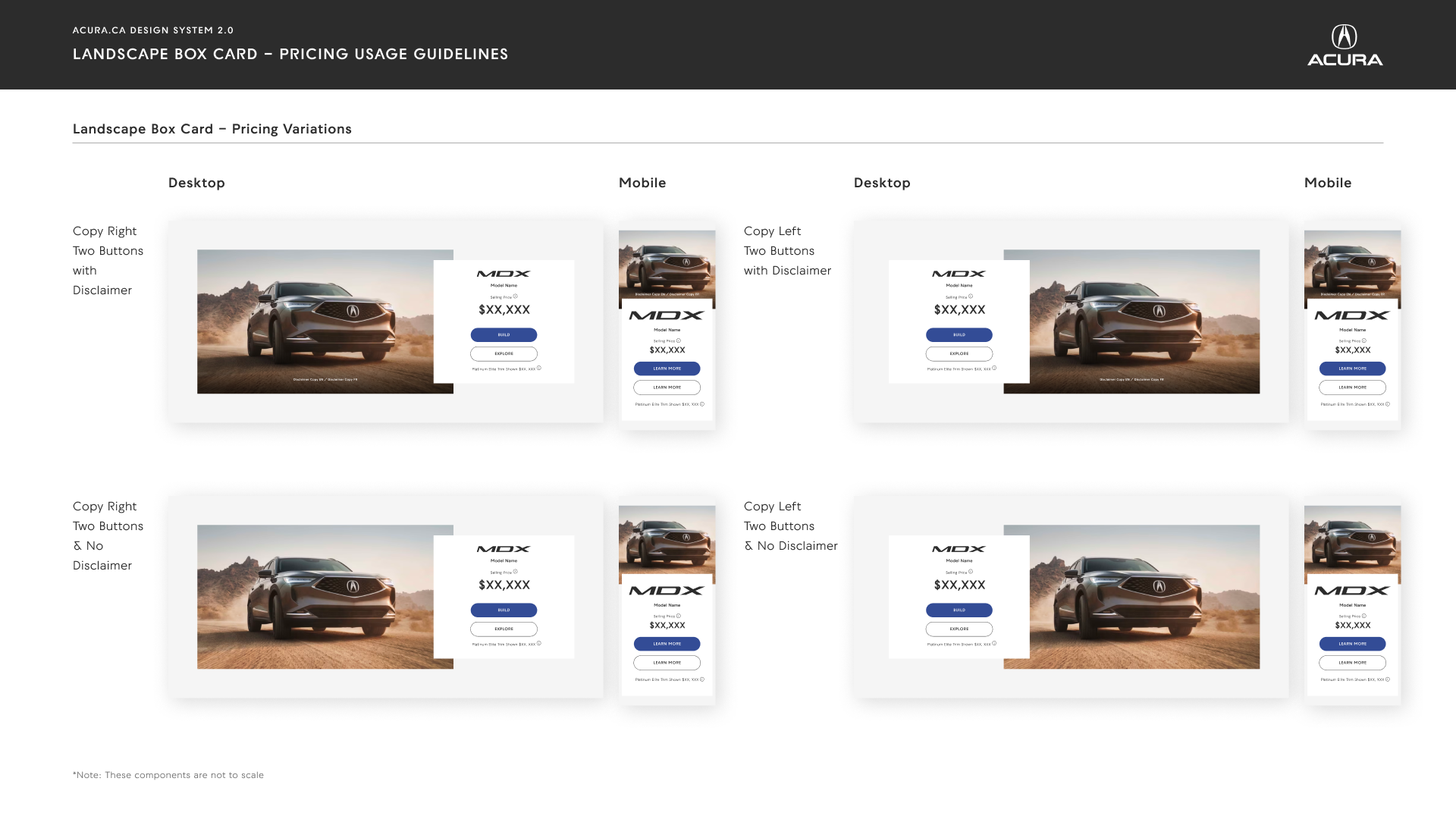
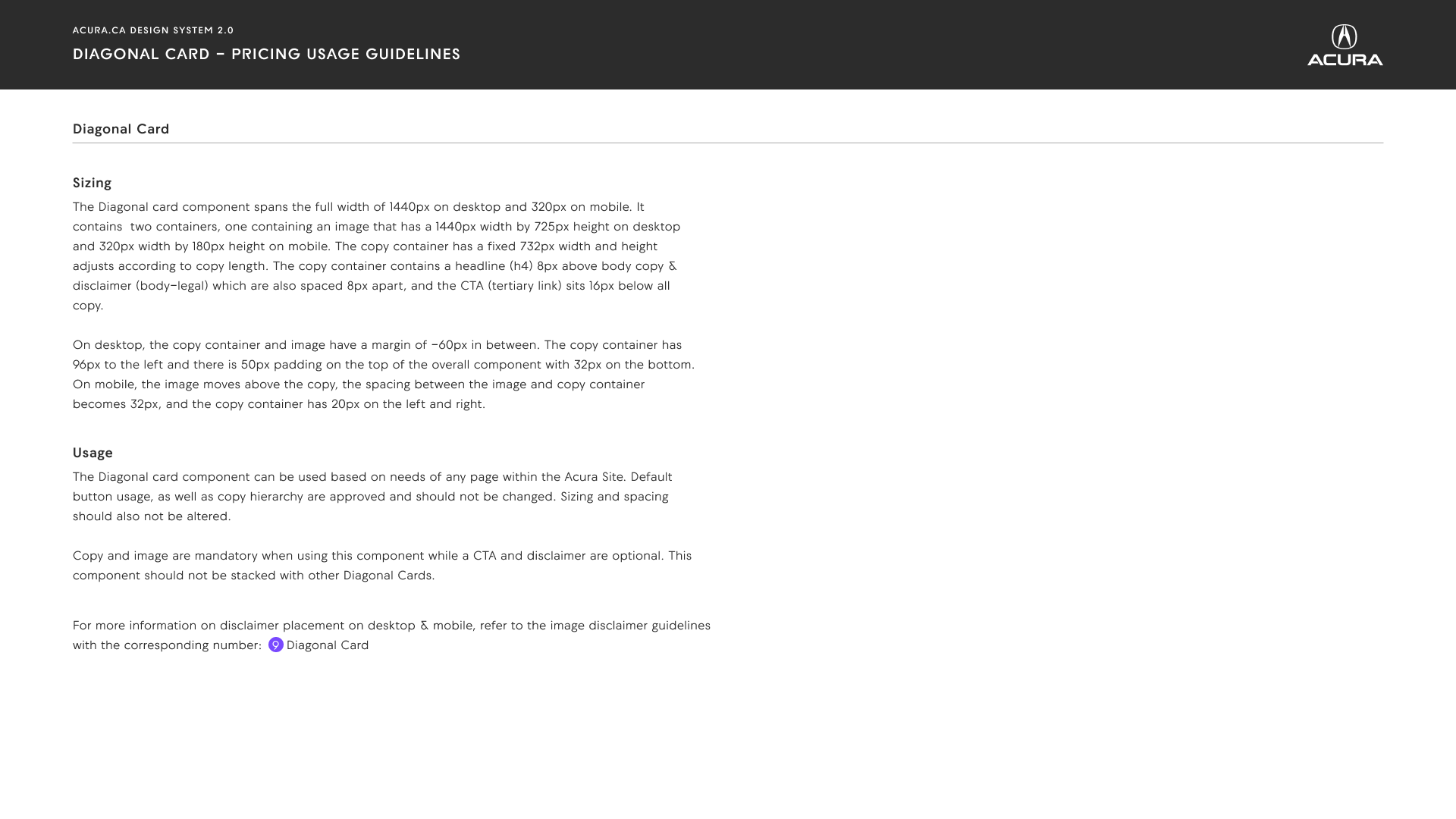
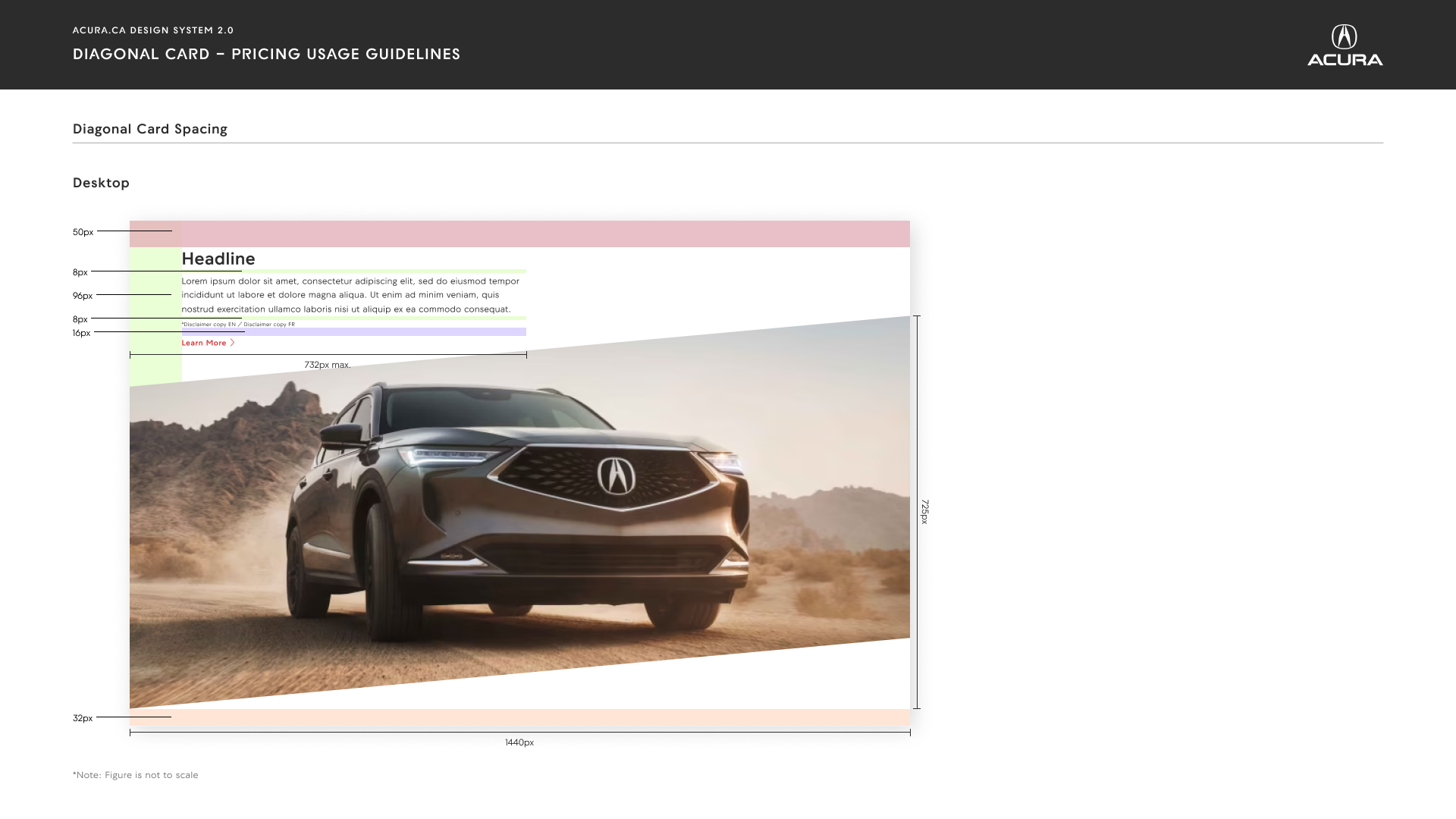
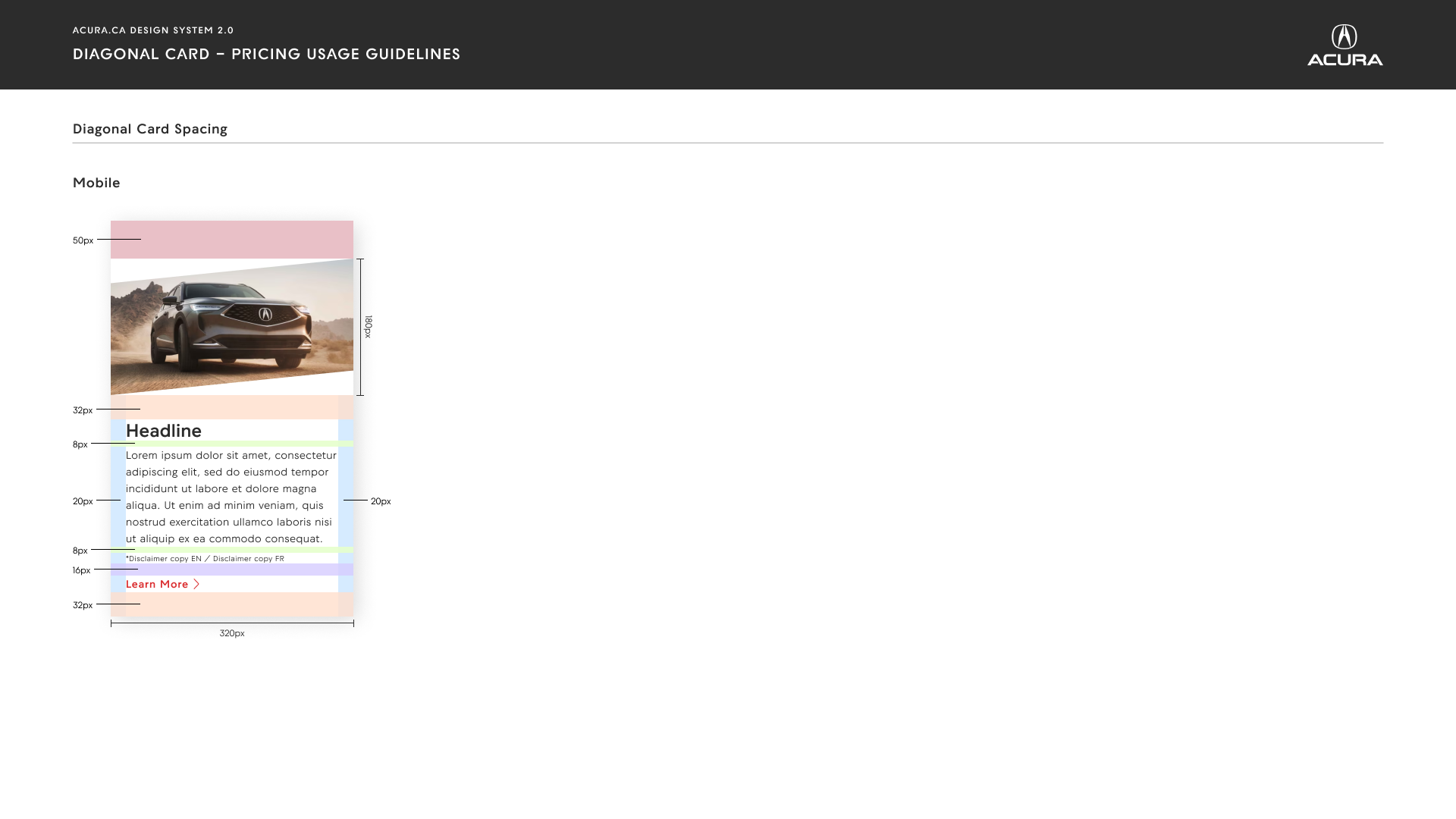
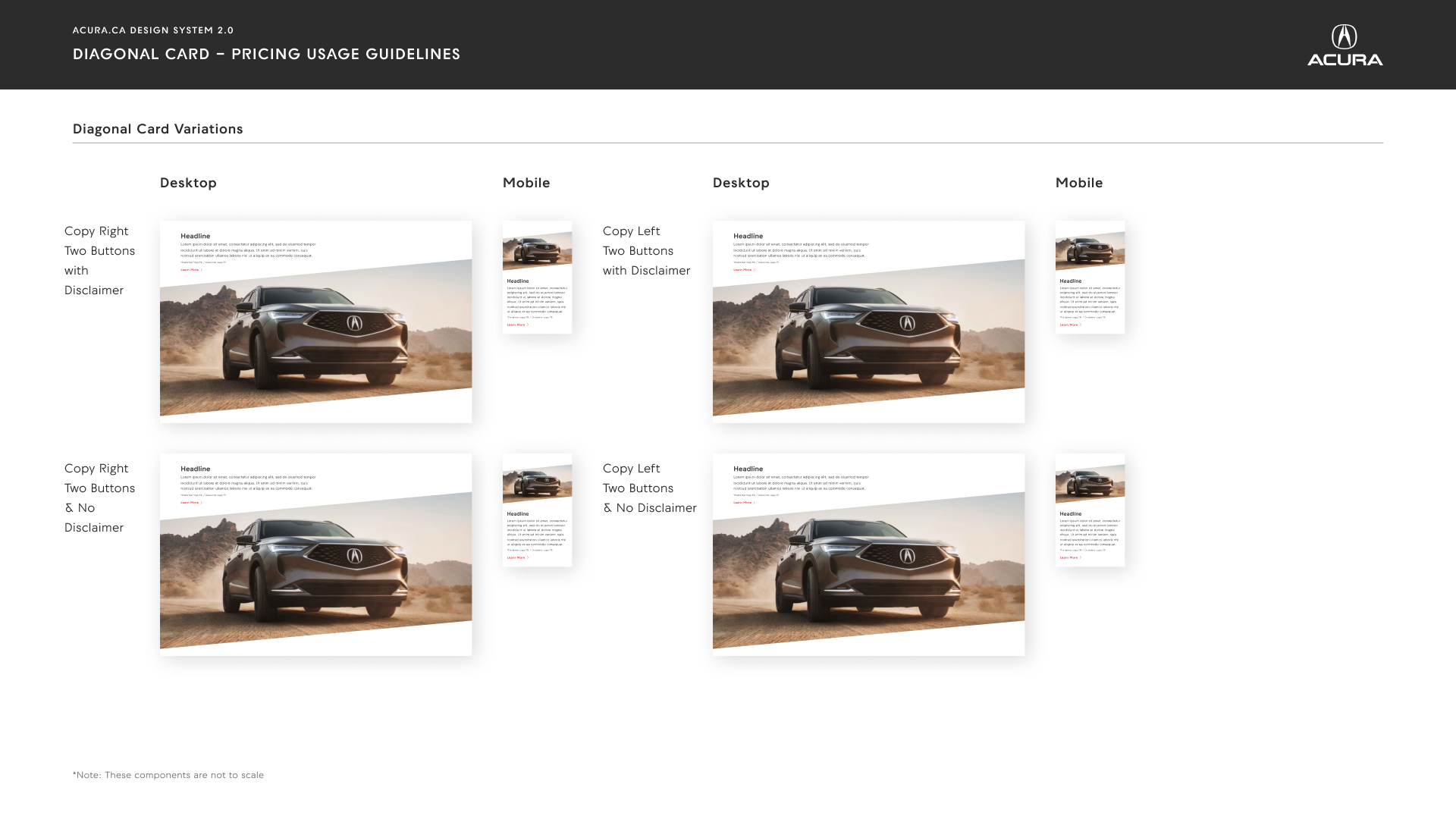
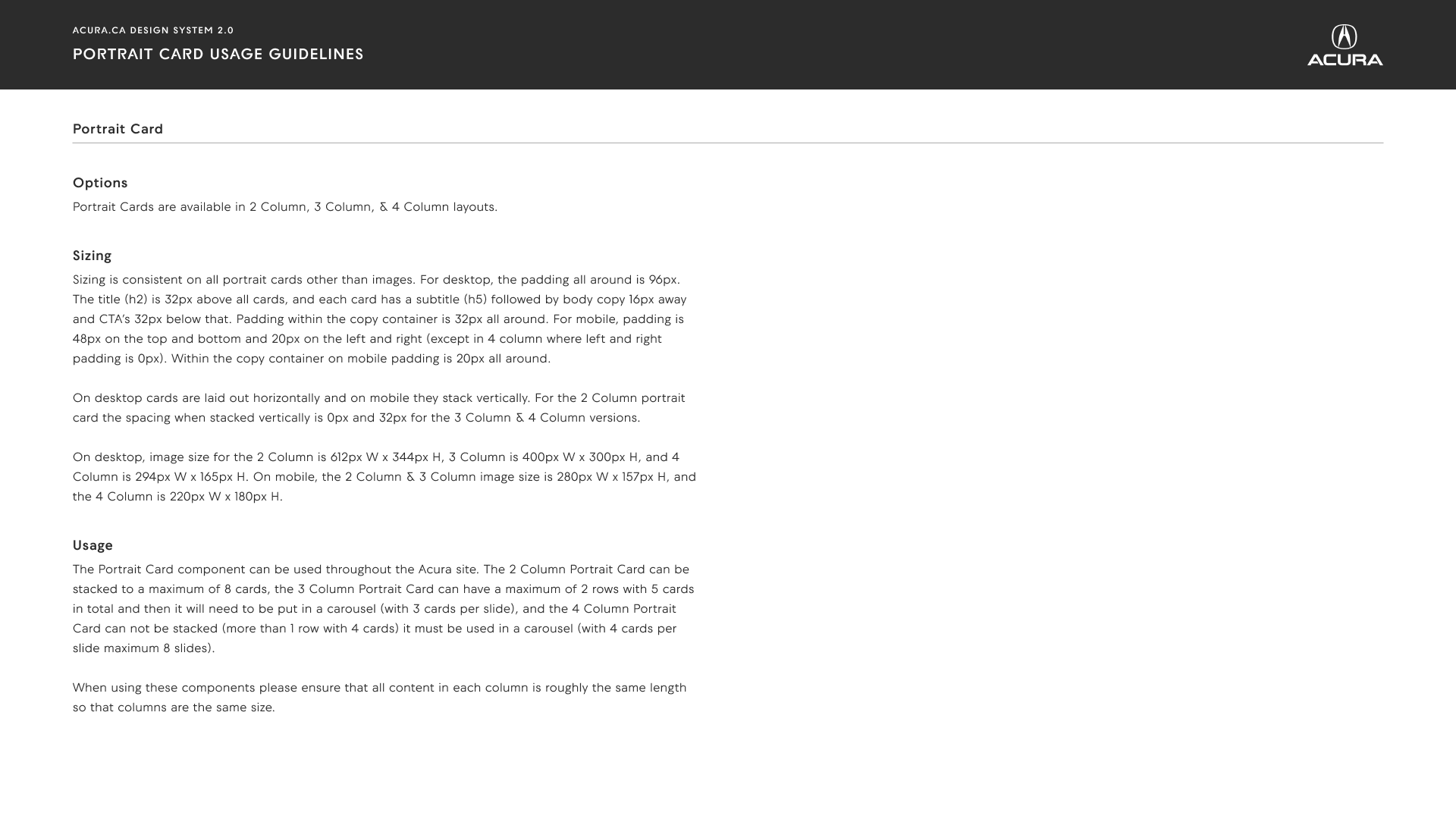
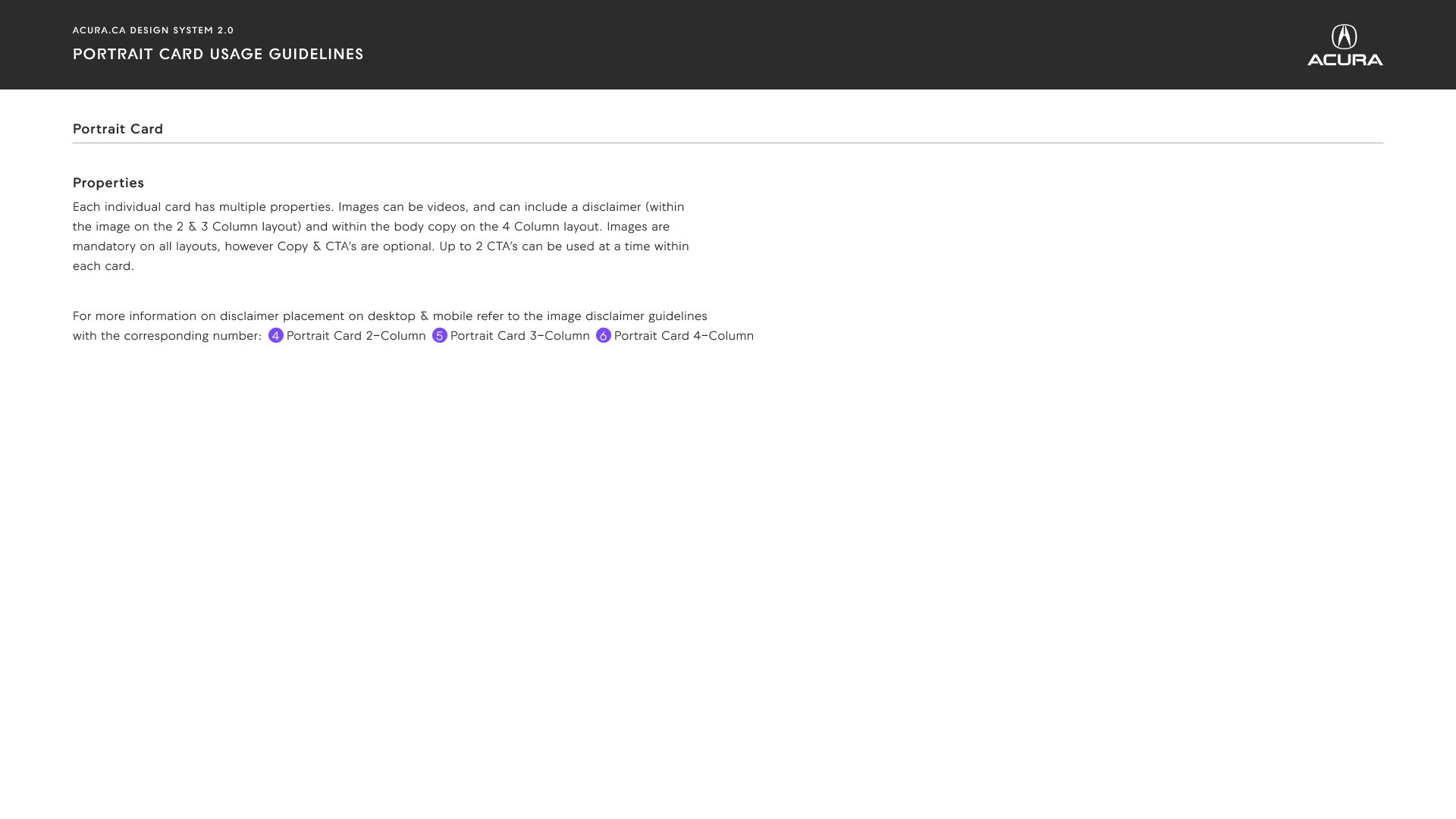
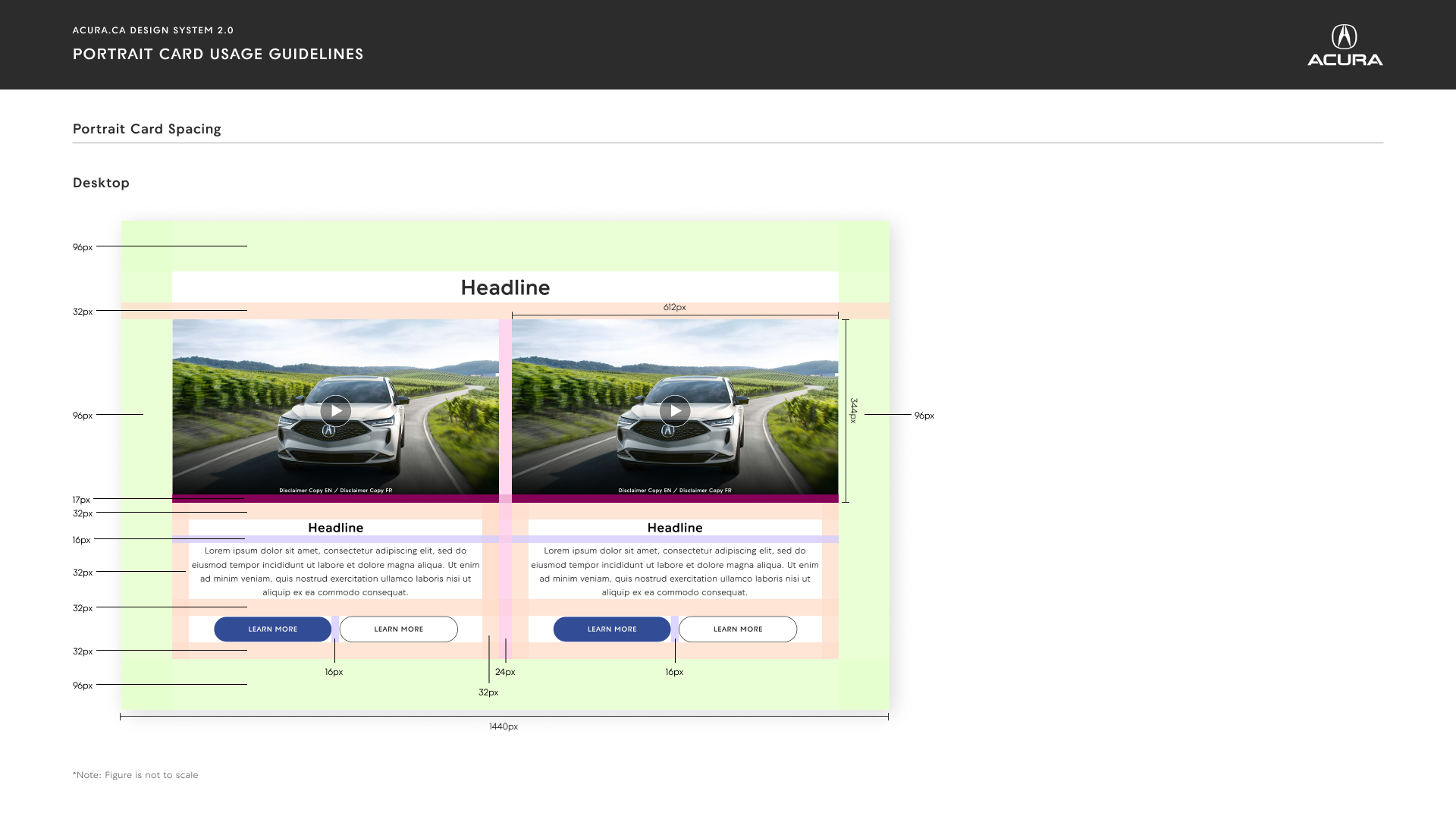
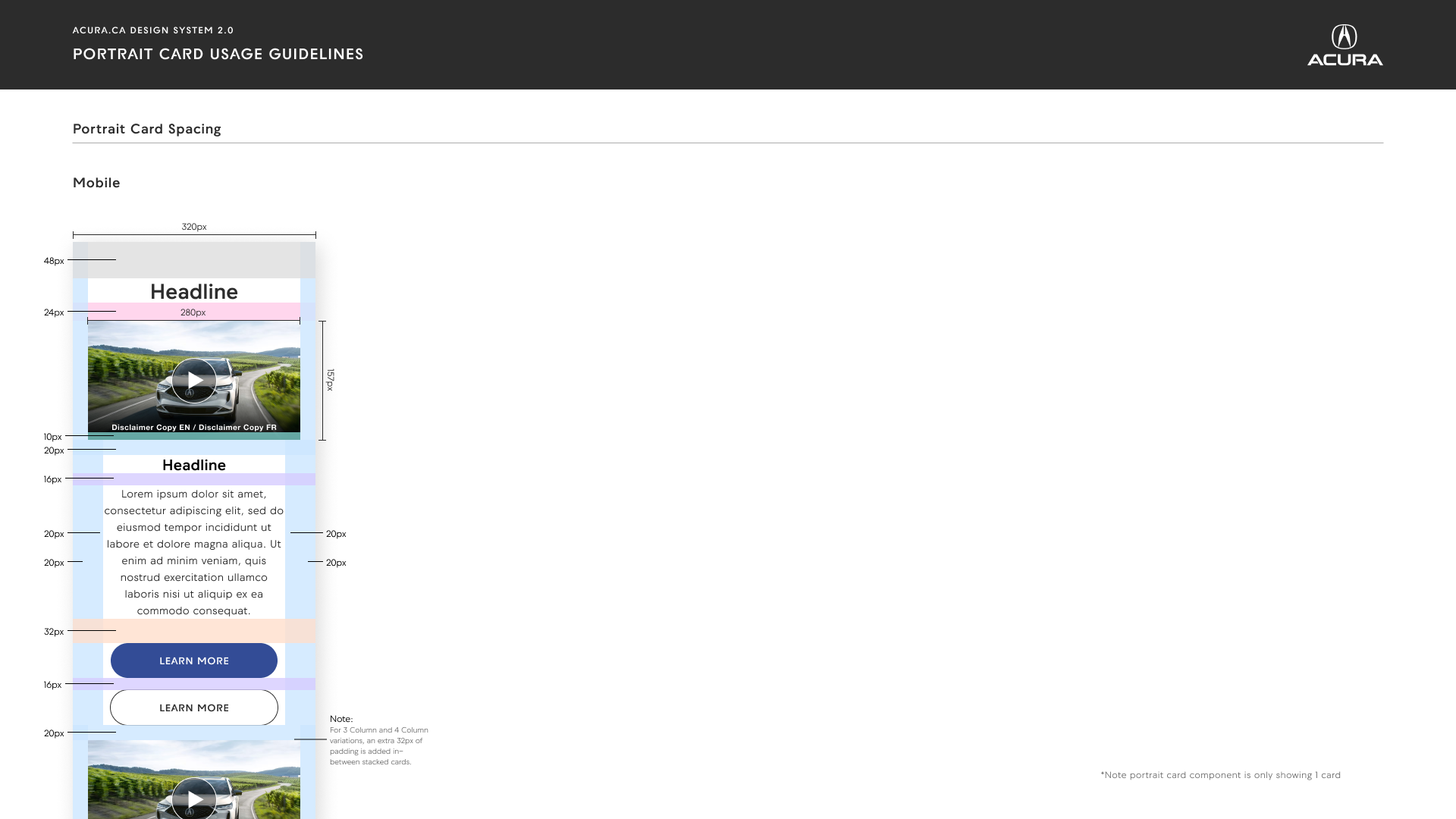
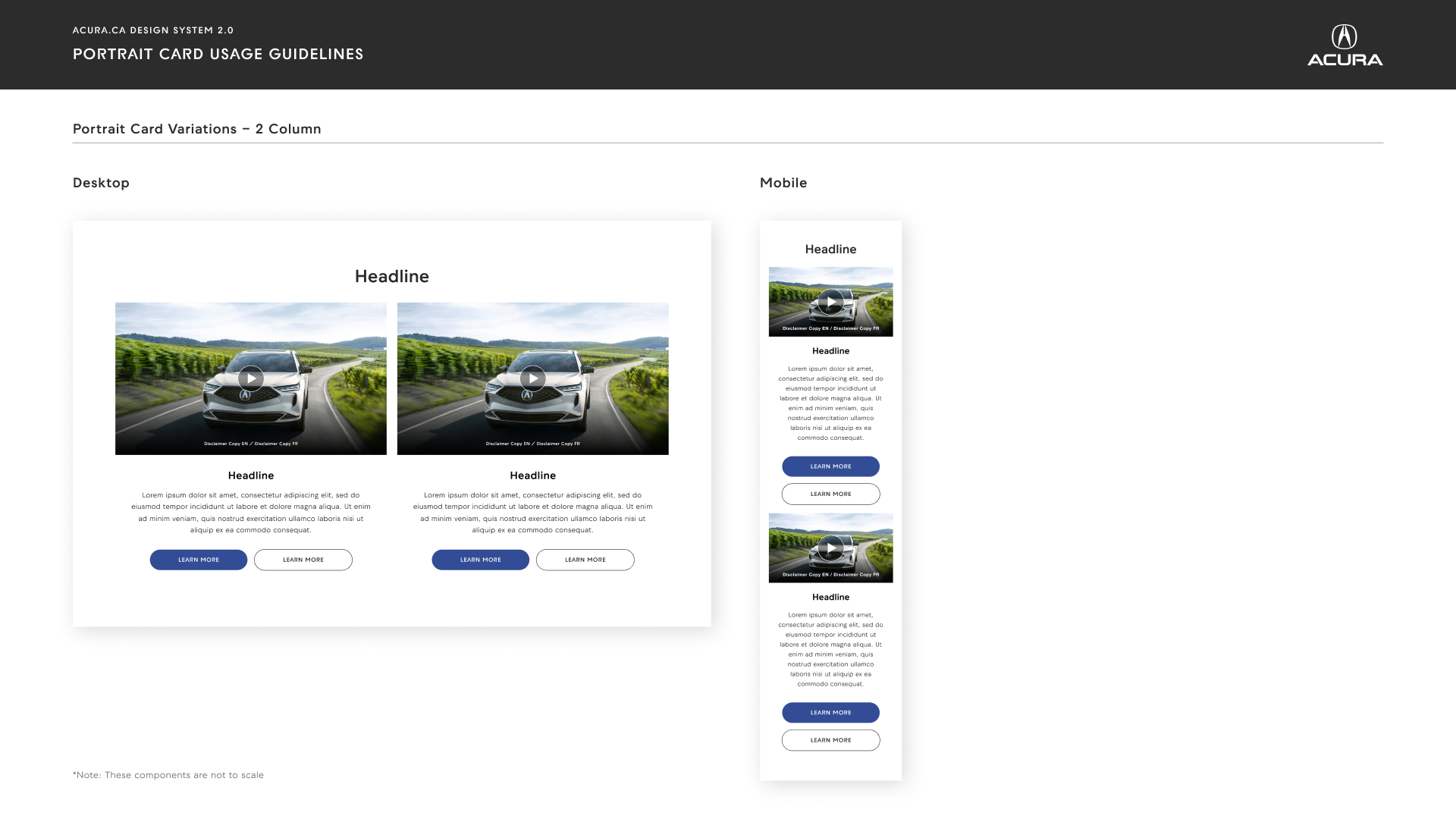
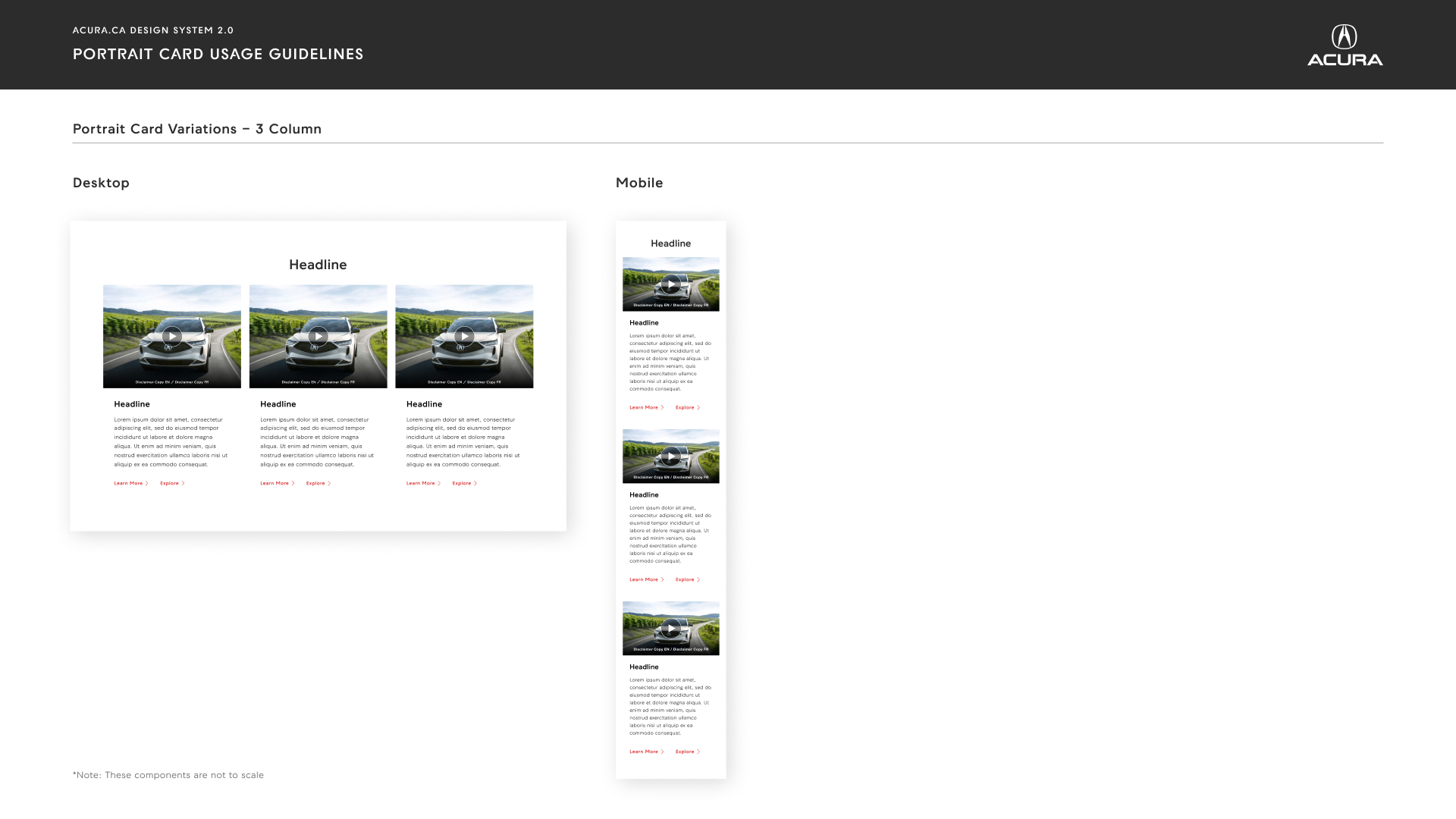
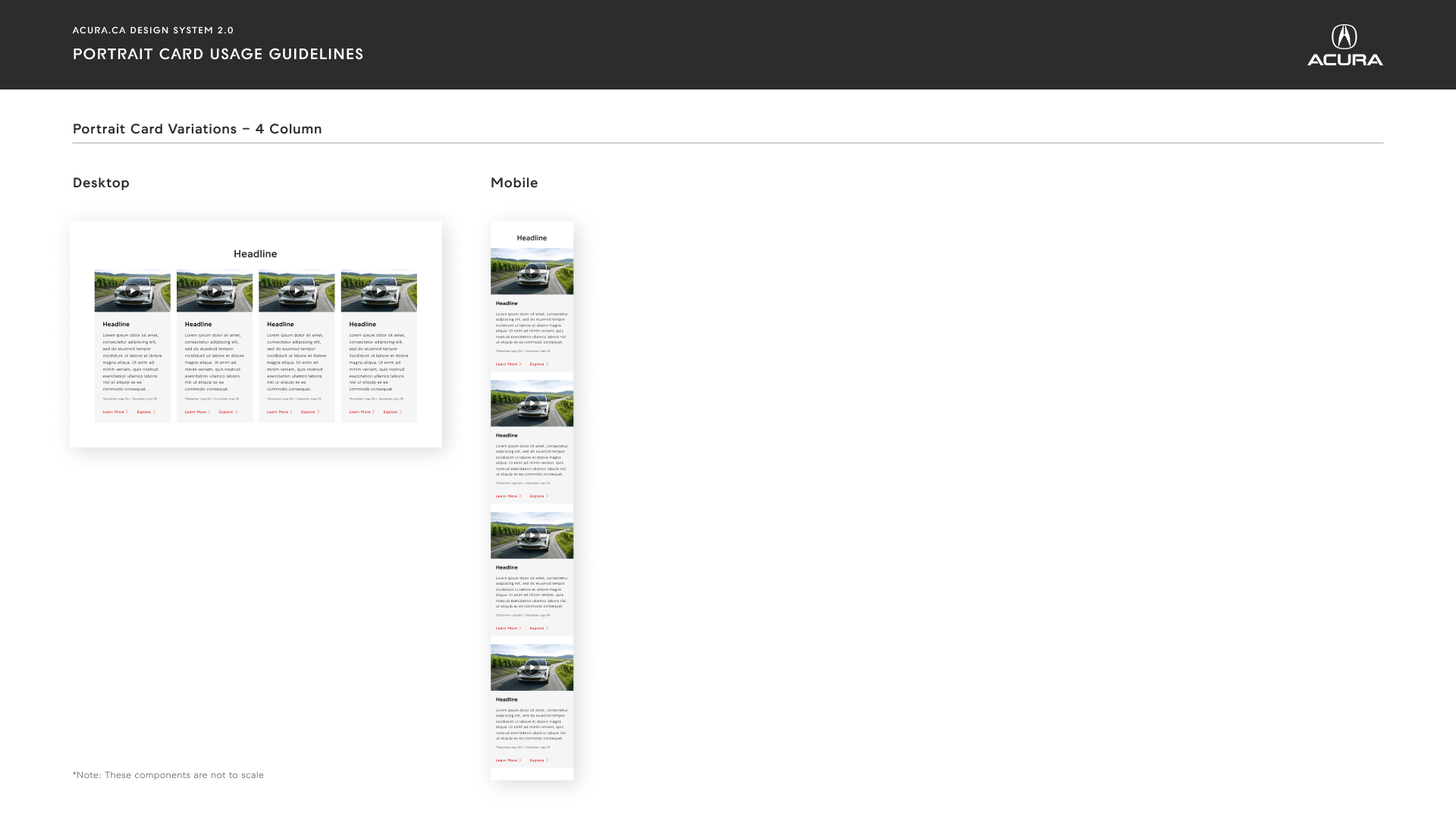
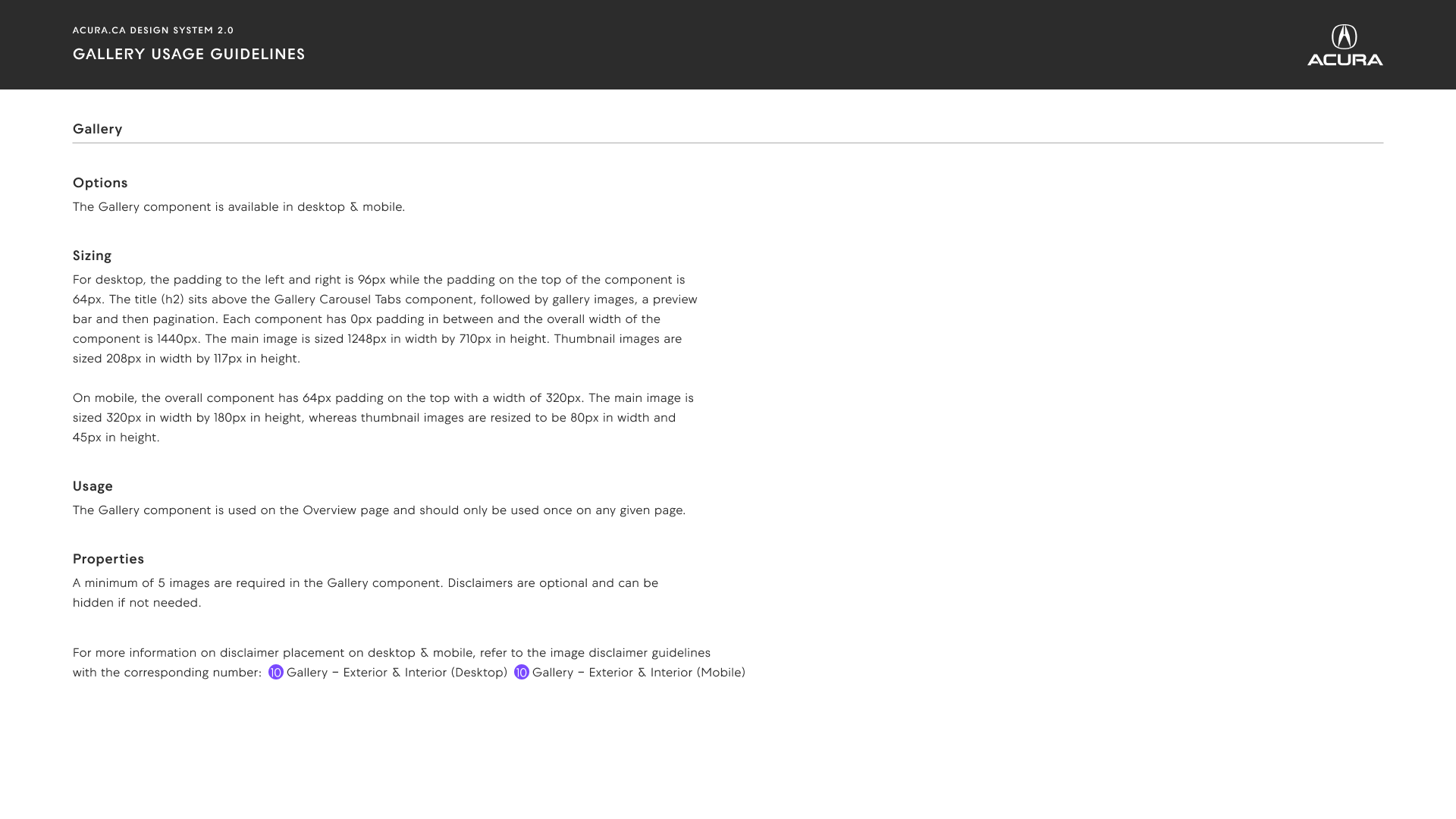
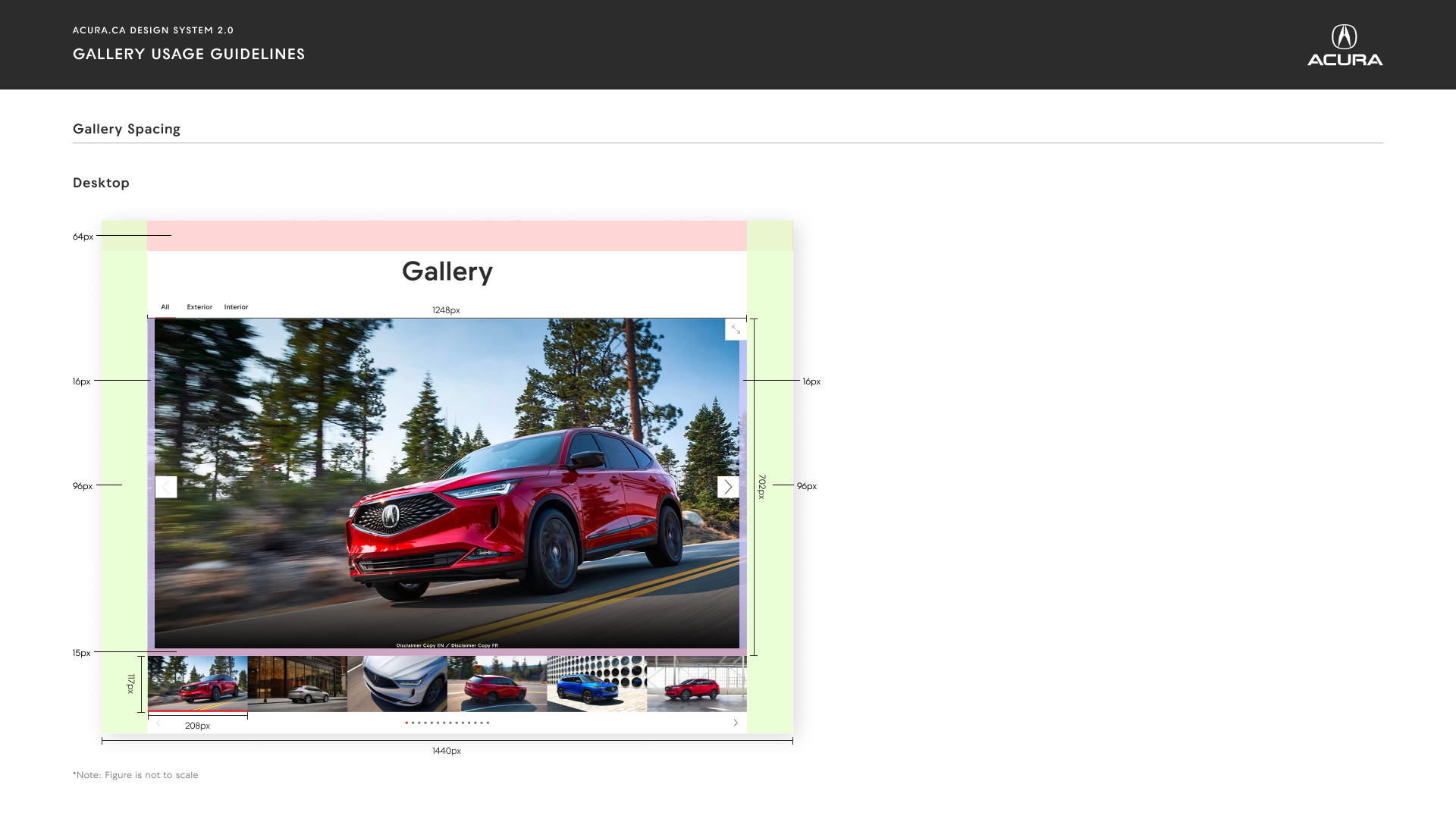
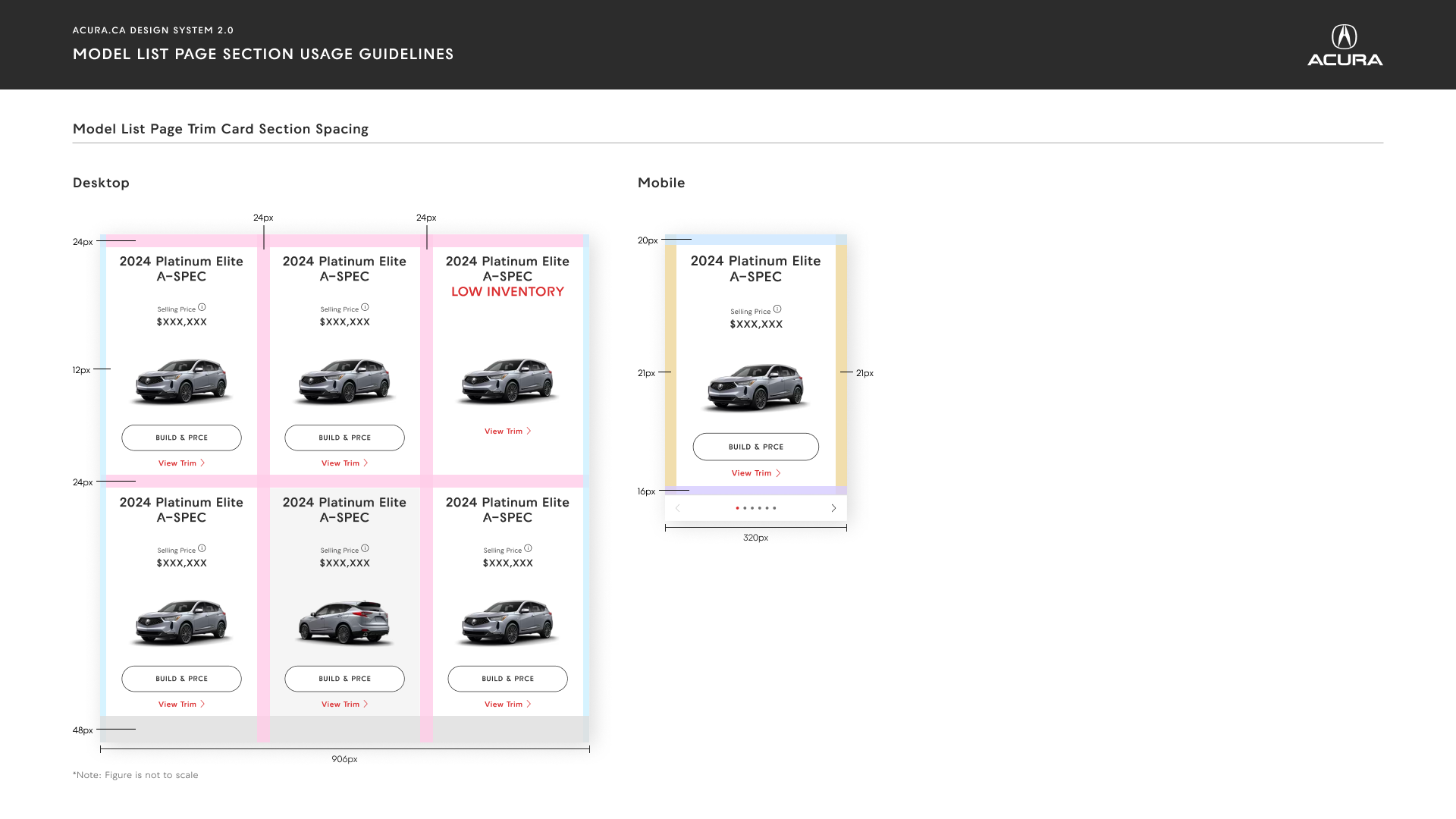
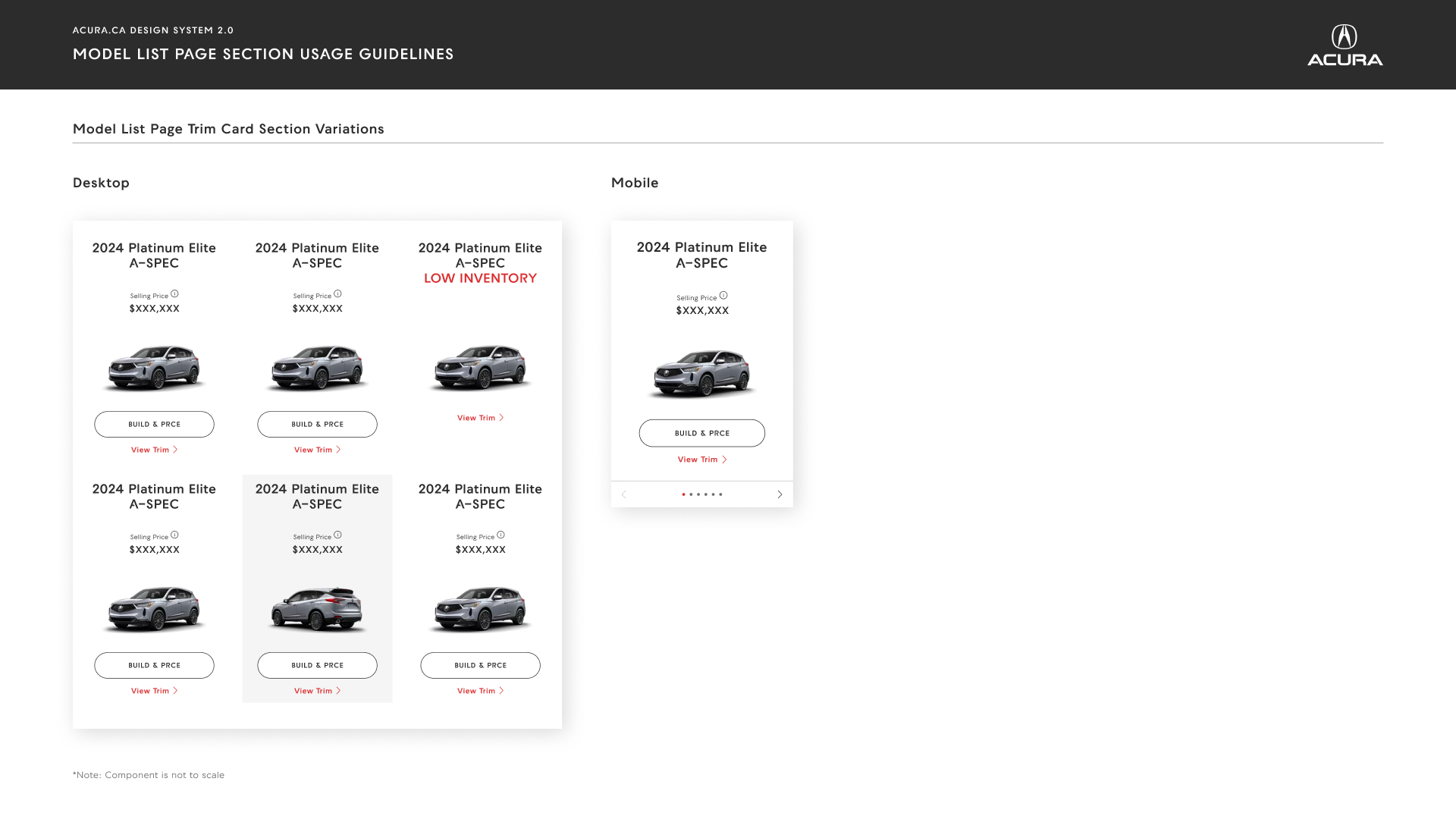
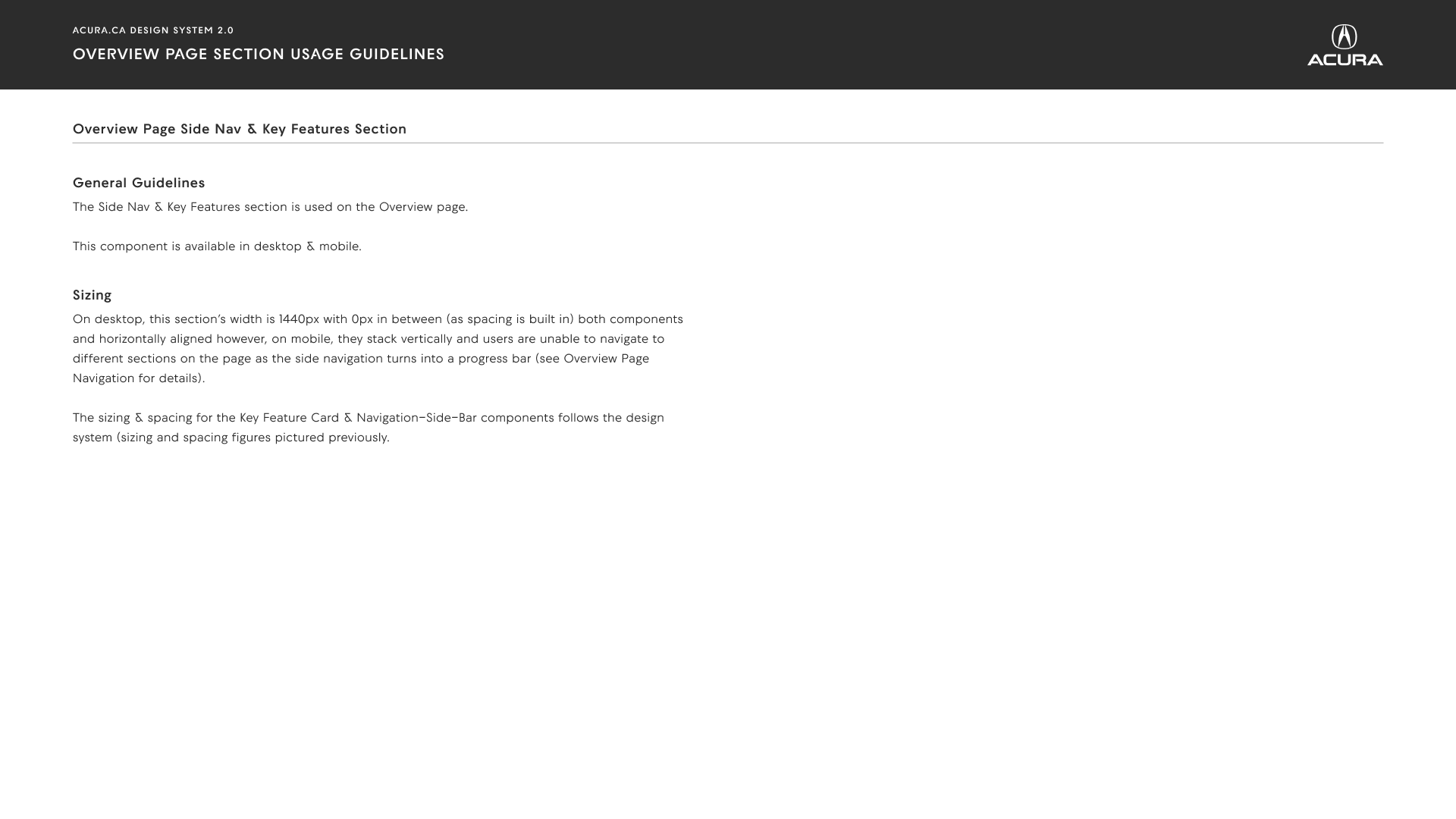
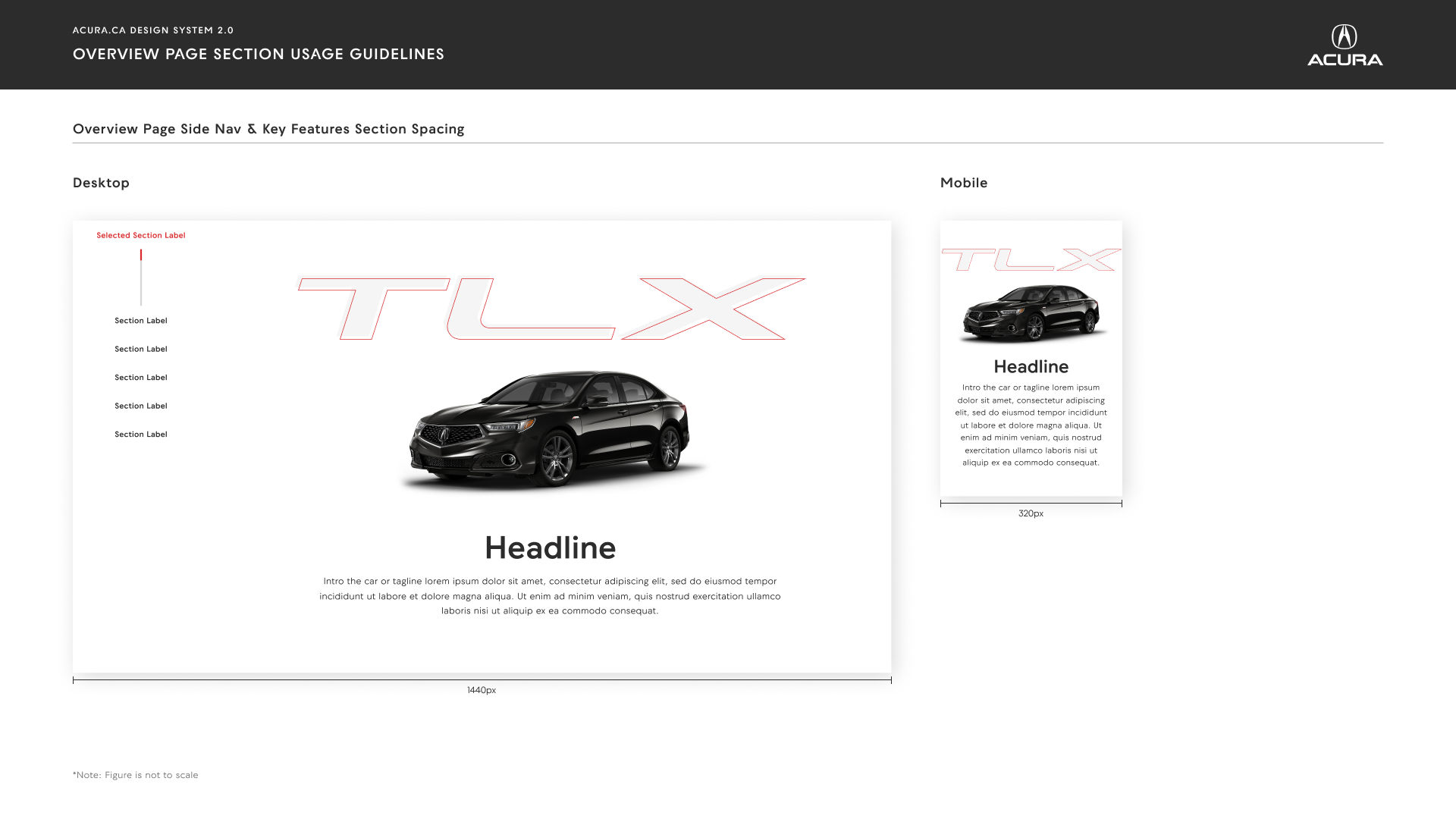
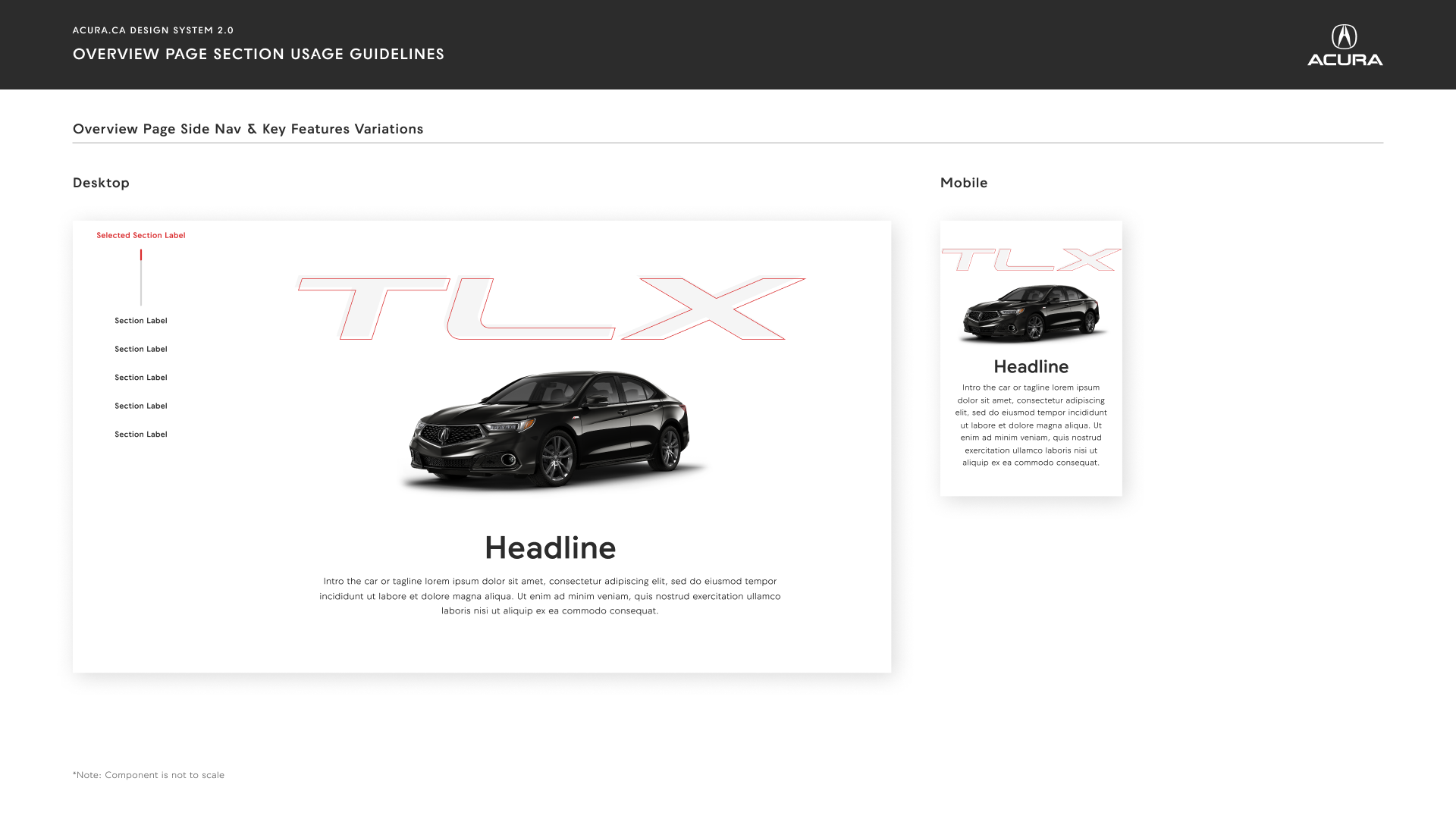
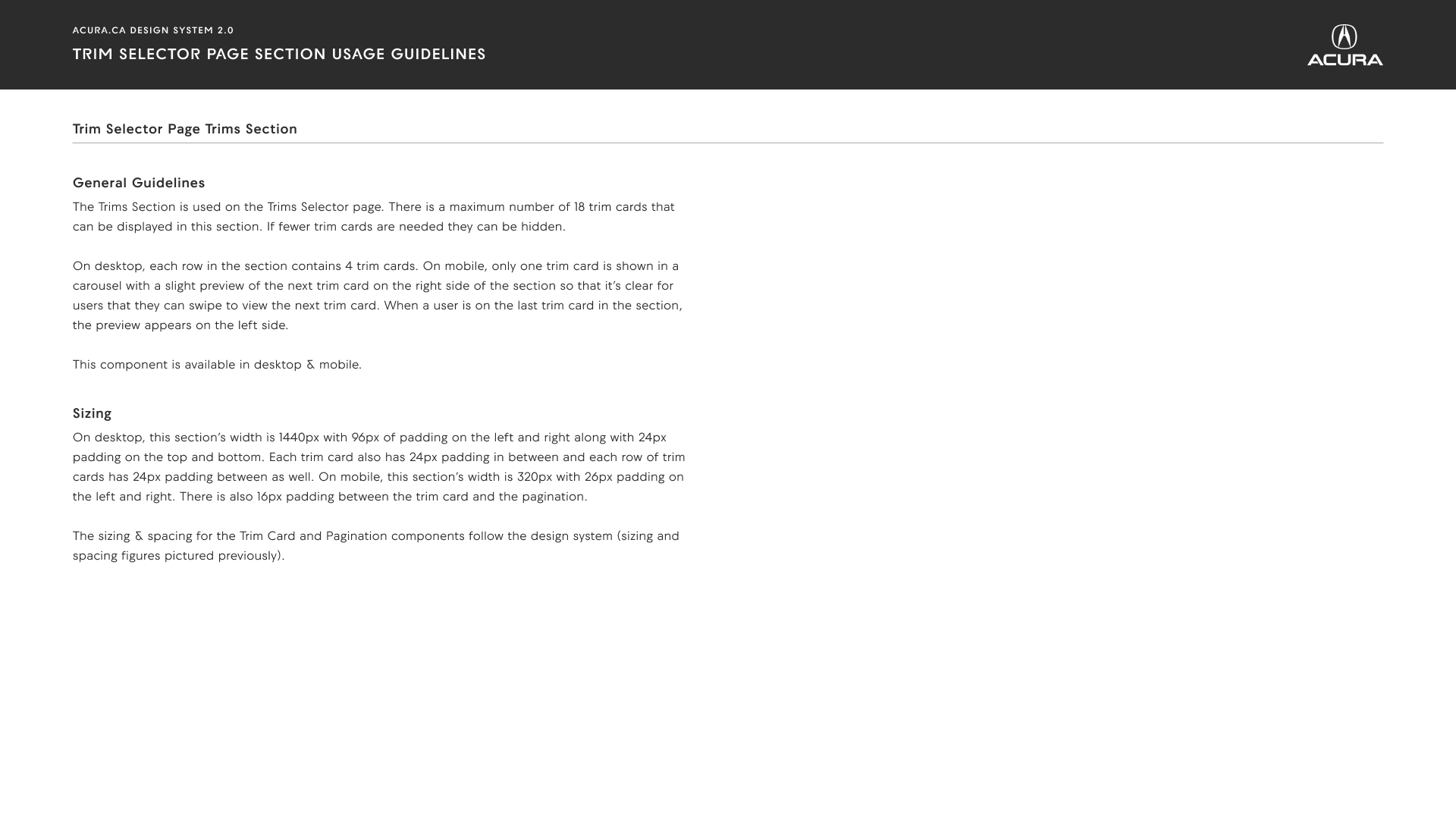
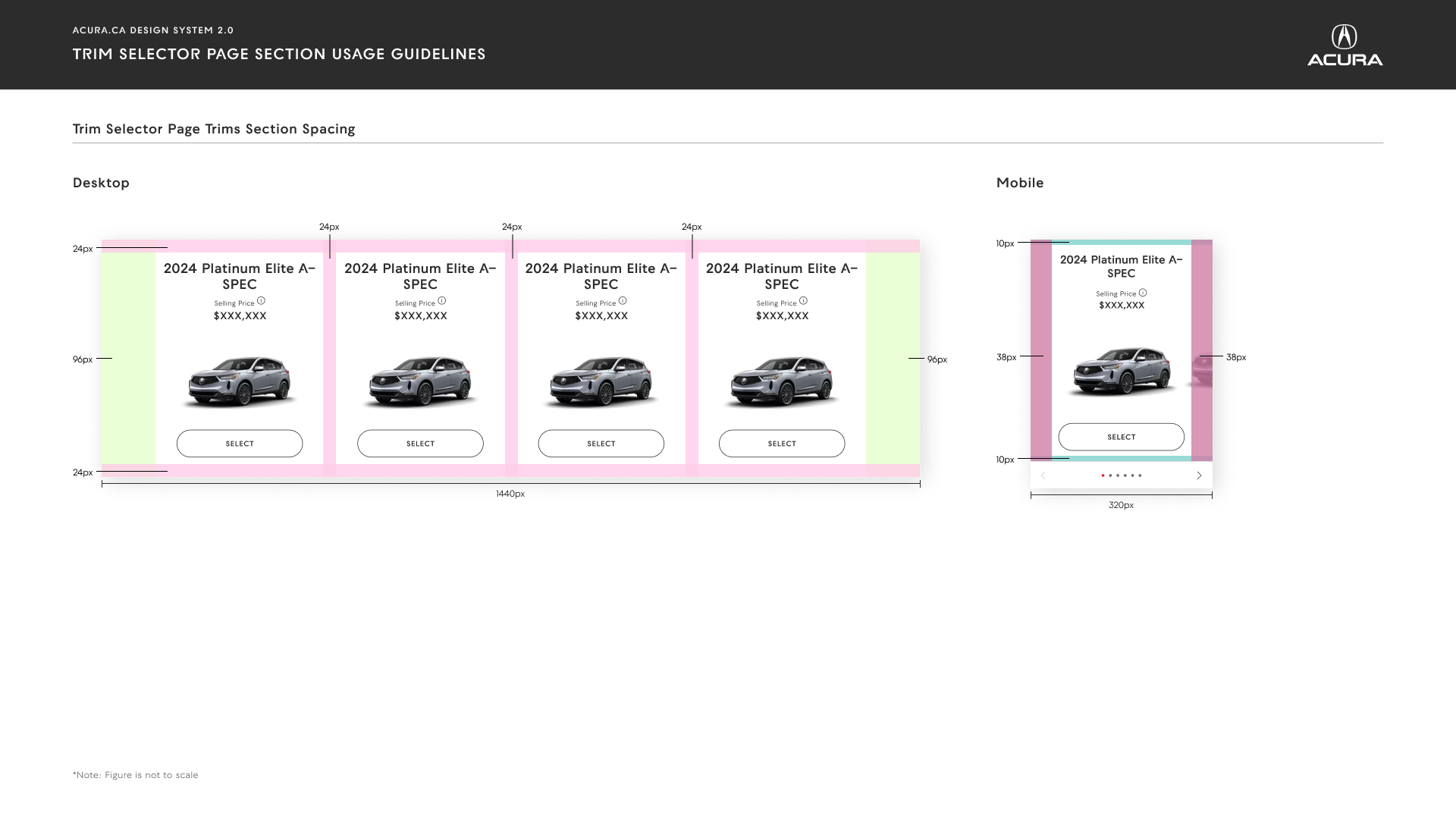
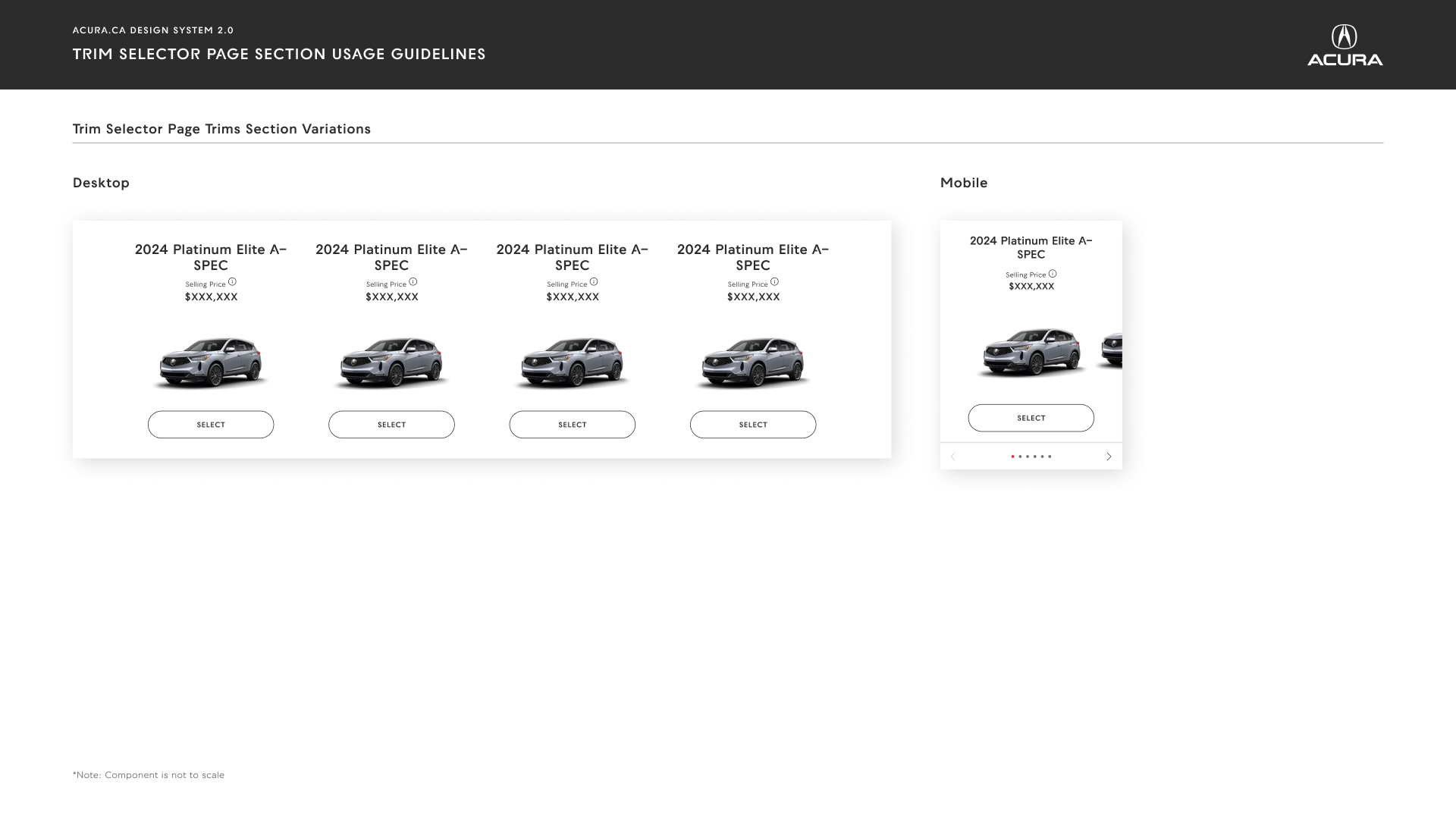
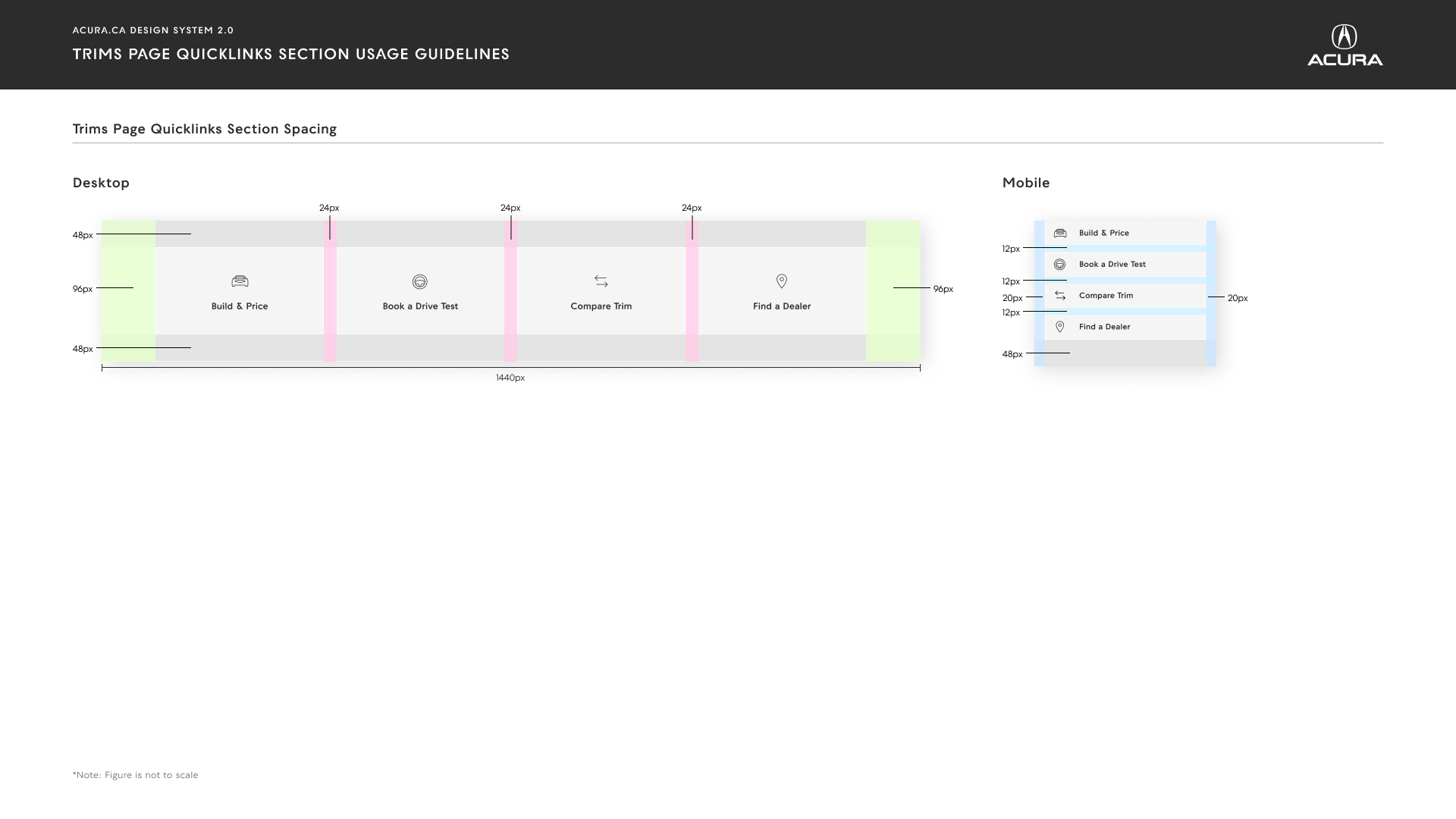
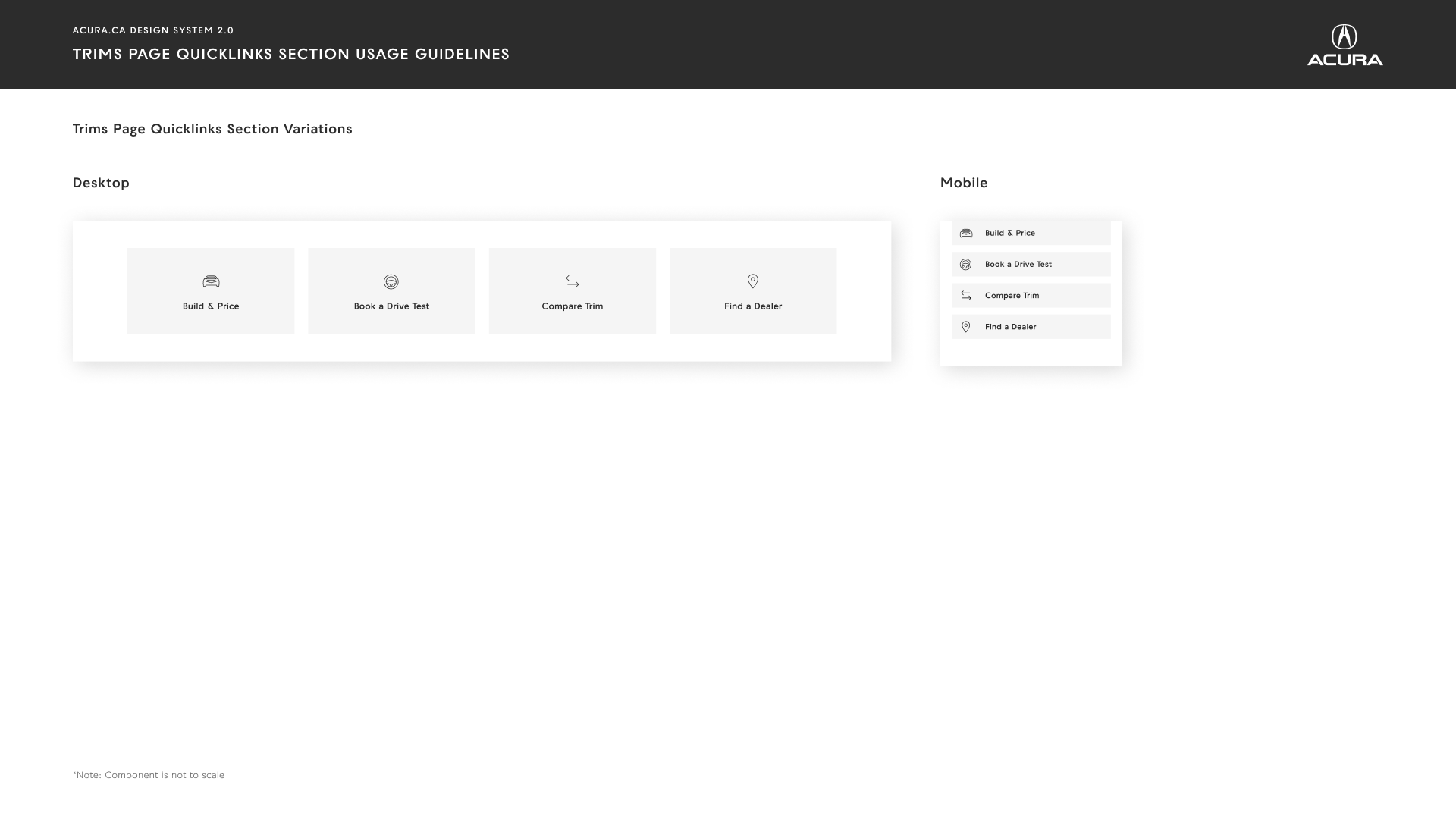
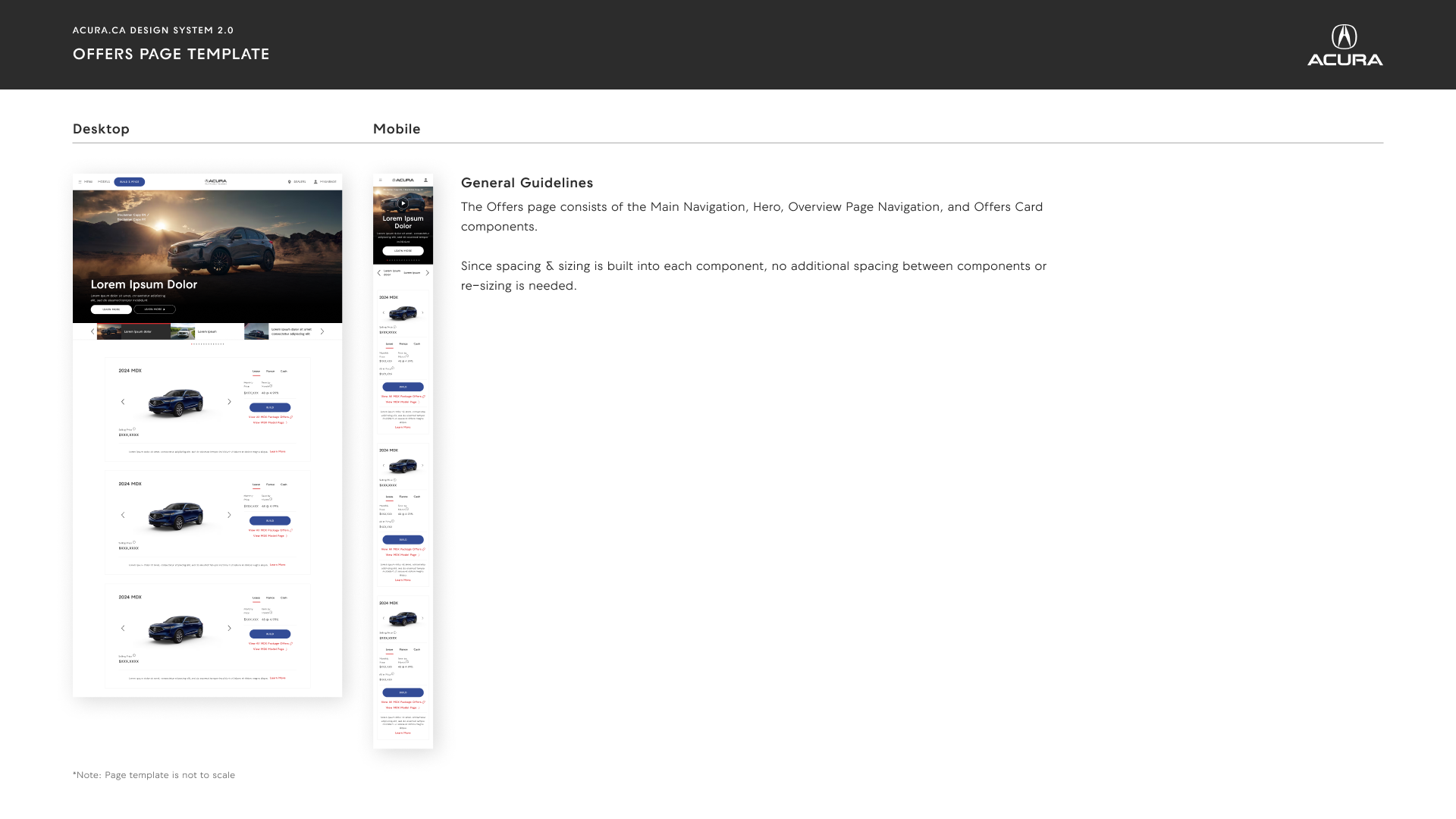
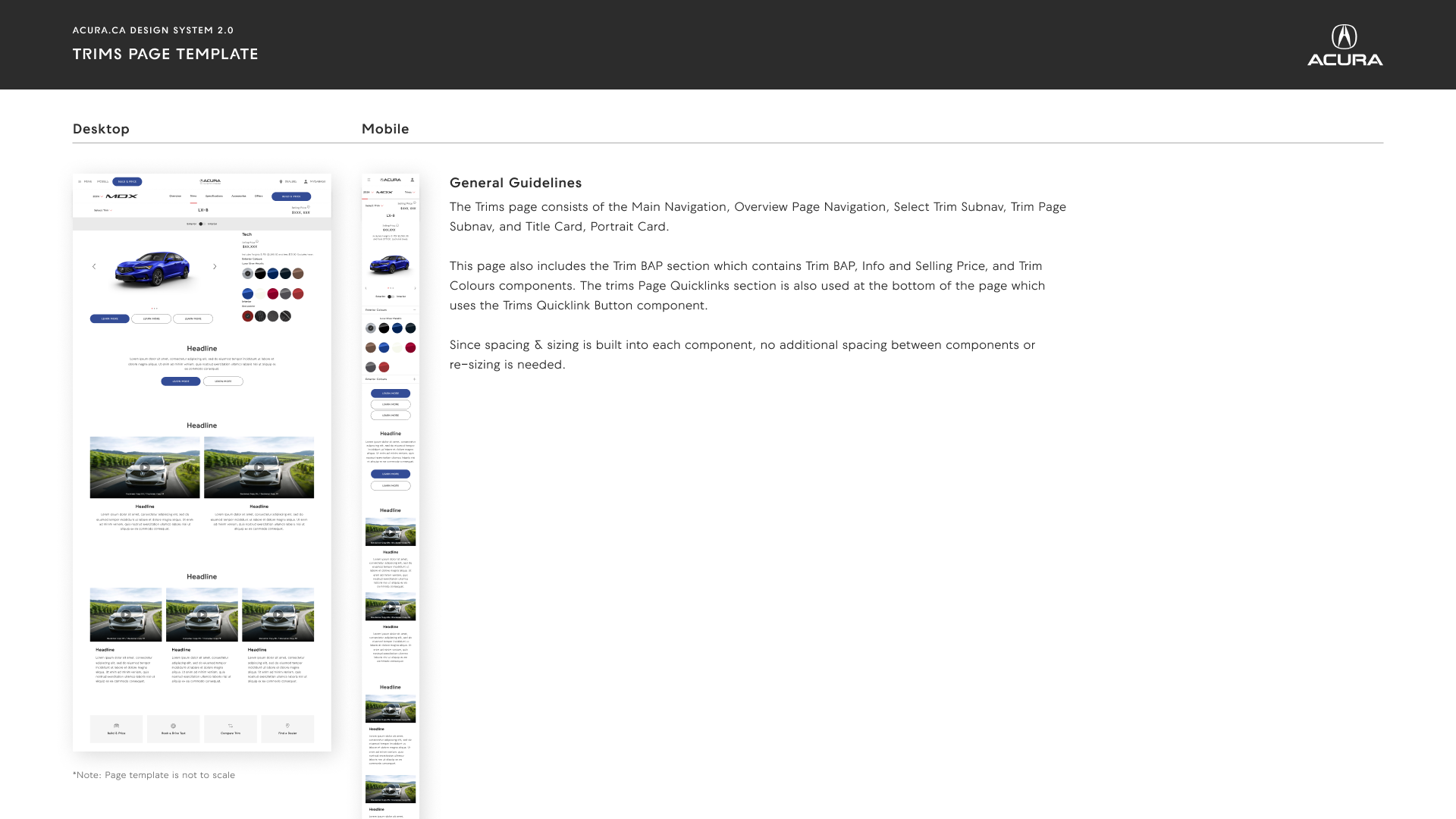
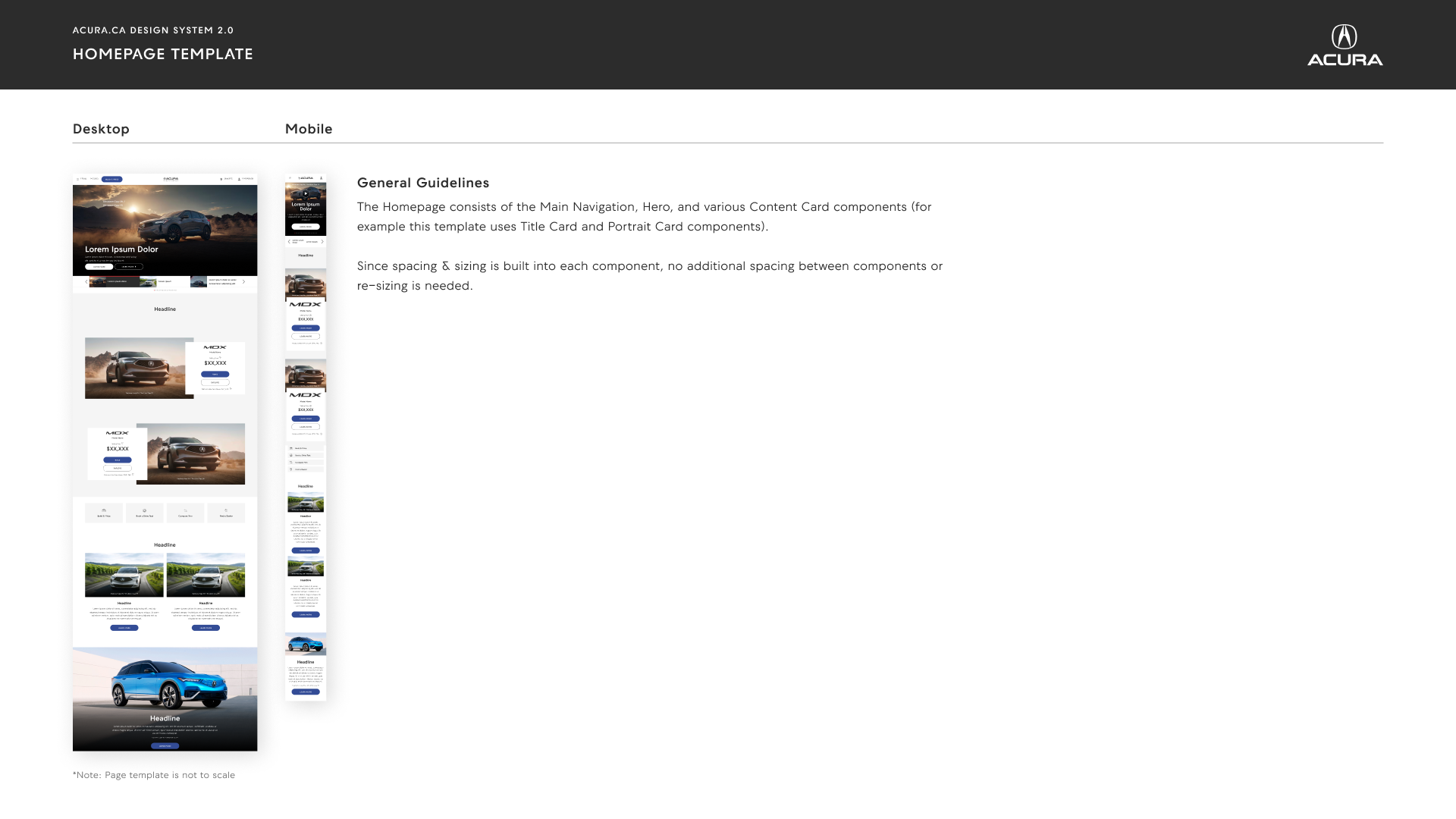
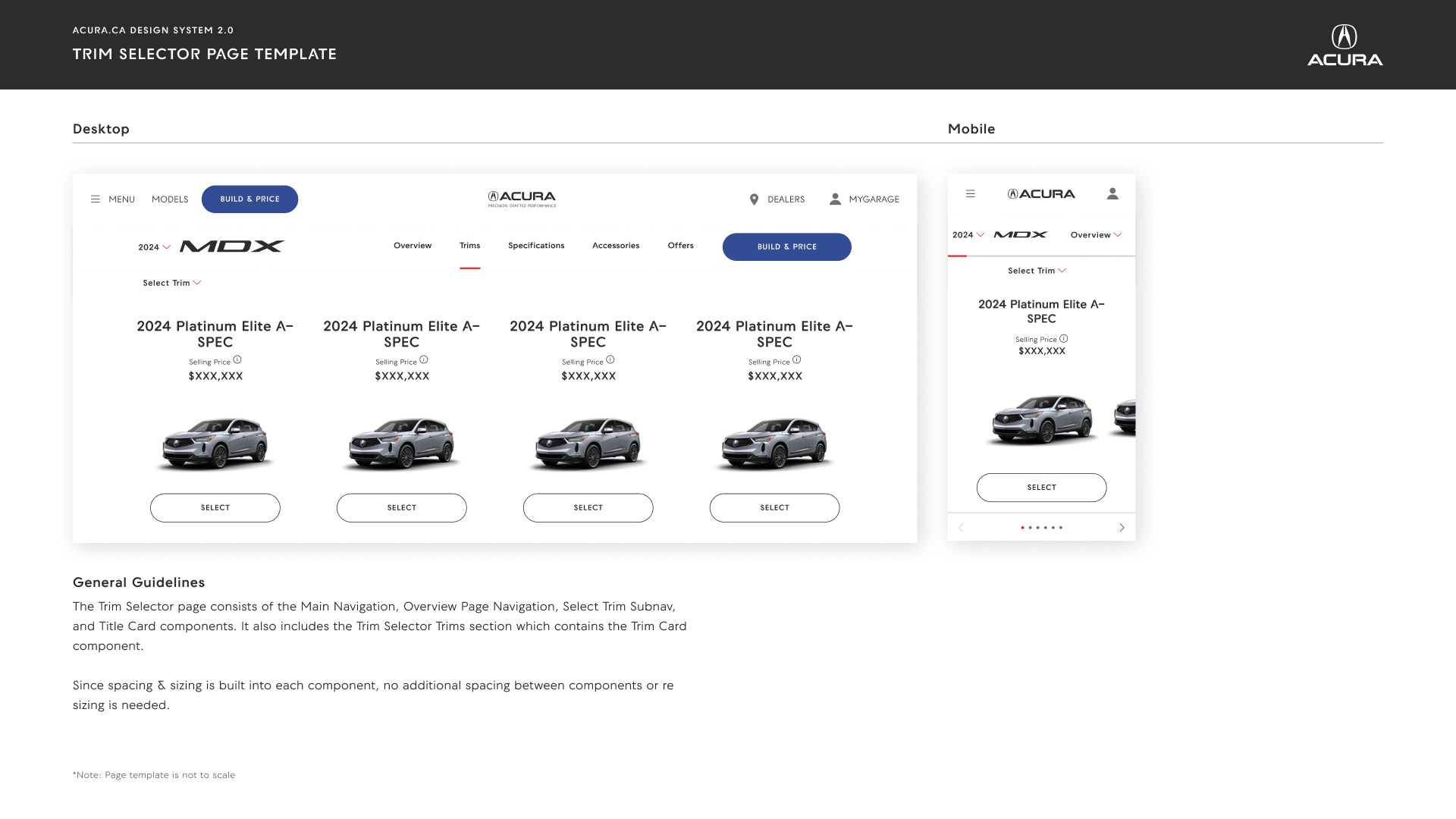
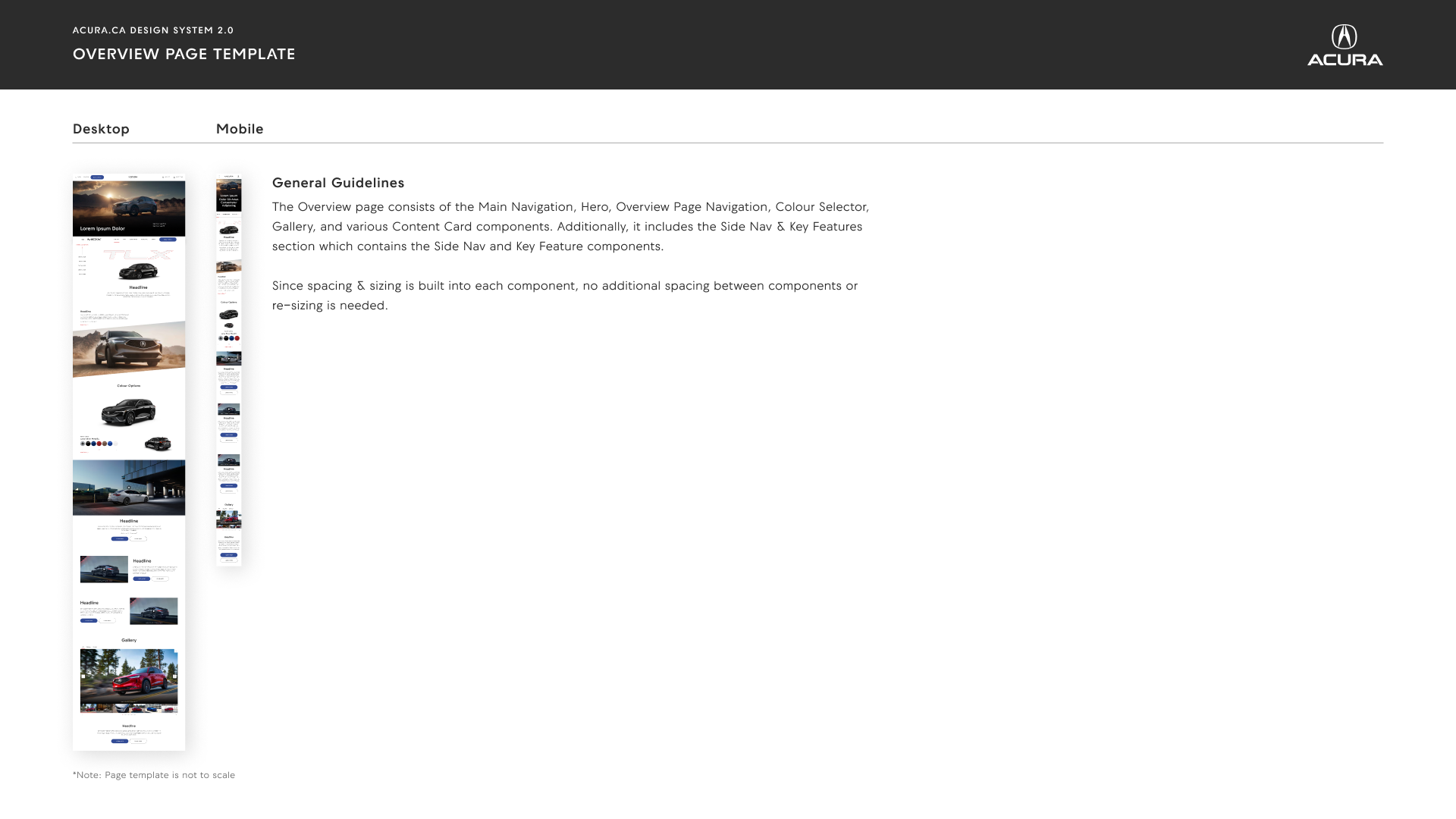
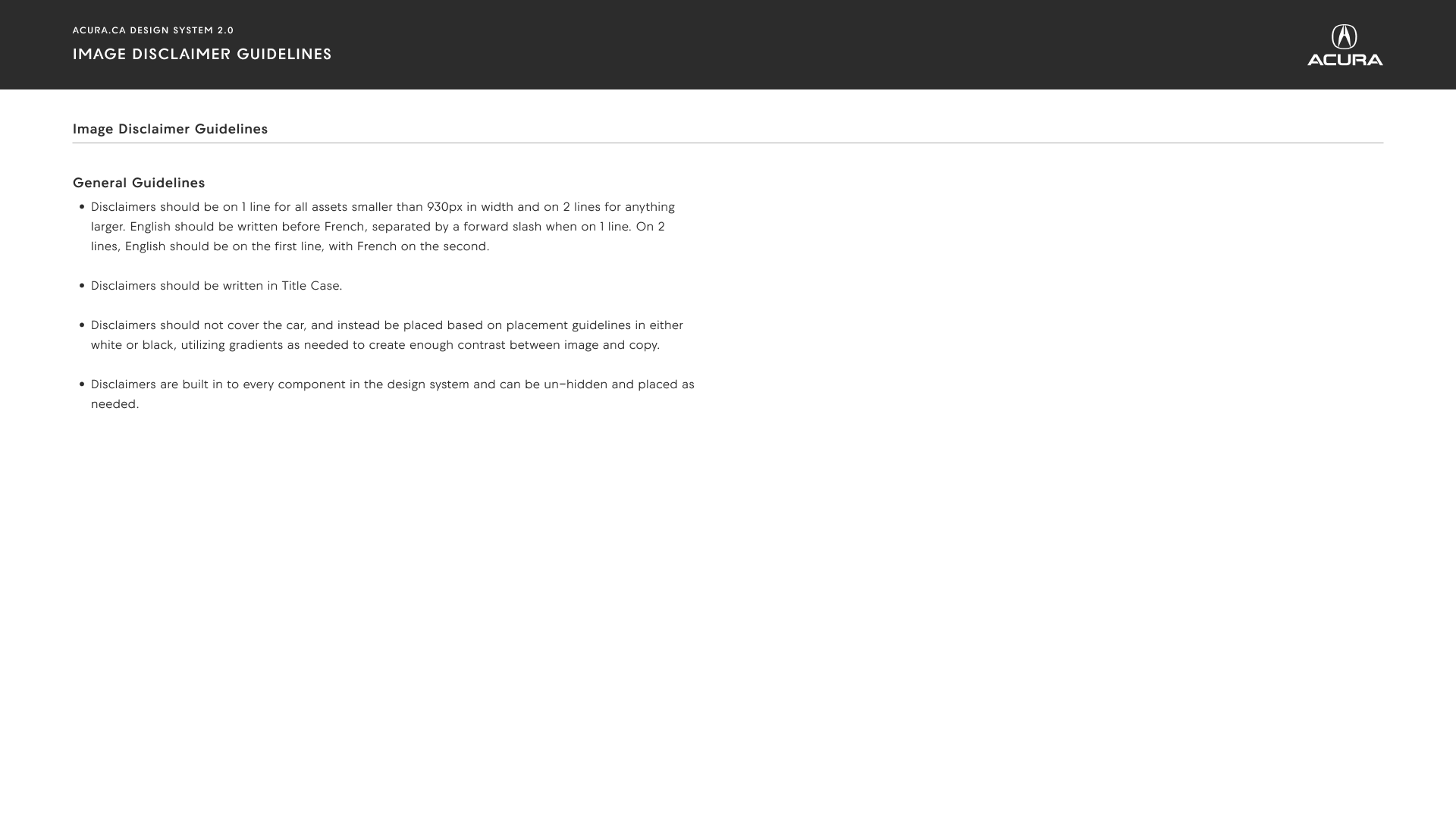
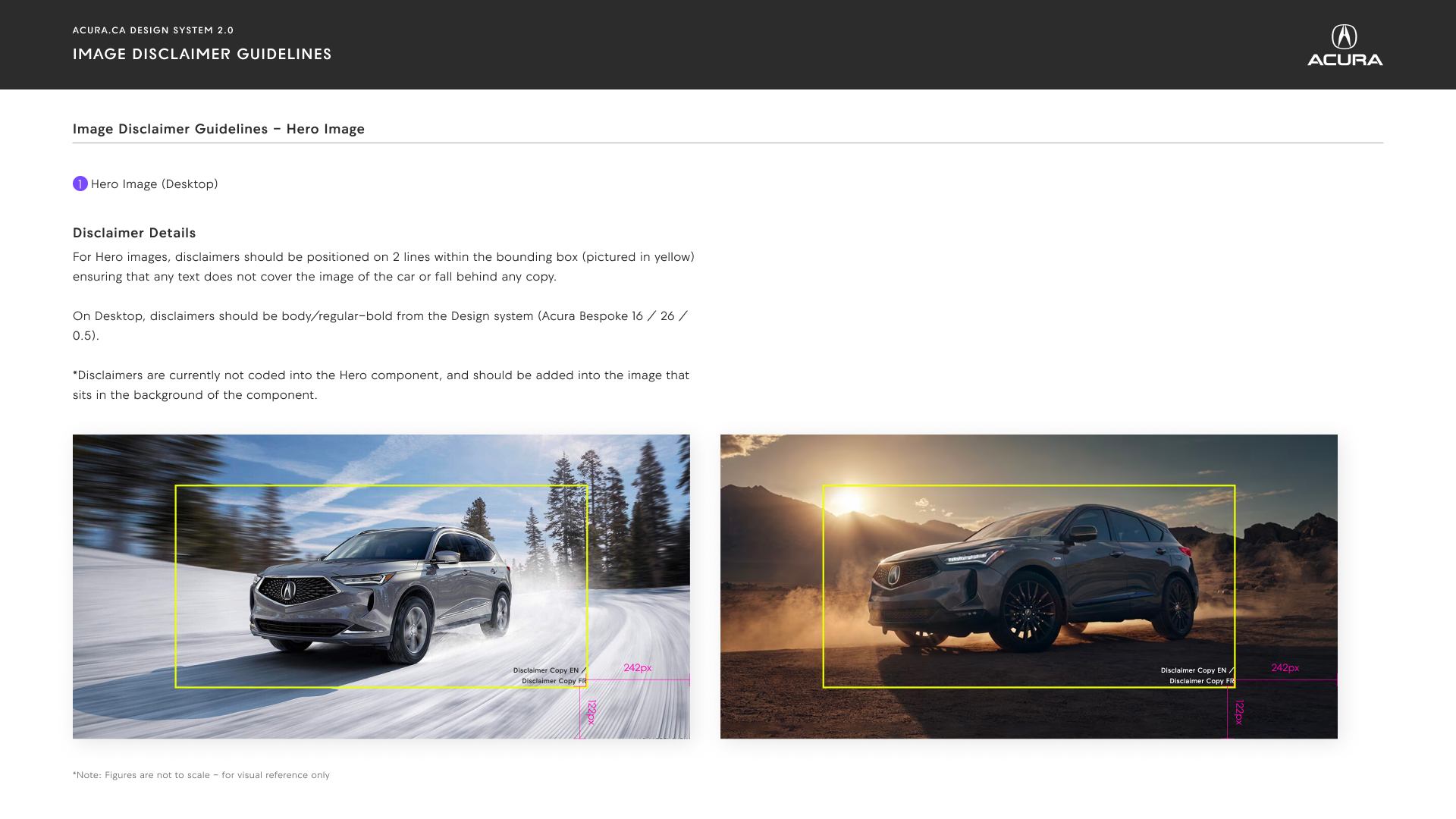
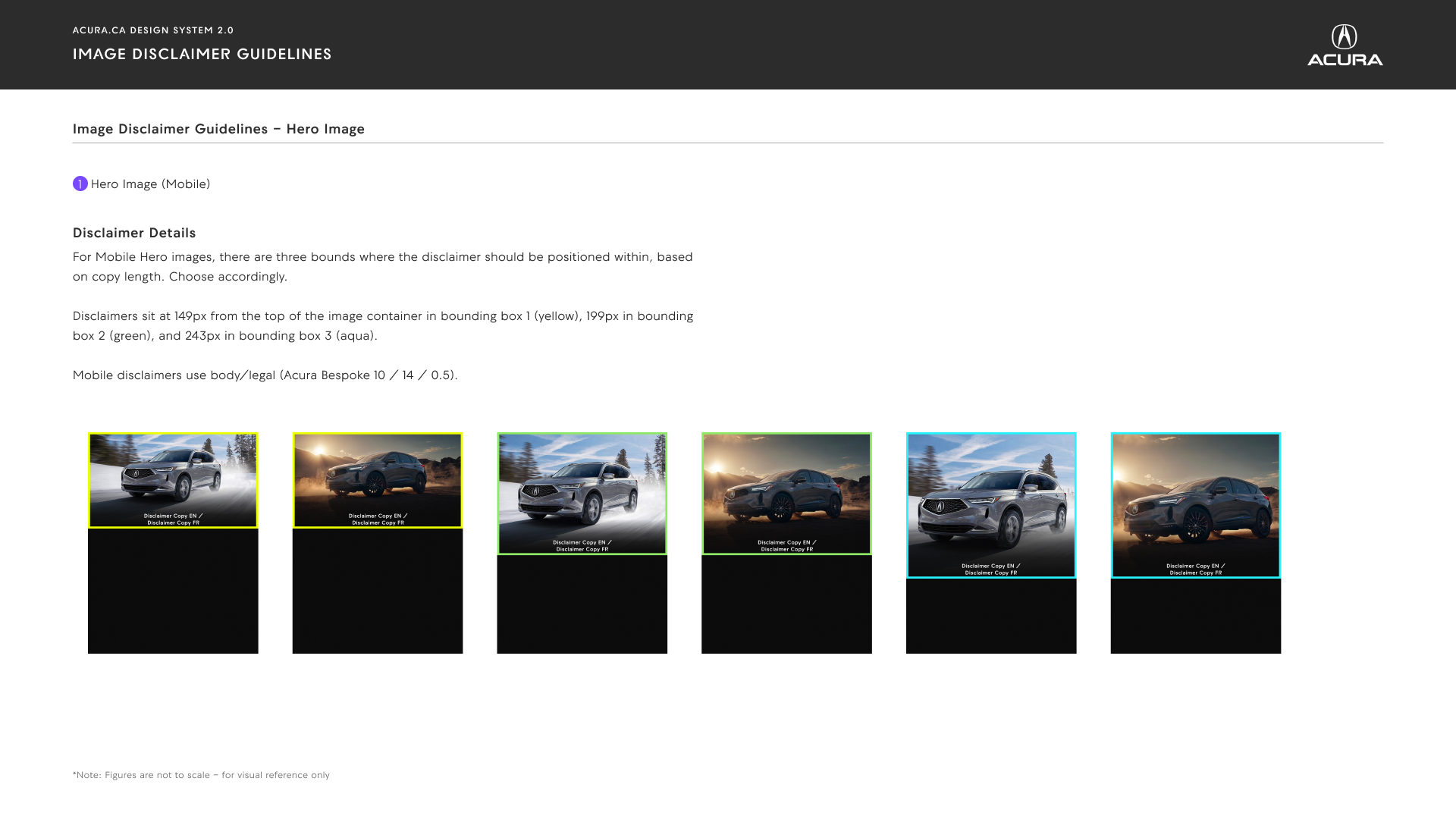
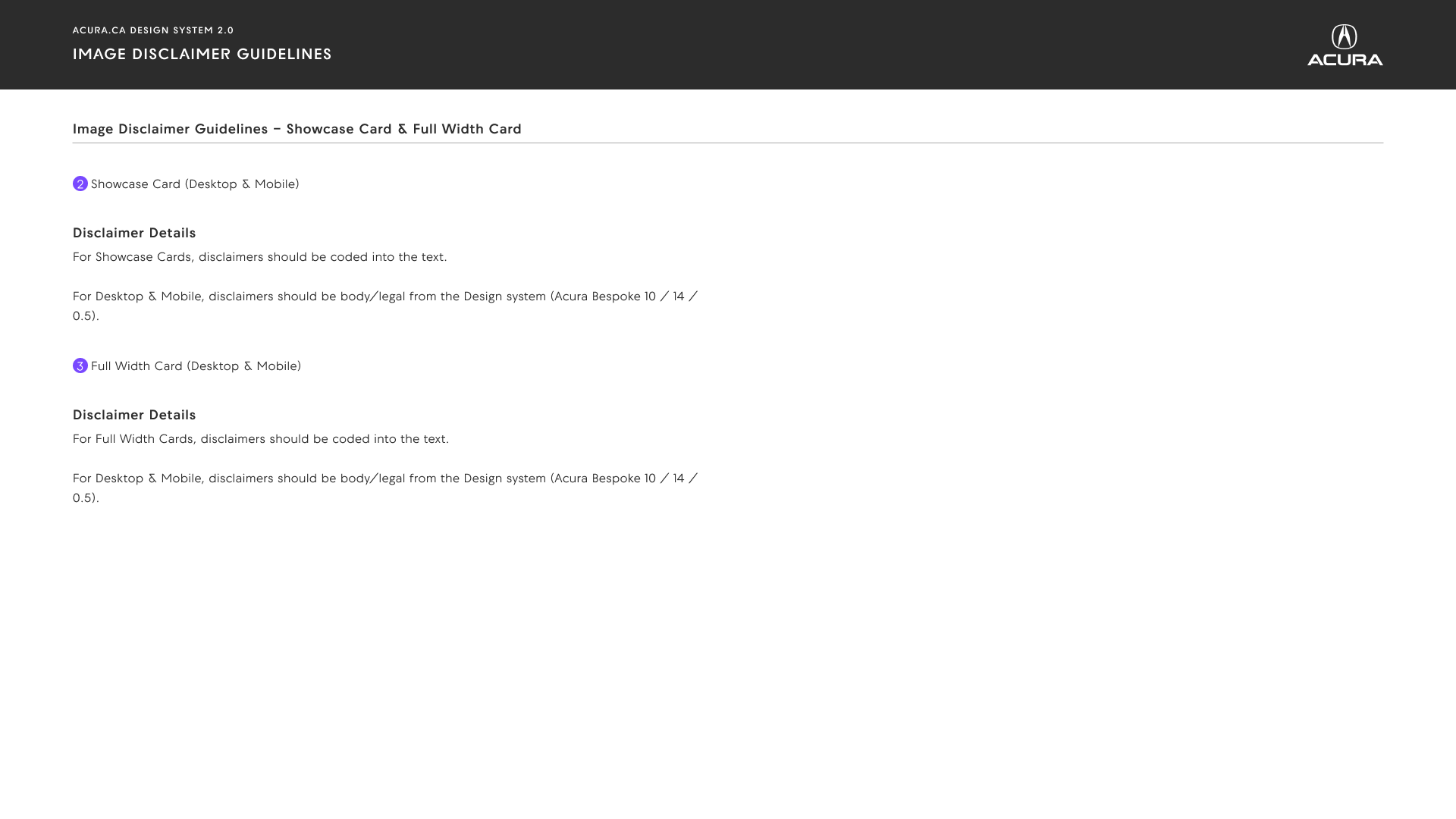
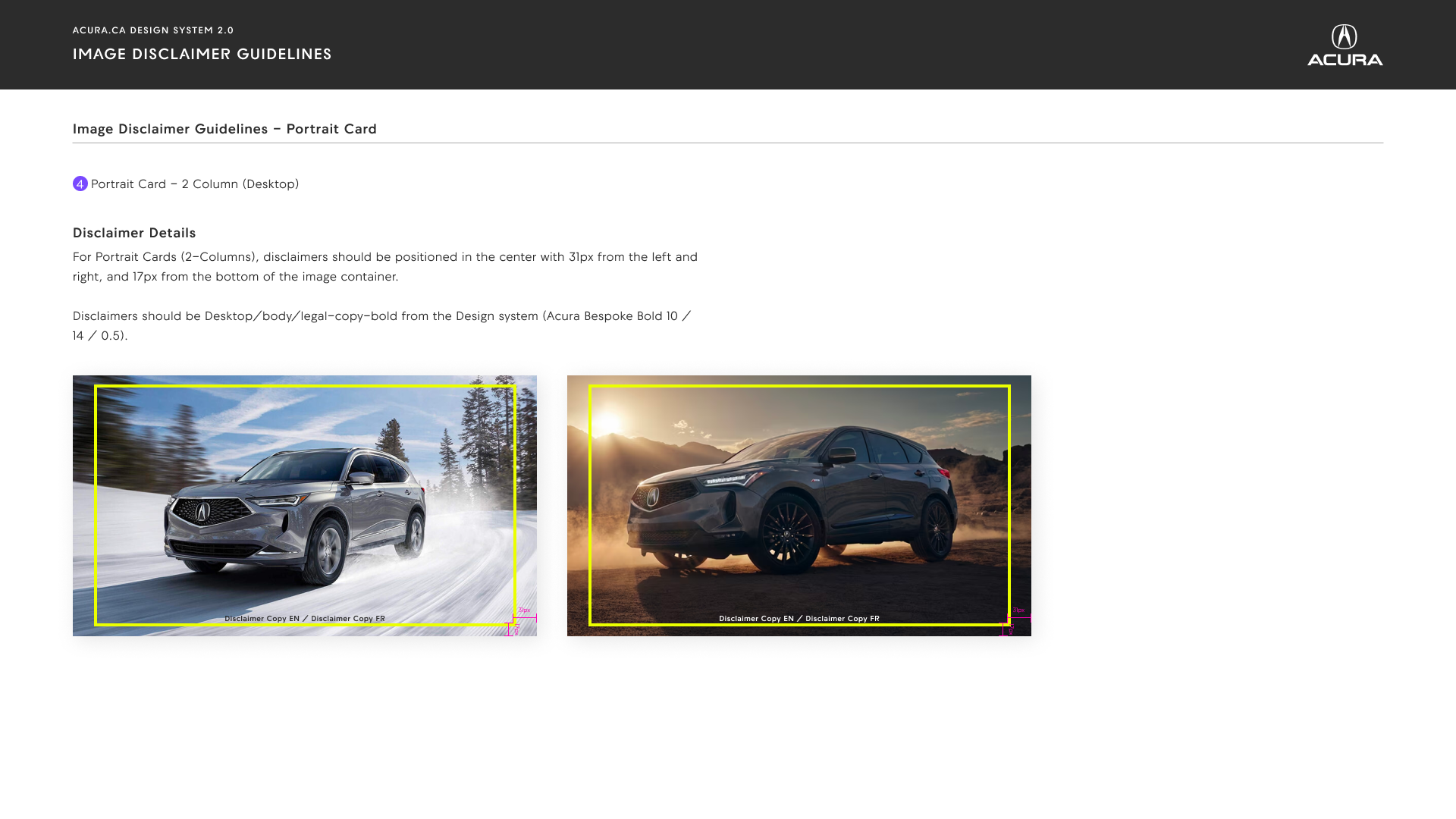
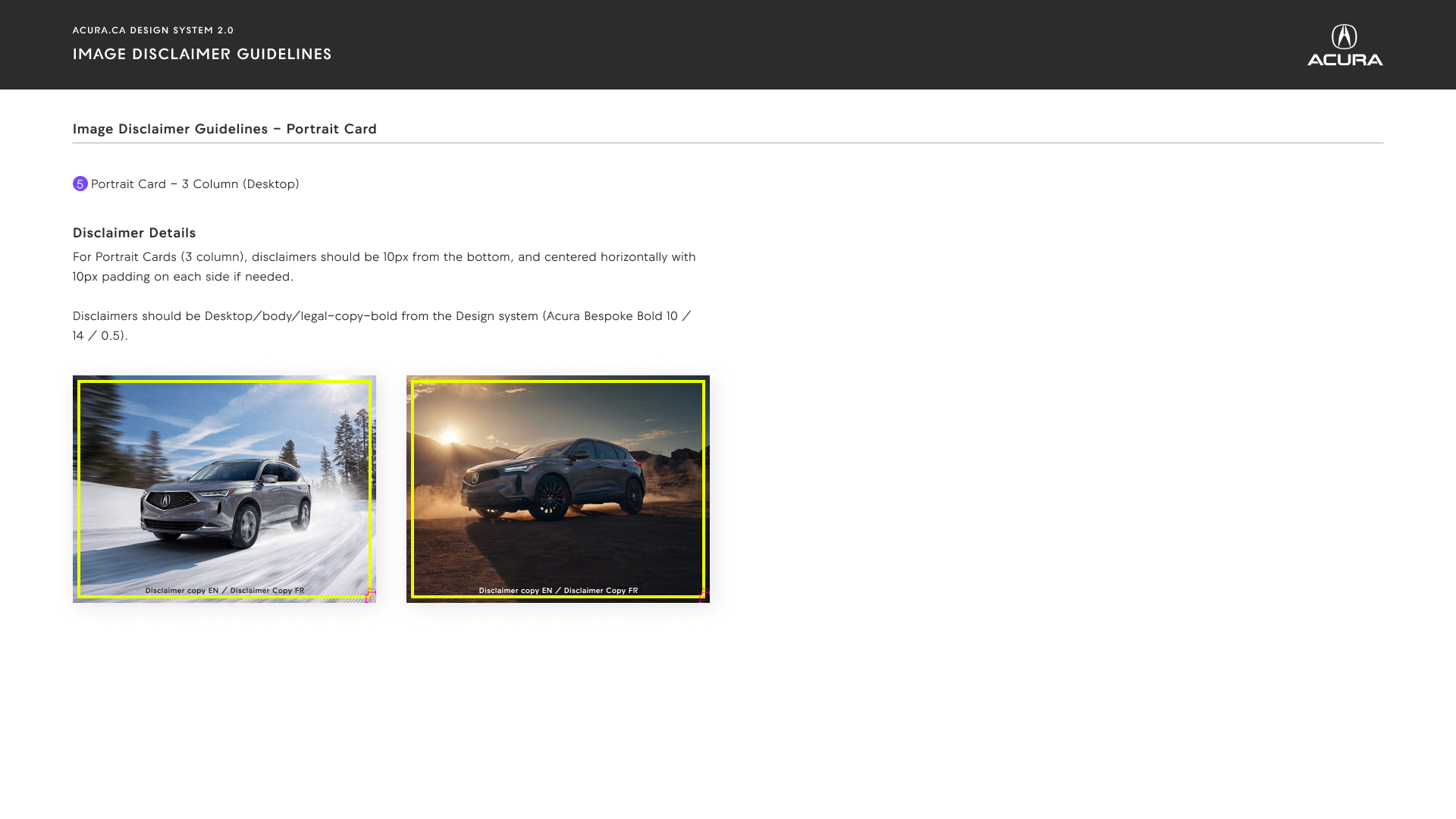
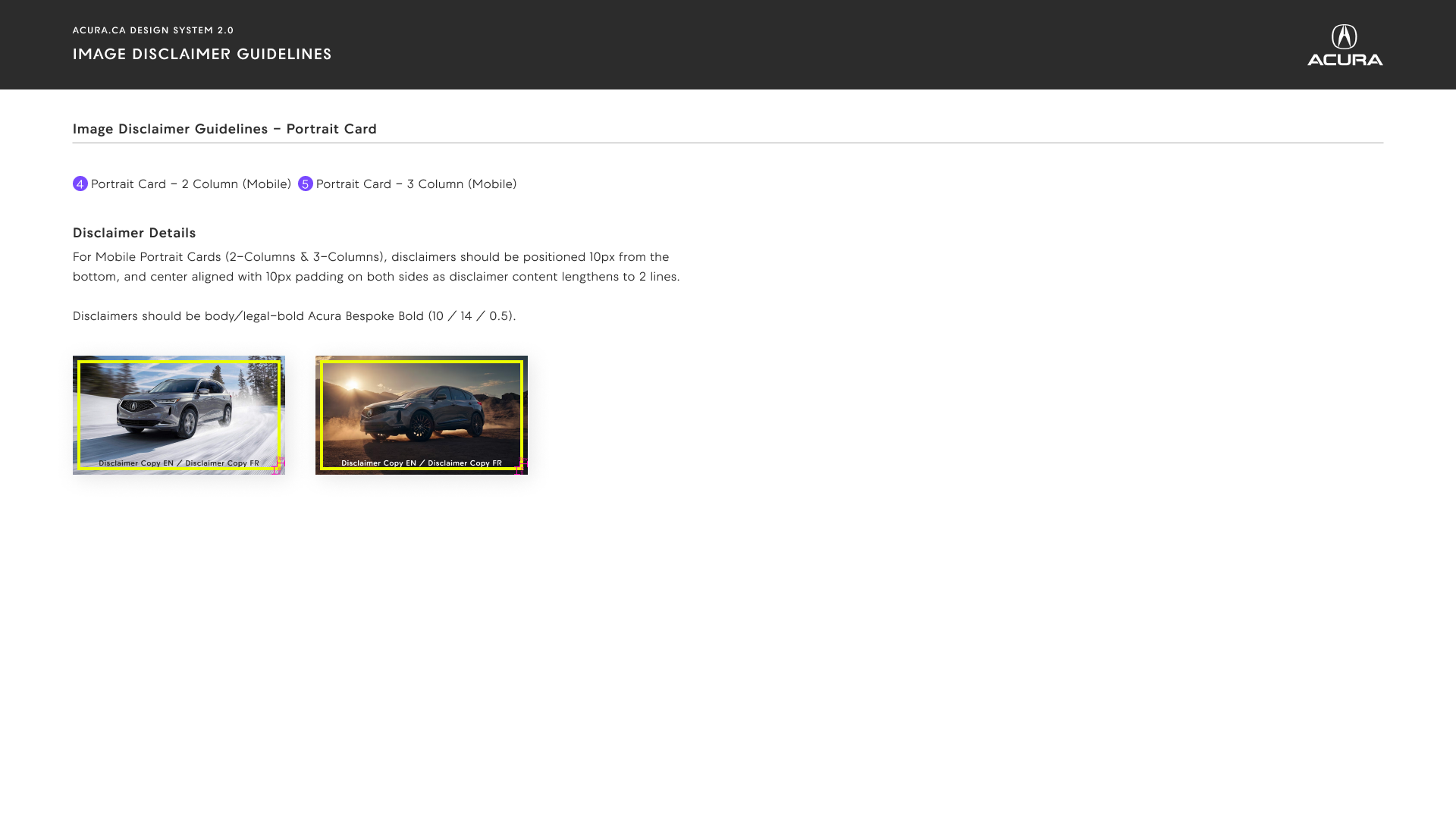
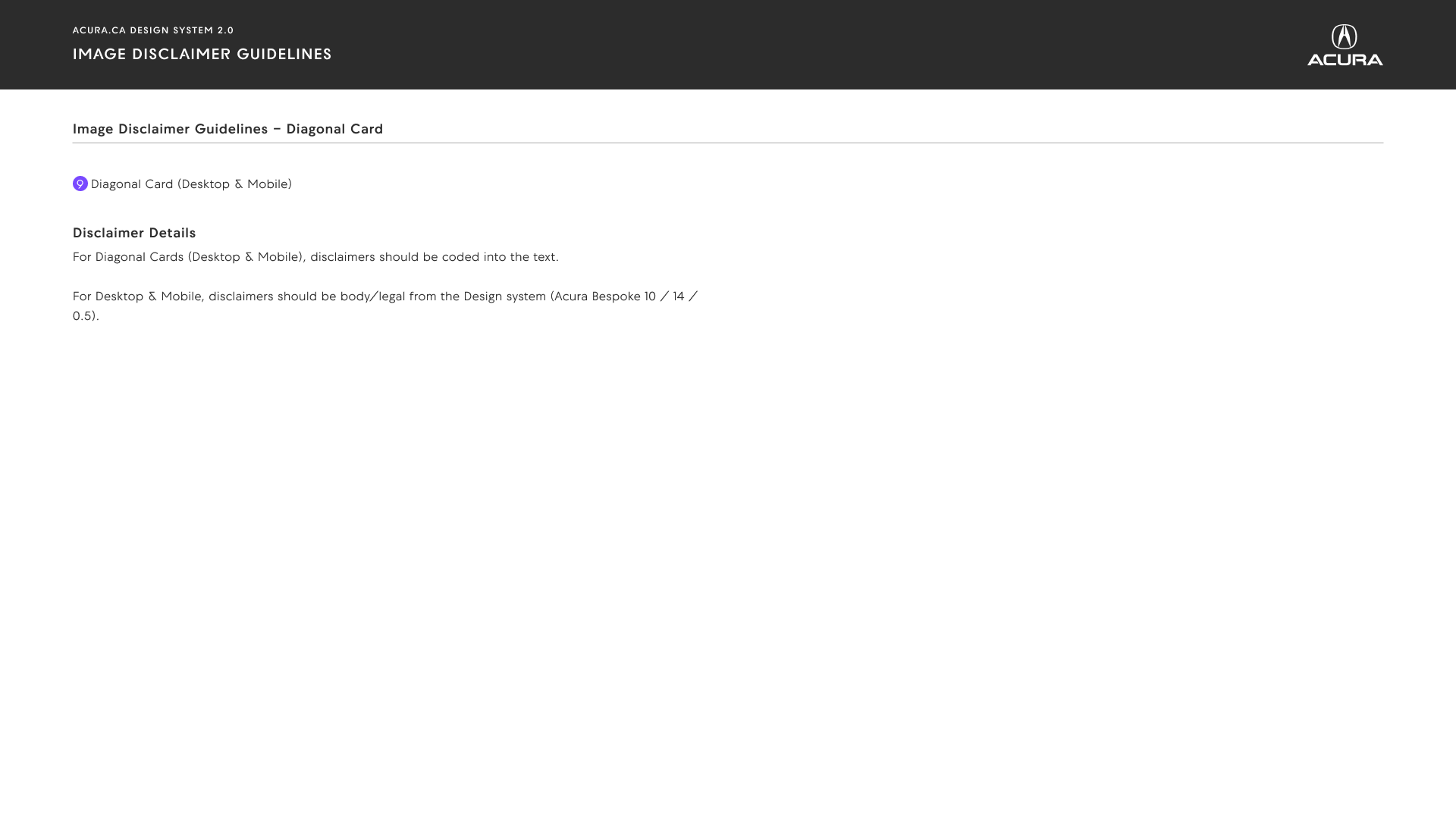
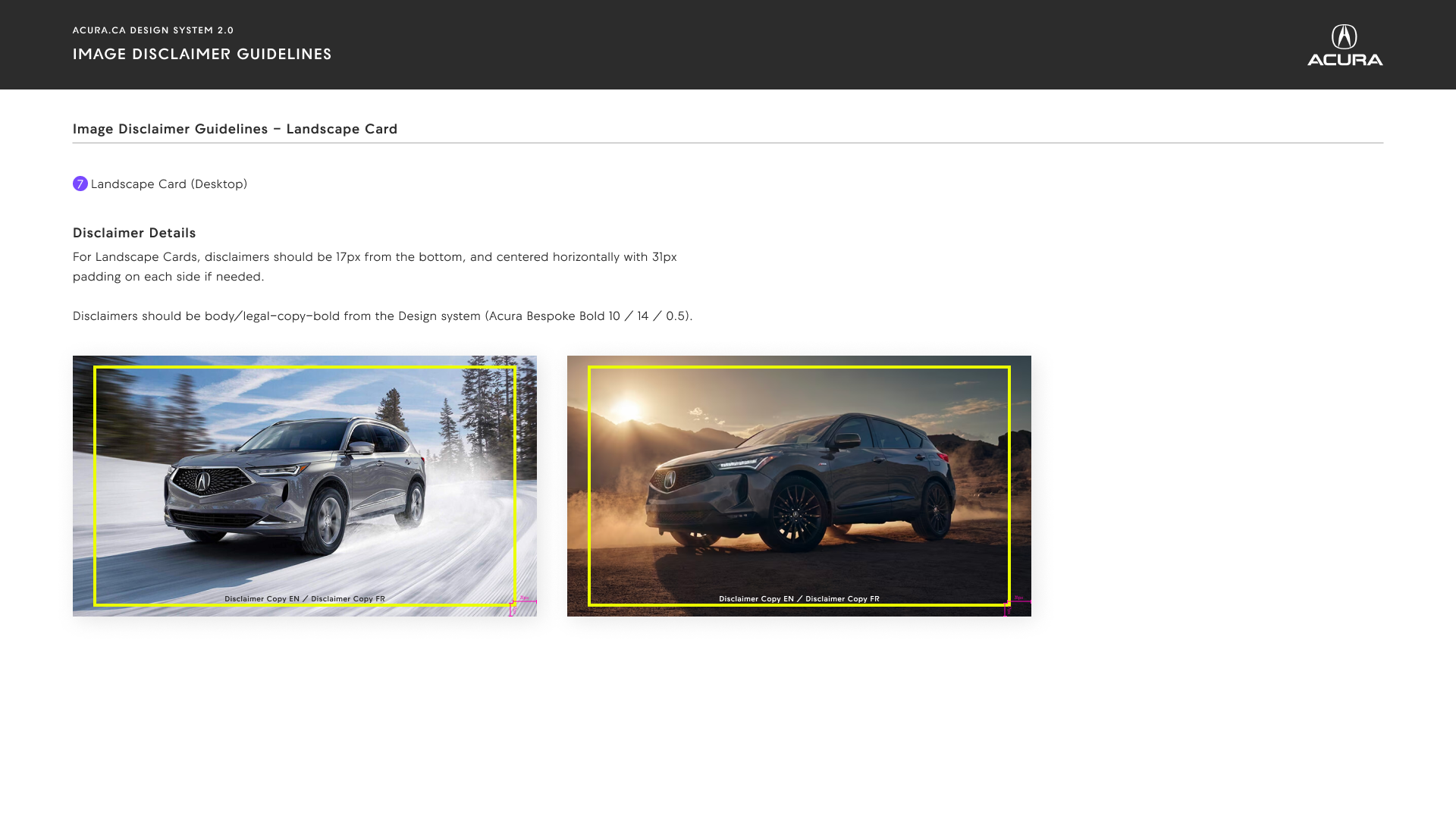
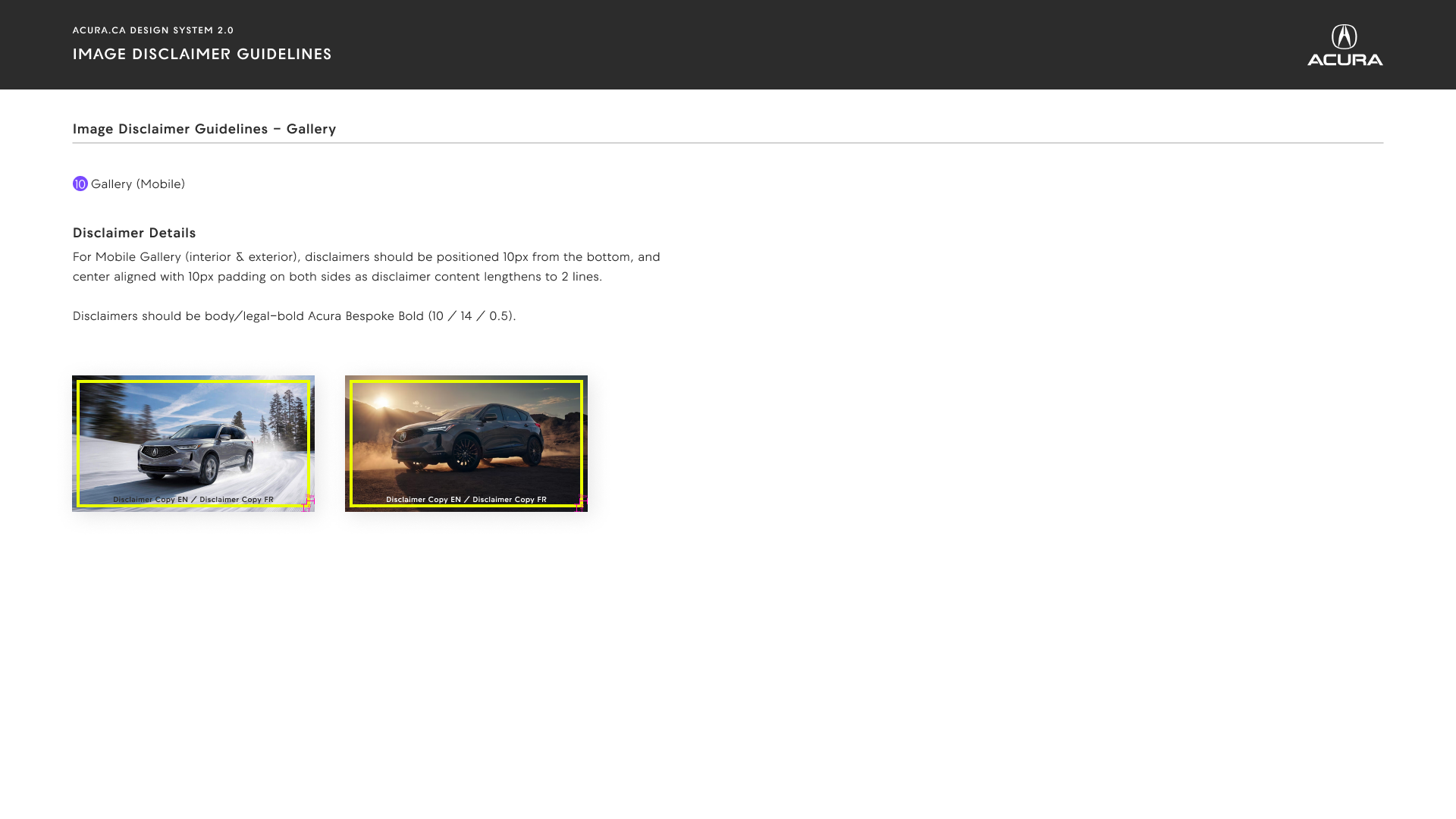
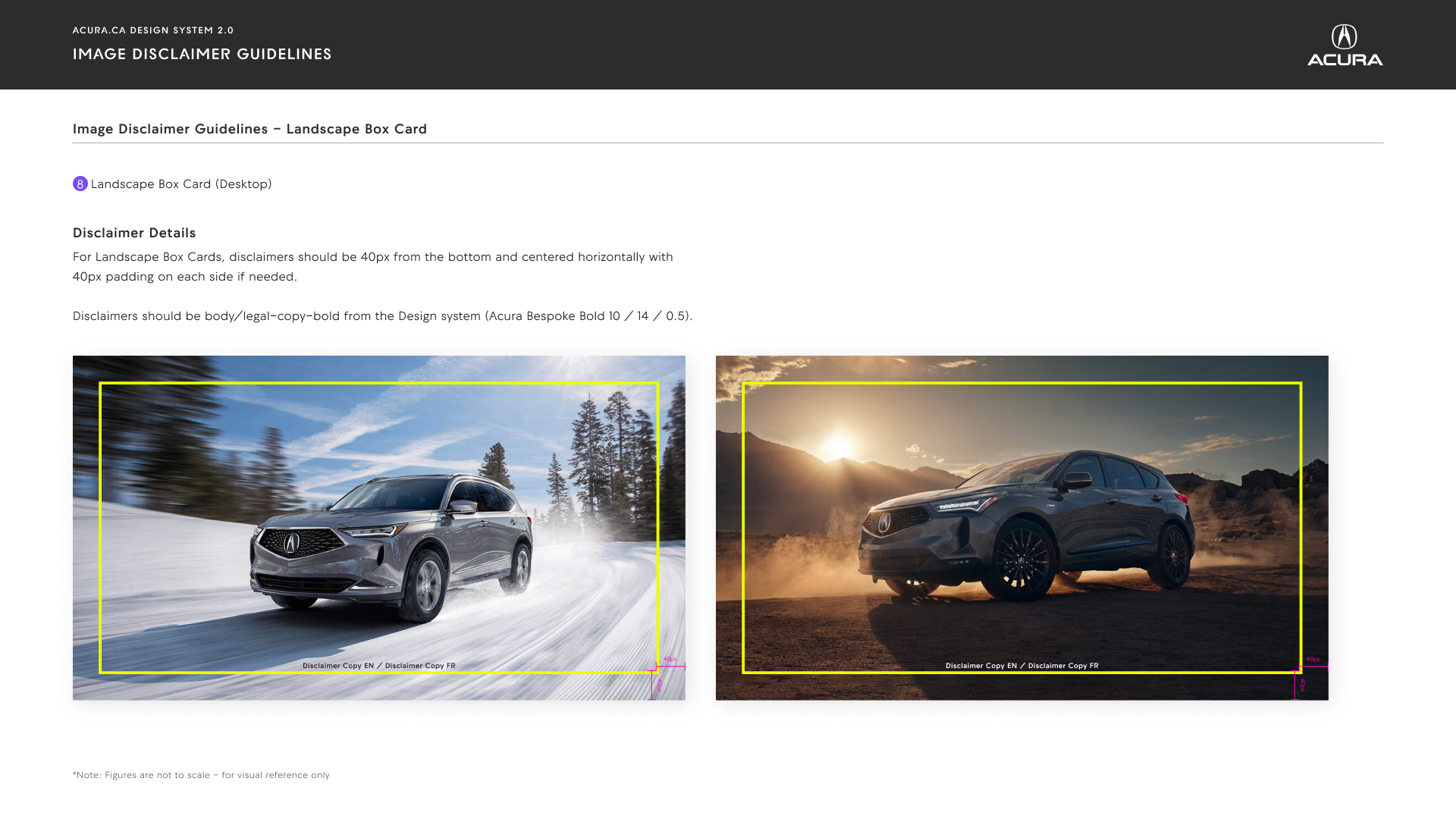
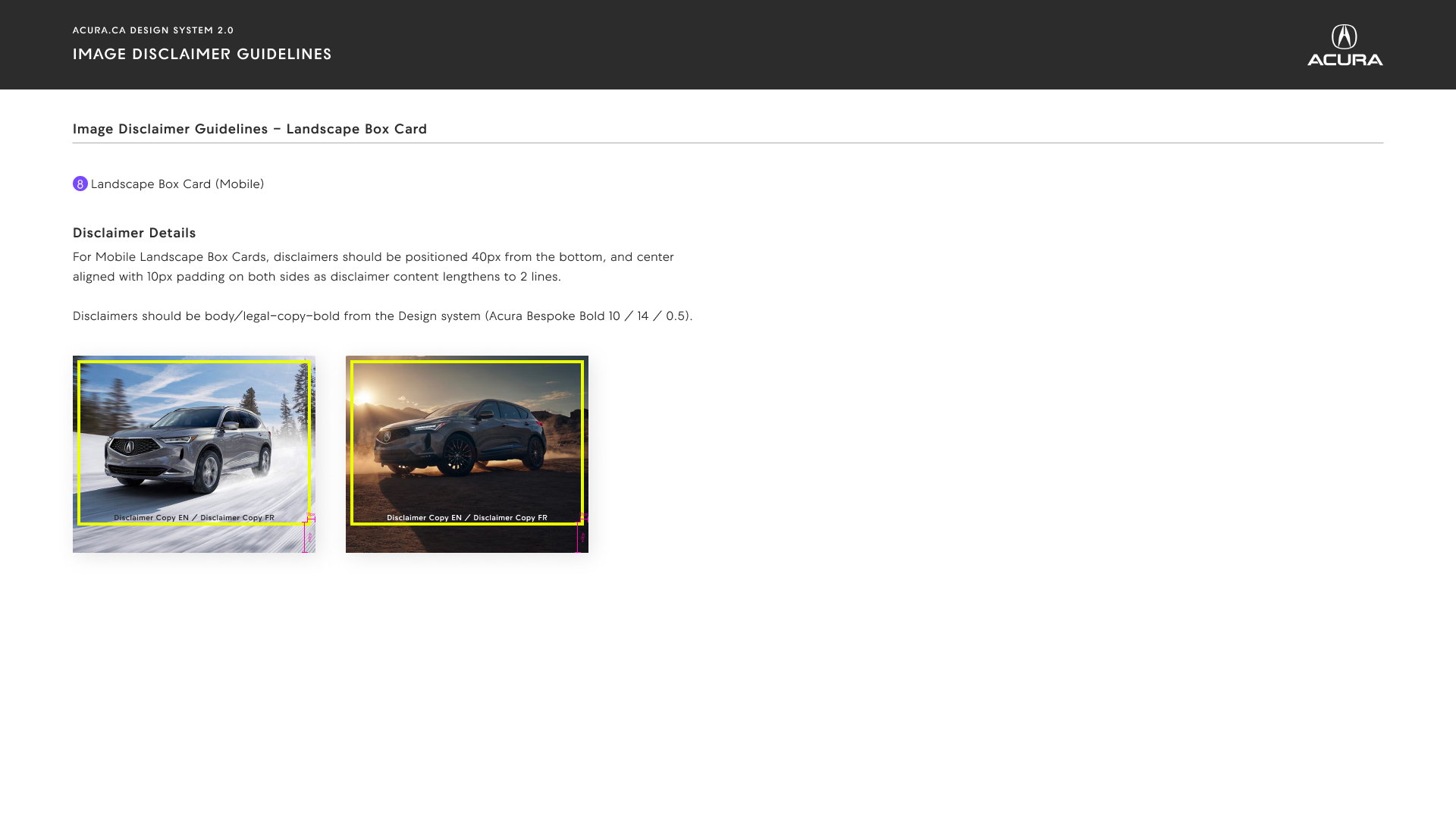
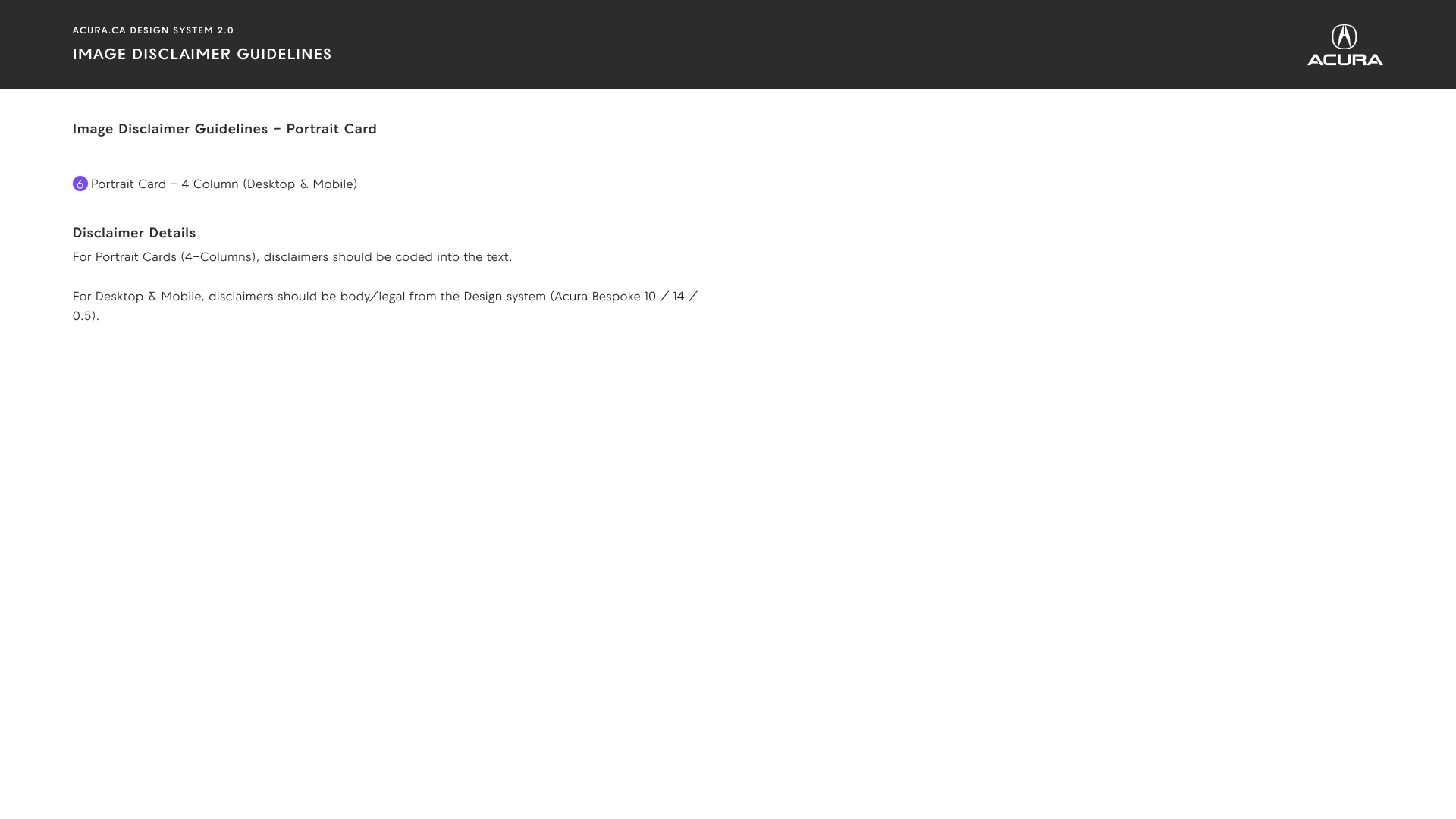
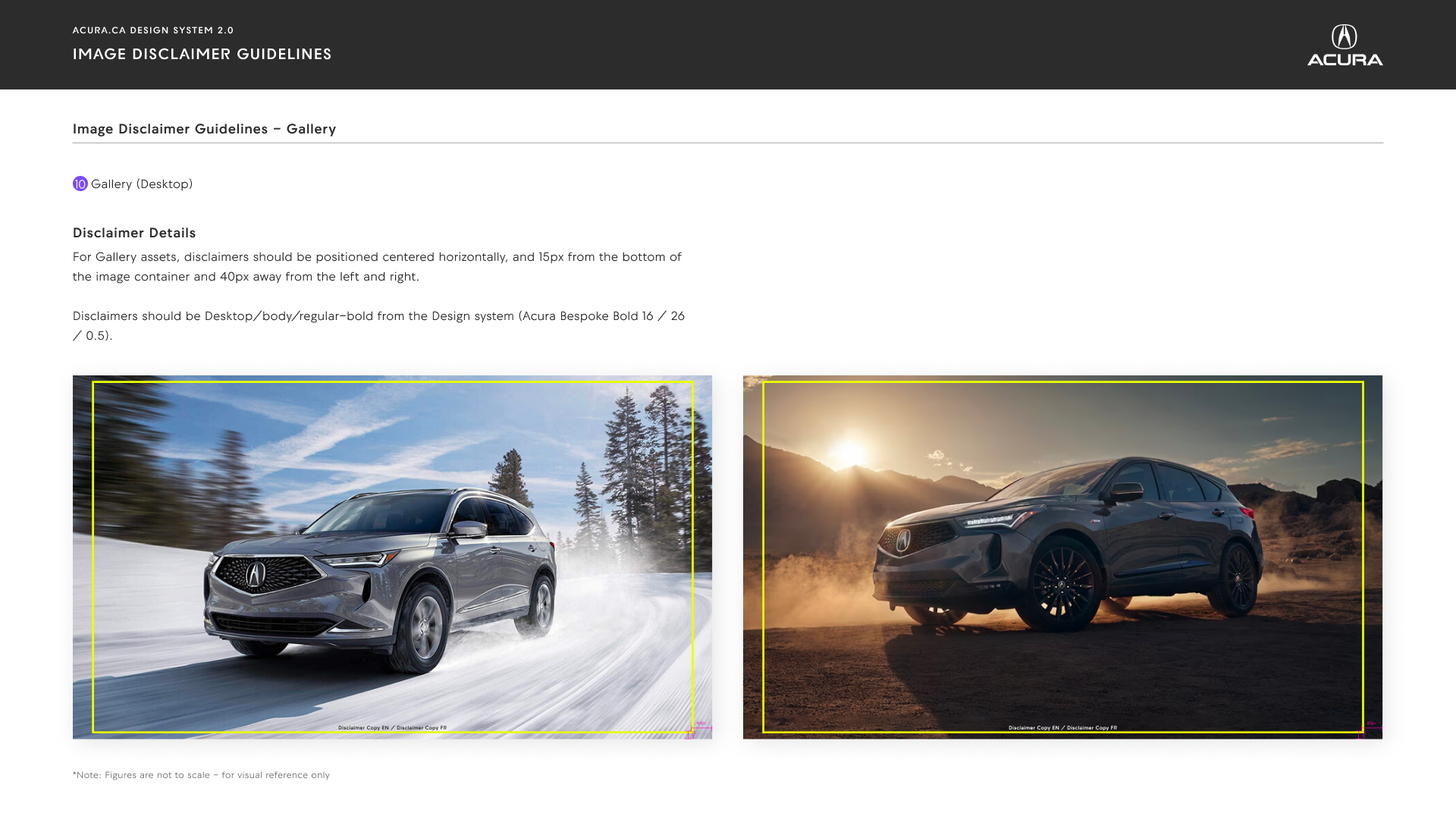
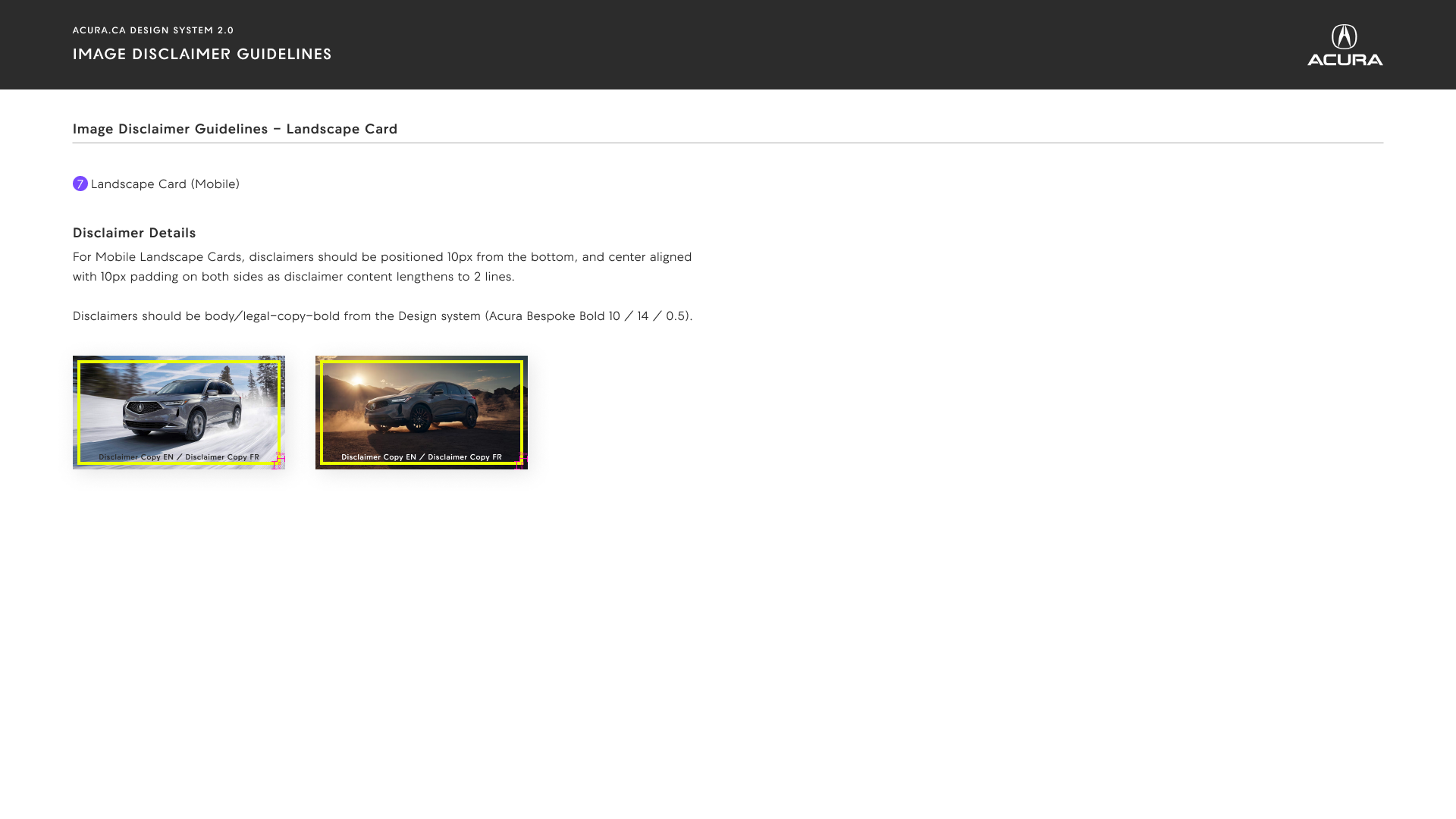
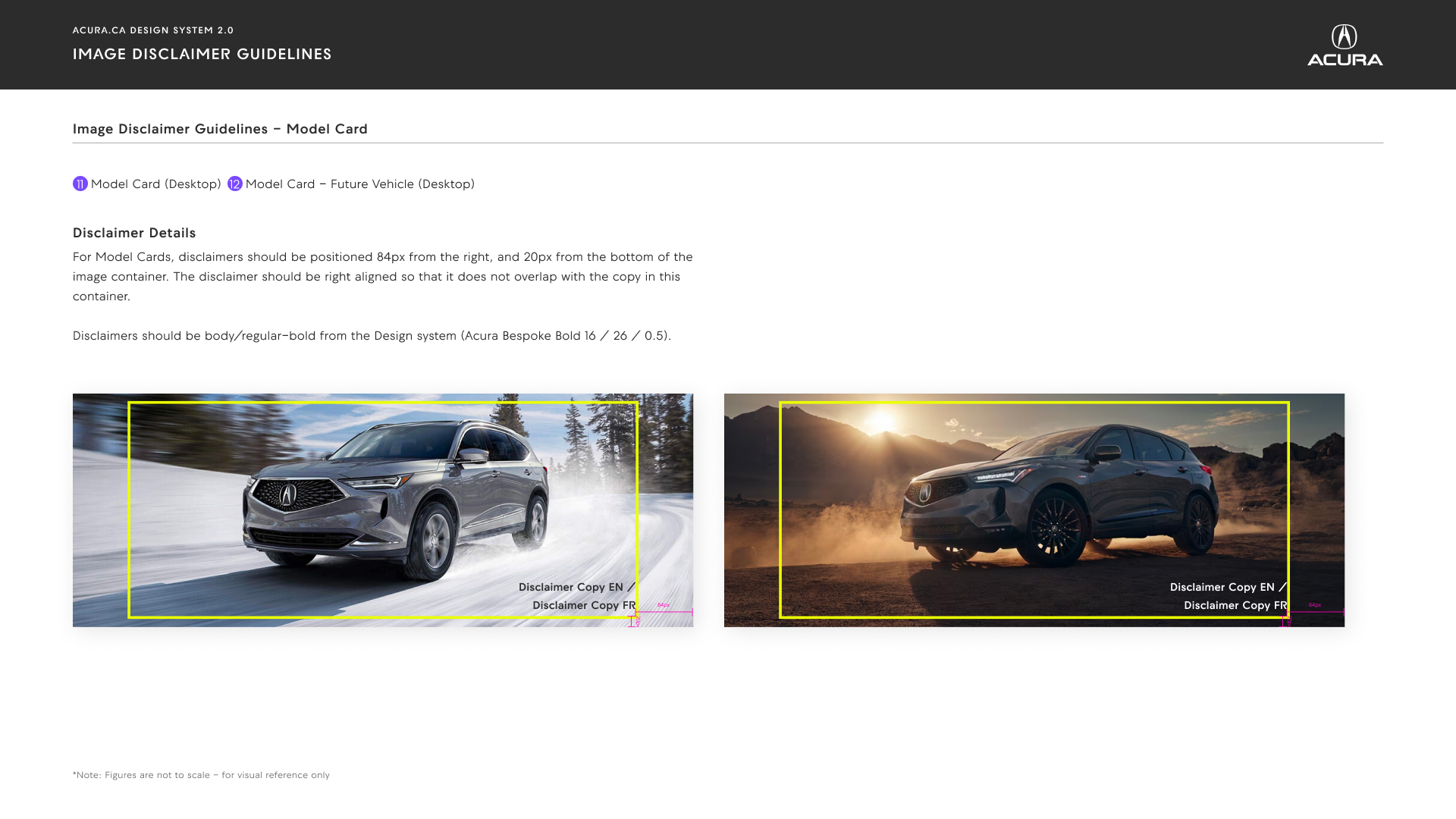
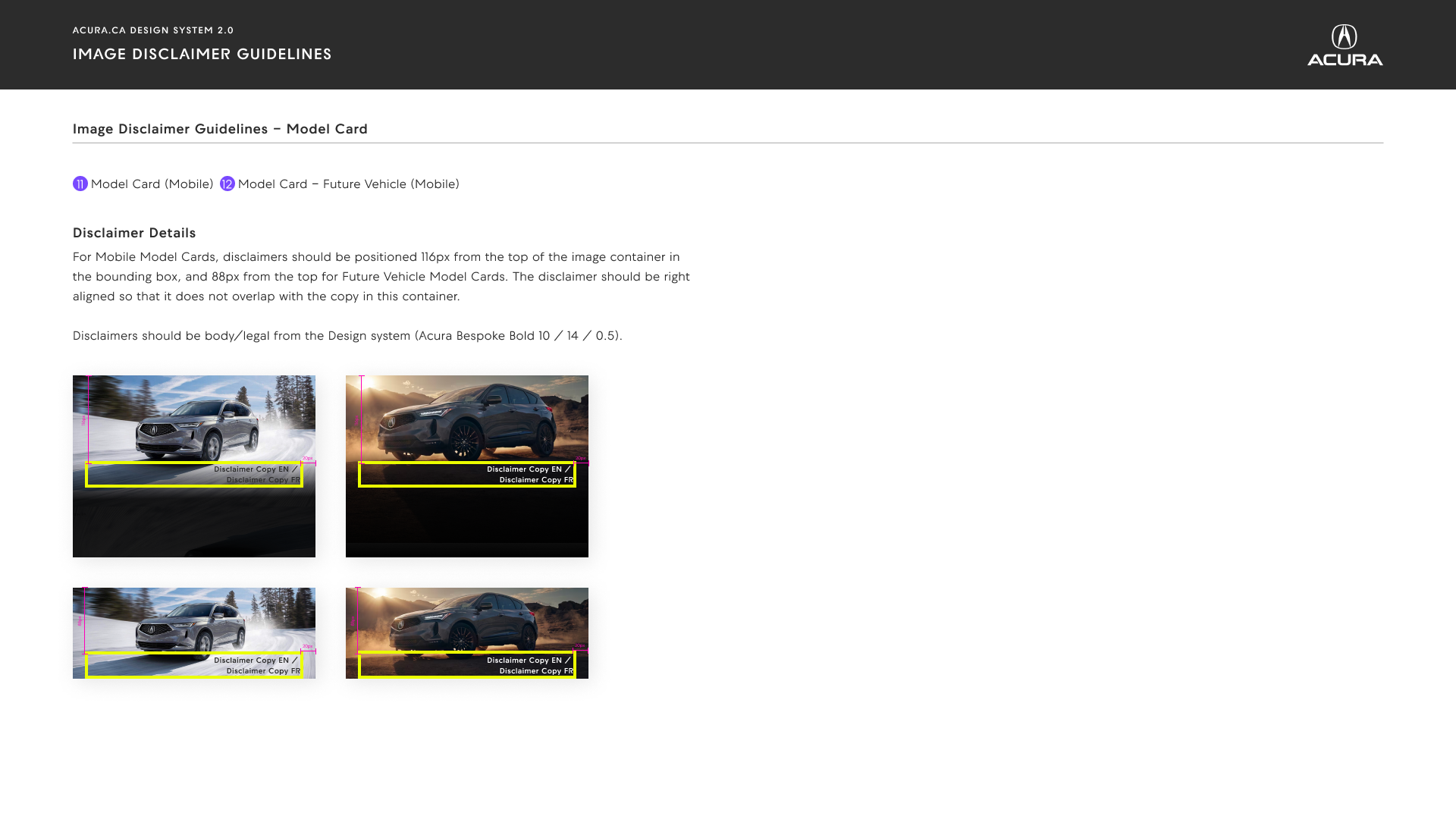
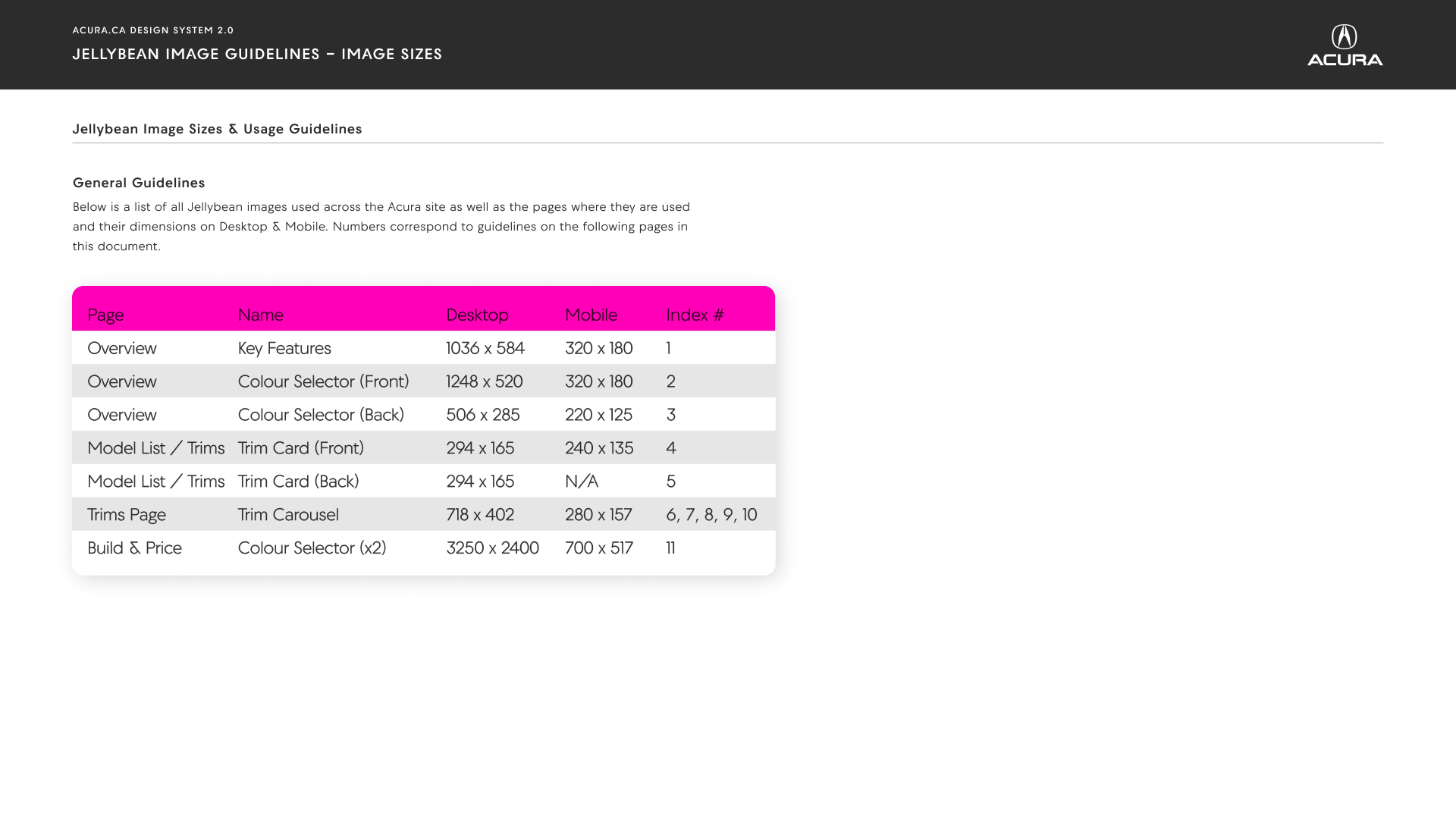
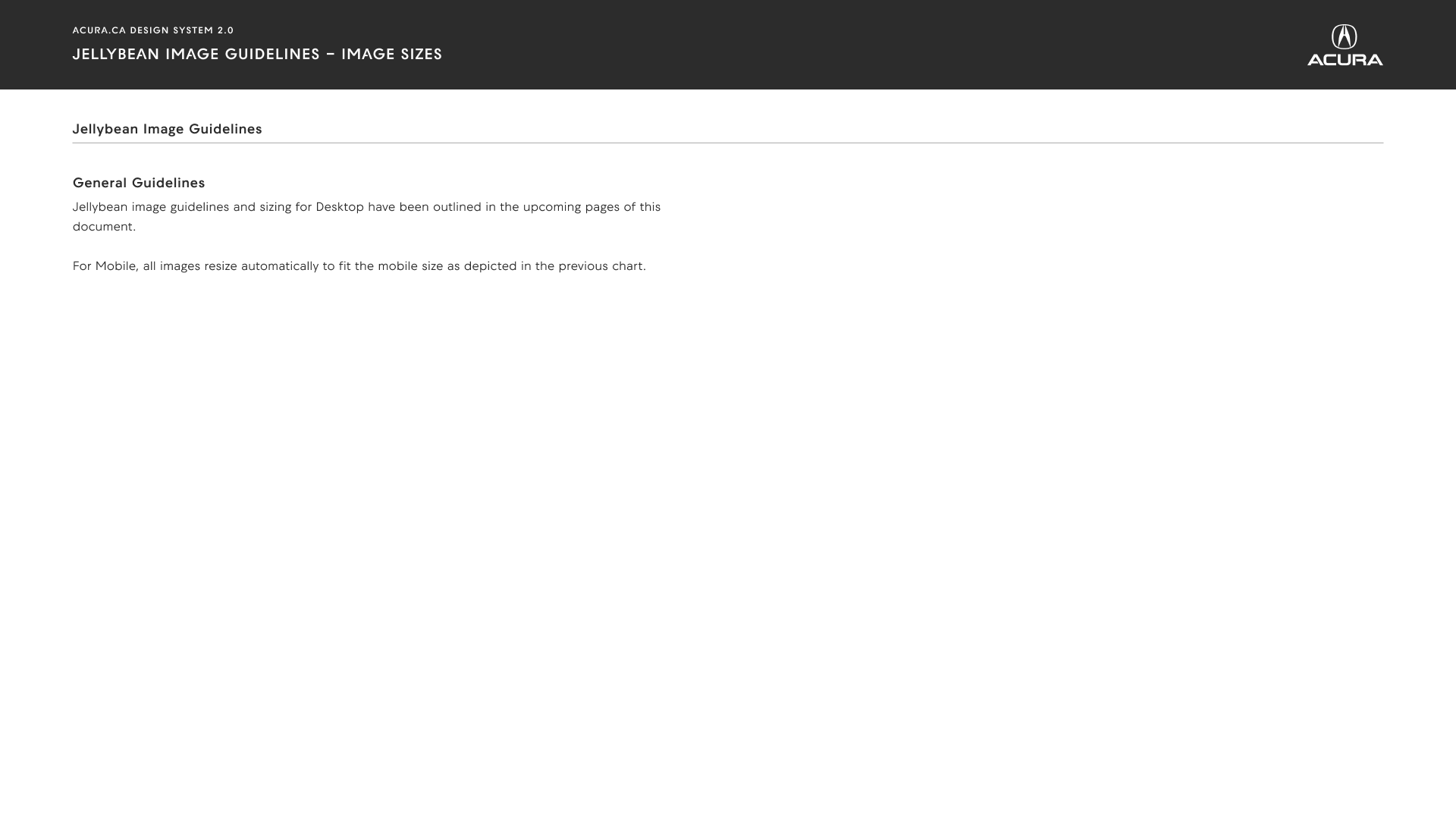
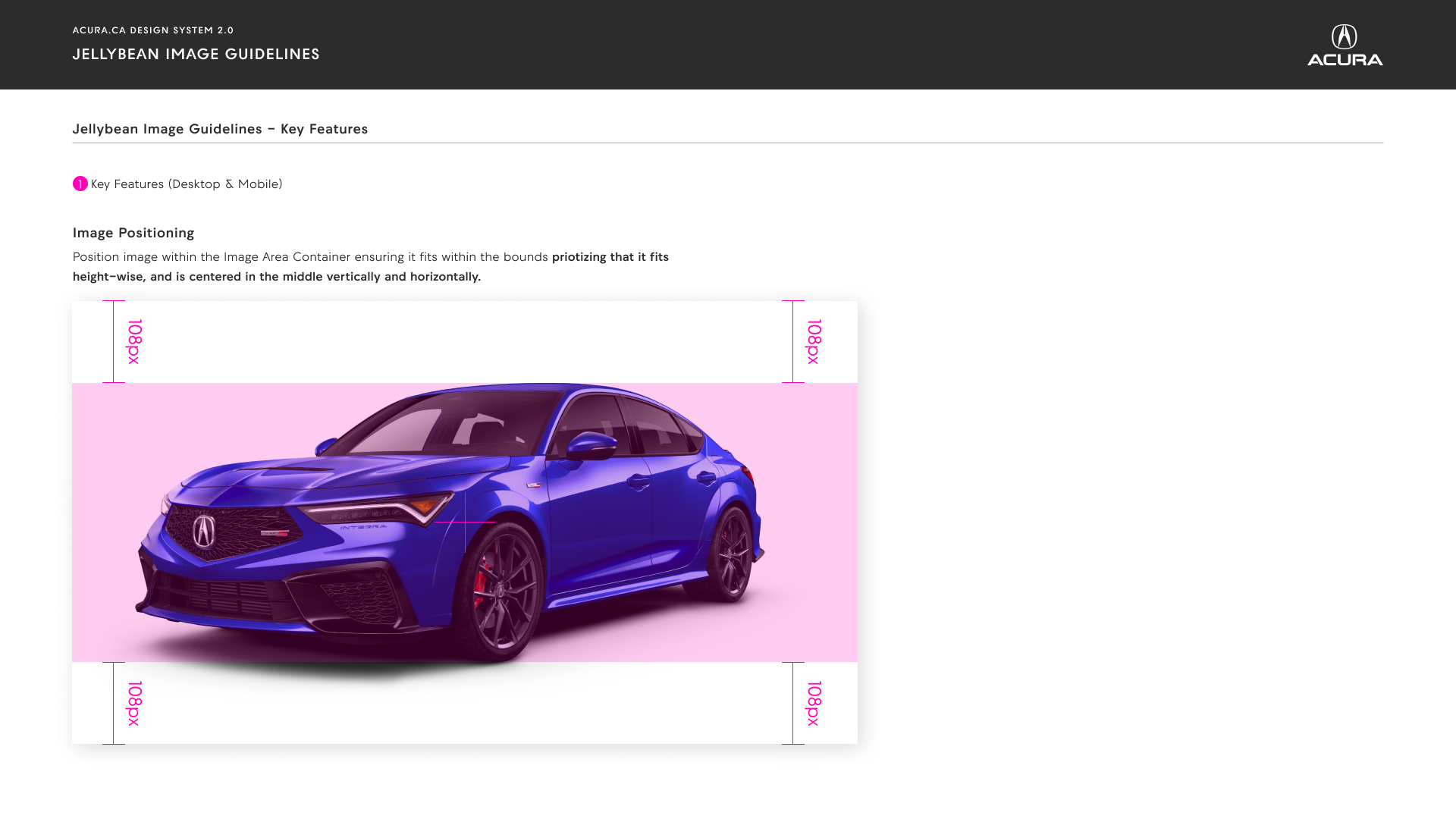
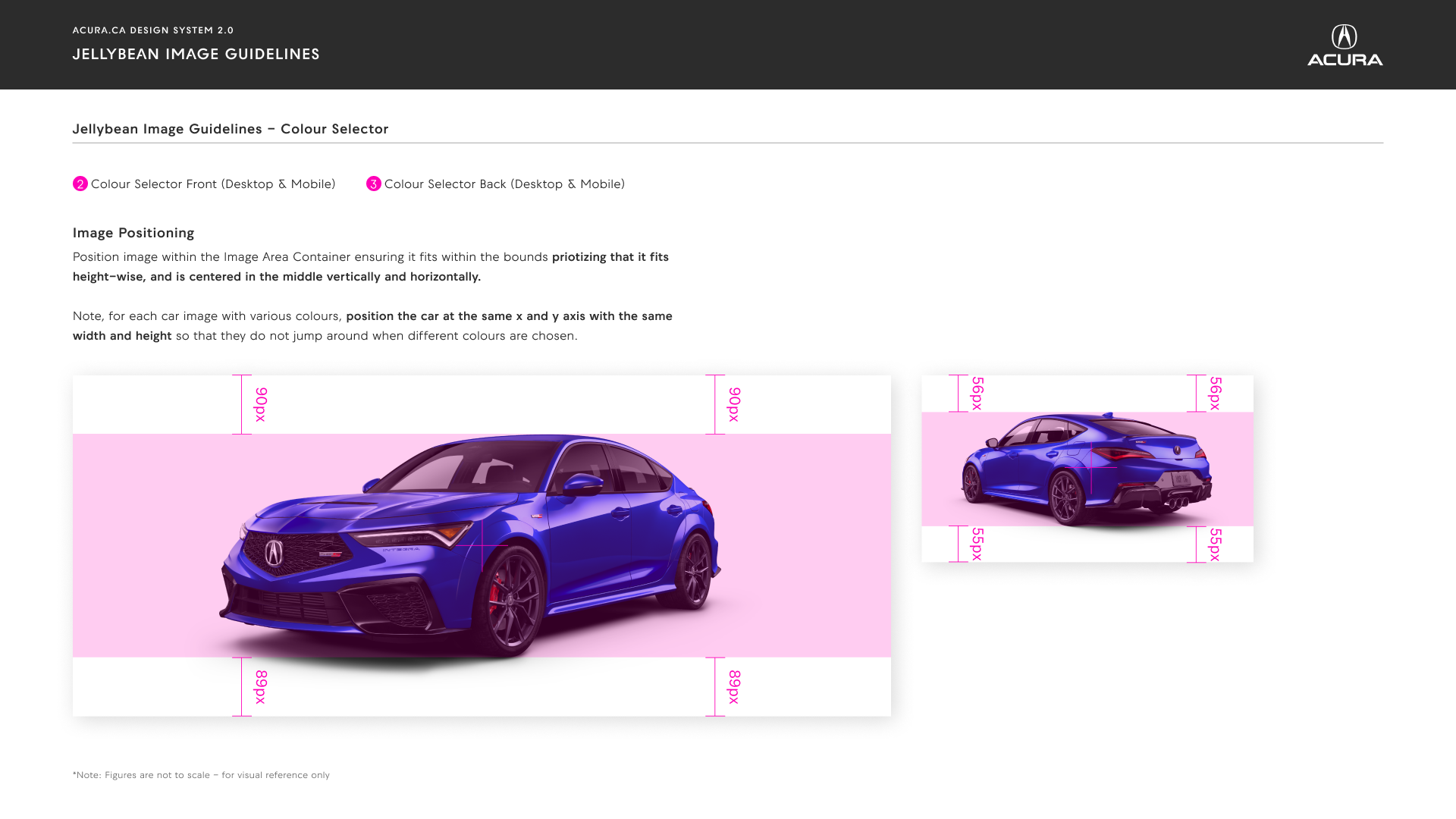
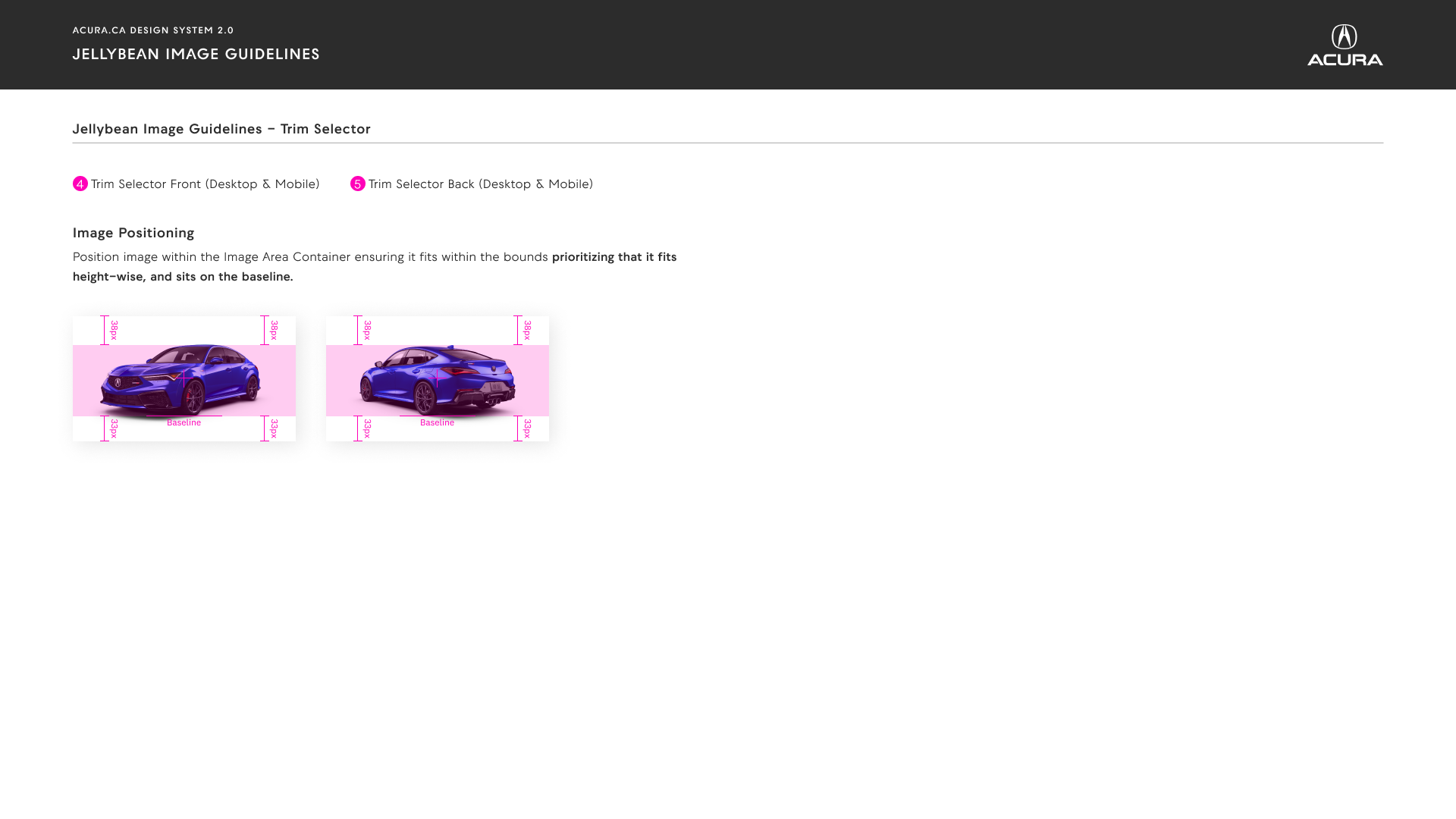
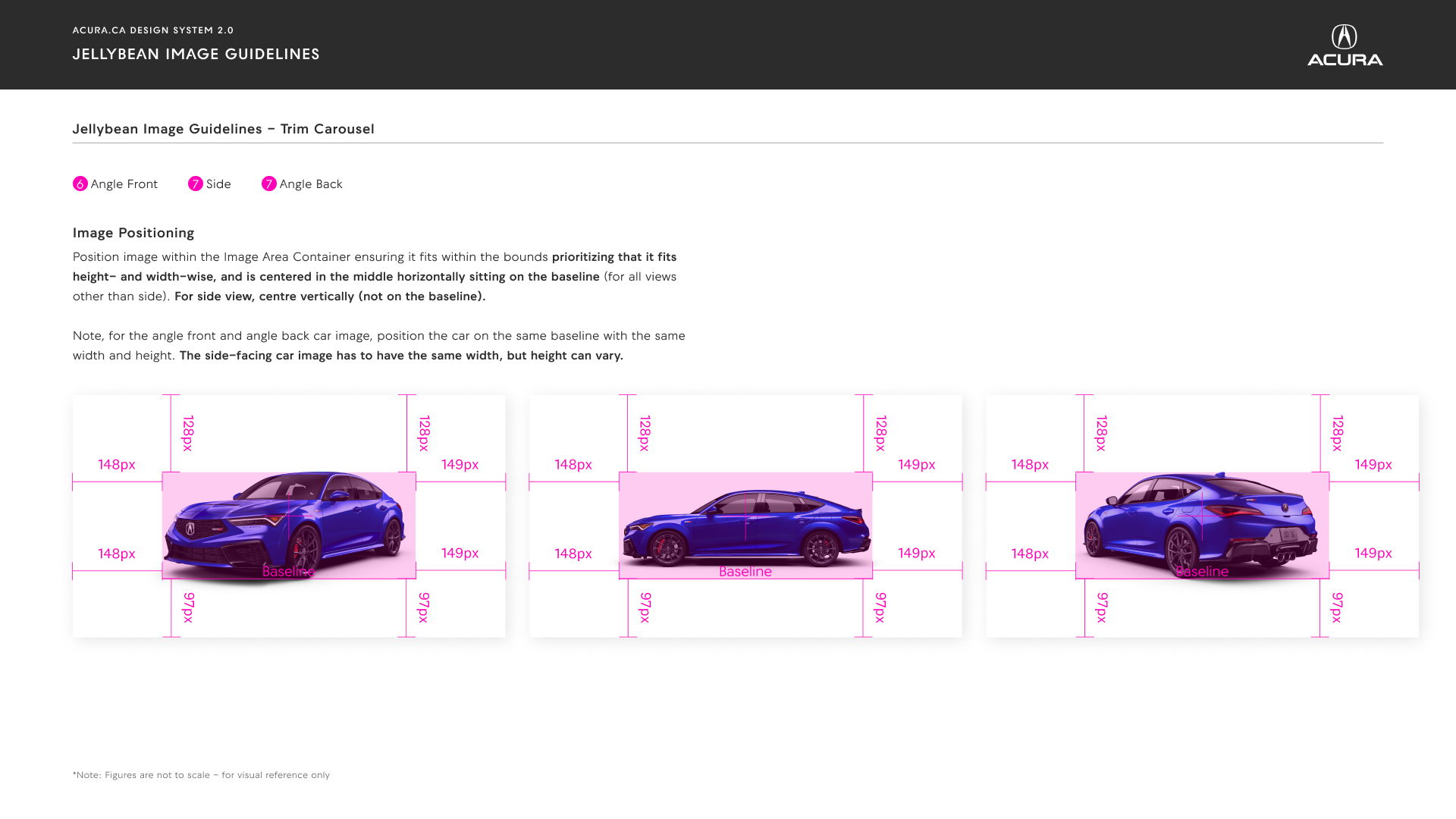
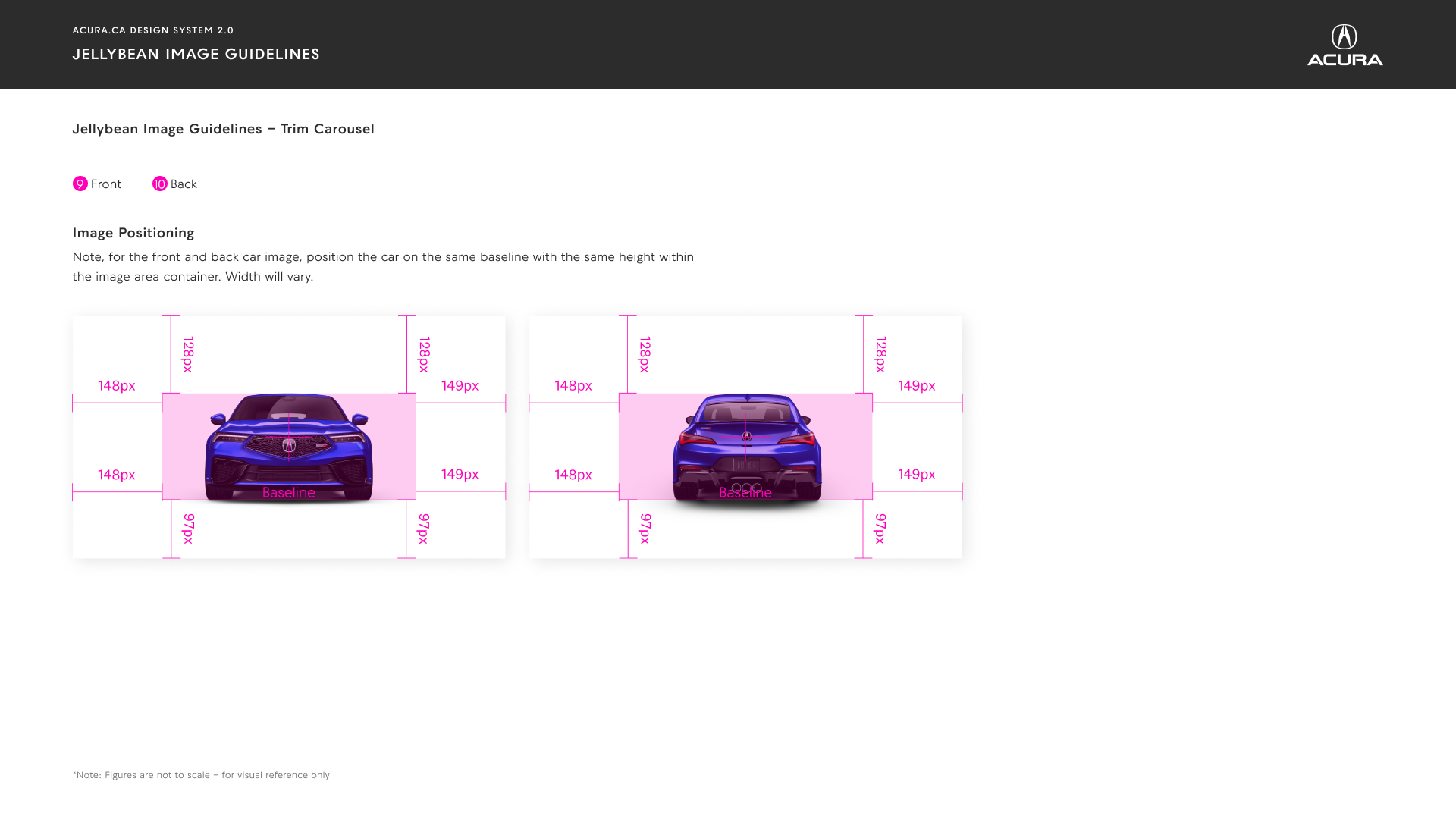
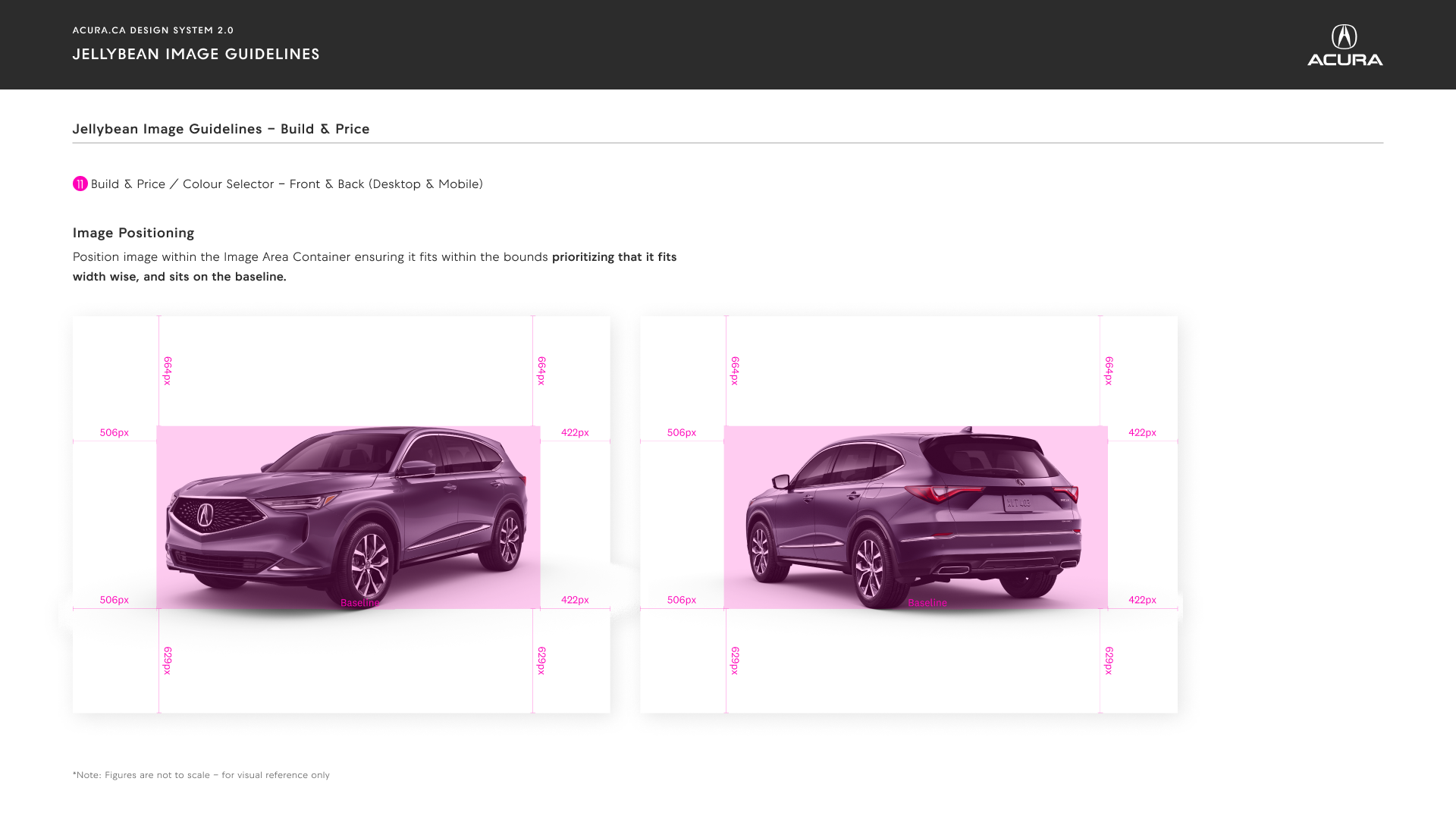
I was also responsible for designing and updating new components as needed.
For example, the Hero component needed to be rebuilt. Based on the way it was coded and the systems being used on the back end to compress images (among other things) the hero banner was a consistent pain point for our client.
Every single time a page was designed, it had to be re designed multiple times, images had to be exported and re exported and the whole process was costing too many resources. The project had also been worked on for at least a year however never implemented as a solution that worked for everyone was never found, and there wasn’t time or resources to build it.
So we re-designed, and re-built it.
I led a team of two to do all the research (looking at past iterations, competitor sites, as well as industry standards), re-design the component, present to all stakeholders (internal, client side) and build out all guidelines for the dev team.
We also re-designed the client’s authoring tool so that all designs could be exactly what the user would see on the front end.
The process was very long and we went through a lot of iterations. We looked at the hero component from the users perspective but also from our users perspective - the clients perspective. We were also working with an external dev team, so had to ensure that the build was done right throughout the whole process - Everything was coded properly from the back end, designed properly at the design stage, and then once designs were approved, the client was able to implement the designs one to one using their authoring tool.
The biggest challenge was responsiveness.
So to get buy in from the internal team, the client, the dev team, we had to do a lot of research. Internally, within the industry, and with this client specifically, the want was typically something that was designed with an editorial feel, so everyone wanted to maintain that. But they also wanted flexibility.
On top of that, when we brought over assets from their US counterpart, and took into consideration how everything worked on digital, accessibility, & responsiveness, what they had was just not working.
To get buy in we had to show them what the current drawbacks were, and how we could solve all of these challenges with a new design of the component. Then we had to mock it up in every possible version so that they could see if it would work for them.
Research & Iterations
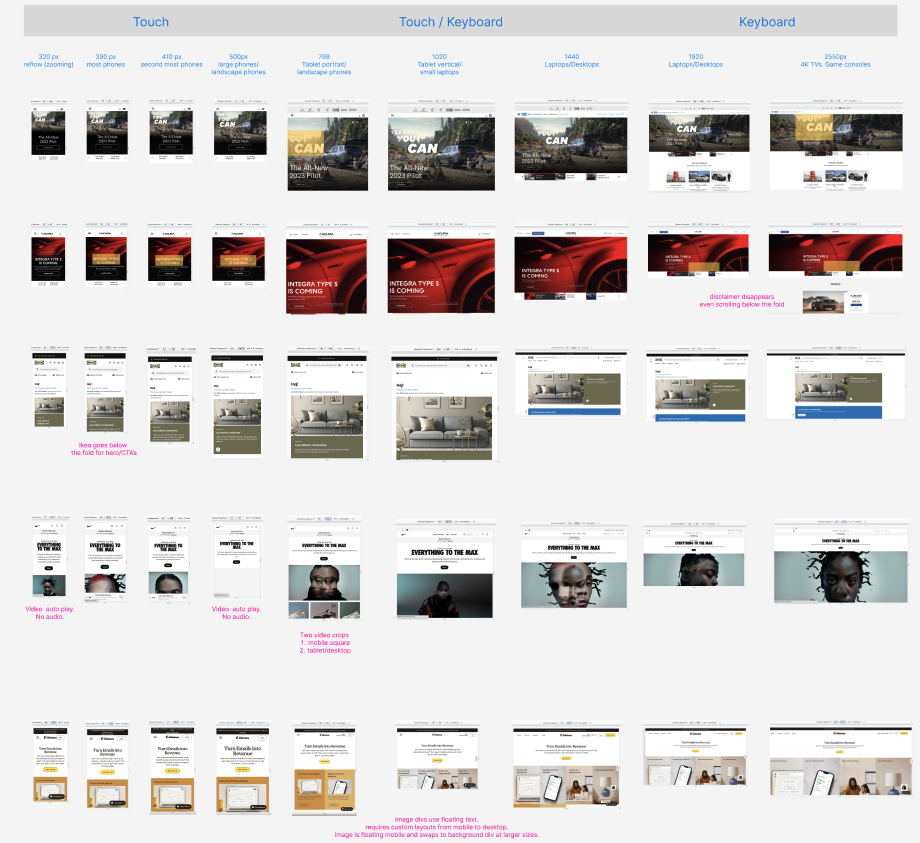
Responsive Stress Test
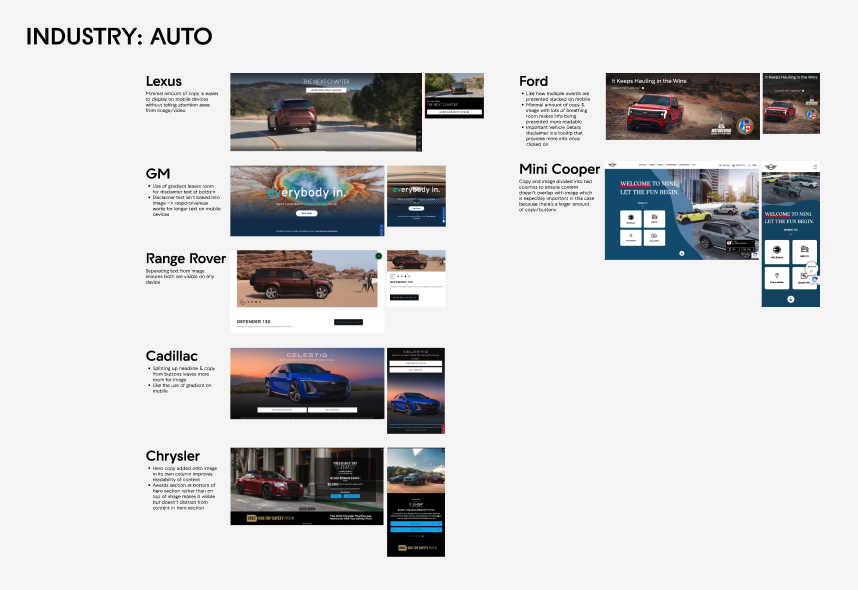
Industry Research - Auto
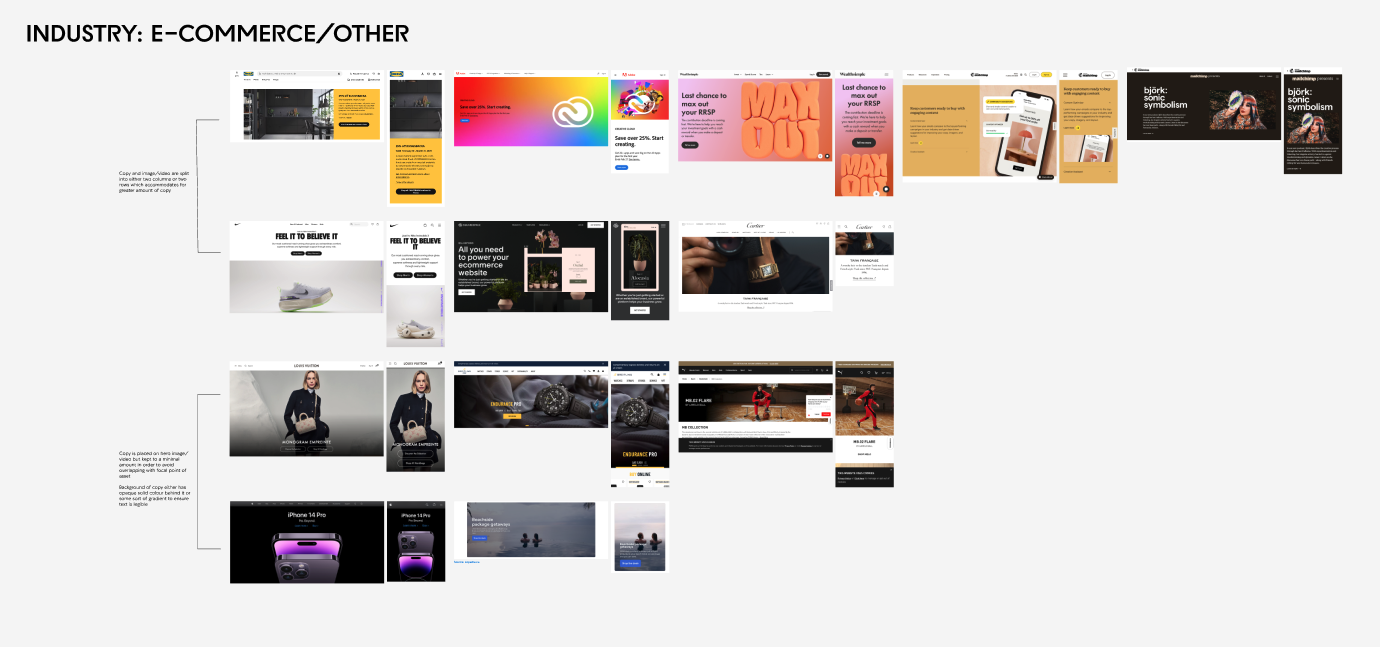
Industry Research - E-Commerce
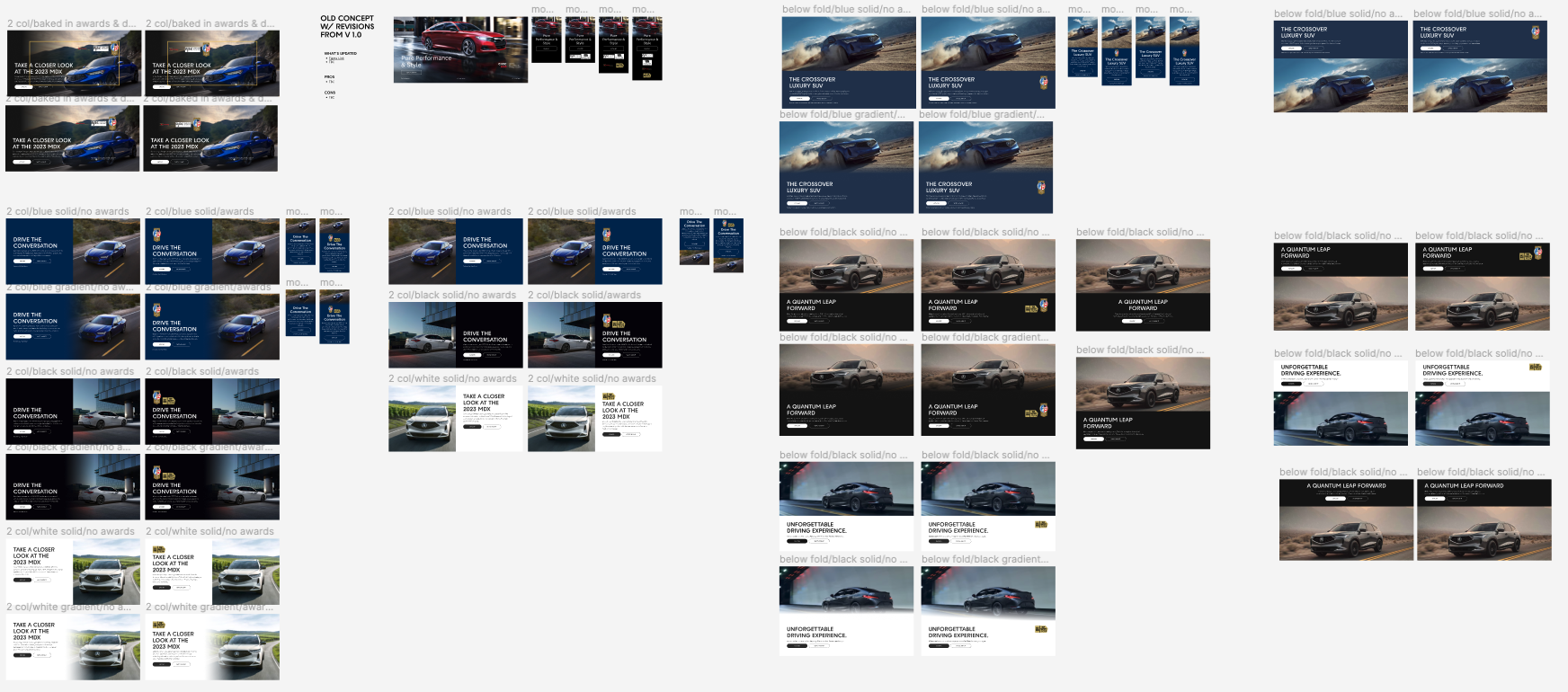
First Iteration
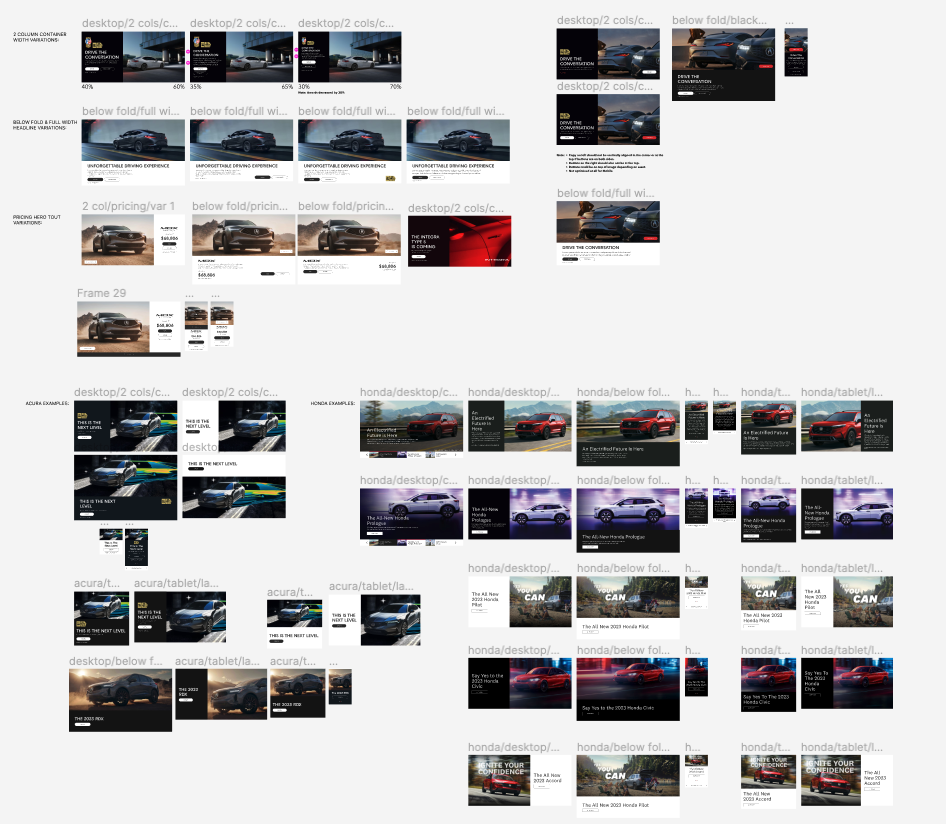
Second Iteration
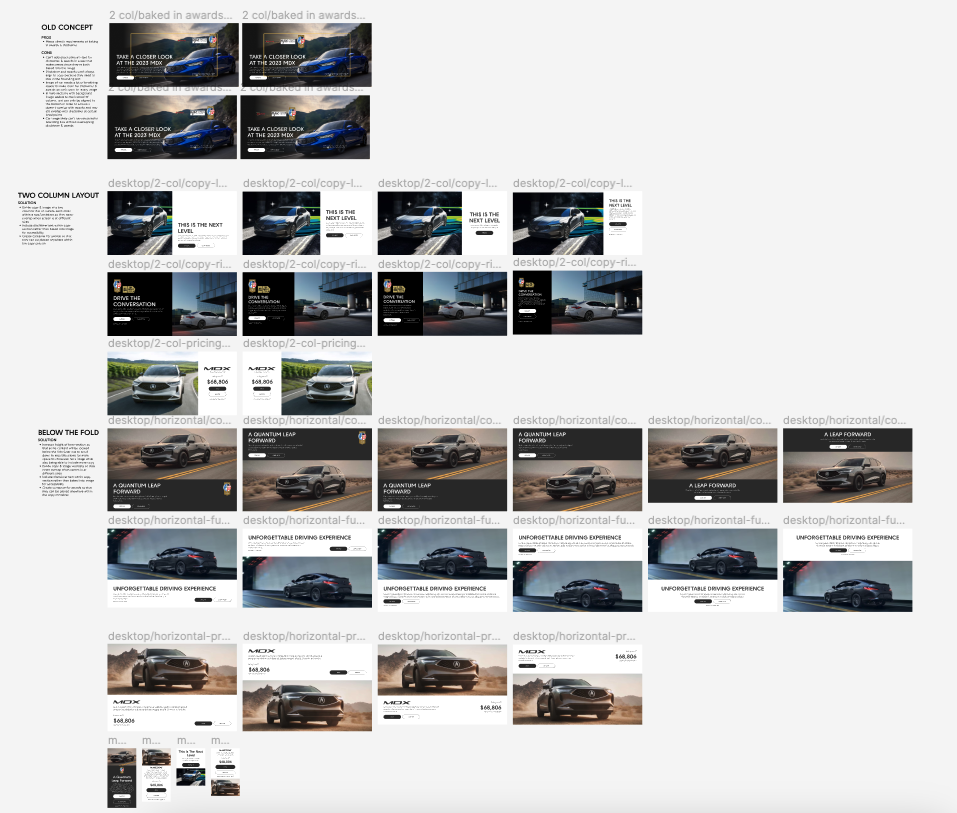
Final Iteration
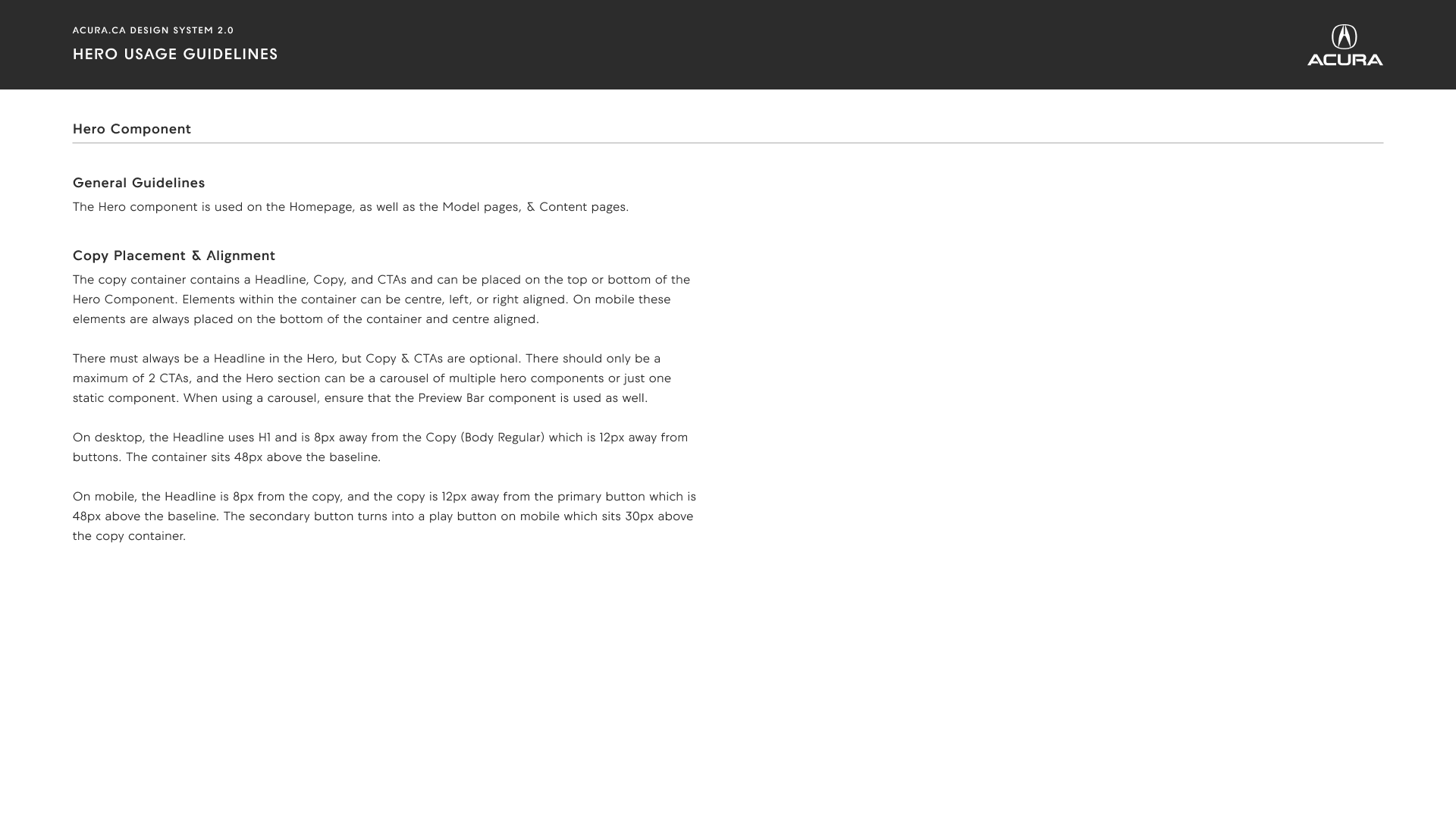
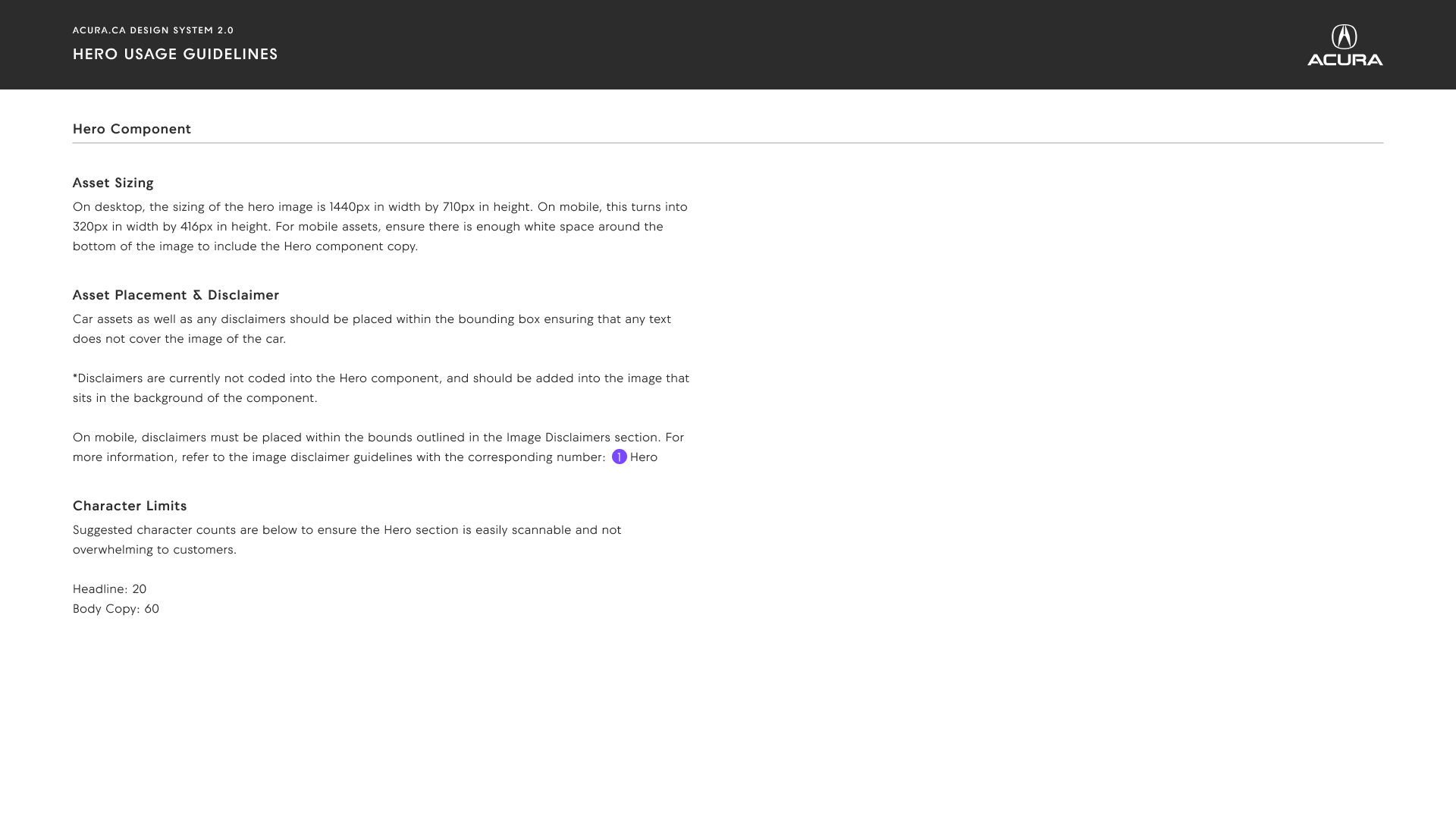
Dev Guidelines
User flow of client authoring tool showing all options the client needed to have in order to build out the types of hero sections they needed.
Updated authoring tool design using a drag & drop WYSIWYG style
Authoring tool design incorporating all additional options client would need to have - designed in the style of the current tool.
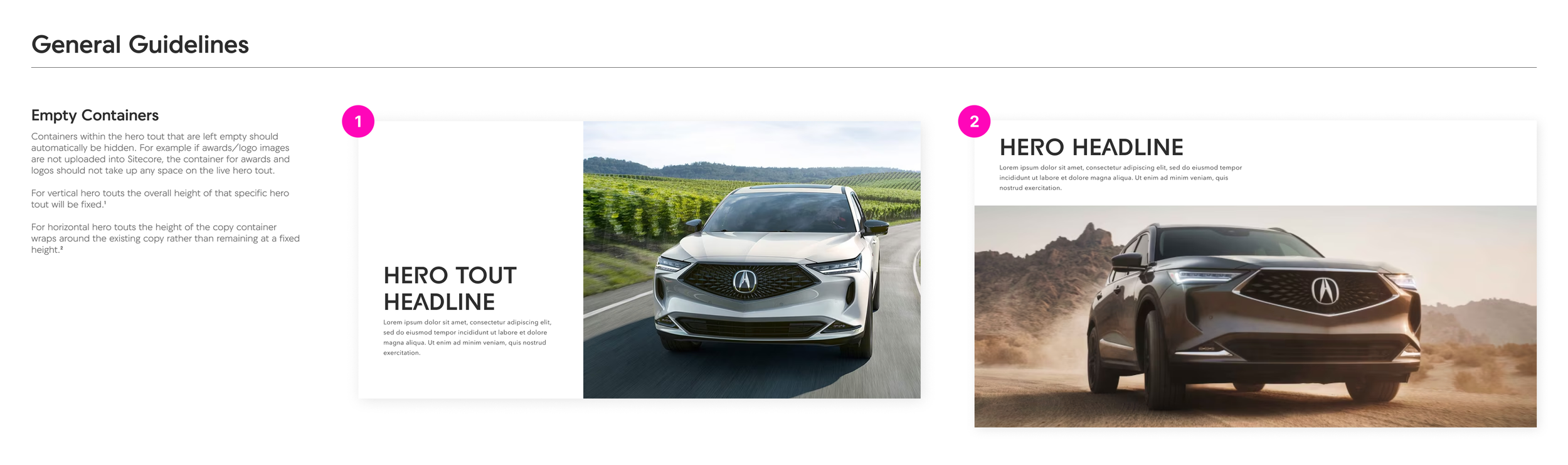
General guidelines
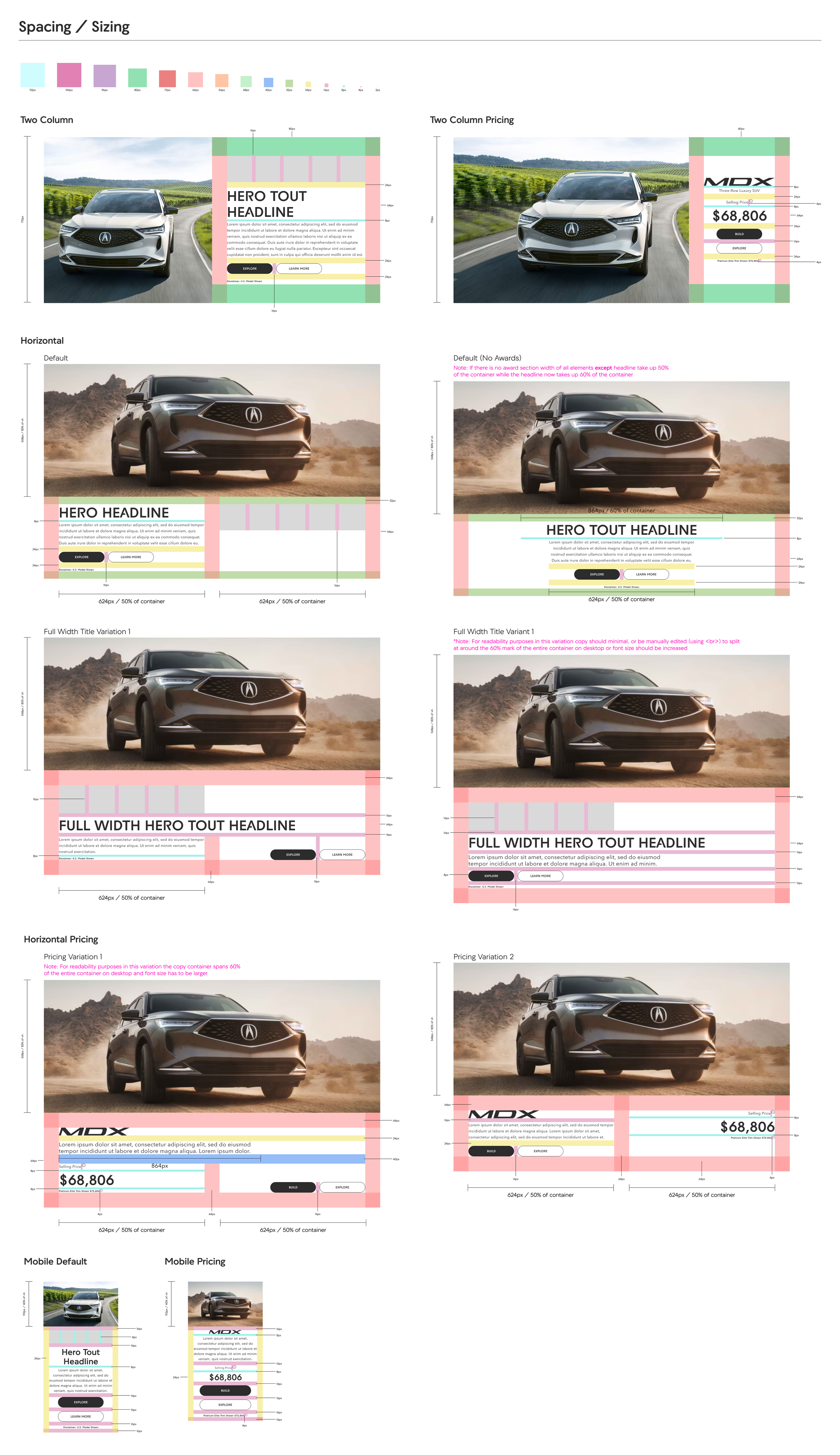
Spacing guidelines
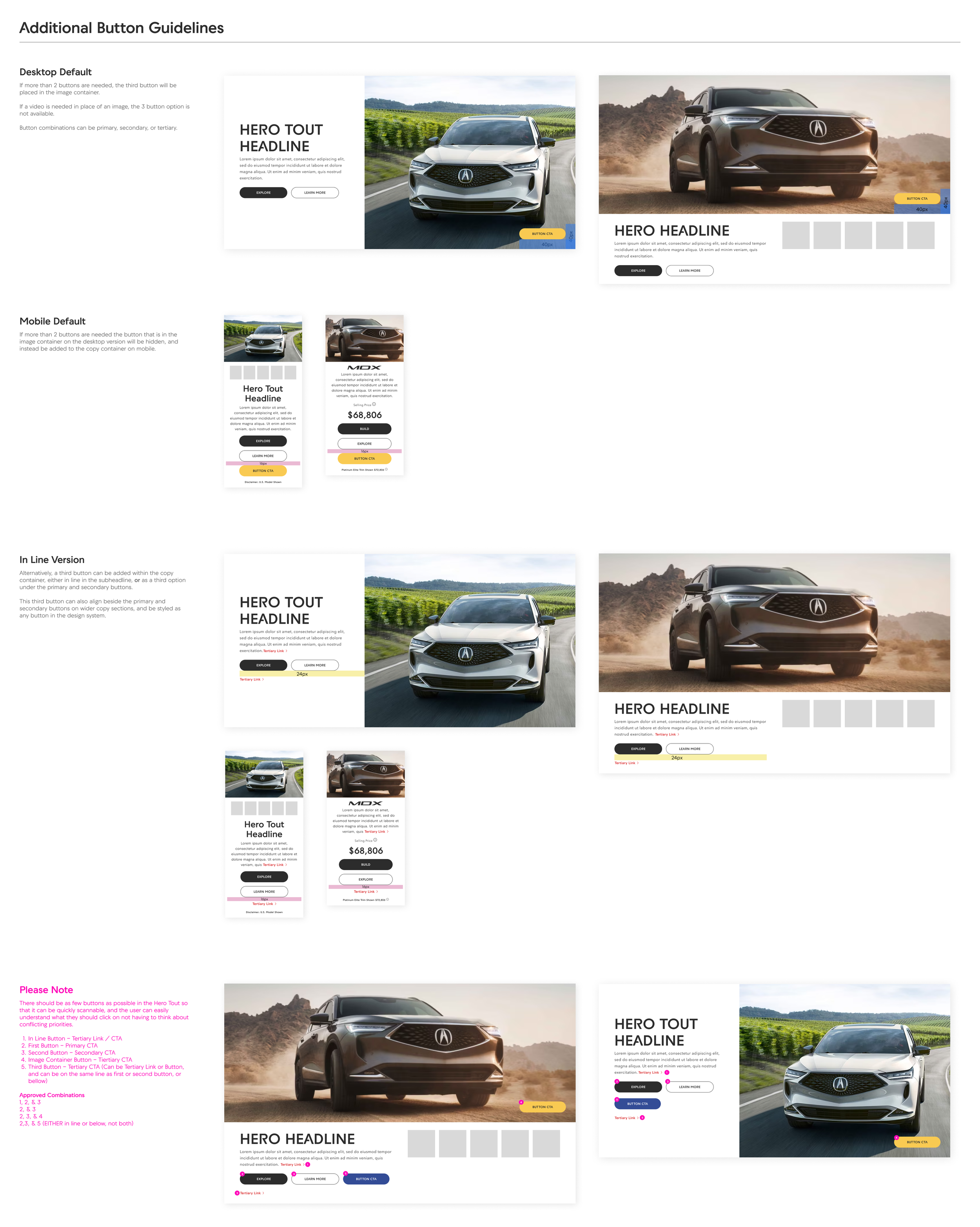
Additional button options
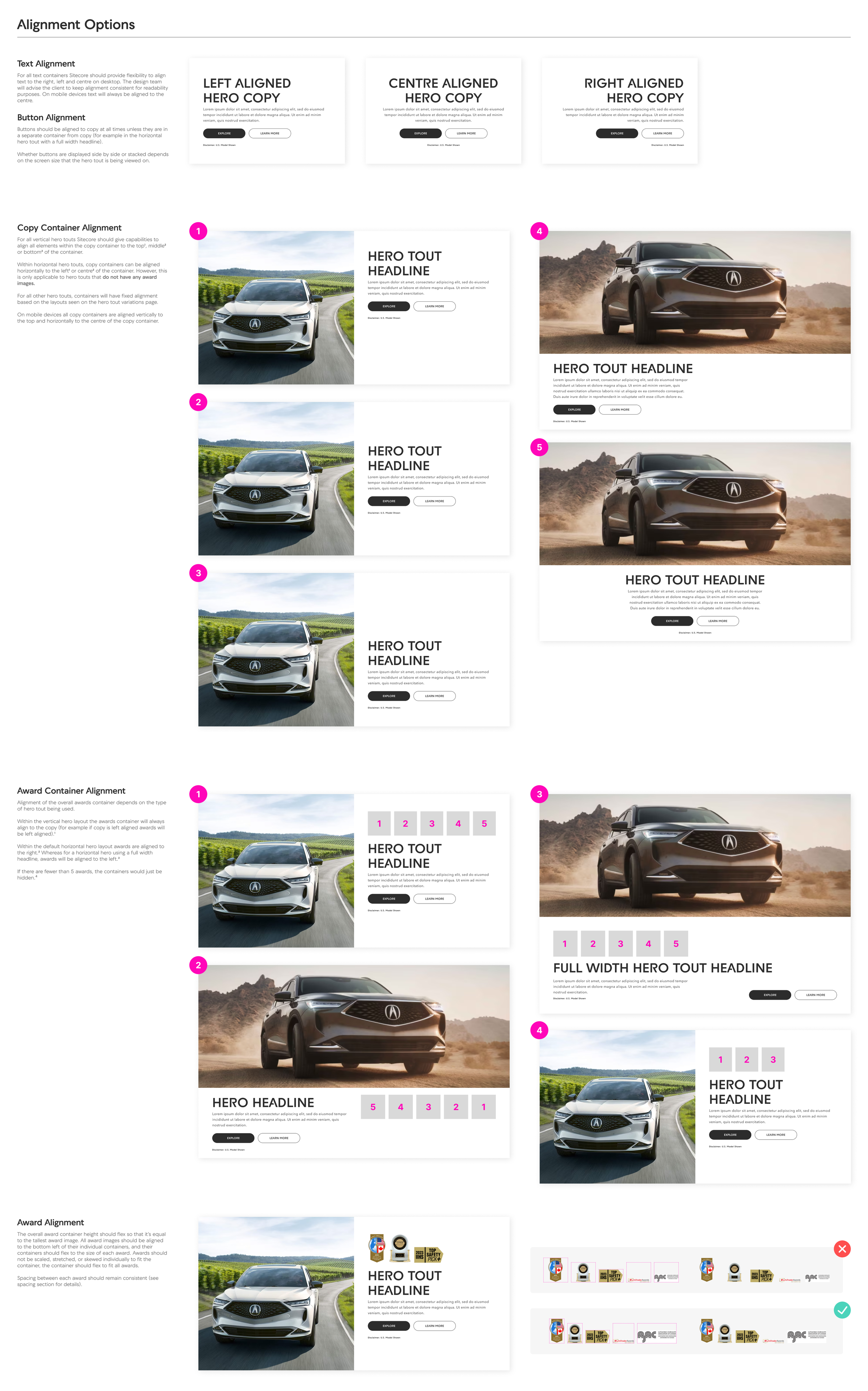
Alignment guidelines
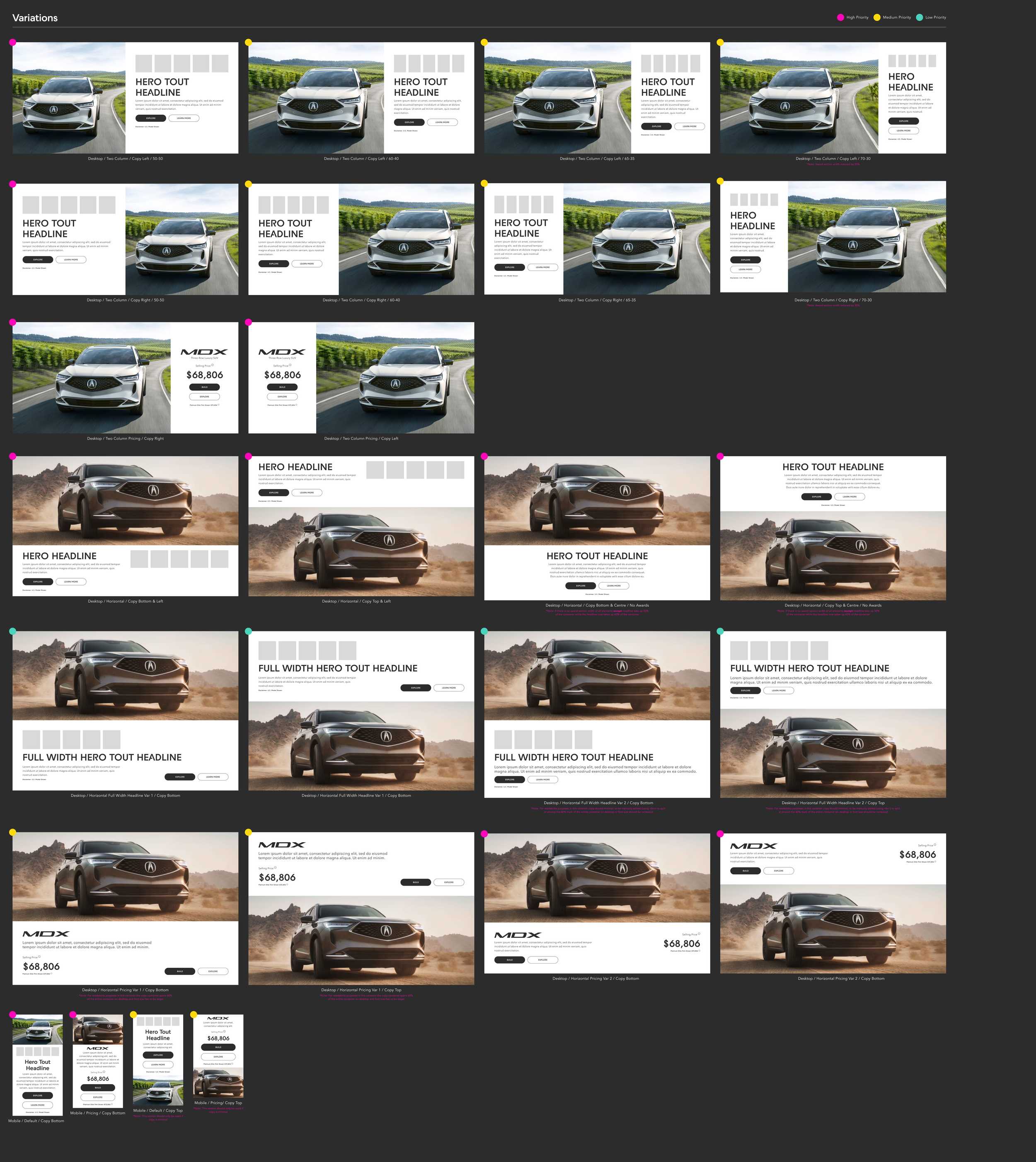
Hero Variations
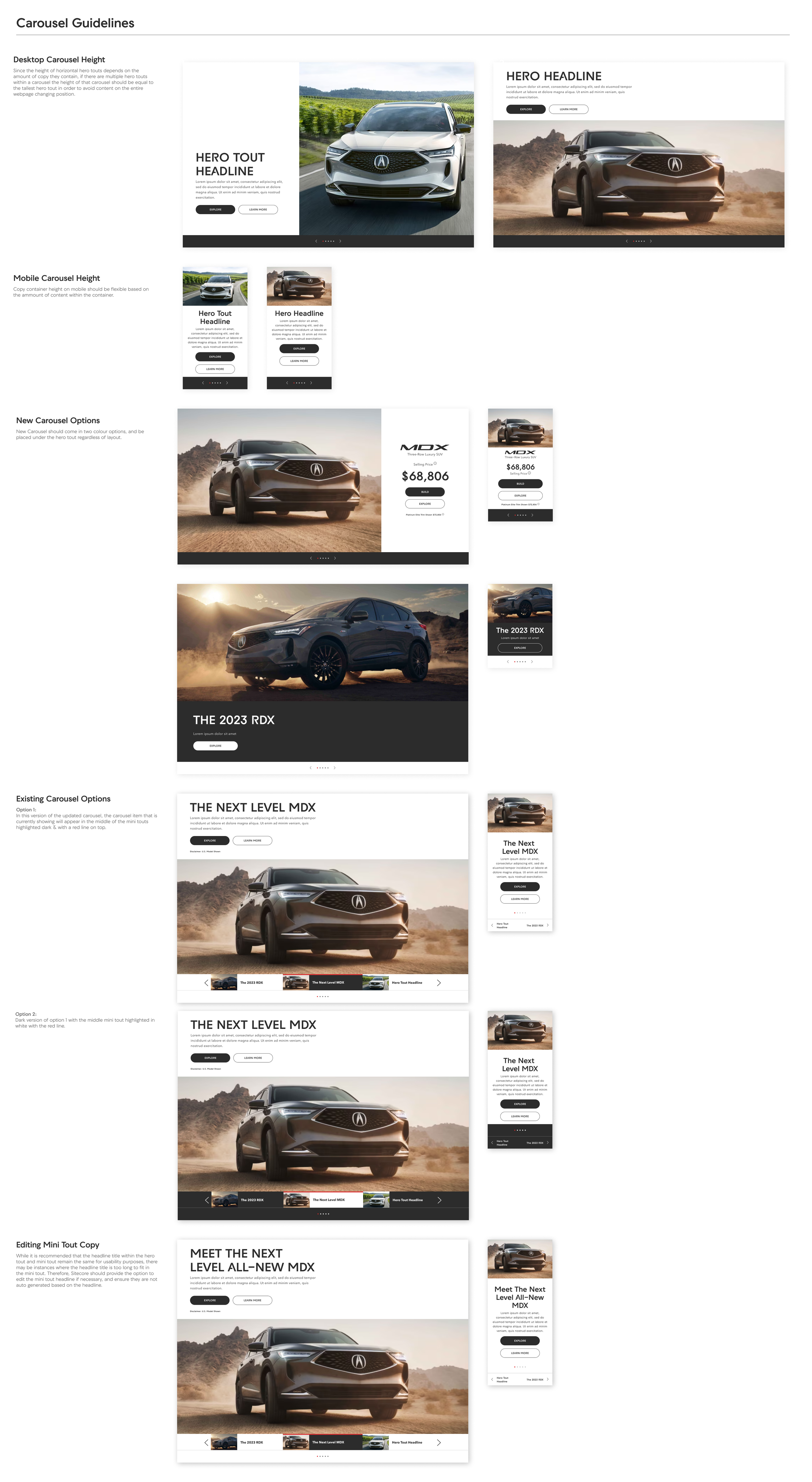
Carousel guidelines
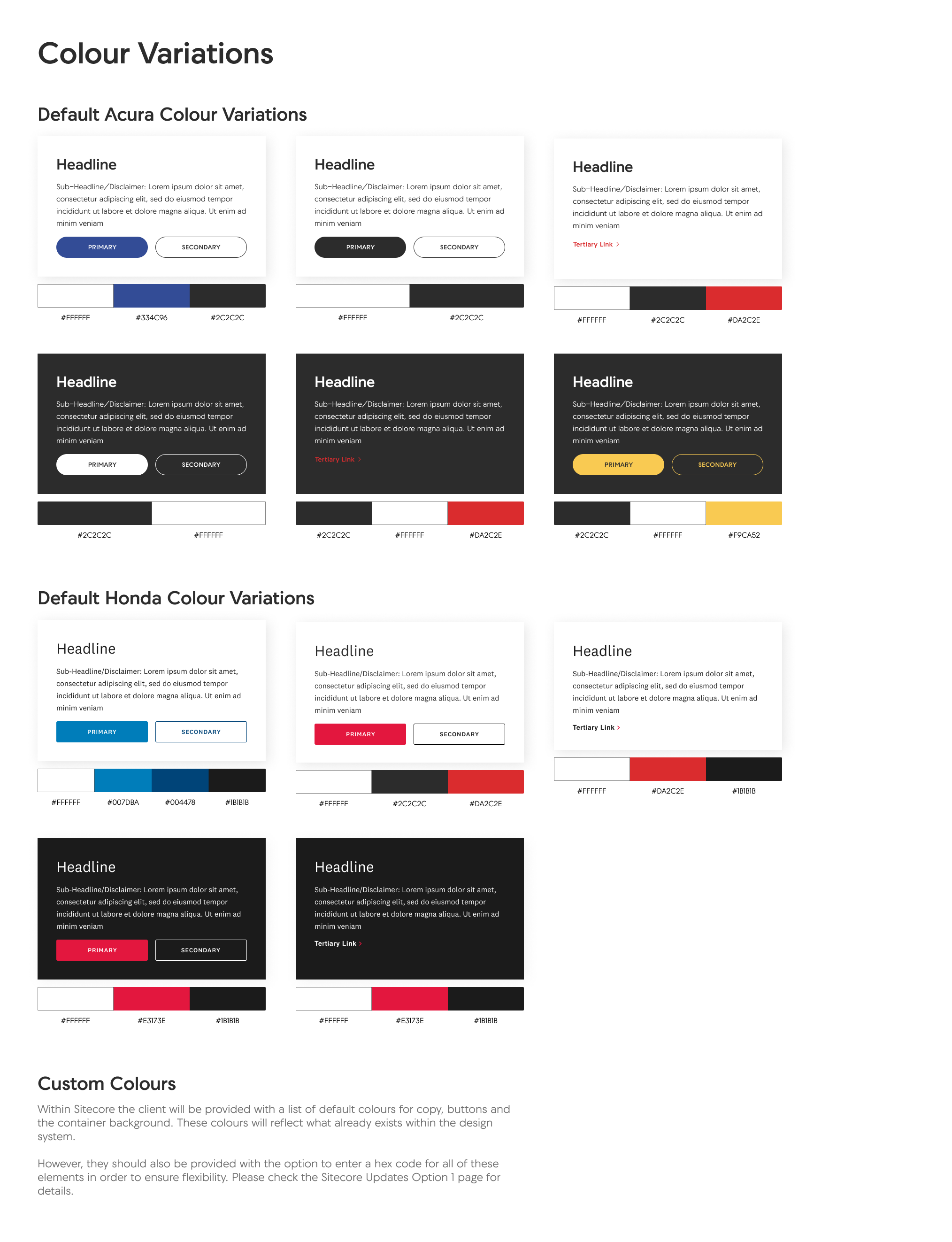
Colour Variations
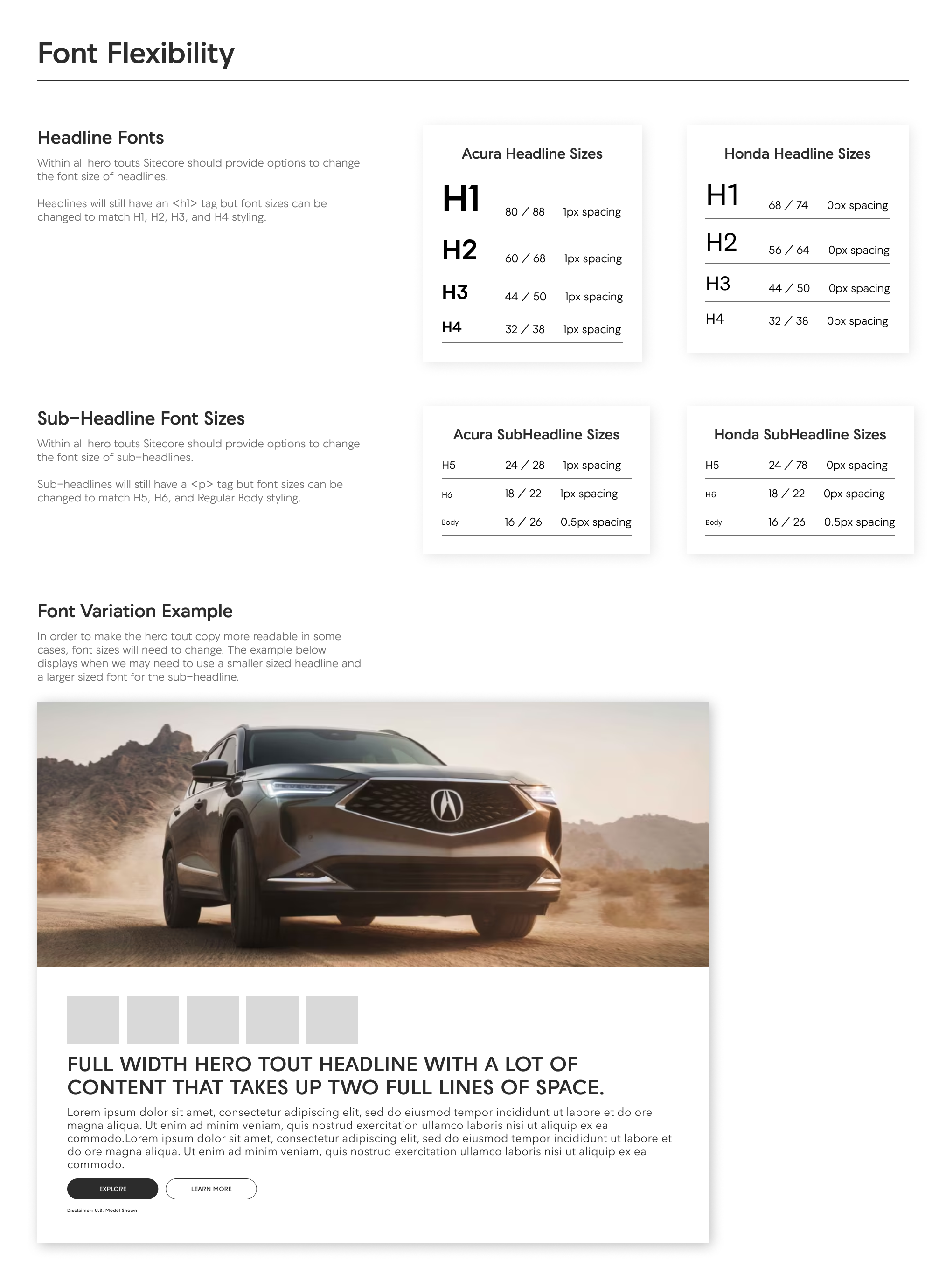
Copy guidelines
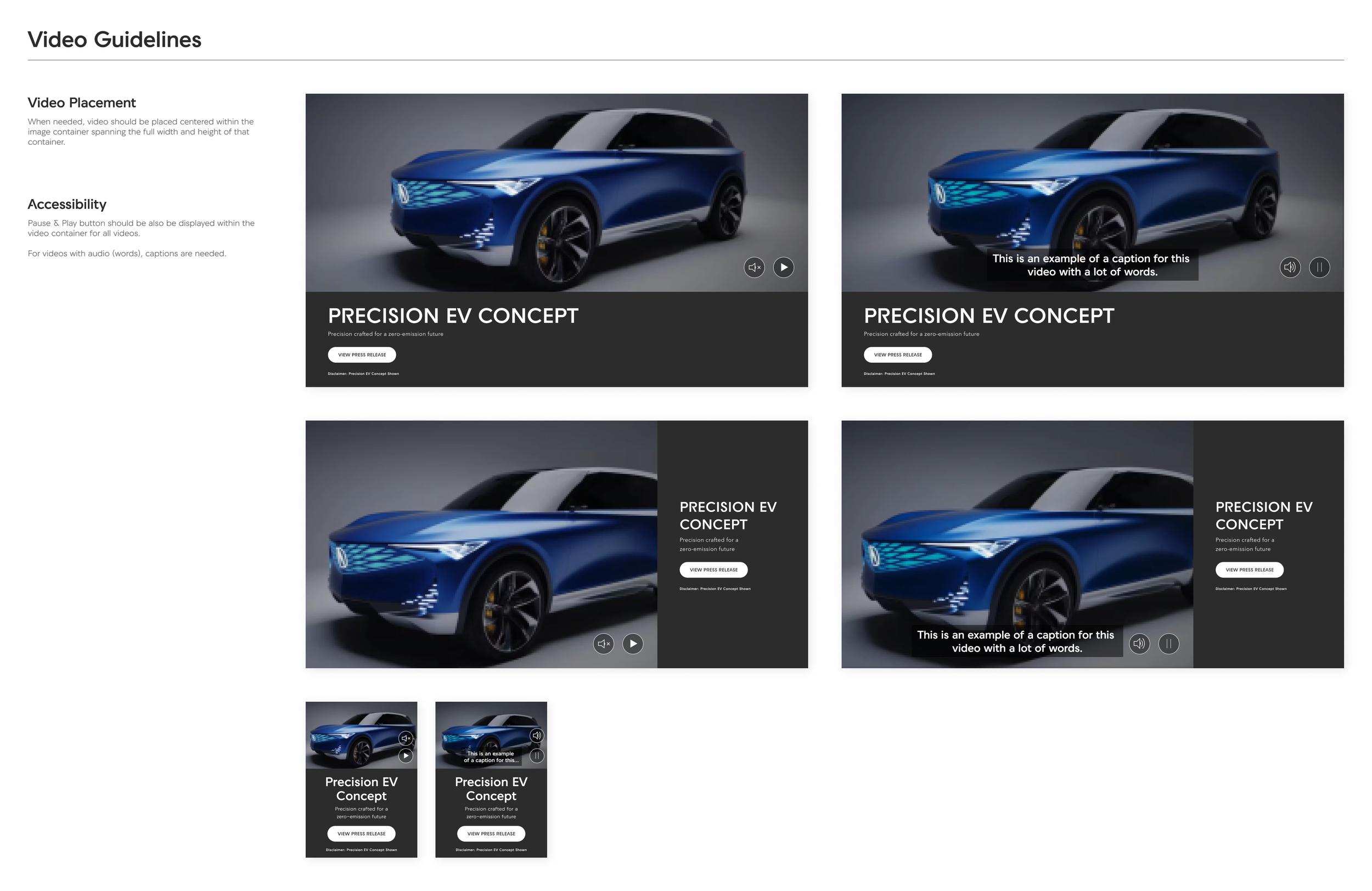
Video guidelines